


More news on this day
Canada’s summer travel season is off to a turbulent start as passengers on Air Canada, WestJet and Porter report mounting delays and cancellations across major hubs, complicating long weekend plans and raising fresh questions about airline reliability and passenger rights.
Get the latest news straight to your inbox!
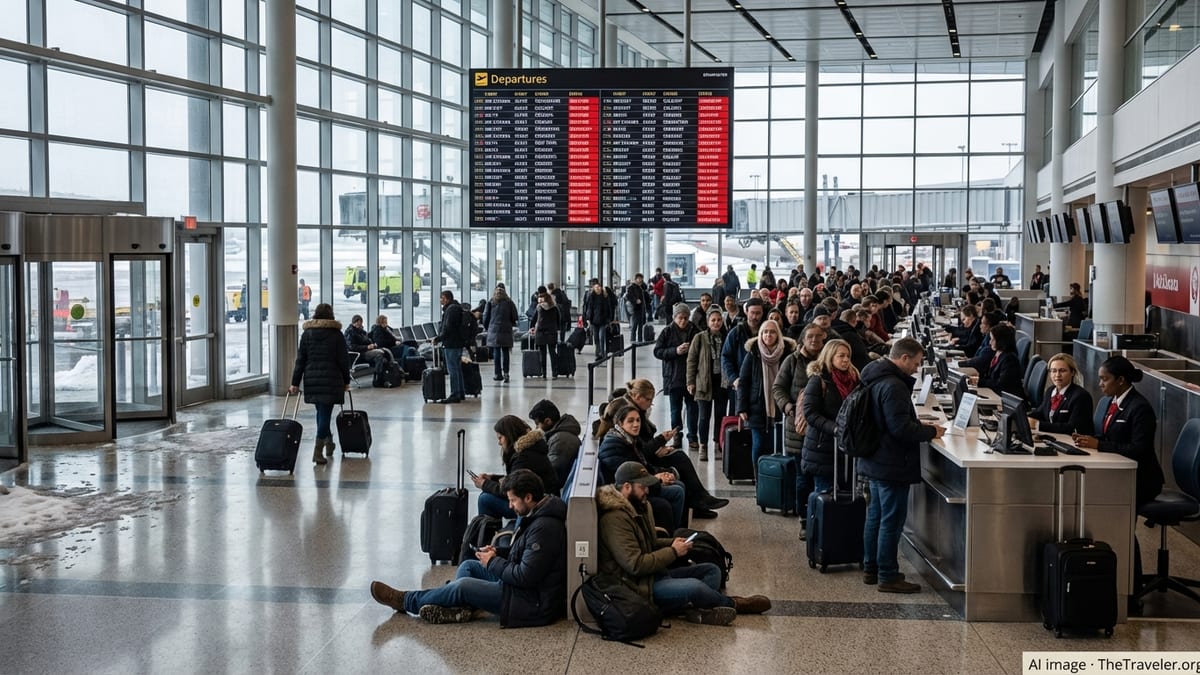
Fresh Wave of Disruptions Hits Major Canadian Hubs
Publicly available operational data and industry coverage indicate that Canadian airports are again seeing significant disruption involving the country’s three main full service and hybrid carriers. Recent tracking of flight movements shows elevated levels of delays and cancellations on services operated by Air Canada, WestJet and Porter, particularly at Toronto Pearson, Montreal Trudeau, Calgary, Vancouver and Ottawa.
Reports focused on Ottawa Macdonald Cartier International Airport on July 2, 2026 describe dozens of cancellations in a single day, affecting multiple airlines and leaving large numbers of passengers attempting to rebook on already busy summer services. Separate coverage of activity at other major airports points to persistent knock on effects, with some aircraft and crews falling out of position and forcing schedule changes on subsequent legs.
Data compiled by aviation analytics and passenger rights platforms over the past several months suggests that the latest problems are part of a broader pattern. Several national reports in April, May and June documented repeated waves of disruption, often concentrated on a handful of peak time departures and popular domestic and transborder routes where aircraft utilization is already high.
Individual flight status records for early July also show recurring delays on some services, including west to east trunk routes into Ottawa and Montreal. While not all of these delays result in cancellations, extended late departures and arrivals have created missed connections for passengers booked on onward domestic and international flights.
Air Canada: High Volume Network Under Strain
As Canada’s largest carrier by fleet size and destinations, Air Canada has been at the center of several recent disruption events. Industry digests focused on flight status updates for 2026 highlight clusters of Air Canada cancellations tied to a mix of winter storms earlier in the year, staffing constraints and aircraft maintenance issues, all of which continue to reverberate into the peak summer schedule.
Guides summarizing Air Canada’s 2026 delay and cancellation policy note that the airline has outlined procedures for rebooking and compensation when disruptions are within its control, such as certain mechanical problems or crew availability, and separate treatment when events are categorized as outside its control, including severe weather or air traffic restrictions. Consumer advocates point out that the distinction is crucial for travelers seeking reimbursement for long delays.
Recent third party tracking suggests that Air Canada’s operations have been particularly vulnerable at large hubs like Toronto Pearson and Montreal Trudeau, where congestion can amplify even minor schedule changes. Passengers flying on connecting itineraries have reported extended wait times at customer service desks and on call centers when multiple flights on a route are delayed at once.
Despite the challenges, schedule data indicates that Air Canada continues to operate the broadest domestic and international network in the country, leaving many passengers with limited alternatives on certain routes when flights are disrupted. This dynamic has increased scrutiny of the carrier’s handling of cascading delays and its ability to provide timely rebooking options during peak periods.
WestJet Adjusts Network Amid Operational Pressures
WestJet has also faced high profile disruption this year, with passenger reports and legal filings drawing attention to prolonged delays and contested explanations for some cancellations. Regulatory documents and recent news coverage refer to previous enforcement actions related to how certain schedule changes were communicated and categorized under federal passenger protection rules.
Alongside these operational challenges, WestJet has been reshaping its network for the 2026 summer and fall seasons. Industry schedule analyses show reductions of more than a quarter in some United States services compared with earlier plans, as the airline concentrates capacity on key domestic and leisure routes. Observers suggest that trimming weaker performing transborder flights may help WestJet stabilize operations at core hubs such as Calgary.
Flight status snapshots from early July indicate that WestJet services, particularly long domestic legs into Ottawa and eastern Canada, are still experiencing periodic delays. While many flights continue to operate close to schedule, even modest late departures can create wider disruption when aircraft are scheduled tightly across several daily rotations.
Travel forums and passenger rights groups report that some WestJet customers continue to challenge the reasons given for cancellations, particularly when other airlines appear to be operating from the same airport. These disputes often hinge on whether the cause is considered within the airline’s control, with implications for cash compensation and voucher offers under Canadian regulations.
Porter Expands but Confronts Reliability Concerns
Porter, which has been rapidly expanding beyond its original eastern Canada niche, is also under pressure to improve on time performance. Discussions on consumer platforms over recent months describe a noticeable increase in delays and short notice cancellations on certain routes, especially during the winter and early spring period, as the airline integrated new aircraft and destinations.
Operational data for individual Porter flights at the start of July 2026 shows a mix of largely on time operations and modest delays, some under half an hour and others longer. While smaller than its two main competitors, Porter’s growing presence at Toronto Pearson, Ottawa and Western Canadian cities means that any cluster of disruptions can quickly affect connecting passengers relying on tight turnarounds.
Passenger rights resources note that Porter is subject to the same federal air passenger protection framework as Air Canada and WestJet, including potential compensation for certain delays and cancellations within the airline’s control. Advisories published in mid 2026 emphasize that travelers should keep boarding passes, receipts and written explanations of the cause of disruption to support any future claim.
At the same time, analysts point out that Porter’s strategy of using a newer narrow body fleet on longer routes could, over time, improve schedule reliability if maintenance and crew planning keep pace with expansion. For now, however, many travelers booking peak summer flights are weighing the risk of disruption alongside price and schedule convenience.
What Travelers Should Expect in the Coming Weeks
Industry watchers expect Canada’s air network to remain under strain through July as high passenger demand coincides with tight aircraft and crew availability. Historical data from May and June shows that waves of disruption often cluster around weather systems or localized operational breakdowns, but can quickly spread across the country as aircraft miss scheduled rotations.
Consumer organizations advising Canadian travelers recommend building extra time into itineraries, particularly for connections involving different carriers or separate tickets. They also encourage passengers to monitor flight status closely on the day of travel and to check whether their route is covered by compensation regimes such as Canada’s Air Passenger Protection Regulations or, for certain international itineraries, European Union rules.
For those flying with Air Canada, WestJet or Porter in the near term, publicly available guidance suggests that being prepared can make a significant difference when disruption occurs. This includes understanding airline rebooking policies, knowing when hotel and meal vouchers may be offered, and keeping digital copies of all travel documents to streamline any later claims.
With Canada’s busiest vacation weeks still ahead, the performance of the country’s major carriers will remain in the spotlight. Travelers, regulators and advocacy groups are expected to follow punctuality metrics and cancellation tallies closely as the industry works to balance strong demand with the operational realities of a tightly stretched network.