


More news on this day
Travellers across Colombia are facing another spell of flight disruptions, with recent data showing mounting delays and cancellations affecting services operated by LATAM, Avianca and Copa at Bogotá and other key airports.
Get the latest news straight to your inbox!
Wave of Cancellations at Bogotá and Bucaramanga
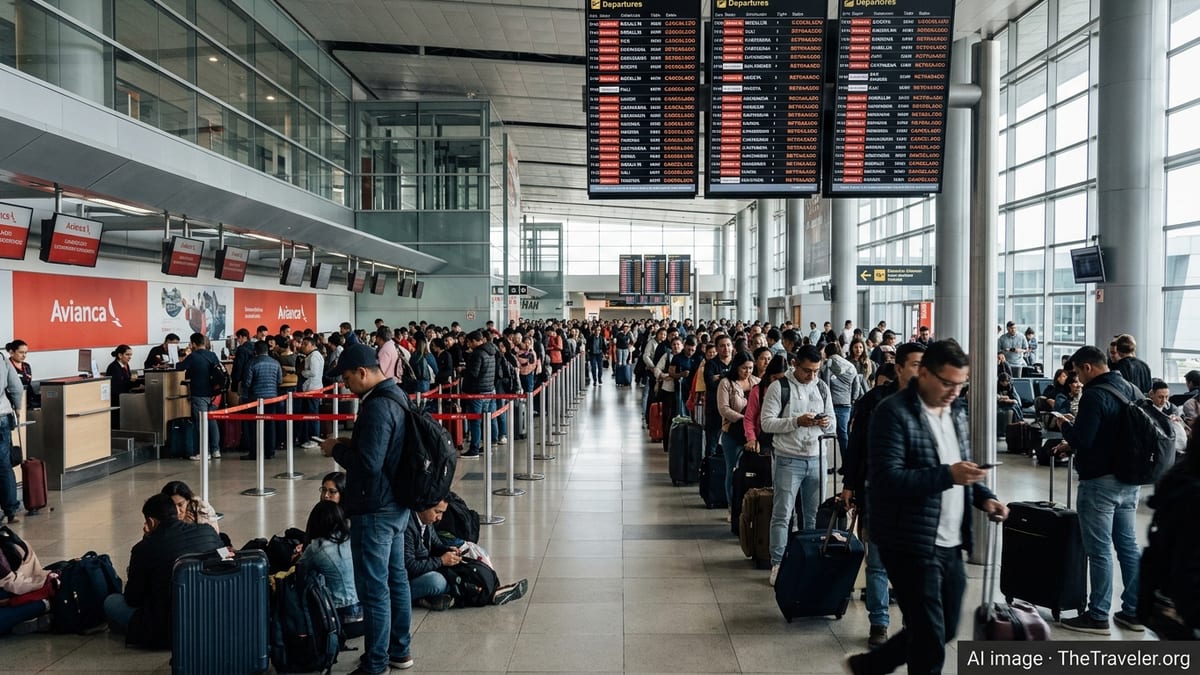
Recent operational data from Colombian airports indicates that full service and regional carriers have cancelled dozens of flights and delayed many more, with Bogotá’s El Dorado and Bucaramanga’s Palonegro airports among the most affected. Coverage in travel industry outlets reports that Avianca, LATAM Colombia and Copa Airlines have collectively cancelled around three dozen flights and delayed well over one hundred in a single operational day, disrupting itineraries for hundreds of passengers on domestic and international routes.
El Dorado, the country’s main hub and one of Latin America’s busiest airports, has borne the brunt of the disruptions. Reports describe banks of departures to major Colombian cities such as Medellín, Cali and Cartagena being pushed back repeatedly, along with services to regional hubs including Panama City and Lima. At Palonegro, a smaller but strategically important airport for the Santander region, cancellations and delays have cascaded across connections, creating missed links for travellers heading to and from Bogotá.
Publicly available flight tracking information shows that the disruption pattern has not been isolated to a single carrier or route. Instead, it has spread across multiple operators and alliances, with Avianca and LATAM services particularly prominent on the domestic side and Copa experiencing knock on effects on regional international operations. The combination has produced crowded terminals, long queues at customer service desks and growing frustration among passengers attempting to rebook or secure onward connections.
El Dorado Hub Under Strain
Recent coverage from aviation and travel news outlets points to El Dorado International Airport as the central pressure point in Colombia’s current wave of flight disruptions. As the primary hub for Avianca and an important base for LATAM and Copa, any operational difficulty at Bogotá quickly ripples through the wider network, affecting both domestic feeders and long haul international services.
On several days in late June, publicly available data showed dozens of delayed departures and multiple cancellations from El Dorado alone, affecting flights to destinations such as Madrid, Amsterdam, Mexico City and major South American capitals. When a key long haul departure runs late or is withdrawn from the schedule, knock on effects can include missed transatlantic connections, aircraft and crew being out of position, and subsequent rotations departing behind schedule.
Aviation specialists note that El Dorado has also been undergoing scheduled calibration work on its instrument landing systems on selected Sundays in recent weeks. This programmed maintenance has required temporary adjustments to runway availability and flight schedules in specific morning time windows, further narrowing operational margins. Although such work is intended to enhance long term reliability and safety, it can contribute to short term congestion when combined with high seasonal traffic and other constraints.
Weather, Visibility and Technical Factors
Weather related factors have compounded the strain on Colombia’s air network. Local media reports point to episodes of dense fog at El Dorado that have forced restrictions on arrivals and departures, with flights to cities such as Cali among those delayed or diverted. In low visibility conditions, air traffic controllers must increase separation between aircraft, reducing the overall number of movements the airport can accommodate in any given hour.
At the same time, the Colombian civil aviation authority has been managing a broader programme of technological upgrades and systems modernisation. According to national press coverage, the agency has committed to finalising a series of radar and communications improvements around mid 2026, after several months of scrutiny over previous equipment failures and operational incidents. While much of this work takes place behind the scenes, any temporary reduction in available capacity or additional safety buffers introduced during transitions can tighten constraints at already busy hubs.
Industry analysis suggests that such a combination of weather, scheduled maintenance and infrastructure modernisation can create a fragile operating environment. When everything runs to plan, passengers may notice only minor schedule tweaks. However, once an unexpected delay occurs, recovery is slower because spare capacity is limited, making it more likely that airlines such as LATAM, Avianca and Copa will opt to cancel particular flights in order to stabilise the remainder of their schedules.
Passenger Impact and Rights in the Spotlight
The repeated waves of disruption have once again drawn attention to the rights of passengers affected by delays and cancellations in Colombia and on international routes touching the country. Consumer advocacy organisations monitoring the situation highlight that entitlements vary depending on the cause of the disruption, the operating carrier and the origin and destination of the flight.
For flights departing the European Union and operated by carriers including Avianca or LATAM that connect to Colombia, travellers may be covered by European passenger protection rules when delays or cancellations are within airline control. Under these frameworks, passengers can, in some circumstances, request compensation in addition to rerouting or refunds. On routes entirely within Colombia or elsewhere in the Americas, national and regional regulations, as well as each airline’s own conditions of carriage, determine the level of care and reimbursement available.
Travel information platforms are advising affected customers to document their delays carefully, retain boarding passes and receipts, and consult official airline channels to understand rebooking options. LATAM, Avianca and Copa set out procedures for schedule changes in their published tariffs and service policies, typically including the possibility of rebooking on the next available flight, requesting a refund of the unused portion of a ticket, or, in some cases, being rerouted with partner airlines when significant delays or cancellations occur.
What Travellers Should Expect in the Coming Weeks
Forward looking statements from aviation authorities and industry observers suggest that Colombia’s air traffic system will remain under pressure in the short term. Runway and navigation system calibrations, together with continuing technology upgrades, are expected to extend through the early part of the second half of 2026, even as demand for both domestic tourism and international travel continues to rebound.
Analysts note that airlines operating in Colombia have limited flexibility to add spare aircraft or crew, particularly on busy trunk routes where utilisation is already high. This means that when irregular operations occur, it may take several rotations for schedules to fully recover. For travellers booked on LATAM, Avianca or Copa in the coming weeks, publicly available guidance recommends building additional buffer time into connections, especially when transiting El Dorado or pairing domestic legs with long haul departures.
Despite the current challenges, aviation experts emphasise that the infrastructure projects under way are aimed at strengthening the system and reducing chronic delays over the longer term. Once modernised radar, communications and approach systems are fully commissioned and tested, Colombia’s main airports are expected to handle peak traffic with greater resilience. Until then, passengers are likely to continue facing periodic waves of disruption, particularly during periods of adverse weather or when scheduled maintenance intersects with heavy travel demand.