


More news on this day
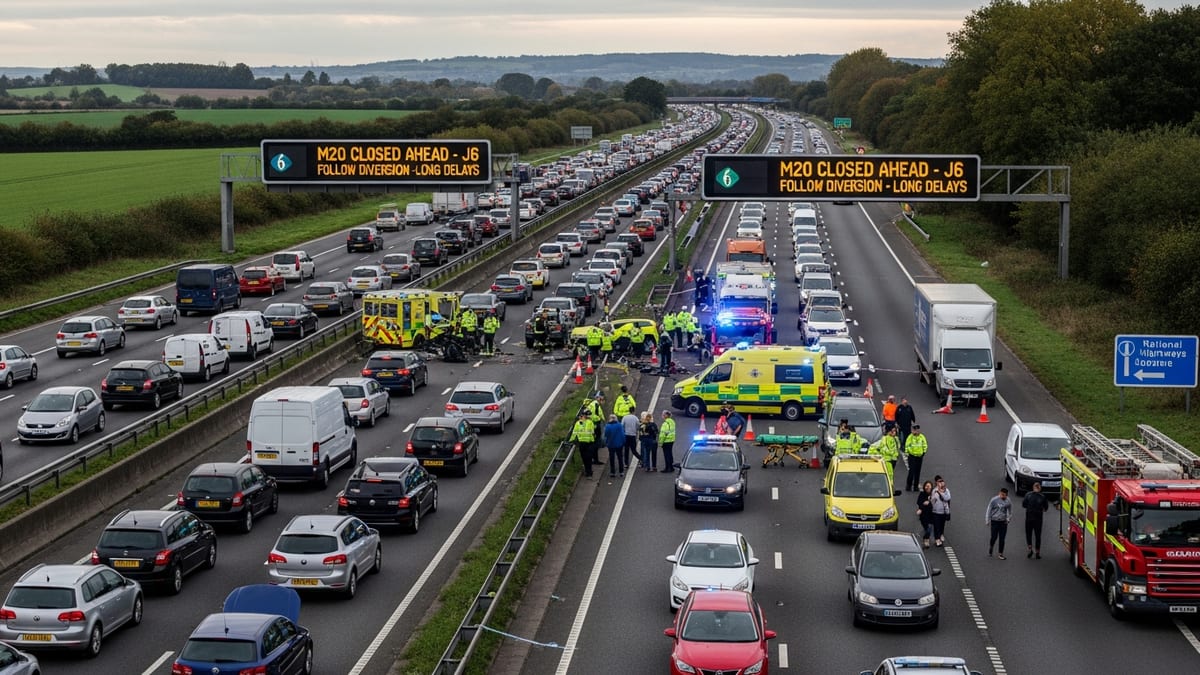
Traffic on the Kaduna–Abuja highway was thrown into chaos on Monday, 9 November 2026, as multiple crashes and broken-down trucks triggered hours-long gridlock that left hundreds of travellers stranded along one of northern Nigeria’s busiest road corridors.
Get the latest news straight to your inbox!
Multiple Incidents Converge to Block a Vital Corridor
Reports from Nigerian news outlets indicate that the worst congestion developed around Gidan Busa, just before Katari in Kaduna State, after several accidents involving long vehicles and other heavy-duty trucks obstructed both lanes of the highway. The standstill stretched for kilometres as private cars, commercial buses, fuel tankers and articulated vehicles were trapped in unmoving traffic under the sun.
Published coverage describes a similar build-up near Rijana Bridge, where three broken-down trucks early on Monday also contributed to a separate but related gridlock. The tailback was reported to run from Akilibu through Gidan Busa, compounding delays for motorists travelling between Kaduna and the federal capital, Abuja.
Travellers, including business people heading to meetings in Abuja and intercity passengers returning after the weekend, were among those caught in the disruption. Publicly available reports note that some individuals missed contract appointments and deliveries as they waited in vehicles that did not move for hours.
Images and videos shared in local media show long queues of vehicles stretching into the haze, with some passengers stepping out to stand by the roadside, walk along the tarmac or seek shade while monitoring any sign of movement ahead.
Ongoing Reconstruction Narrows Lanes and Slows Recovery
The crashes and vehicle breakdowns occurred along sections of the Kaduna–Abuja highway that are currently undergoing reconstruction, a long-running federal project aimed at upgrading the route that links Abuja to Kaduna and further north. Publicly available information shows that parts of the carriageway near Katari, Jere and Gidan Busa have been reduced to single, narrow diversions to accommodate repairs.
Coverage of Monday’s events notes that these temporary diversions sharply limited room for manoeuvre when accidents occurred. Once long vehicles jackknifed or stalled, other trucks and buses had little space to turn or reverse, meaning a single incident could freeze traffic in both directions for extended periods.
Reports from the scene describe a stark contrast between a fresh, unfinished stretch of concrete and the rough gravel and diversions that motorists were forced to use. Where the new surface is not yet open, vehicles were funnelled onto narrower lanes that offered fewer escape options once the queue formed.
The combination of active construction zones, high volumes of freight traffic and limited shoulders appears to have slowed efforts to clear the obstructions. Some accounts indicate that even after broken-down trucks were partially removed, progress remained painfully slow as vehicles filtered one by one through tight bottlenecks.
Travellers Resort to Detours, Risky Shortcuts and Long Waits
As the gridlock dragged on through Monday, some motorists reportedly abandoned the main carriageway to try unpaved side tracks and village roads in search of a way around the blockage. Local coverage notes that drivers near Gidan Busa and Katari steered off the highway into bush paths, risking being stuck in sand or mud in an effort to beat the standstill.
Other travellers turned back towards Kaduna to postpone their journeys or seek alternative routes through Kachia or Bwari, which can add significant time and distance. These detours are reported to be less direct and may also present security and road-condition challenges, particularly for those unfamiliar with the terrain.
Passengers who remained in the queue described scenes of fatigue and improvisation. According to publicly available reports, some climbed onto parked trucks and cargo loads to sit, while others walked along long lines of vehicles asking for updates on when traffic might resume. In the slow-moving sections closer to the crash sites, commercial drivers inched forward to protect scarce gaps on the narrowed road.
The delays did not only affect human passengers. Coverage from local platforms notes that livestock trucks carrying cattle and vehicles loaded with perishable goods were caught in the traffic, raising concerns about animal welfare, spoilage and financial losses for traders relying on timely arrival in Abuja or Kaduna markets.
Safety, Congestion and Security Fears Intersect on Key Highway
The Kaduna–Abuja highway is widely described in public records as one of Nigeria’s most important road links, connecting the federal capital with Kaduna and onward routes to several northern states. At the same time, it has gained notoriety over the past decade for security incidents, including reported cases of kidnapping and banditry that once pushed some travellers toward rail and air options instead of road travel.
Monday’s disruption has renewed scrutiny of how accidents, stalled reconstruction and security fears intersect along the corridor to shape travel choices. While the latest gridlock was triggered by crashes and broken-down trucks rather than an attack, reports indicate that some passengers expressed unease as night approached and vehicles remained stationary in isolated stretches of the road.
Analyses by transport and safety commentators cited in open sources argue that heavily loaded articulated vehicles, combined with limited enforcement of loading and lane-discipline rules, are increasing both the frequency and impact of crashes on strategic highways such as Kaduna–Abuja. The narrow diversions and incomplete shoulders associated with ongoing road works can then transform relatively minor incidents into multi-hour shutdowns.
Lawmakers and road-safety specialists have previously linked faster completion of the broader Abuja–Kaduna–Kano reconstruction with reduced congestion and a lower risk of serious accidents. Public debate around the latest gridlock has added fresh pressure for more visible traffic management and contingency planning while construction continues.
Calls Grow for Tighter Truck Controls and Faster Repairs
In the aftermath of the latest incidents, commentary in Nigerian media has focused on the role of long vehicles and articulated trucks in repeated shutdowns of the Kaduna–Abuja corridor. Some experts quoted in published analysis are urging tighter controls on heavy-duty traffic, including limits on movement during peak passenger hours and stricter checks on vehicle roadworthiness.
The timing of the gridlock, at the start of a work week in November, has also sharpened concerns about what similar incidents could mean during upcoming festive periods, when travel volumes between Abuja and the north typically rise. Travellers caught in Monday’s standstill have used public platforms to appeal for quicker completion of the highway so that bottlenecks around Katari, Rijana and Gidan Busa are reduced before end-of-year journeys peak.
While there was no immediate comprehensive estimate of economic losses linked to Monday’s disruption, publicly available information highlights missed business appointments, delayed deliveries and extra fuel consumption by vehicles forced to idle for hours. Commercial drivers interviewed in various reports described spending several hours trapped in queues that would ordinarily take minutes to traverse under free-flowing conditions.
As reconstruction continues, the Kaduna–Abuja highway remains both a crucial lifeline and a recurring source of anxiety for travellers. The crashes and breakdowns that paralysed traffic this week have reinforced demands for accelerated repair works, more assertive traffic control around construction zones and a broader rethink of how Nigeria manages freight movement on its most strategic routes.