


More news on this day
International arrivals at major Canadian airports faced renewed delays after another failure of the Canada Border Services Agency’s primary inspection kiosks, pushing many travellers back into manual processing lines and reviving questions about the system’s resilience during busy travel periods.
Get the latest news straight to your inbox!
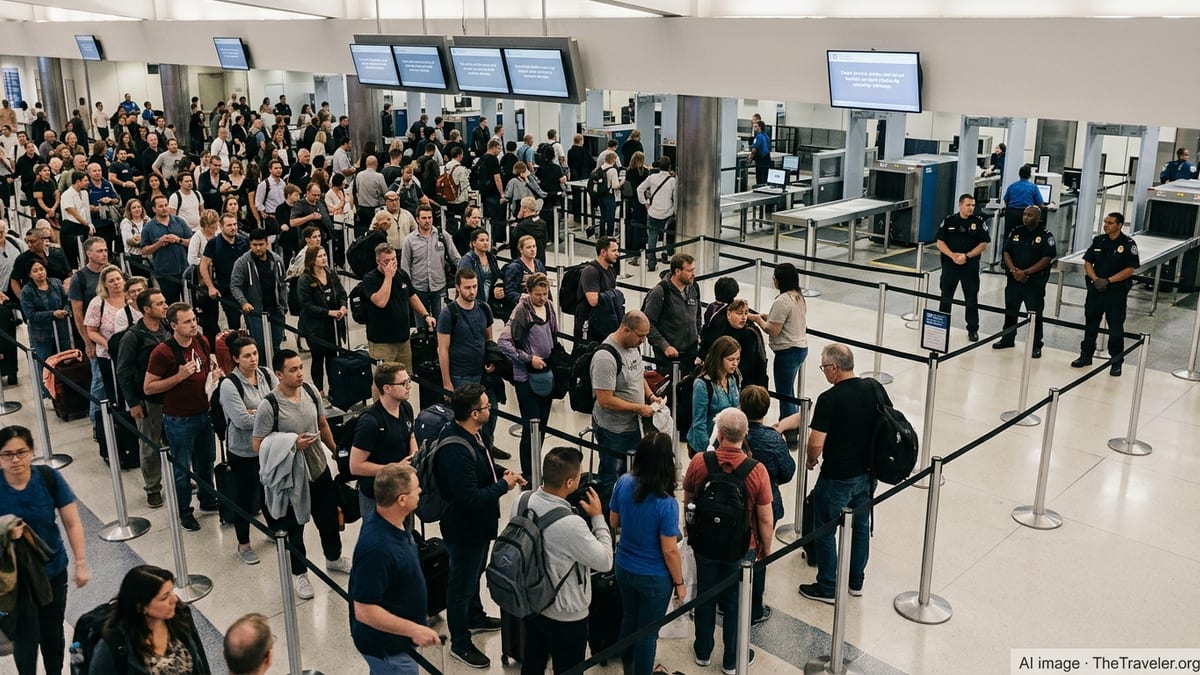
What happened and where delays were reported
Public advisories posted by Toronto Pearson during the disruption indicated a CBSA outage affecting Primary Inspection Kiosks in both Terminal 1 and Terminal 3, a key choke point for international arrivals that normally routes most passengers through self-serve kiosks and eGates before speaking with an officer.
Published coverage of the incident also pointed to knock-on impacts at Montréal-Trudeau, where reports described long queues in the customs hall during the outage window. Travel trade coverage and airport updates framed the disruption as a kiosk and border-processing technology issue rather than an airline operational problem, even though long arrival queues can spill back into gate availability and passenger flows inside terminals.
By the weekend following the outage, subsequent updates indicated systems had returned to regular use at Pearson and that wait-time indicators were trending back toward normal, suggesting the backlog was largely cleared after kiosks came back online.
Why kiosk failures create bottlenecks so quickly
CBSA’s airport primary inspection model is built around high-throughput automation: travellers scan a passport, complete a declaration, and receive a printed receipt before proceeding to an officer. CBSA’s own public “how to use the kiosks and eGate” guidance describes this flow as the standard process at major international airports.
When kiosks go offline, the same volume of passengers must be handled at staffed primary inspection points, which typically process people more slowly because each interaction requires manual document handling and longer questioning. CBSA committee-facing materials also describe the contingency approach in broad terms: during a kiosk outage, travellers are redirected into manual processing lines while the agency attempts to keep adequate inspection capacity open.
Airports may also meter the flow of passengers into the inspection hall when physical space fills up, a dynamic that can keep travellers waiting in arriving corridors or, in some cases, delay deplaning while the arrivals area clears. That crowd-management step is designed to prevent unsafe congestion, but it can make delays feel sudden and severe even when the outage window is relatively short.
A recurring problem set against past CBSA technology incidents
The latest disruption lands in the shadow of earlier, well-documented technology outages affecting CBSA traveller processing. A joint CBSA and Shared Services Canada report into late September and early October 2025 incidents described outages across major traveller and commercial systems, including primary inspection kiosks at airports and other border-processing tools used by officers.
That 2025 report tied outages to cascading impacts well beyond airport halls, including delays related to airline passenger-processing systems and significant wait times at commercial highway border crossings. While the causes and scope of each incident can differ, the broader takeaway is consistent: when core border IT services fail, the disruption can spread quickly across multiple channels of travel and trade.
For travellers, the “fail again” aspect is less about one airport or one evening and more about the pattern of intermittent technology disruptions affecting a front-door service that millions of passengers depend on. Public-facing airport advisories, trade coverage, and government-published material together show how heavily the system relies on kiosk availability to meet expected processing times.
What travellers can do when kiosks are down
Travellers cannot fix a kiosk outage, but they can reduce stress by planning for variability at arrival. When airport advisories flag kiosk disruptions, the most practical step is to build extra time into onward connections, ground transportation pickups, and any time-sensitive plans immediately after landing.
CBSA service standards for major airports state an aim to start primary processing within 20 minutes of a traveller’s arrival in the primary inspection hall at 11 major airports. Outages can push real-world waits well beyond that target, especially when multiple widebody flights arrive close together and manual inspection lines become the only option.
Passengers should also expect that a kiosk outage changes the sequence of arrival steps. Even if a traveller has prepared standard documentation, they may be routed into different lines or held in controlled areas while the arrivals hall is managed for capacity. For NEXUS members, airport guidance at Pearson notes dedicated NEXUS kiosks as part of the arrivals options, though any expedited program still depends on how an airport and border processing are operating at that moment.
What to watch next: resilience, maintenance windows, and transparency
Publicly available information shows CBSA maintains scheduled maintenance windows for some electronic services, while airports post real-time advisories when traveller-facing systems such as kiosks are affected. The challenge for passengers is that unscheduled outages rarely align with low-volume periods, and even short disruptions can create long recovery times.
In the background, government-published materials continue to emphasize that airports and CBSA must keep serving travellers even when self-service technology fails, including accessible assistance and continuity of operations. But the repeated arrival-hall bottlenecks underline a key operational question: how quickly can manual processing scale up when automation suddenly drops out.
For now, travellers should treat kiosks as a convenience rather than a guarantee. Until outage frequency and recovery time improve in a measurable way, the safest assumption for peak travel days is that processing may revert to slower, manual lines with little notice, even at Canada’s best-resourced airports.