


More news on this day
Flight disruption across Dubai and the wider Middle East continues to spill into airline schedules this week, with recurring delays at key hubs and shifting timetables as British Airways outlines how and when it expects to restart parts of its regional network.
Get the latest news straight to your inbox!
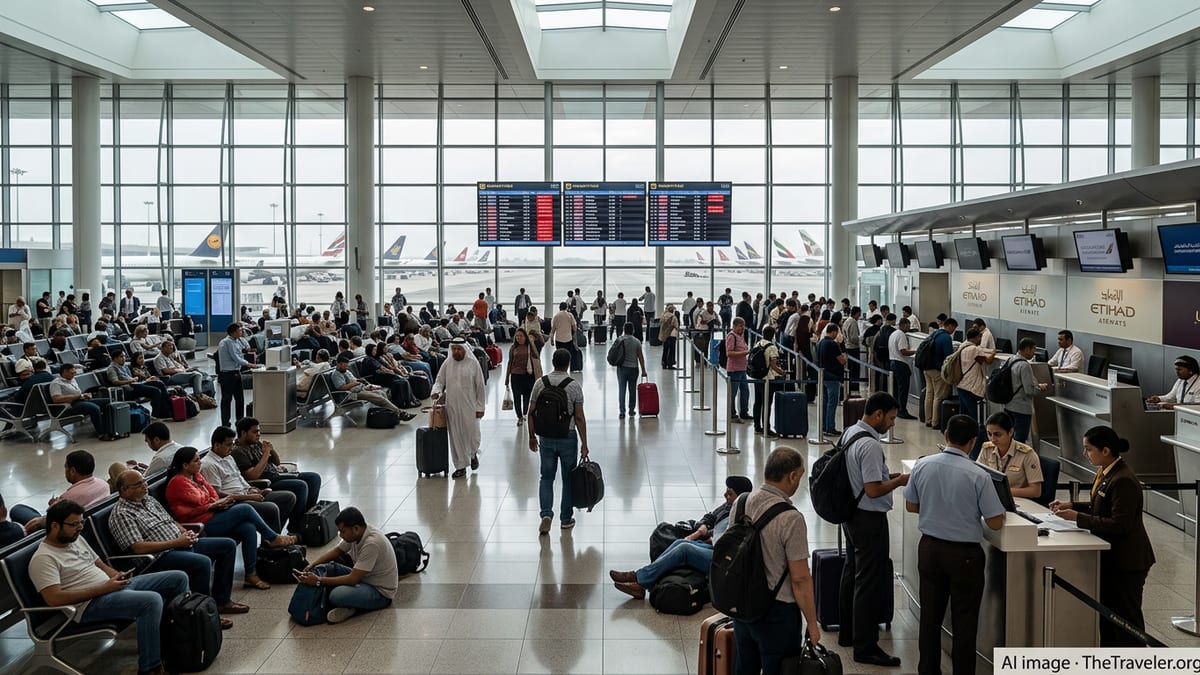
Delays in Dubai and Abu Dhabi highlight ongoing operational strain
Published coverage and flight-tracking data indicate that punctuality remains under pressure at the UAE’s largest airports, even as they remain open and heavily used. On September 13, more than 170 flights were reported delayed across Dubai International Airport and Abu Dhabi’s Zayed International Airport, reflecting a pattern of congestion and knock-on disruption that has been recurring through September.
The same coverage pointed to a mix of contributing factors, including earlier-week disruption tied to UK air-traffic control problems, alongside other technical and weather-related incidents that can compound delays across tightly scheduled long-haul networks. In practical terms for travelers, this means that even flights operating as planned may depart or arrive late, and downstream connections can become more fragile.
Airlines’ own travel-update pages continue to emphasize checking flight status before leaving for the airport and monitoring notifications for schedule changes. That guidance has become especially relevant on routes that connect the UK and Gulf hubs, where delays can quickly cascade into missed connections for passengers transiting onward to Asia, Africa, and Australasia.
British Airways’ restart plans remain phased and capacity-limited
British Airways has been gradually refining its Middle East plans after suspending and later curbing services amid elevated regional risk and airspace disruption in 2026. Multiple trade and consumer-travel publications have described a staggered approach, where some routes return earlier at reduced frequencies while others remain paused deeper into the schedule.
Publicly available industry schedule updates for the Northern winter 2026-27 season show further adjustments. British Airways is listed as tentatively resuming London Heathrow to Amman from October 26, 2026, while London Heathrow to Abu Dhabi is shown as tentatively resuming from January 10, 2027 at the earliest. The same schedule information indicates that Bahrain remains cancelled in the winter season plan, and that Dubai and Doha are planned at reduced frequencies from October 25, 2026 compared with prior schedules.
For Dubai specifically, published schedule updates also indicate that planned Airbus A380 operation on the Heathrow-Dubai pairing has been removed from the winter plan, with Boeing 777 and 787 aircraft appearing instead in updated filings. Capacity decisions like these matter for travelers because aircraft type changes can affect seat counts, premium-cabin availability, and the likelihood of being rebooked onto partner airlines when irregular operations occur.
Why disruptions persist even when airports stay open
While Dubai and other Gulf hubs are operating, published coverage suggests the region’s airspace environment has remained variable, with some corridors restricted or rerouted and airlines continuing to adapt flight paths. Longer routings can add time and complexity, reducing schedule resilience across a full day of operations.
Recent UK air-traffic control disruption has also been an external shock that affected flights well beyond Britain. AP reported that a technical problem in the UK’s air-traffic control system led to more than 1,000 cancellations on September 8, with delays rippling through the network as airlines repositioned aircraft and crews. Even after the immediate issue was resolved, the backlog and aircraft rotation impacts were expected to persist into subsequent days.
Because Dubai functions as a global connector, disruption imported from Europe can arrive alongside region-specific constraints, amplifying delays. Travelers connecting through DXB often experience the effects in the form of late-arriving inbound flights, shortened connection windows, and gate changes that occur as airlines try to keep aircraft moving through packed schedules.
What travelers should watch in the coming weeks
For passengers planning fall and winter travel to Dubai or onward across the Middle East, the key variable is not simply whether a route is operating, but whether it is operating at full frequency and with stable aircraft assignments. Reduced schedules can leave fewer same-day options if a flight is cancelled, increasing the likelihood of overnight delays or rerouting via alternative hubs.
Travelers should also pay close attention to the difference between “tentative” resumptions and firmly reinstated flights in airline systems. Schedule filings and published timetables can change, especially in markets impacted by airspace and security considerations, and a route’s reappearance in a seasonal plan does not always translate into uninterrupted daily service.
For those booked on British Airways into the region, the most practical step is to monitor the booking for aircraft swaps, time changes, or day-of-week frequency adjustments as the carrier continues to rebalance capacity. For travelers transiting Dubai on other airlines, the same principle applies: check flight status close to departure, allow extra buffer time for tight connections where possible, and be prepared for last-minute operational changes that can occur during periods of heavy congestion.