


More news on this day
Some MSC Cruises passengers sailing to Alaska from Seattle are finding a faster way onto their ship, as the cruise line rolls out new remote and priority check-in options that let eligible guests bypass the main embarkation queues.
Get the latest news straight to your inbox!
New Remote Check-In Debuts for Seattle Alaska Sailings
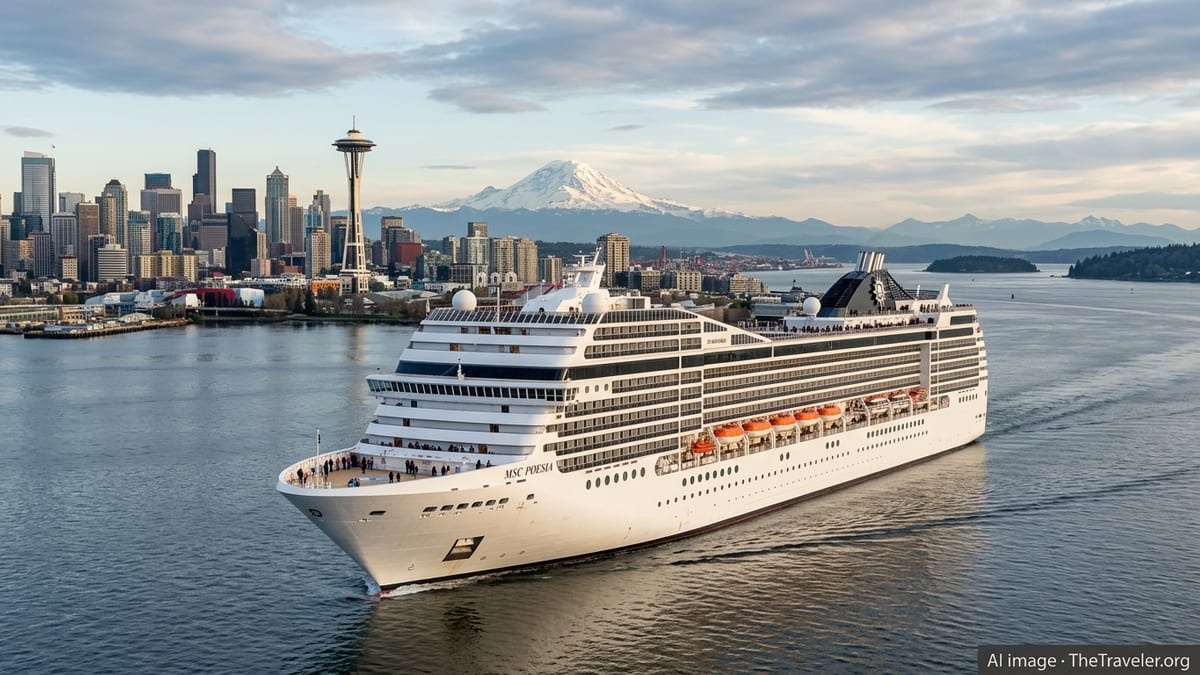
MSC Cruises has introduced a remote check-in service in Seattle for its inaugural Alaska season, giving certain guests the opportunity to complete formalities before they even reach the cruise terminal. According to industry coverage, the program is being piloted for MSC Poesia departures, which operate weeklong itineraries from Seattle to Alaska during the 2026 summer season.
The new system allows guests traveling on MSC’s official airport transfers from Seattle-Tacoma International Airport to handle their cruise check-in at the airport. Publicly available information indicates that staff at the airport facilities can verify travel documents, issue boarding materials and confirm onboard accounts, effectively shifting tasks that are normally handled at Pier 91 to an earlier point in the journey.
Once at the terminal, these passengers are directed to dedicated entry points instead of the standard embarkation queue. Reports indicate that the approach is intended to ease congestion during peak boarding hours and reduce the time it takes for guests to move from curbside to ship.
While the remote system reflects a broader industry trend toward digital and off-site processing, MSC’s Seattle rollout is specific to airport transfer guests and is designed around the logistics of the city’s cruise and air hubs.
Who Qualifies to Skip the Standard Check-In Line
The ability to bypass the main check-in queue in Seattle currently applies only to a subset of MSC Cruises passengers. Published coverage of the program notes that eligibility is tied to guests using MSC’s organized transfers from Seattle-Tacoma International Airport to the cruise terminal. Those who arrive independently by taxi, rideshare or private vehicle do not have access to the airport-based service.
In addition, MSC’s existing embarkation guidelines show that certain premium products, such as the MSC Yacht Club, already provide more flexible or expedited embarkation in various ports. Information on the company’s North American website indicates that Yacht Club guests are typically able to check in at their convenience within operational limits, with access to priority embarkation areas and lounge-style waiting spaces.
Together, these layers of service mean that a relatively small portion of travelers departing from Seattle can effectively skip the general check-in lines, either because they have been processed at the airport or because they hold a premium cabin category that carries embarkation privileges.
Standard guests, by contrast, are still assigned embarkation windows and asked to complete online check-in in advance, which helps the line stagger arrivals but does not automatically grant priority access once at the pier.
How the Remote Process Changes the Embarkation Experience
By moving parts of the check-in process away from the cruise terminal, MSC aims to streamline the flow of people through Pier 91 on busy turnaround days. Reports from trade publications describe the airport remote check-in as a way to convert transfer time into productive processing time, rather than having all verification and documentation handled at a single bottleneck.
For guests using the service, the experience can feel more linear. After landing in Seattle, they meet MSC representatives at the airport, complete the bulk of their check-in there and then travel directly to the port with paperwork already in hand. At the terminal, their journey typically involves security screening and a brief verification step, with less time spent standing in long queues.
The approach is also designed to improve operations behind the scenes. With fewer passengers to process at the same time, terminal staff can manage security, luggage handling and document checks more evenly across the day. This is particularly relevant in Seattle, where multiple large ships often share weekend departure slots and where port authorities have been working to balance higher passenger volumes with available space.
Early indications from industry reporting suggest that the program is being closely watched as a potential model for other MSC homeports, especially those that serve fly-in markets with significant airport-to-port transfer traffic.
Seattle’s Role in MSC’s North American Growth
The decision to introduce remote check-in in Seattle is closely tied to MSC Cruises’ broader North American expansion strategy. The arrival of MSC Poesia in May 2026 marked the line’s first Alaska season and established Seattle as its newest United States homeport, with weekly sailings running through September.
Publicly available statements from the company ahead of the season highlighted investments in both onboard offerings and shoreside infrastructure. The Alaska program was positioned as a showcase for MSC’s growing presence in the region, pairing new itineraries with operational changes intended to make embarkation smoother for guests unfamiliar with the brand.
Seattle’s status as a major air gateway has also influenced the design of the check-in initiative. With many Alaska cruisers flying in on the morning of departure, the ability to process passengers at the airport aligns with patterns already seen in other mass-market cruise hubs, where coordinated air and sea operations are increasingly common.
Observers note that as MSC seeks to attract a larger share of the North American cruise market, initiatives like the Seattle remote check-in can help differentiate the line on convenience and technology, particularly for travelers comparing options among multiple Alaska operators.
What Travelers Should Know Before Sailing
For prospective MSC guests planning an Alaska cruise from Seattle, understanding who can skip the check-in line and how is becoming part of pre-trip preparation. The remote program is not something that can be added spontaneously at the port; it is linked to booking official airport transfers and following the guidance provided in pre-cruise documents.
Passengers are still encouraged to complete MSC’s online check-in process before traveling, which includes providing personal details, selecting embarkation time slots and confirming required travel documents. Company guidance indicates that online check-in generally remains available up to a short period before sailing, though timelines can vary by market and itinerary.
Travelers who do not qualify for remote or premium check-in options should still plan for standard terminal procedures in Seattle, including security screening, document review and possible waiting periods during peak arrival times. Port reports and traveler accounts from early sailings suggest that arriving within the assigned check-in window remains the best way to balance avoiding crowds with not waiting too long before boarding.
As MSC’s Alaska season progresses, the performance of the Seattle remote check-in system and overall embarkation experience is likely to shape how the line refines its approach in future years, both in the Pacific Northwest and at other growing homeports.