


More news on this day
A thunderstorm-triggered ground stop at Hartsfield-Jackson Atlanta International Airport has been lifted, but travelers are still facing long delays as airlines and air traffic managers work through a sizable backlog of flights at the world’s busiest passenger hub.
Get the latest news straight to your inbox!
Storms ease, but schedule disruptions continue
According to recent coverage from local television outlets, the Federal Aviation Administration initially halted most flights bound for Hartsfield-Jackson Atlanta International Airport on July 3 as storms swept across metro Atlanta, bringing heavy rain, lightning and strong winds. The restriction, known as a ground stop, temporarily prevented departures from other airports that were headed to Atlanta and slowed movements at the field itself.
Publicly available information indicates the ground stop was formally lifted before its planned expiration time and converted into a ground delay program lasting into the late evening. That shift allowed flights to resume, but on a limited, metered basis designed to keep arrival and departure volumes in line with what the airport and air traffic control could safely handle in unsettled weather.
Even after the storms moved through, airlines remained out of position, with aircraft and crews scattered around the country. As a result, the ripple effects on the schedule continued well beyond the weather event itself, leaving passengers to contend with late departures, missed connections and extended waits at gates and on taxiways.
Hundreds of flights affected across arrivals and departures
Flight-tracking data cited in regional news reports show that in the 24 hours surrounding the disruption, more than 600 flights at Hartsfield-Jackson were delayed, affecting both arrivals and departures. Average departure delays were reported at well over an hour during the peak of the disruption, while arriving flights routinely logged late gate times as air traffic controllers spaced aircraft farther apart in the stormy conditions.
These figures are significant even for Atlanta, which routinely handles more scheduled flights than any other airport in the world. On a typical busy day, minor schedule variations can usually be absorbed by built-in buffers. In this case, the combination of lightning, low visibility and shifting storm cells severely reduced the airport’s throughput for several hours, creating a surge of aircraft once restrictions began to ease.
Published operational summaries from the FAA show that when a ground stop is followed by a ground delay program, each arriving flight is assigned a new controlled arrival time. That framework is designed to maintain safety and reduce airborne holding, but it also concentrates delays on the ground at origin airports and downstream hubs like Atlanta, where passengers may experience longer waits before boarding or while seated on the aircraft.
Knock-on effects for connections at the world’s busiest hub
Hartsfield-Jackson functions as a primary connecting hub for domestic and international traffic across the southeastern United States, making it especially vulnerable to cascading disruption when storms move through. With many passengers booked on itineraries that require tight connections, even modest delays can quickly translate into missed onward flights and rebookings throughout the day and into the following morning.
Travel-industry analysis frequently notes that, in hub-and-spoke systems, operational challenges at a single mega-hub tend to propagate across the network. When thunderstorms affect Atlanta, flights to and from secondary markets can be pushed back or canceled outright as airlines prioritize long-haul services and attempt to rebuild their schedules. That pattern appeared to play out again in this latest episode, with regional flights among those reporting some of the longest disruptions.
Because summertime thunderstorm activity is common across the Southeast, carriers serving Atlanta routinely schedule additional buffer time and keep reserve aircraft and crews on hand. However, sharp, fast-moving storm systems combined with pre-existing congestion or staffing constraints can still overwhelm contingency plans, leading to the kind of extended queues seen in Atlanta during this latest weather event.
What passengers are experiencing at the terminals
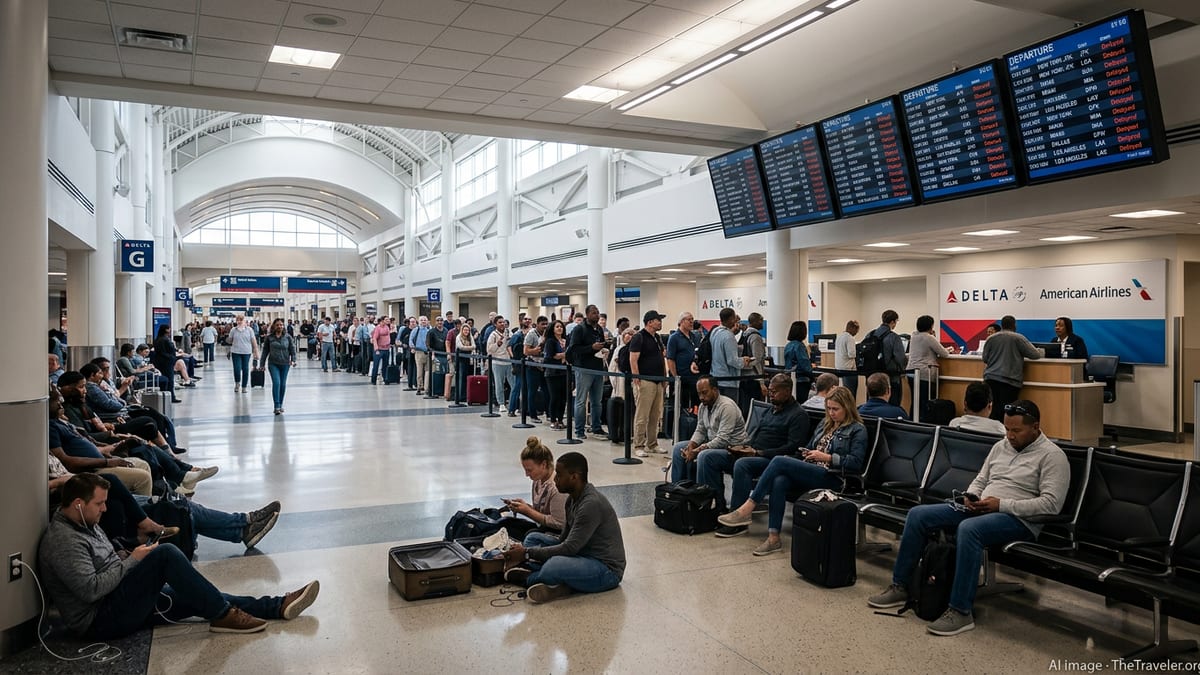
Reports from local outlets and social media posts from travelers describe crowded concourses, long lines at customer service desks and busy airport lounges as passengers seek rebooking options and wait out delays. Some travelers have also reported aircraft holding on taxiways after landing while gates are reassigned, reflecting the difficulty of turning aircraft quickly when the schedule compresses after a ground stop.
Atlanta’s role as a major connecting point means many affected passengers are neither starting nor ending their journeys in the city. For those with tight international connections or late-night departures, even a delay of an hour or two can force overnight stays or lengthy re-routes. Families traveling for the Independence Day holiday period are among those whose plans have been disrupted, with some needing to adjust rental car reservations and hotel bookings at short notice.
Publicly available guidance from the airport and airlines advises travelers to monitor their flight status frequently, arrive early, and expect that rebooking options may be limited at peak times following a large-scale disruption. Many carriers allow same-day changes through their mobile apps when there is significant weather-related disruption at a major hub, a practice that can help some passengers secure more favorable options without waiting in physical lines.
Broader pattern of weather-related strain at Atlanta
The latest round of delays fits into a broader pattern of weather-related challenges at Hartsfield-Jackson in 2026. Earlier this year, persistent storms and periodic air traffic management programs contributed to long lines at security checkpoints and extensive delays, drawing attention to how quickly operations at the airport can become strained when severe weather coincides with peak demand.
Federal performance reports and academic research on major U.S. hubs highlight Atlanta as a key case study in how weather, airport capacity and air traffic control measures interact to shape delays. Because Hartsfield-Jackson operates with high runway utilization even in good conditions, any reduction in arrival or departure rates for safety reasons can produce disproportionate delays, especially when there are already tight turnaround times built into airline schedules.
For travelers planning to pass through Atlanta in the coming weeks, particularly during the busy summer travel period, industry observers suggest building extra time into itineraries, favoring longer connection windows and monitoring local forecasts in the days leading up to departure. While the recent ground stop has ended, the lingering backlog illustrates how quickly conditions can change at one of the world’s most important aviation crossroads.