


More news on this day
United Airlines’ busiest hub endured an unusually turbulent day after two separate Federal Aviation Administration ground stops briefly halted departures, triggering rolling delays and missed connections across the carrier’s network.
Get the latest news straight to your inbox!
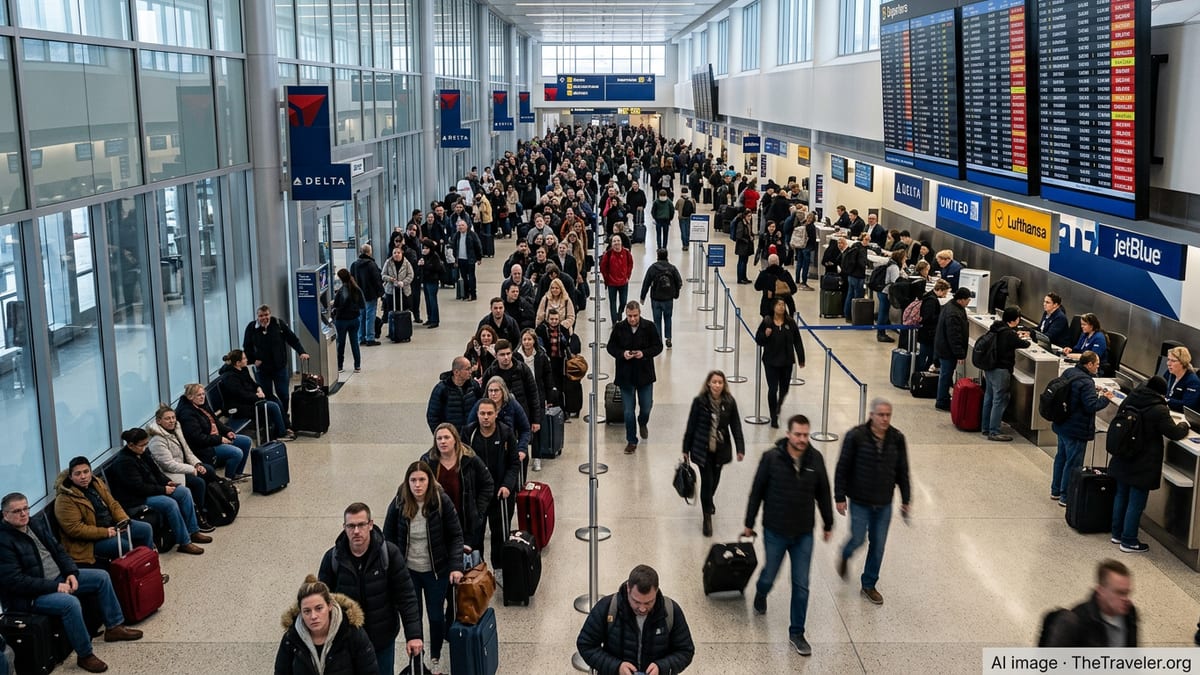
Back-to-Back Restrictions Snarl Operations
Publicly available FAA traffic management logs and airline status tools indicate that United’s primary hub was placed under two distinct ground stop orders within the same operating day, each tied to separate operational issues. The first pause, imposed in the morning peak, temporarily halted most United departures as controllers sought to manage congestion and arrival flow into the already busy airport. A second, shorter restriction later in the day again froze outbound traffic, catching many travelers who believed the worst of the disruption was over.
Ground stops are among the most restrictive tools available to air traffic managers because they prevent aircraft that meet specific criteria from taking off until conditions improve at the destination. Even brief halts can quickly cascade into hours of disruption as departure queues lengthen, aircraft and crews fall out of position, and connecting banks of flights lose their carefully timed spacing.
At a hub heavily dominated by United operations, the double stoppage effectively rippled through much of the airline’s domestic and international schedule. Flight-tracking data showed triple-digit delays and a spike in short-notice cancellations, with some departures pushed back repeatedly as the carrier worked through a backlog of aircraft waiting for release times.
Travelers connecting through the hub reported on social media that they were offered rebookings through alternate United hubs and, in some cases, overnight hotel stays when onward connections became impossible. Others described sitting on taxiways after boarding while crews waited for updated departure slots once the ground stops were lifted.
Weather, Technology And Congestion All Under Scrutiny
While official post-mortems on the twin ground stops were still emerging, industry reporting pointed to a mix of familiar pressures that have weighed on the national airspace system in recent months. Convective storms in crucial air corridors, along with low ceilings around the hub, reduced the number of arrivals controllers could safely accept per hour. When that diminished capacity intersected with peak bank schedules and construction-related runway or taxiway constraints, the system rapidly hit its limits.
Separate coverage also highlighted the role that technology and internal airline systems can play in amplifying disruptions. United experienced nationwide technology-related ground stops in the past year after requesting the FAA temporarily hold its departures while it resolved system issues that affected dispatch and flight-planning functions. Though the latest disruptions appeared primarily driven by airspace flow and weather, the recent history of tech outages has heightened attention on how quickly internal glitches can force carrier-specific ground stops.
FAA data for the current fiscal year shows that hubs such as Denver and Newark, both major United strongholds, rank among the airports most frequently affected by ground stops. Analysts point out that as schedules have grown more ambitious, with tight turnaround times and dense peak periods, both regulators and airlines have less margin to absorb unexpected constraints before resorting to aggressive traffic management measures.
Operational experts note that two ground stops in a single day at the same hub are still relatively rare, but not unprecedented, particularly during periods of intense summer or shoulder-season weather. The episode underscores how interdependent weather forecasting, airport construction phasing, staffing levels and airline scheduling have become in determining whether a hub functions smoothly or seizes up.
Network-Wide Consequences For United Travelers
For United customers, the impact of the twin ground stops stretched far beyond the hub itself. Banks of outbound flights from smaller cities that feed the hub were held at their origin airports, while long-haul departures later in the day left behind some connecting passengers whose inbound flights had missed their scheduled arrival windows.
Travel tools and mobile apps showed that same-day standby options through other United hubs began to appear as the airline attempted to rethread disrupted itineraries. Some travelers were rerouted via alternative gateways to reach their final destinations, while those with more flexible plans accepted later departures in exchange for confirmed seats and, in limited cases, travel credits or meal vouchers.
Airline operations specialists say these kinds of cascading disruptions are especially painful at fortress hubs, where a single carrier operates the majority of flights. When that carrier is hit by a ground stop, the lack of competing airlines with spare capacity on similar routes can make it harder for travelers to find same-day alternatives.
United has previously emphasized in public statements that it prioritizes maintaining its long-haul international schedule and hub-to-hub flying during periods of disruption, using schedule changes and aircraft swaps to protect those routes where possible. That strategy can translate into deeper cuts and longer delays on shorter domestic segments that feed into or out of the affected hub, particularly late in the operational day.
What The Episode Says About U.S. Airspace Strain
The double ground stop at United’s major hub arrives during a broader period of heightened stress across the U.S. air traffic system. Recent FAA reports and policy discussions describe a landscape shaped by persistent controller staffing gaps, a surge in post-pandemic travel demand, and ongoing technology modernization projects that sometimes require temporary capacity reductions at key facilities.
In this environment, ground stops have become a more visible, if still relatively infrequent, tool for keeping traffic at manageable levels when bottlenecks emerge. Aviation advocates argue that while these measures protect safety, they also highlight how little slack remains in the system at certain high-volume airports, particularly during peak travel seasons.
Travel industry analysts observing the latest United hub disruptions say the episode will likely feed into continuing debates over how aggressively airlines should schedule flights at capacity-constrained airports, as well as how the FAA allocates resources and designs new procedures to boost throughput without compromising safety. With both carriers and regulators under pressure to avoid high-profile meltdowns, there is increasing focus on more conservative scheduling, expanded use of time-based metering, and faster dissemination of real-time information to passengers.
For now, the two ground stops in one day stand as a stark example of how quickly a modern hub operation can tip from business as usual into widespread disruption. For travelers planning connections through major United airports in the coming months, the incident is a reminder to build in extra buffer time, keep a close eye on day-of-travel updates, and remain prepared for last-minute changes when the airspace system tightens unexpectedly.