


More news on this day
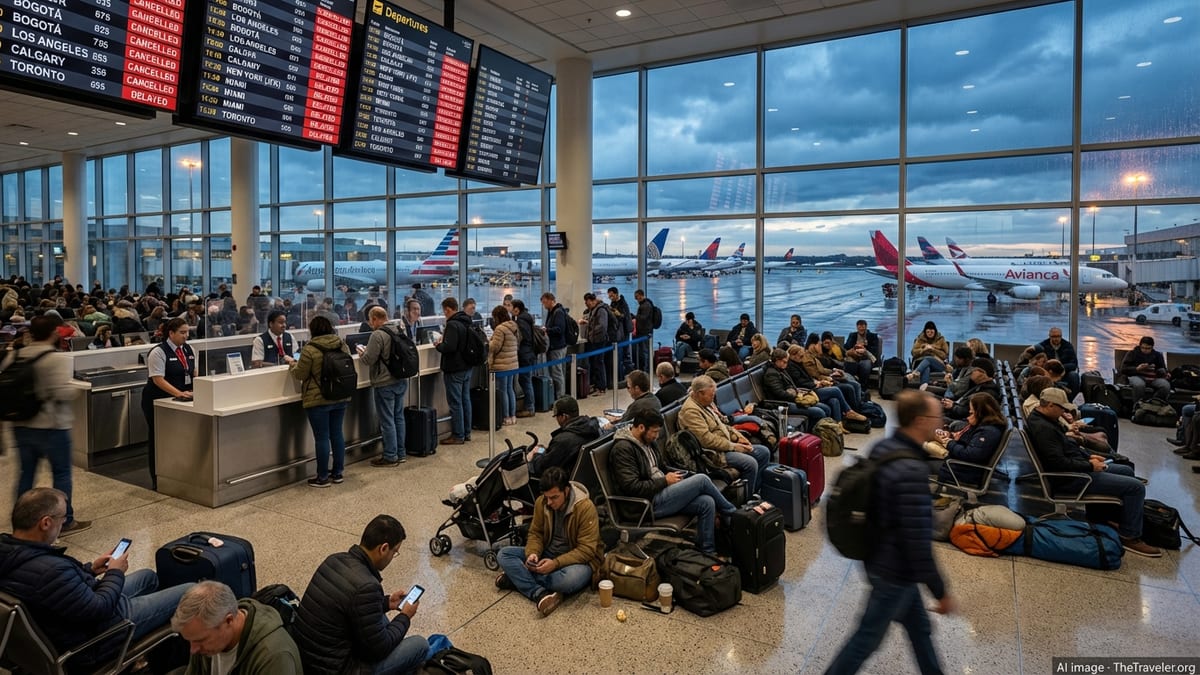
Travelers across the Americas faced fresh uncertainty this week as three flights operated by LATAM Airlines Ecuador and Air Canada and linked to Lima’s Jorge Chávez International Airport were canceled, disrupting itineraries connecting Peru with Argentina, Brazil, Canada, the United States, and onward global destinations.
Get the latest news straight to your inbox!
A Strategic Hub Feels the Strain
Jorge Chávez International Airport in Lima has expanded its role as a regional hub over the past year, supported by a new terminal and growing connections across South America, North America, and Europe. Publicly available traffic data and airport communications describe Lima as a key node for itineraries that combine regional hops in South America with long-haul links to Canada and the United States.
The cancellation of three flights tied to LATAM Airlines Ecuador and Air Canada may appear limited in number, but the impact is magnified by the airport’s hub function. Many affected passengers were not simply flying point to point but were using Lima as a transfer point between Peru, Argentina, Brazil, Ecuador, Canada, the United States, and beyond.
Operational statistics and recent schedule adjustments at Jorge Chávez indicate that carriers are operating in a context of tight margins, from fuel costs to airport charges. Small schedule shocks can therefore cascade quickly, with a single cancellation at a hub potentially severing multiple onward connections in both directions.
Analysts following Latin American aviation note that Lima’s position in airline networks has been in flux as carriers recalibrate capacity, frequencies, and route economics. This latest disruption underscores how even modest changes can resonate across a web of connecting markets.
LATAM Airlines Ecuador: Regional Links Under Pressure
LATAM Airlines Ecuador operates within the wider LATAM group network, plugging Ecuadorian cities into Lima and onward destinations across South America and North America. Historical route data and fleet information show that services touching Jorge Chávez often form part of multi-leg journeys linking Quito and Guayaquil with major cities in Peru, Brazil, Argentina, and the United States.
The LATAM Ecuador cancellation associated with Lima interrupted one of these crucial regional threads. Passengers booked on itineraries via Jorge Chávez found that a single canceled leg could unravel trips that included long-planned visits to Buenos Aires, São Paulo, or U.S. gateways such as Miami and Atlanta. In many cases, rebooking options required significant rerouting through alternative hubs in Santiago, Bogotá, or Panama City.
Recent LATAM group communications about flight flexibility and schedule changes in Peru emphasize the importance the airline places on managing disruptions around Lima. While those notices do not reference this specific LATAM Ecuador flight, they highlight a broader pattern in which the group has been forced to adjust operations in response to infrastructure issues, regulatory changes, and cost pressures at the Peruvian hub.
For Ecuadorian travelers, the impact is amplified by the relative scarcity of nonstop alternatives to certain South American and North American destinations. A disrupted Lima connection can mean longer travel times, additional stops, and in some cases the need to shift travel dates altogether.
Air Canada Cancellation Hits Long-Haul Connectivity
Air Canada has positioned Lima as one of its South American gateways, with seasonal and regular service from Canadian hubs feeding both leisure and business traffic. Airline schedule documents and network maps list Jorge Chávez among the carrier’s Latin American destinations, linking Peru with Toronto and other Canadian cities on itineraries that often continue to the United States, Europe, and Asia.
The Air Canada cancellation connected to Lima removed a key long-haul option on the day in question, stranding some travelers in transit and forcing others to adjust plans at short notice. Reports from passenger forums and publicly available booking data point to same-day and next-day rebookings via alternative North American points such as Montreal and Houston, or via European hubs depending on the final destination.
In recent months, Air Canada has already been reshaping parts of its network, trimming or suspending selected routes in response to jet fuel costs and broader economic pressures. While the Lima-linked cancellation appears to be an isolated operational event rather than part of a wholesale withdrawal, it arrives at a time when many travelers are acutely aware of the fragility of long-haul schedules.
For Canadian visitors heading to Peru and neighboring countries, the disruption meant not only lost vacation time but also missed connections onto regional partners serving Argentina and Brazil. Corporate travelers, too, faced challenges rearranging meetings and itineraries that had been built around a relatively small set of nonstop options between Canada and Peru.
Passengers Face Missed Connections and Limited Alternatives
The immediate consequence of the three cancellations was a wave of missed connections at Jorge Chávez. Travelers arriving from, or attempting to reach, destinations in Peru’s interior, as well as key South American markets such as Buenos Aires and São Paulo, found themselves out of sequence with their onward flights.
Accounts shared on travel forums and social platforms describe passengers queuing at transfer desks and customer service counters in Lima to secure new itineraries. For some, the solution involved rerouting through other hubs, adding one or even two extra stops between origin and destination. Others opted to delay their trips entirely, rescheduling for later dates in the hope of avoiding further disruption.
Accommodation and expense policies varied depending on ticket type, intermediary travel agencies, and consumer protection rules in the country where tickets were purchased. While some travelers reported being offered hotels and meal vouchers, others indicated that they were left to arrange and fund their own overnight stays while waiting for replacement flights.
The episode also highlighted the vulnerability of passengers on complex, multi-ticket itineraries assembled across different carriers and booking platforms. Where tickets were not on a single reservation, rebooking proved more complicated, with travelers sometimes required to negotiate separately with both LATAM and Air Canada or to purchase new segments outright.
What the Disruption Signals for Future Travel via Lima
Although only three flights were canceled, the ripples through the network have drawn renewed attention to Lima’s evolving role as a connecting hub. Airlines serving Jorge Chávez are currently adjusting to a new terminal environment, revised airport charges, and shifting demand patterns across South America and North America. In this context, passengers may see further fine-tuning of schedules and capacity in the months ahead.
Industry commentary suggests that airlines will continue to prioritize high-demand trunk routes between major cities in Peru, Brazil, Argentina, Canada, and the United States, while being more cautious about thinner or highly seasonal services. For travelers, that could translate into fewer daily frequencies on some routes and heavier reliance on cooperation between carriers through codeshares and alliances.
Public information from Lima Airport and regional aviation observers indicates that infrastructure upgrades and policy debates, including over airport fees, remain in flux. Any further changes could influence which airlines expand or reduce their footprint at Jorge Chávez and how resilient the hub proves during periods of operational stress.
For now, the cancellations involving LATAM Airlines Ecuador and Air Canada serve as a reminder that even well-established connections can be vulnerable. Travelers planning multi-leg journeys through Lima may benefit from monitoring schedules closely in the days before departure, building in longer connection times, and considering flexible ticket options where available.