


More news on this day
Passengers travelling through Ljubljana Jože Pučnik Airport on Saturday faced significant disruption as a cluster of cancellations and delays involving British Airways, Transavia and easyJet affected links with London, Paris, Amsterdam, Warsaw and Brussels.
Get the latest news straight to your inbox!
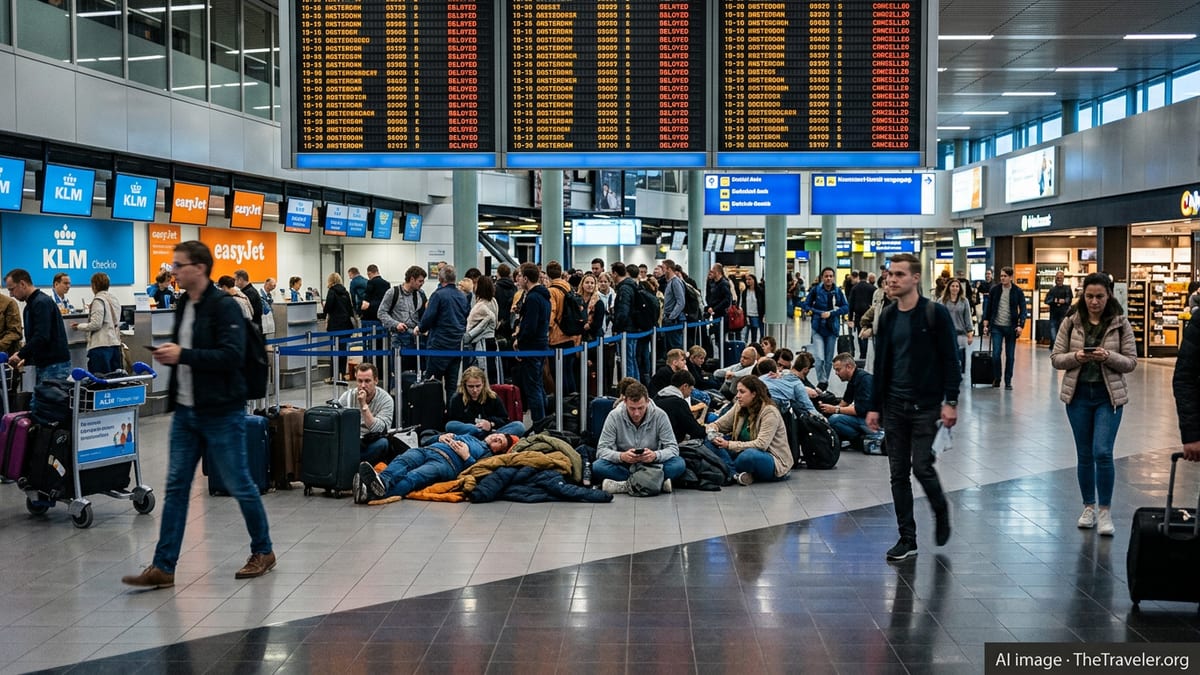
Cluster of Cancellations and Delays Hits Weekend Traffic
Publicly available flight-tracking data and airport schedules for 27 June 2026 indicate that at least five services operated by British Airways, Transavia and easyJet to and from Ljubljana were cancelled, while around a dozen more experienced notable delays. The disruption concentrated around key European hubs, including London Heathrow and Gatwick, Paris Orly, Amsterdam Schiphol, Warsaw and Brussels, affecting both outbound and inbound traffic.
Data from multiple flight-status platforms show irregular operations on British Airways services linking Ljubljana with London Heathrow, Transavia rotations between Ljubljana and Paris Orly and Amsterdam, and easyJet services connecting to London and other Western European airports. While some flights remained listed as planned or merely delayed, others were removed from timetables or marked as cancelled, reducing options for travellers already en route or preparing to depart.
The pattern of cancellations and rolling delays effectively fragmented Ljubljana’s limited network of direct European connections for several hours. With the airport serving as Slovenia’s primary international gateway, even a small number of disrupted flights had an outsized impact on passengers relying on onward connections across the continent.
Published schedules for the summer season show that British Airways, Transavia and easyJet collectively provide a significant share of Ljubljana’s direct links to major European capitals. Any operational issues affecting more than a handful of rotations in a single day therefore translate quickly into queues at check-in, longer waits at departure gates and pressure on customer-service channels as travellers seek rebooking options.
London and Paris Routes Among the Worst Affected
According to real-time tracking services, the London area appeared particularly exposed, with disruptions reported on British Airways flights between Ljubljana and London Heathrow and on easyJet’s London Gatwick link. A number of rotations were either cancelled outright or pushed back from their scheduled times, forcing passengers to adjust plans or attempt to secure seats on alternative services via other hubs.
On the Paris route, Transavia’s Ljubljana–Orly operations also showed signs of strain. While some departures remained listed as scheduled, others were significantly delayed or removed from day-of-operation overviews. For travellers using Paris as a connecting point to long-haul destinations or regional French airports, these irregularities created knock-on challenges in preserving same-day onward journeys.
The impact extended beyond point-to-point travellers. Ljubljana’s connectivity to London and Paris is often used by passengers transferring onward to North America, the Middle East and other parts of Europe. When relatively infrequent services are cancelled or heavily delayed, opportunities to re-route within the same day can become limited, especially at the start of the peak summer season.
Public information from recent weeks also points to broader strains across European networks, including at London Heathrow and major French and Dutch hubs, where a mix of high summer demand, tight aircraft and crew availability and local operational challenges has reduced flexibility to absorb additional disruption on smaller routes.
Knock-on Effects for Passengers Bound for Amsterdam, Warsaw and Brussels
Beyond London and Paris, disruptions at Ljubljana had further consequences for travellers heading to or from Amsterdam, Warsaw and Brussels. Airline schedule data and recent operational patterns show that these cities are typically linked to Ljubljana by low-cost and regional carriers, including Transavia on the Amsterdam route and seasonal or connecting options via larger hubs for Warsaw and Brussels.
With at least five flights cancelled and around a dozen delayed, passengers with itineraries involving Amsterdam Schiphol, Warsaw Chopin and Brussels found themselves facing missed connections and extended layovers. In some cases, rebooked journeys required additional changes at intermediary airports such as Munich, Frankfurt or Vienna, lengthening travel times by many hours.
The situation was particularly challenging for travellers relying on same-day connections at large hub airports, where minimum connection times can be tight even when flights run punctually. Once departure times from Ljubljana slipped or services disappeared entirely from departure boards, previously viable itineraries often became unworkable, especially on busy weekend departures where remaining seats were limited.
Reports shared on social media and consumer forums reflected a familiar pattern for European air travel during periods of disruption: long lines at transfer and ticketing desks, confusion over entitlement to accommodation and meal vouchers, and uncertainty about when replacement flights would become available. For those travelling for short city breaks or time-sensitive business trips, the loss of even one flight segment risked undermining the purpose of the journey.
Airlines Cite Operational Pressures Across European Networks
Although a single, clear-cut cause for Saturday’s disruption at Ljubljana has not emerged from publicly accessible information, the irregularities align with wider operational pressures facing European carriers this summer. Recent coverage has highlighted constraints on aircraft availability, crew rostering challenges, and congestion at key airports, all of which can quickly cascade into cancellations and delays on thinner routes.
Industry commentary in recent months has pointed to the tight margins under which many carriers now operate, with little spare capacity to recover once a mechanical issue, weather disruption or airspace restriction affects an aircraft rotation. When such issues occur at or near a major hub, airlines often prioritise protecting their densest routes, leaving smaller destinations like Ljubljana more vulnerable to short-notice schedule changes.
In addition, air-traffic control constraints and intermittent weather events across parts of Europe continue to reduce operational resilience. Even when Ljubljana itself experiences relatively stable local conditions, knock-on effects from storms, staffing issues or congestion at other airports on the network can still trigger changes to the day’s flying programme.
Publicly available guidance from the airlines involved advises affected passengers to rely on digital tools such as mobile apps and booking-management portals to track rebookings, request refunds or explore alternative departure dates. However, high volumes of concurrent disruptions can slow response times and make it harder for travellers to secure preferred alternatives, especially on leisure-heavy weekends.
What Travellers Through Ljubljana Should Expect Next
With the summer travel season building and Ljubljana Jože Pučnik Airport depending on a relatively small number of carriers to maintain its European links, further days of patchy operations cannot be ruled out. Historical traffic data for the airport shows that London, Paris and Amsterdam are among its most important routes, meaning that any repeated issues involving British Airways, Transavia or easyJet would have a noticeable effect on overall connectivity.
Travel advisories and consumer-rights resources encourage passengers scheduled to fly to or from Ljubljana to monitor their flight status closely in the 24 to 48 hours before departure and to consider leaving additional buffer time when planning tight onward connections through London Heathrow or Gatwick, Paris Orly, Amsterdam Schiphol, Warsaw or Brussels.
Passengers are also urged by publicly accessible consumer guidance to familiarise themselves with the relevant European air-passenger protection rules, which set out when airlines must offer re-routing, refunds or care such as meals and accommodation in the event of cancellation or long delay. Understanding these frameworks in advance can help travellers make faster decisions if their flight is affected.
For now, the day’s cluster of cancellations and delays at Ljubljana underscores how quickly disruptions at a single regional airport can ripple along key European corridors. As airlines and airports navigate another busy summer, travellers using Slovenia’s main gateway may face a period of less predictable operations on some of its most important routes.