


For many travelers, a wildlife trip is a once-in-a-lifetime investment. You might be dreaming of polar bears in Churchill, lions in the Serengeti or blue-footed boobies in the Galapagos, but one question quickly looms large: should you join a specialist operator like Natural Habitat Adventures or plan the entire trip yourself? In 2026, with online booking tools more powerful than ever and wildlife destinations under greater environmental pressure, the right answer is not the same for everyone. It depends on your budget, comfort level, time, and how much responsibility you want to carry once you are on the ground.
Get the latest updates straight to your inbox!
Who Is Natural Habitat Adventures, Really?
Natural Habitat Adventures, often shortened to Nat Hab, is a United States based operator that has specialized in nature and wildlife travel since the mid-1980s. The company runs small-group expeditions to classic wildlife destinations such as the Galapagos Islands, East and Southern Africa, Alaska, Churchill in Canada, and the Arctic and Antarctic regions. Its trips typically focus on close-up encounters with wildlife in their natural habitats, combined with a strong emphasis on conservation and low-impact travel.
Nat Hab is widely known for its long-standing partnership with the World Wildlife Fund, positioning itself as a conservation-focused operator rather than a generalist tour company. Its fact sheets and marketing materials highlight small groups that often average fewer than a dozen travelers, a high guide-to-guest ratio, and itineraries that prioritize early starts and extended time in the field rather than quick sightseeing stops. For example, its flagship polar bear tours in Churchill use custom-built tundra vehicles and lodges that allow guests to spend more time in key wildlife-viewing zones.
The company’s portfolio covers a wide spectrum of trip styles. There are lodge-based African safaris in private reserves, Galapagos adventures aboard small expedition yachts, Alaska bear viewing trips that use floatplanes and remote camps, and Northern Lights journeys in Scandinavia and Canada. Many itineraries are operated in collaboration with small-ship partners such as expedition cruise lines and with local outfitters that provide on-the-ground logistics. Nat Hab’s acquisition by a major expedition cruise company in recent years has further expanded its reach and reinforced its niche as a premium, expert-led wildlife specialist.
For travelers considering whether to book with Nat Hab or go it alone, it is important to understand the brand’s positioning: these are not discount trips, but curated, small-group experiences pitched at travelers willing to pay for expertise, comfort, and conservation credentials.
Cost Reality: Nat Hab Group Tour vs DIY Wildlife Trip
Price is often the first factor travelers compare when deciding between Nat Hab and a self-planned wildlife trip. At a glance, group expeditions with Nat Hab can look significantly more expensive than stitching together your own itinerary, but the comparison is rarely one-to-one because the inclusions and style of travel differ markedly.
Take the Galapagos as a concrete example. A typical eight-day Nat Hab small-group voyage on a private yacht, including guided excursions, most meals and park fees, often starts in the mid four-figure range per person before international flights. By contrast, a traveler booking independently might secure an expedition ship cabin with a mainstream operator for slightly less, or book a series of day trips from islands like Santa Cruz and San Cristobal. However, once you add domestic flights from mainland Ecuador, national park fees, transit cards, daily excursions, guiding, and lodging before and after the cruise, the gap narrows considerably. The DIY route may still save some money, but usually at the cost of more moving parts and less personalized guiding.
On safari in Africa, the comparison becomes even more nuanced. A week-long Nat Hab style safari in a private reserve in Botswana or a combination itinerary in Tanzania might run to several thousand dollars per person, including internal flights, park fees, guiding, and full-board stays in intimate bush camps. A determined independent traveler could design a cheaper trip by focusing on self-drive options in national parks such as Kruger in South Africa or Etosha in Namibia, staying in government rest camps or budget lodges outside the gates. For example, recent breakdowns of self-drive safaris in Kruger show that a couple can keep daily on-the-ground costs moderate by renting a small sedan, self-catering, and using national park rest camp chalets instead of private lodges. Yet once you factor in vehicle rental, fuel, multi-day conservation fees, food, and basic gear, savings compared with a midrange guided safari are often less dramatic than expected.
The key is to compare apples with apples. Nat Hab’s prices typically reflect small group sizes, experienced naturalist guides, private or semi-private transport, and handpicked accommodations that skew toward the upper-midrange or luxury end. A self-planned trip can definitely be cheaper, especially if you are willing to compromise on comfort, travel in the shoulder season, or share costs in a group of four or more. But if you try to match the same lodge category, internal flights, and level of guiding that Nat Hab offers, the independent cost often approaches, and sometimes even exceeds, what you would pay in a group format, particularly in remote regions where logistics are complex.
What You Get With Nat Hab That Is Hard to DIY
One of Nat Hab’s strongest selling points is the depth of its guiding and logistics in destinations where going independently can be challenging. In Churchill, for instance, polar bear viewing happens in a small window each autumn when bears congregate near Hudson Bay. Accommodation in this tiny frontier town is limited, tundra vehicles are specialized and heavily regulated, and weather routinely disrupts flights. Booking with an operator like Nat Hab secures seats on custom-built vehicles, access to specialized lodges, backup plans for weather delays, and guides who have run the same trip dozens of times.
In the Galapagos, a Nat Hab expedition typically includes an expedition leader plus locally licensed naturalist guides who accompany every landing and snorkeling excursion. Guests do not need to worry about securing daily permits, choosing which islands to visit for the best seasonal wildlife, or puzzling over the differences between yacht classes. Instead, the itinerary is designed backwards from wildlife behavior, currents and park regulations to maximize encounters with species such as marine iguanas, Galapagos penguins and sea lions.
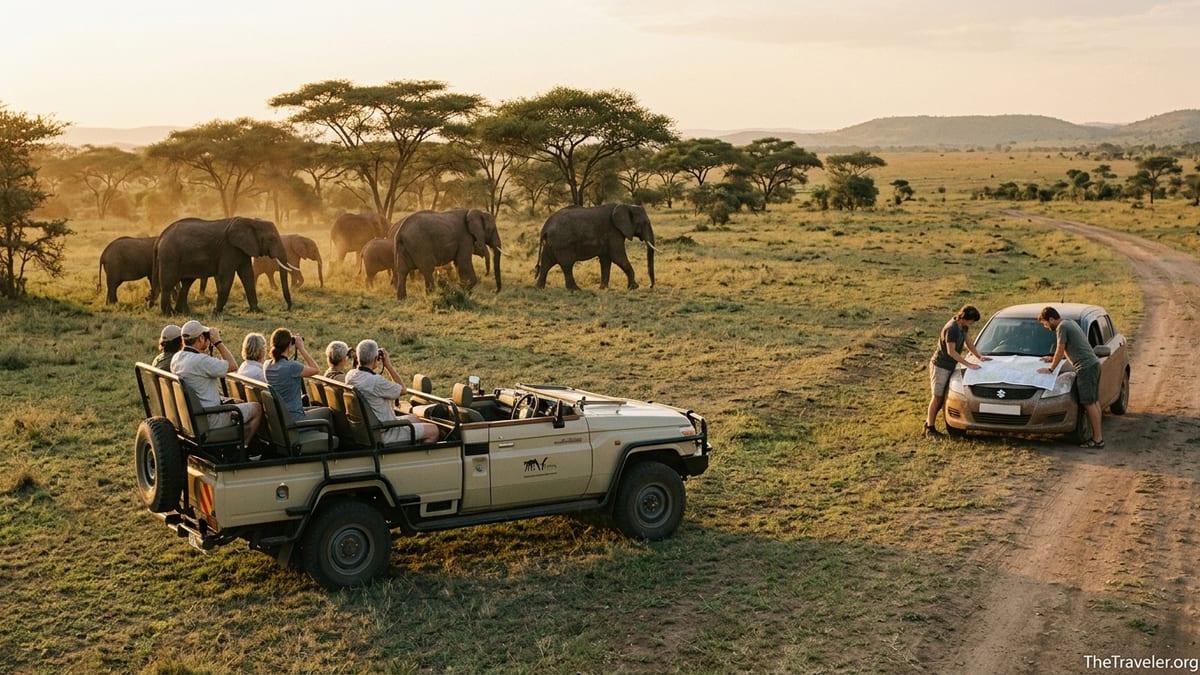
Similarly, on African safaris, Nat Hab leans heavily on long-standing relationships with expert local guides and small camps inside or adjacent to prime wildlife areas. In private concessions bordering national parks, vehicles are allowed to leave the main roads, night drives are permitted, and walking safaris can be run legally and safely. These experiences can be extraordinarily difficult to replicate on your own as a self-driver restricted to daylight hours and main roads in public parks. While independent travelers can still have rewarding sightings, particularly in places like Kruger where wildlife is abundant and roads are extensive, they often miss out on off-road encounters and interpretive guiding.
For first-time wildlife travelers, older travelers and families, another intangible benefit is the reduction of cognitive load. Once the trip is booked, Nat Hab typically handles internal flights, transfers, park fees, most meals and daily schedules. You focus on wildlife, photography and rest, rather than navigating rough roads in the dark, negotiating with local operators, or reacting to sudden changes like flood-damaged roads or last-minute permit adjustments.
Where DIY Wildlife Trips Shine
Planning a wildlife trip yourself can be deeply rewarding and, in some cases, the better choice. If you have the time, patience and appetite for problem-solving, a DIY itinerary offers a level of flexibility that even the most customized group trip cannot match. You can linger for extra days in a national park you fall in love with, skip activities that do not appeal, and make spontaneous detours when local travelers share a tip about a lesser-known reserve or a seasonal migration.
Consider a self-drive safari in South Africa’s Kruger National Park. With a standard sedan rental from Johannesburg, a couple can reach the southern gates in about five to six hours by road. Booking accommodation directly through the national park system allows you to mix simple bungalows with more comfortable cottages, and you can choose rest camps such as Skukuza or Satara based on their proximity to good game-viewing areas. Daily game drives in your own vehicle, supplemented by optional sunrise or night drives operated by park rangers, give you maximum control over your timetable. For travelers on a moderate budget, this approach can stretch a wildlife vacation to 10 nights instead of 6 for similar money.
DIY planning also shines in regions with robust tourism infrastructure and plenty of midrange lodging. In Costa Rica, for example, you can rent a car and link wildlife hotspots such as Tortuguero, Arenal, Monteverde and the Osa Peninsula using a mix of pre-booked lodges and locally arranged guided walks. Similarly, in the United States, you might plan a self-guided wildlife road trip through Yellowstone and Grand Teton, staying in or near the parks and joining occasional day tours for specialized experiences like wolf tracking or backcountry photography.
Independent planning gives animal-focused photographers more control as well. If your priority is to capture a specific behavior, such as river crossings during the Great Migration or brown bears fishing for salmon in Alaska, you might choose to spend several extra days in one location rather than follow a fixed circuit. While Nat Hab offers photography-focused departures, the daily schedule is ultimately designed for the group. On a self-planned trip, you set your own rhythm, even if that means driving the same loop at dawn four days in a row in the hope of a particular shot.
Risk, Safety and Contingencies
Wildlife travel exposes you to a different set of risks than an urban city break, and this is where the decision between Nat Hab and DIY deserves especially careful thought. Risks range from the obvious, such as encountering large animals at close range, to the more subtle, including navigating remote roads, staying within the letter of local regulations, and coping with sudden weather or political disruptions.
On a guided Nat Hab trip, risk management is built into the design. Expedition leaders and local guides generally receive training in wildlife behavior, first aid and emergency response. In Churchill, for example, polar bear guards and strict viewing protocols are standard. On African walking safaris or boat trips in places like Botswana’s Okavango Delta, guides are licensed, routes are pre-scouted, and support vehicles or radio communication back-ups are used. In addition, the company’s back office can help reroute itineraries when flights are canceled or natural events, such as flooding or wildfires, force lodge closures.
For independent travelers, these responsibilities fall largely on your shoulders. Driving at dawn in a national park requires discipline about speed limits and staying inside your vehicle; misjudging a distance to an elephant or buffalo can have serious consequences. In regions where roads are poorly lit or not fenced, night driving can be dangerous for both wildlife and people. Health considerations are another factor: arranging appropriate malaria prophylaxis, travel insurance, and evacuation coverage is crucial when you are far from major hospitals.
That does not mean DIY wildlife trips are inherently unsafe. Many domestic and international visitors safely self-drive in places like Kruger or Etosha every year and organize their own whale-watching in Alaska or manatee snorkeling in Florida with reputable local outfitters. However, the margin for error is thinner when you are unfamiliar with animal behavior or local road etiquette. Travelers who are anxious about high-consequence decisions may find significant peace of mind in the structured support of a Nat Hab expedition.
Time, Complexity and the Value of Expertise
Another major consideration is how much time you are willing to invest before you even board a plane. Designing a complex wildlife trip from scratch can take weeks of research, comparisons and bookings spread across multiple platforms. You will need to juggle park booking systems, independent lodges, domestic flights, car rentals, activity providers and sometimes permit offices, all while keeping an eye on seasonal patterns, migration timing and climate.
For instance, if you decide to plan your own Tanzania safari, you may need to coordinate a multi-park route that balances the Serengeti, Ngorongoro Crater and perhaps a quieter park such as Tarangire or Ruaha. Each park has its own character, and driving times between them are long. Then you factor in domestic flights or transfer services, choose between lodge categories, and ensure park fees and concession charges are accurately included in your budget. Doing the same for a Galapagos trip means understanding regulations around island hopping, where and when public ferries run, and which day tours offer the best wildlife value without overloading fragile sites.
Nat Hab’s advantage is that its itineraries and departure dates are engineered by teams who track wildlife seasonality and logistics year-round. They know when bears congregate in specific Alaskan bays, which months tend to bring the clearest night skies for aurora viewing in northern Scandinavia, and how El Niño patterns might affect snorkeling visibility in the Galapagos. For many travelers, buying into that expertise is not just about comfort; it is a hedge against missing the main event because of poor timing or a misjudged route.
This is particularly relevant when your vacation time is limited. If you have ten days off in a year, and you have saved for a decade to visit a dream destination, outsourcing complexity to a specialist like Nat Hab can be a rational choice. Conversely, if you have flexible time, enjoy research and have previously traveled in the region, you may derive as much satisfaction from the planning process as from the trip itself, making DIY planning part of the adventure.
Environmental and Ethical Considerations
Wildlife travel always interacts with conservation and local communities. The ways in which Nat Hab and independent travelers contribute to or strain local ecosystems differ, and this can influence your decision. Nat Hab highlights its partnership with conservation organizations and its efforts to minimize the footprint of its trips, for example by using smaller groups, supporting protected areas and often choosing camps and lodges with strong sustainability practices.
Joining a Nat Hab expedition can mean your spending is concentrated with a curated set of suppliers that meet certain environmental and community standards. In polar regions and fragile archipelagos such as the Galapagos, this can be a meaningful safeguard. Vessels are chosen based on compliance with strict environmental regulations, and itineraries are designed within caps on visitor numbers per site. Guides are trained to enforce leave-no-trace principles, manage wildlife viewing distances, and advocate for conservation messages.
Independent travel can be just as responsible, but it requires more due diligence. You will need to actively seek out operators and accommodations with credible sustainability practices and to be vigilant about offerings that promise close wildlife encounters at the expense of animal welfare. For example, you should be wary of operators who allow touching or feeding wild animals, or who crowd nesting beaches and den sites. In some destinations, there is a growing patchwork of regulations and voluntary certifications, but enforcement is uneven. Doing your own research, checking recent traveler reports and being prepared to walk away from questionable experiences are all part of ethical DIY wildlife travel.
On the positive side, independent travelers have the freedom to channel their money directly into small, locally owned guesthouses, community conservancies or park-run accommodation. In East Africa, for instance, some community-owned conservancies adjacent to major parks offer a blend of wildlife viewing and cultural experiences that distribute income more widely than high-end private reserves. A thoughtful DIY plan can therefore be highly impactful, provided you take the time to understand where your money is going and what practices you are supporting.
Which Option Fits Which Traveler?
In practice, the choice between Nat Hab and DIY often comes down to your travel profile. If you are a first-time international traveler, uncomfortable with foreign languages, or have limited time and a strong preference for predictability, Nat Hab’s structure and support are likely to be a better fit. The same holds for travelers with mobility considerations or health concerns that make independent problem-solving on rough roads and in remote regions feel daunting.
Couples or families celebrating milestone events often lean toward guided expeditions because they want a high likelihood of standout wildlife encounters without the stress of managing every detail. A 50th birthday safari or a multi-generational polar bear trip may justify the higher upfront cost in exchange for a more polished, hand-held experience, dedicated naturalist guides, and carefully selected properties.
On the other hand, seasoned travelers who are comfortable driving on unfamiliar roads, reading park maps, and making decisions in ambiguous situations can thrive on a DIY wildlife trip. If you have already visited Africa with a tour operator, planning your own self-drive itinerary in Kruger or Namibia can be a logical next step. Backpackers and digital nomads, who typically have more flexible timelines and lower budgets, also tend to benefit from building itineraries gradually, taking advantage of local promotions and word-of-mouth recommendations.
Importantly, this does not have to be an all-or-nothing choice. Some travelers combine both approaches: for example, booking a week-long Nat Hab cruise in the Galapagos and then adding independently arranged days in mainland Ecuador, or joining a guided safari for five nights and then renting a car for a self-drive add-on to nearby national parks. Hybrid models can offer the best of both worlds, with intense, expert-led wildlife experiences balanced by slower, more flexible independent exploration.
The Takeaway
Deciding between Natural Habitat Adventures and planning a wildlife trip yourself is ultimately about aligning your resources, expectations and risk tolerance. Nat Hab offers tightly organized, small-group expeditions that leverage deep destination expertise and conservation partnerships. They excel in remote or logistically complex environments, where a misstep could mean missing the very wildlife spectacles you traveled to see. The price tag reflects not only accommodation and transport, but also the value of experienced guides and an operations team focused on contingency planning.
DIY wildlife travel, meanwhile, rewards curiosity, flexibility and patience. It can stretch your budget, especially in destinations with strong self-drive infrastructure or abundant midrange lodging, and it allows you to shape the journey to your own rhythms and interests. The tradeoff is that you shoulder more responsibility for safety, environmental impact and last-minute problem-solving.
For many travelers, the most satisfying path lies somewhere in the middle. Consider your comfort with uncertainty, the amount of vacation time you have, and how important it is that your trip supports specific conservation and community outcomes. Whether you find yourself watching a polar bear amble across the tundra from the window of a Nat Hab vehicle, or spotting a leopard at dawn from your own rental car in a public reserve, the essential question is the same: which planning style will let you be most present in that moment, with minimal regret about the choices that got you there.
FAQ
Q1. Is Natural Habitat Adventures worth the higher price compared with planning my own trip?
It depends on your priorities. If you value expert guiding, small groups and a high degree of logistical support in complex destinations, many travelers feel the premium is justified. If you are comfortable handling your own research, bookings and on-the-ground decisions, you can often design a rewarding wildlife trip for less money.
Q2. Can I save a lot by planning a wildlife trip myself?
You can usually save some money, especially if you are flexible on dates and accommodation quality, or if you are traveling in countries with strong self-drive infrastructure. However, once you match similar lodges, internal flights, park fees and high-quality guiding, the savings compared with a premium small-group operator may be smaller than they first appear.
Q3. Is it safe to do a self-drive safari if I have never been on safari before?
Many first-timers safely self-drive in well-managed parks that have clear rules and good roads, such as Kruger in South Africa. That said, you must be disciplined about speed limits, staying in your vehicle, observing wildlife distances and planning your days around park gate times. If you are nervous about those responsibilities, a guided trip is usually a better starting point.
Q4. How do Nat Hab trips compare with other wildlife tour operators?
Nat Hab positions itself at the premium end of the small-group wildlife market, with an emphasis on conservation partnerships, very small groups and highly experienced guides. Other operators, from adventure travel brands to local safari companies, may offer similar routes at different price points and group sizes. The best choice depends on your budget and the level of service you want.
Q5. Can I combine a Natural Habitat Adventures trip with independent travel?
Yes. Many travelers book a Nat Hab expedition for the most logistically complex portion of their trip, such as a polar bear tour or Galapagos cruise, and then add independently planned days before or after in gateway cities or nearby regions. This hybrid approach can balance expert-led experiences with more flexible exploration.
Q6. Do I need travel insurance for a Nat Hab trip or a DIY wildlife trip?
Travel insurance is strongly recommended for both. Wildlife destinations often involve remote locations, small aircraft and weather-dependent activities. Insurance that covers medical emergencies, evacuation and trip interruption is an important safety net whether you are with a tour operator or on your own.
Q7. Are Nat Hab trips suitable for children and older travelers?
Many Nat Hab itineraries are designed to be accessible to a wide range of ages, with varying levels of physical activity. The structured pace, expert guiding and logistical support can be especially comfortable for families and older travelers. Always check the specific trip notes regarding minimum ages, fitness requirements and accommodation details.
Q8. How far in advance should I book a Natural Habitat Adventures trip?
For popular departures, such as peak-season polar bear tours or prime Galapagos dates, it is wise to book many months, and sometimes more than a year, in advance. Space on small expedition ships and in remote lodges is limited, and the most sought-after departures often sell out early.
Q9. What skills do I need to plan my own wildlife trip?
You should be comfortable researching destinations, comparing logistics and reading maps or GPS. Basic knowledge of wildlife behavior, local regulations and driving conditions is important, as is the ability to adapt when plans change. Patience and a realistic understanding of what your budget can cover are also essential.
Q10. How can I make a DIY wildlife trip more responsible and sustainable?
Choose locally owned lodges and operators with clear environmental and community commitments, avoid activities that encourage feeding or touching wildlife, and follow park rules on distances and noise. Travel in smaller groups, minimize waste, and consider donating to reputable conservation organizations that work in the areas you visit.