


More news on this day
Hundreds of passengers were left stranded at Amsterdam Schiphol Airport on June 27, 2026, as publicly available flight-tracking data showed 407 delays and 26 cancellations affecting services operated by easyJet, KLM, German Airways and British Airways on routes linking the Netherlands with London, Rome, Lisbon, Mexico City and Los Angeles.
Get the latest news straight to your inbox!
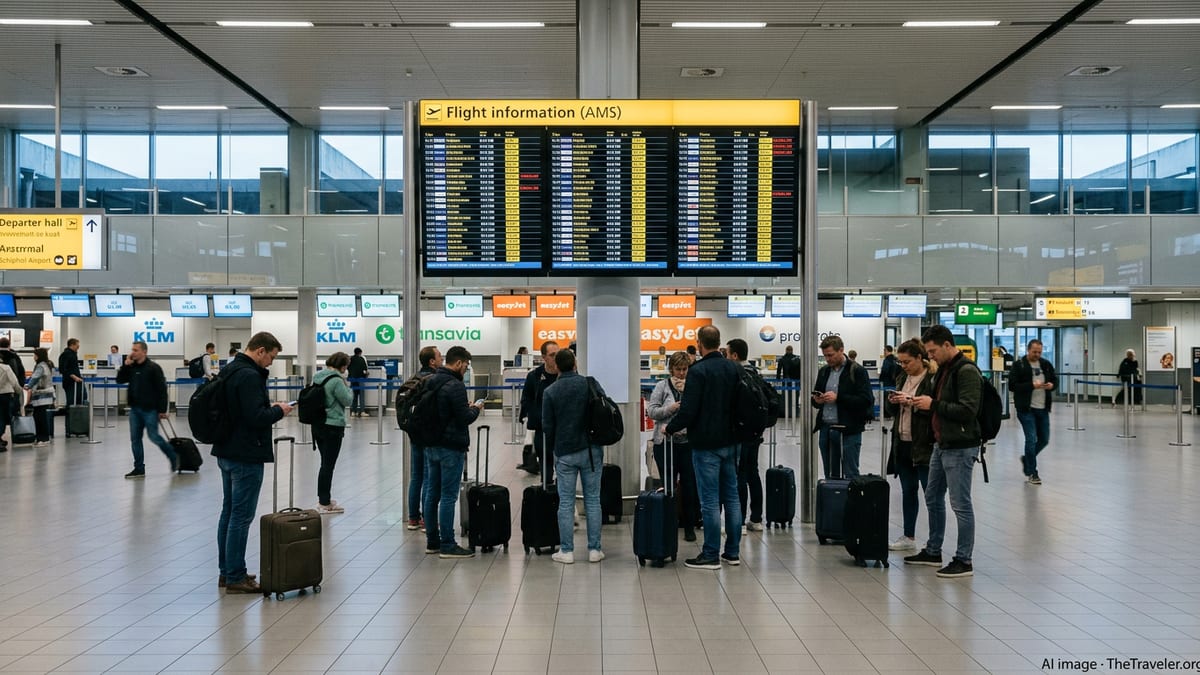
Heavy Disruption Across European and Long Haul Networks
Operational snapshots compiled from Schiphol’s live departure and arrival boards, combined with tracking services frequently used by aviation analysts, indicate that disruption at the Dutch hub stretched well beyond short intra-European hops. Passengers on flights to London, Rome and Lisbon faced rolling departure pushes, missed connections and, in some cases, outright cancellations as aircraft and crews fell out of position across the day.
Publicly available metrics for June 26 and June 27 show Schiphol emerging as one of Europe’s main bottlenecks, with aggregate tallies pointing to 407 delayed movements and 26 cancellations connected to the airport’s schedule. While those figures fluctuate as airlines adjust operations in real time, they align with recent patterns in which even a moderate number of cancellations, when layered over several hundred late departures, quickly translates into large numbers of stranded travelers at a single hub.
Several of the affected services linked Amsterdam with major gateways across Europe and the Americas, including London-area airports, Rome Fiumicino, Lisbon, Mexico City and Los Angeles. For many travelers, especially those connecting from other European cities or transatlantic services, the first sign of trouble was a gate display shifting from a modest delay to a more serious hold as congestion and earlier disruption cascaded through the network.
Some airlines concentrated their schedule adjustments in off-peak windows to try to protect long haul departures to North America, yet delays on feeder flights still left tight onward connections at risk. In practice, that meant that a late arrival from London or Rome could invalidate a same-day onward journey to Mexico City or Los Angeles, forcing passengers to be rebooked onto later departures or shuffled between carriers where interline agreements allowed.
easyJet, KLM, German Airways and British Airways Under Pressure
Publicly accessible operational data shows that easyJet and KLM, both major operators at Schiphol, featured prominently in the disruption statistics for June 27. easyJet’s dense schedule of intra-European services, particularly to leisure destinations in southern Europe, appeared highly exposed as rotations slipped behind schedule. Each delayed arrival reduced turnaround time for the next departure, amplifying knock-on effects throughout the day.
KLM, Schiphol’s largest hub carrier, faced its own set of challenges. Reports from aviation tracking platforms and recent coverage of European disruption trends suggest that the airline has been operating close to capacity during the early summer peak, leaving little margin to absorb additional stress from airspace restrictions or ground handling bottlenecks. As a result, even relatively modest weather or capacity constraints could force last-minute schedule revisions and tactical cancellations.
German Airways, which operates a smaller but strategically important portfolio of regional and charter services, also appeared within the disrupted group of carriers, with delays and occasional cancellations complicating onward travel plans for passengers using Amsterdam as a transfer point to Germany and other destinations. British Airways, connecting London and Amsterdam as part of its broader European network, was likewise affected, with Schiphol-related delays feeding into an already busy operational picture at London-area airports.
Recent industry briefings and data-driven analyses of Europe’s June flight performance point to a broad pattern in which multiple carriers share the burden of delays at major hubs rather than a single airline shouldering the entire problem. Schiphol’s latest episode fits this profile, with easyJet, KLM, German Airways and British Airways all experiencing varying degrees of schedule disruption that collectively translated into hundreds of delayed flights.
Weather, Air Traffic Restrictions and Ground Constraints Cited
Published coverage from aviation and passenger-rights outlets links the latest wave of Schiphol disruption to a combination of weather-related air traffic restrictions, broader European airspace congestion and local ground handling constraints. A heat driven pattern of turbulence and storm cells over parts of western and central Europe has periodically tightened en route capacity, prompting flow restrictions that slow the rate at which aircraft can depart or arrive at busy hubs such as Amsterdam.
At the same time, data shared by air passenger advocacy organizations for June 25 and June 26 highlights a spike in delays and cancellations across several major European airports, including London Heathrow, Barcelona El Prat and Amsterdam Schiphol. The figures suggest that Schiphol’s difficulties on June 27 did not occur in isolation but instead formed part of a wider network effect in which regional weather and capacity limits caused schedules to unravel across multiple hubs simultaneously.
Operational strain on airport infrastructure has also been cited as a contributing factor. Ground handling teams at large hubs must juggle aircraft turnarounds, baggage processing and deicing or cooling operations during extreme temperatures. When combined with tight airline schedules and limited spare aircraft, these pressures can slow boarding, delay pushback times and reduce overall runway throughput.
The latest Schiphol data is consistent with earlier episodes in 2026 in which the airport experienced waves of disruption tied to adverse weather, staffing challenges and aircraft availability. Those incidents have reinforced concerns among frequent travelers that large European hubs remain vulnerable to cascading effects whenever a single element of the system, such as air traffic control or baggage handling, comes under strain.
Passenger Impact From London to Los Angeles
The immediate human impact of the 407 delays and 26 cancellations at Schiphol was felt most acutely by travelers whose journeys depended on tight connections. Passengers originating in London or Rome and connecting in Amsterdam to long haul flights bound for Mexico City or Los Angeles found that even short early delays could quickly escalate into missed onward departures once boarding cut off for transatlantic legs.
Travelers heading to leisure destinations such as Lisbon, as well as those returning from holidays to northern Europe, encountered lengthy queues at transfer desks and customer service points as airlines worked through rebooking requests. With hotel inventory around Schiphol already constrained during the high season, some passengers were left facing overnight stays at satellite properties or in other nearby cities while waiting for the next available seats.
Publicly available posts on social media and travel forums described confused scenes as departure times were repeatedly revised on information screens, only for flights to be delayed again as aircraft awaited new slots from air traffic control. In several cases, passengers reported being held on board parked aircraft for prolonged periods while crews waited for updated departure clearances, adding to frustration and fatigue at the end of already long travel days.
For travelers arriving from Mexico City and Los Angeles, irregular operations at Schiphol reduced the chances of making same day onward connections into the wider European network. Those who missed their follow up flights to cities including London, Rome and Lisbon were often left to navigate unfamiliar rebooking processes and compensation rules at a time when airport staff were simultaneously dealing with hundreds of similar cases.
Rights, Remedies and What Travelers Can Do
Passenger-rights organizations point out that travelers caught up in Amsterdam’s latest disruption may be protected by European air passenger regulations when departing from Schiphol or connecting to other EU and UK airports. Under these rules, airlines generally have obligations to provide care and assistance during long delays or cancellations, including meals, refreshments and hotel accommodation where an overnight stay becomes necessary, regardless of whether further compensation is due.
However, compensation for delays or cancellations is not automatic. Guidance from legal and advocacy groups explains that payments can depend on the cause of the disruption, the length of the delay and the distance of the affected flight. If airlines can demonstrate that the problems stemmed from extraordinary circumstances such as severe weather or sudden airspace closures, they may not be required to provide financial compensation even though they must still look after stranded passengers at the airport.
Specialists in air travel disruption recommend that passengers keep boarding passes, booking confirmations and any written communication about schedule changes or cancellations, as these documents can be important when submitting later claims. They also suggest monitoring both airport and airline apps for live updates, since gate changes and revised departure times at hubs like Schiphol can be frequent during periods of disruption.
With early summer 2026 already marked by multiple days of large scale delays across Europe’s busiest airports, analysts caution that travelers passing through Amsterdam in the coming weeks should plan for potential schedule volatility. Allowing longer connection times, traveling with essential items in carry on bags and familiarizing themselves with basic passenger-rights provisions are among the steps that may help mitigate the impact of any further disruption at Schiphol and other major hubs.