


More news on this day
Thousands of passengers across France have faced hours of disruption as Paris Charles de Gaulle, Paris Orly, Nice Côte d’Azur and Marseille Provence airports collectively recorded 849 delays and 56 cancellations, affecting routes operated by major carriers including Air France, British Airways, Emirates, Delta Air Lines, Lufthansa, easyJet and several other international and low cost airlines.
Get the latest news straight to your inbox!
Summer Peak Travel Hit by Widespread Operational Disruption
The disruptions emerged during one of the busiest travel periods of the year, with late June departures already running close to full at France’s main international hubs. Operational data compiled from airport dashboards and independent flight tracking platforms indicates that the four airports saw a sharp build up of delays over the course of the morning, with knock on effects for departures and arrivals throughout the day.
At Paris Charles de Gaulle, France’s largest airport by passenger volume, real time departure boards on Saturday showed hundreds of services behind schedule across Schengen and long haul terminals. Publicly available statistics for the day’s operations point to delay rates significantly above typical early summer averages, affecting both European feeder flights and intercontinental services.
Paris Orly, traditionally focused on domestic and medium haul routes, also reported an elevated number of late departures and a cluster of cancellations concentrated around busy mid morning and late afternoon banks. At Nice Côte d’Azur and Marseille Provence, which act as key gateways to the Mediterranean and Provence regions, delays were more moderate but still sufficient to disrupt tight connections and onward ground transport for tourists heading to coastal resorts.
The combined total of 849 delayed movements and 56 outright cancellations across the four airports underscores how quickly localised operational pressure can cascade across airline networks, particularly when it coincides with already dense summer schedules.
Major Carriers and Low Cost Airlines Among Those Affected
According to flight tracking and schedule monitoring services, the disruption has touched a wide range of airlines that rely on French hubs for both point to point and connecting traffic. Flag carrier Air France, which dominates operations at Charles de Gaulle and maintains significant activity at Marseille and Nice, registered numerous delayed domestic and European flights, alongside schedule changes on transatlantic and Asian routes.
British Airways, Emirates, Delta Air Lines and Lufthansa also appeared in delay tallies for Saturday’s operations, with late departures reported on services linking Paris with London, Dubai, major US gateways and key European hubs. For many of these carriers, a single late rotation early in the day can reverberate through multiple subsequent sectors, compounding knock on delays as aircraft and crews fall out of their planned positions.
Low cost operators including easyJet, which maintains a substantial presence at both Paris and regional French airports, experienced their own share of schedule disruption. Data from services between Paris, Nice and other Mediterranean destinations shows pushing back times and arrivals drifting well beyond originally published slots, forcing passengers to adjust ground transportation plans and, in some cases, miss onward connections.
The wide spread nature of the disruption across network and low cost airlines illustrates the degree of interdependence built into European air travel, where shared infrastructure, high utilisation of fleets and dense airspace can turn local bottlenecks into region wide headaches.
Operational Strain, Airspace Constraints and Weather All Cited
While a full picture of the underlying causes is still emerging, publicly available information from aviation analytics providers and recent European air traffic reports points to a mix of factors behind the latest wave of delays. European network monitoring data for June has highlighted persistent airspace constraints in several control sectors, including areas managed from Reims and Marseille, which can restrict traffic flows into and out of France at peak times.
On the ground, French airports are operating close to or above pre pandemic volumes during the summer holiday build up, putting additional strain on turnaround times, baggage handling and security screening. Industry briefings in recent weeks have also underscored ongoing staffing challenges in some parts of the aviation ecosystem, from air traffic control to ground services, which can reduce resilience when operations come under pressure.
Weather has played a supporting role in the disruption picture. Periods of low visibility, storms and shifting wind conditions along key approach and departure corridors can force temporary spacing between flights, reducing runway capacity and creating backlogs that can take hours to clear. Even modest weather related restrictions, when layered on top of dense schedules, can generate the kind of cumulative delays now being recorded at Paris and major regional airports.
Analysts note that this combination of structural constraints and seasonal peaks has been visible in European aviation data for several summers in a row, but warn that 2026’s busy June and July travel period may prove particularly challenging if demand remains high and contingency capacity limited.
Passengers Face Missed Connections, Rebookings and Longer Travel Days
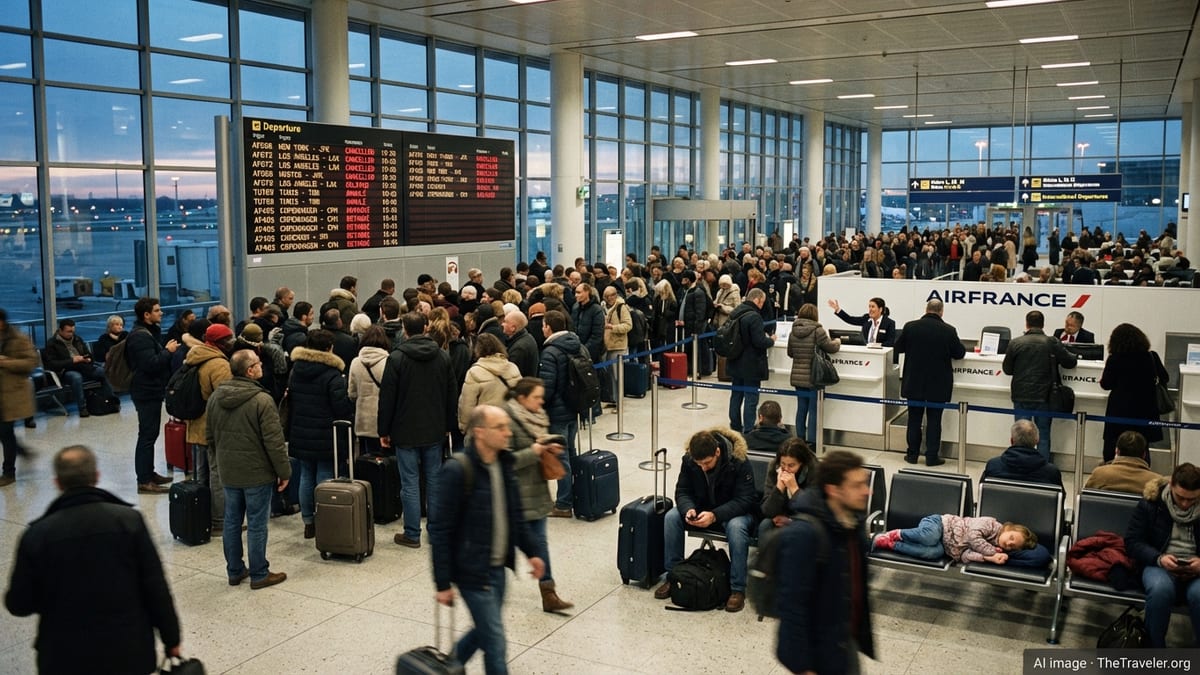
For travelers, the operational statistics translate into long queues, crowded departure halls and often uncertain arrival times. Reports on social media and travel forums from Saturday morning and early afternoon describe passengers waiting for updated departure information, scrambling to rebook missed connections and, in some cases, seeking overnight accommodation after cancellations or significant delays.
Missed onward flights are a particular concern at hub airports such as Charles de Gaulle, where many long haul passengers connect to short haul European or domestic services. When an inbound flight arrives late, limited seat availability on later departures can force travelers to re route through alternative hubs or accept lengthy layovers. Similar patterns are emerging for those using Nice and Marseille as gateways to cruises or time sensitive tour departures along the Mediterranean coast.
Travel advisers and consumer organisations have reiterated general guidance that passengers keep close track of their flight status via airline apps and departure boards, arrive at the airport early when disruption is anticipated, and retain all documentation related to delays and cancellations. This paperwork can be important when seeking refunds, rerouting or compensation under European passenger rights rules.
Travel insurance specialists also emphasise the value of policies that specifically cover missed connections, additional accommodation and incidental expenses such as meals and local transport, which can mount quickly during extended delays.
Outlook for the Coming Days as Summer Rush Builds
Looking ahead, aviation data for the first weeks of June already shows elevated traffic levels across Europe, with French airspace among the busier regions. Recent European aviation overviews point to average delay minutes per flight creeping upward compared with the same period a year earlier, suggesting a system operating with limited slack.
For airlines, that means even modest disruptions at key hubs can translate into outsize operational challenges. Carriers serving France are likely to continue proactive schedule management over the coming days, trimming frequencies where necessary, consolidating lightly booked flights and adjusting departure times in an effort to keep rotations predictable and minimise late night arrivals that can run into local curfew constraints.
Passengers booked to travel through Paris, Nice or Marseille in the near term may see more frequent preemptive schedule changes as airlines refine their operations in response to airspace conditions, weather forecasts and staffing patterns. Industry observers advise monitoring reservations closely in the 48 hours before departure and considering alternative routings or travel dates where flexibility exists.
With the main summer holiday period in France and across Europe still ramping up, the situation at Charles de Gaulle, Orly, Nice Côte d’Azur and Marseille Provence will be closely watched as an indicator of how well the continent’s aviation system can absorb sustained high demand while keeping disruption within manageable bounds.