


More news on this day
Canelo Álvarez’s Halloween title clash in Riyadh is pressing ahead even as the United States hardens its travel warnings on Saudi Arabia and orders some government personnel and family members to leave the kingdom, spotlighting the uneasy intersection of big-ticket sports and regional security concerns.
Get the latest news straight to your inbox!
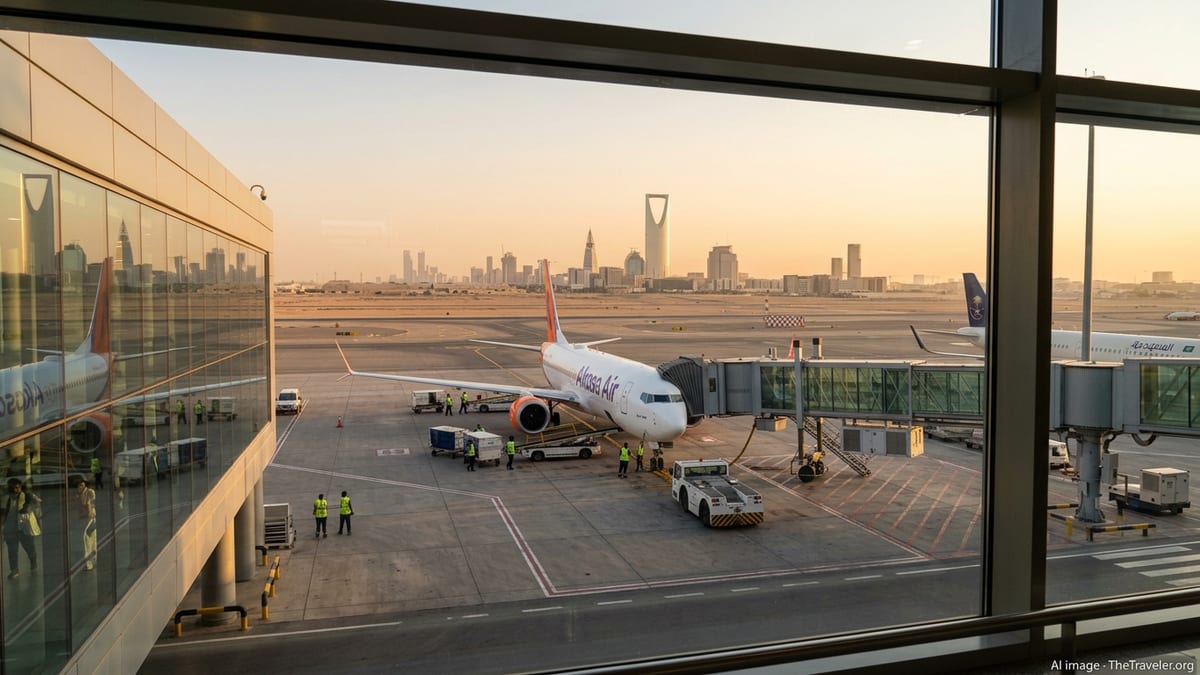
Riyadh Bout Holds Firm Amid Escalating Security Concerns
The Mexican star is scheduled to face WBC super middleweight titleholder Christian Mbilli on Saturday, October 31, at a purpose-built arena in Riyadh, headlining a “Mexico vs The World” card that anchors this year’s Riyadh Season entertainment program. Reports from boxing outlets indicate that the event remains on the calendar and preparations in the Saudi capital are continuing despite a recent spate of attacks that have disrupted travel and raised questions across combat sports.
Publicly available coverage of the conflict in the region shows that Iranian-aligned Houthi forces based in Yemen have claimed responsibility for several recent strikes on Saudi infrastructure, including Riyadh’s King Khalid International Airport. The attacks earlier in October resulted in significant casualties and led to a temporary closure of the airport, according to multiple news reports. Commercial flights have since resumed on a limited basis, but the facility and its surrounding airspace remain under heightened scrutiny.
Against that backdrop, Álvarez arrived in Riyadh on Monday, October 26, with images shared across sports media showing the four-division champion stepping off a private jet and greeting local organizers. The timing of his arrival, just days after new U.S. security steps, underscores how the event has become a test case for whether major international sports can proceed when a host destination is under active security advisories.
U.S. Travel Advisory Tightens As Event Nears
The U.S. Department of State’s advisory page for Saudi Arabia currently lists the country at Level 3, “Reconsider Travel,” citing the risk of missile and drone attacks, terrorism and the threat of ballistic projectiles targeting civilian infrastructure. On October 23, 2026, the department ordered the departure of non-emergency U.S. government employees and eligible family members from Saudi Arabia, noting recent strikes on airports and the possibility of further attacks that could disrupt air travel.
The advisory materials emphasize that airports and other transport hubs could be affected with little warning, and that attacks may target areas frequented by travelers. The same guidance stresses that U.S. citizens who choose to visit despite the warning should have contingency plans that do not rely on government-organized evacuations, and should ensure that documentation, cash reserves and communication tools are in order in case of sudden route changes or delays.
Sports coverage has highlighted that the updated advisory coincides with the final build-up to Álvarez versus Mbilli, as well as other high-profile events planned for the kingdom. U.S. media reports note that the departure order applies to diplomatic staff and families rather than private citizens or visiting athletes, yet it has added a new layer of complexity for promoters, broadcasters and traveling fans considering whether to board flights to Riyadh for the Halloween weekend card.
Riyadh Season Pushes On With Boxing at the Forefront
Riyadh Season, the government-backed festival that has turned the Saudi capital into a recurring stage for elite boxing, continues to market the October 31 showpiece as one of its centerpiece attractions. Previous editions of the festival have hosted heavyweight title bouts and undisputed championship fights, underscoring the kingdom’s rapidly expanding role in global combat sports.
Promotional materials for the “Mexico vs The World” bill present Álvarez’s clash with Mbilli as the culmination of a multi-fight agreement that has seen the Mexican icon appear regularly in Saudi venues. Publicly available information on the broader card suggests that boxers, trainers, officials and media are expected from North America, Europe and the Middle East, reinforcing Riyadh’s position as a crossroads for international sports tourism despite the current security environment.
Analysts who track Saudi Arabia’s sports investments point out that proceeding with the card allows organizers to project confidence in the country’s ability to host global events even during periods of regional tension. At the same time, the heightened advisory status for U.S. travelers and the recent airport attacks have given the event an unavoidable geopolitical backdrop that is likely to shape how visiting fans and participants experience the city across fight week.
Practical Considerations for Travelers Heading to the Fight
For travelers planning to attend Álvarez versus Mbilli, publicly available advisories and travel resources outline a series of practical steps that have taken on new urgency after the latest security developments. The State Department recommends that visitors enroll in its Smart Traveler Enrollment Program, monitor local news, and maintain close contact with airlines regarding flight status, particularly into and out of King Khalid International Airport.
Travel information for Saudi Arabia also highlights routine entry requirements, including a valid visa obtained in advance or through the kingdom’s e-visa portal where applicable, and sufficient validity on passports. Separate guidance notes strict local regulations on photography of government and security sites, as well as on social media content that could be viewed as critical of the Saudi state, religion or public figures, issues that can affect tourists as well as residents.
Insurance is another key topic flagged in public guidance. Prospective visitors are encouraged to review whether their policies cover travel to destinations under elevated advisories, as well as potential evacuation or medical costs if commercial flights are disrupted. For those still intent on traveling to Riyadh for the fight, travel specialists suggest flexible tickets and accommodation with changeable or refundable terms, in light of the evolving security picture.
Balancing Sporting Spectacle With Regional Risk
The determination to keep Álvarez versus Mbilli on the schedule reflects a broader trend in which major sports events proceed amid complex security conditions, relying on layered protection measures and detailed contingency planning by hosts. Reports from boxing media indicate that both fighters are continuing their final preparations with the expectation that the bout will go forward as planned, even as diplomatic and military developments shape the environment around them.
Observers note that Riyadh’s emergence as a global boxing hub has unfolded in parallel with debates over sportswashing, human rights and the ethics of staging major spectacles in politically sensitive locations. The latest U.S. advisory, combined with images of Álvarez arriving in the Saudi capital, captures that tension in a single narrative: a prized championship fight pressing ahead in a city that is simultaneously marketed as an entertainment destination and listed as a place where foreign travelers are urged to proceed with caution.
For fans weighing the prospect of a Halloween weekend in Riyadh, the decision now sits at the intersection of sporting passion and risk tolerance. The ring is expected to be ready on October 31, but the journey into and out of the Saudi capital has become part of the story, shaping how this chapter in Álvarez’s career and in Riyadh’s travel landscape will ultimately be remembered.