


For film lovers, Cannes is more than a glamorous stop on the French Riviera. It is a place where cinema shapes the rhythm of everyday life, from red carpet premieres to neighborhood screenings. Yet visitors often face a very practical question: for a short stay in Cannes, is it more rewarding to experience the city through Cannes Cinéma’s local screenings and events, or to focus on the Palais des Festivals et des Congrès, the beating heart of the Cannes Film Festival? The answer depends on the kind of movie trip you want: immersive and accessible, or iconic and intensely glamorous.
Get the latest updates straight to your inbox!
Understanding the Two Cannes Film Worlds
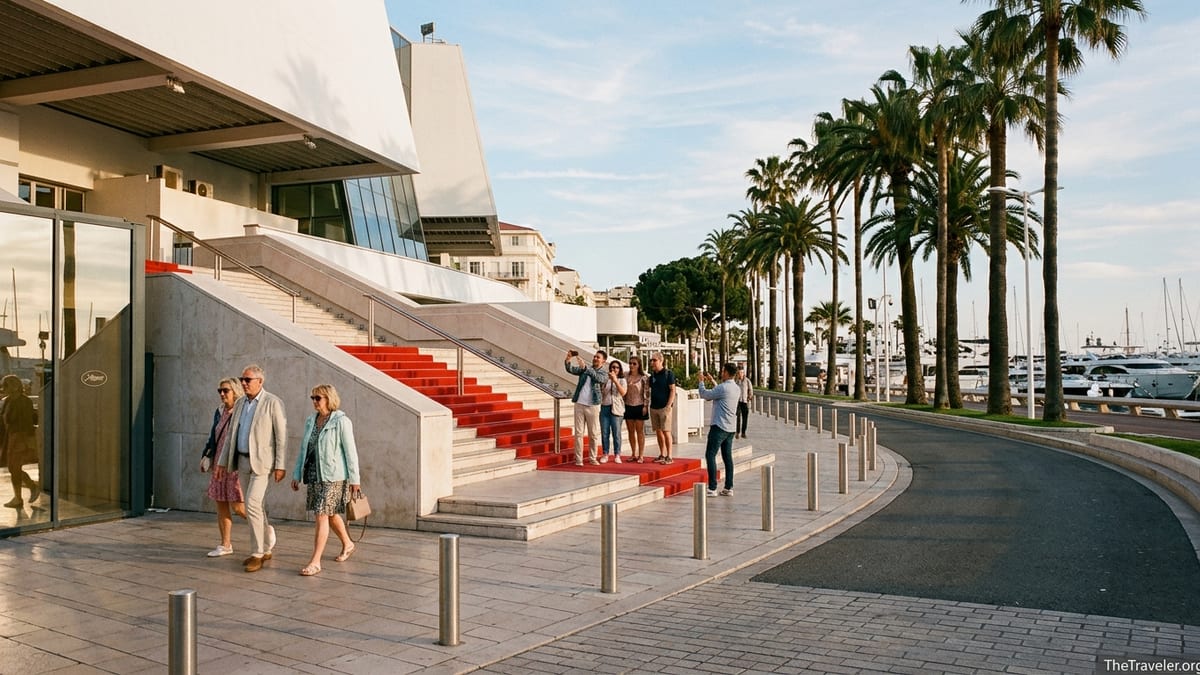
To choose between Cannes Cinéma and the Palais des Festivals, you first need to understand that they represent two different, complementary faces of the city’s film culture. The Palais des Festivals is the large, modern complex that hosts the Cannes Film Festival each May, plus major congresses and events throughout the year. Its stepped facade and red carpet on the waterfront Croisette are the images most travelers associate with Cannes. Walking past the Palais any day of the year places you right where directors, actors and journalists converge during the festival.
Cannes Cinéma, on the other hand, is not a single building but a cultural organization that curates screenings, festivals and educational programs in and around Cannes. It partners with local cinemas and venues, developing events that connect residents and visitors with world cinema. During the festival period, Cannes Cinéma also helps run public screenings linked to the broader event, including affordable showings and collaborations with parallel selections.
For a traveler, this means that the Palais is primarily about place and prestige, while Cannes Cinéma is about ongoing access to films. One is the iconic stage; the other is the network that keeps cinema alive in the city after the spotlight moves on.
In practice, most visitors will encounter both: they might stroll the red carpet steps at the Palais during the day, then see a restored classic or international feature programmed by Cannes Cinéma in the evening at a partner venue. The question is which side of this film equation should be the center of your trip.
The Palais des Festivals: Chasing the Red Carpet Myth
The Palais des Festivals et des Congrès stands at the western end of the Boulevard de la Croisette, facing the sea and the marina. It has hosted the main competition screenings of the Cannes Film Festival since the early 1980s and is designed around large auditoriums such as the Grand Auditorium Louis Lumière, which seats more than 2,000 people. Outside festival time, the building is home to trade shows, concerts and awards ceremonies, but for most visitors its appeal lies in its connection to the festival.
For many travelers, simply standing at the foot of the famous 24 steps is the payoff. The city usually keeps a red or pink carpet on the staircase throughout much of the year for events like Canneseries, so even in February you may see visitors posing for photos in evening wear or casual clothes, recreating the festival entrance. The steps are open to the public when there is no secure event in progress, and you can often walk up and down freely for your own “premiere” moment.
To go deeper, consider a guided tour of the Palais, which local tourism agencies schedule several times a week in high season. These tours are typically modestly priced, often in the ballpark of a mid-range museum ticket, and may include backstage areas, viewing the auditoriums from the balcony and explanations of how the festival’s logistics work. For film buffs, a guide pointing out where photographers line up, how guests enter and where press conferences take place can transform a big concrete building into a living stage set.
The catch is that during the actual Cannes Film Festival, held over roughly 10 to 12 days in May, the Palais becomes heavily restricted. Security zones go up around the building, and access to the interior and to official screenings is limited to accredited professionals, invited guests and a small number of selected young cinephiles. For most tourists in that period, the experience revolves around watching limousines arrive from behind barriers, catching glimpses of stars, or enjoying the beach screenings further along the Croisette.
Inside the Festival Bubble: How Accessible Is the Palais to Visitors?
Outside festival dates, the Palais behaves like a conventional conference center with some tourism features. You may wander into the airy lobby if there is a public event or exhibition, take a photo under the ceiling banners, or visit the tourist office located in or near the building. Some international events, such as music and television markets or games festivals, occasionally sell day passes or tickets to the public, giving you a chance to experience the Palais as a functioning venue rather than a backdrop.
During the Cannes Film Festival itself, however, the experience changes dramatically. Access to screenings in the main auditoriums of the Palais is controlled through accreditation and digital ticketing. Industry professionals, critics and festival guests must request individual tickets for each screening, and even they are not guaranteed seats for red carpet premieres. The official festival FAQ stresses that the event is reserved for film industry professionals, with only certain programs opening a door to the wider public.
For a first-time traveler without industry ties, the most realistic way to enter the Palais during the festival is through special initiatives such as the “3 Days in Cannes” program, which targets young film enthusiasts, or by securing invitations from accredited contacts. A few lucky visitors manage to get last-minute tickets from people giving them away near the red carpet, but this is unpredictable and still usually requires a badge. Dress codes are strict for gala screenings, with tuxedos or formal evening wear expected, and security teams are instructed to turn away anyone not respecting the rules.
In practical terms, this means that if your dream is to sit inside the Grand Auditorium during a red carpet premiere, planning an industry-focused trip, months of preparation and some good connections are essential. If you are simply visiting Cannes as part of a Riviera holiday in June or September, the Palais is still worth seeing, but your interaction will likely stay outside: photos on the steps, a café on the Croisette and maybe a guided tour on a quieter day.
Cannes Cinéma: Everyday Film Culture for Visitors
Cannes Cinéma offers a very different type of experience, one that is closer to how locals consume film throughout the year. Rather than a single iconic venue, Cannes Cinéma partners with several cinemas and cultural centers in and around the city, programming arthouse titles, retrospectives and festival-linked events. These might take place in neighborhood cinemas in La Bocca or along the Croisette, as well as in community centers and cultural spaces used for film clubs.
Ticket prices for Cannes Cinéma screenings are designed to be accessible. While specific rates change over time, recent public price lists show single tickets in the range of what you would expect for a standard French cinema ticket, with reduced tariffs for seniors, students and partner card holders. Occasional ciné-club sessions or special events may cost a little more, but they remain affordable compared to festival-time hotel rates and restaurant bills.
For visitors, the key advantage is that you can participate in Cannes’ film culture without needing accreditation or invitations. On a Tuesday night in March, you might catch a restored classic by an Italian master with a short introduction from a local critic. In October, you might find a small festival of Mediterranean cinema showing recent films that may never receive wide international distribution. Cannes Cinéma’s programming often includes subtitled versions, making it easier for non-French speakers to follow the films.
Even during the major festival in May, Cannes Cinéma contributes to public access through partnerships with parallel sections and events that do not require industry status. Combined with the city’s free beach screenings organized as part of the official festival activities, these initiatives help create an atmosphere where visitors can feel included in the film celebration even if they never step inside the Palais during a premiere.
Comparing Atmosphere: Glamour vs Immersion
The emotional tone of a visit to the Palais des Festivals is very different from that of a Cannes Cinéma evening. The Palais, especially when banners are up for a major event, radiates spectacle. Even when the auditorium is empty, the wide staircase, bright lights and security barriers evoke images of flashbulbs and gowns. Standing near the entrance during festival time, you will be surrounded by crowds of fans, photographers, and curious tourists craning their necks for a glimpse of a familiar face.
This can be thrilling if you enjoy high-energy environments and do not mind feeling like an outsider to a private party. The barrier between public and invited guests is very visible. You might find yourself pressed against a metal fence alongside hundreds of others, watching cars glide past to the foot of the carpet, with loudspeakers announcing each arrival in French and English. For some travelers, this brief brush with global celebrity culture is worth building an entire trip around.
A Cannes Cinéma screening has almost the opposite mood. You will likely enter a modest cinema foyer, buy your ticket from a local cashier and perhaps chat with regulars waiting for the doors to open. Inside, the auditorium feels like any good neighborhood cinema: soft seats, a mix of students, retirees and families, and an atmosphere of quiet attention. If there is an introduction or Q&A, it may feel intimate, with the filmmaker or guest speaker answering questions from a few dozen people rather than a hall of thousands.
Visitors often come away from these smaller screenings with a stronger sense of having “been part of Cannes” rather than just having observed it. Instead of a fleeting red carpet sighting, you might spend two hours absorbed in a Tunisian drama or a South Korean thriller followed by informal conversation in a nearby bar. The glamour is lower, but the connection to cinema as an art form can feel deeper.
Practical Considerations: Cost, Timing and Ease
From a logistical standpoint, Cannes Cinéma is usually the easier and more budget-friendly option. Tickets are sold in straightforward ways, often at the venue box office or through standard French cinema booking systems. You do not need to think about dress codes beyond basic respect for the space, and seats are generally unassigned, first-come first-served. For a couple visiting in autumn, an evening of film through Cannes Cinéma might cost little more than a casual dinner.
The Palais experience can be more complicated. Outside major events, walking the steps and posing for photos is free, though guided tours carry a small fee. During the festival, accommodation prices in Cannes climb significantly, and restaurants along the Croisette can be expensive. While official festival screenings do not have a face-value ticket price for accredited guests, access is controlled, and the cost of accreditation, travel and lodging can be high. Some travelers choose to book festival-focused packages through luxury agencies, which may include red carpet invitations bundled with yacht charters or five-star suites, often costing several thousand euros.
Timing also matters. If you visit Cannes in winter or early spring, Cannes Cinéma’s schedule of local screenings is likely to be steady, while the Palais may look relatively quiet from the outside except during specific professional events. In May, by contrast, the city is at peak intensity, with the Palais fully lit and security perimeters in place. That is the moment when the building’s symbolic power is at its greatest but also when spontaneous access is at its lowest for casual visitors.
Weather and daylight influence the experience too. An evening beach screening linked to the festival or to Cannes Cinéma programming can be magical on a warm May or June night, with deckchairs set out on the sand and the screen glowing against the dark sea. By day, walking around the Palais in bright Riviera sunlight makes the white facade and glass panels shine, but queues and security can be tiring in the heat. Planning your visit for early morning or late afternoon can make photographing the steps more comfortable.
Who Should Choose Which Experience?
If you are an industry professional, critic, film student with accreditation or a participant in programs like the Marché du Film, the Palais is your natural base. Your days will likely be filled with screenings, meetings and press conferences inside the building, and your free time might involve quick escapes to quieter parts of Cannes. For you, Cannes Cinéma can be an added bonus: a way to connect with local cinephiles or catch side events when the main program allows.
For the average traveler or casual film fan, the choice is more nuanced. If you dream specifically of the red carpet, want to spot celebrities and do not mind staying on the spectator side of the barricades, centering your visit around the Palais during the festival can be very exciting. You might book a hotel on or near the Croisette, spend evenings near the entrances watching arrivals, and fill your days with coastal walks and boat trips while the industry works inside.
If, however, your priority is to watch films in Cannes rather than just watch Cannes itself, then Cannes Cinéma and related public events may feel more rewarding. You will be able to sit in a seat, see a film from start to finish and possibly hear from guests involved in its making. Your photos may show modest lobbies instead of glittering red steps, but your memories will be of the films themselves rather than the view of a closed door.
Many visitors find that the ideal approach is not to choose one or the other, but to combine them. You might schedule a guided tour of the Palais one afternoon, take your obligatory “on the steps” photo, and then spend the evening at a Cannes Cinéma screening or a free open-air projection on the beach. That way, you experience both the iconic architecture and the living culture of cinema in the city.
The Takeaway
So which Cannes film experience feels better: Cannes Cinéma or the Palais des Festivals? The honest answer is that they serve different travel dreams. The Palais embodies the mythology of Cannes: the red carpet, the photographers, the sense that history is being made behind closed doors. Walking its steps or glimpsing the gala arrivals can deliver a jolt of cinematic fantasy that many travelers treasure.
Cannes Cinéma, in contrast, offers a grounded, human-scale relationship with film. Its screenings and events are accessible, affordable and open to curious visitors without special status. Here, you are not separated from the action by barriers; you are seated in the dark, watching along with everyone else, part of the city’s ongoing love affair with cinema.
If your idea of the perfect film trip is a selfie on the most famous steps in the movie world and the chance to breathe the same air as global stars, you should focus your plans around the Palais, especially in May. If you are content to skip the flashbulbs in favor of subtitled dialogue and post-screening discussions, Cannes Cinéma may well feel richer and more authentic.
In practice, Cannes rewards travelers who sample both worlds. Let the Palais give you your postcard moments, then let Cannes Cinéma show you why the city’s relationship with film extends far beyond the festival fortnight. Between the two, you can craft a Cannes itinerary that balances glamour with genuine cinematic discovery.
FAQ
Q1. Can I visit the inside of the Palais des Festivals if I am not accredited?
Yes, outside the Cannes Film Festival and major security events, the Palais sometimes offers guided tours and access to certain public areas. During the festival itself, access without accreditation is very restricted and generally limited to the exterior steps and surrounding promenades.
Q2. Do I need tickets to walk on the red carpet steps of the Palais?
No tickets are required to walk on the steps when the area is open and not under tight security for an event. At peak festival moments, barriers and security lines may block public access, but for much of the year you can freely climb the staircase and take photos.
Q3. Are Cannes Cinéma screenings open to tourists, or only to locals?
Cannes Cinéma events are open to anyone who buys a ticket, including tourists. The audience often includes a mix of residents, students and visitors from abroad, and many screenings use subtitled prints to make them accessible to non-French speakers.
Q4. How much do Cannes Cinéma tickets usually cost?
Prices vary slightly by event, but recent public tariffs show standard tickets in line with typical French cinema prices, with reduced rates for students, seniors and partner card holders. Special retrospectives or ciné-club sessions may cost a little more but remain affordable compared with other Riviera activities.
Q5. Can I see a film inside the Palais during the Cannes Film Festival as a regular visitor?
It is possible but not guaranteed. Most screenings require accreditation and digital tickets, and demand is extremely high. Occasional public initiatives and special programs may offer limited access to certain screenings, but they usually involve application processes or invitations rather than simple public sales.
Q6. When is the best time of year to prioritize Cannes Cinéma over the Palais?
Outside the May festival period, Cannes Cinéma is often the more active option for film lovers, with regular screenings and smaller festivals. In winter, spring and autumn, you can still visit the Palais exterior, but Cannes Cinéma is more likely to provide actual film-going experiences.
Q7. Is it worth visiting Cannes during the film festival if I do not have accreditation?
It can be, if you enjoy atmosphere and people-watching. You may not enter official screenings, but you can see red carpet arrivals from public areas, attend free beach screenings and soak up the heightened energy in bars, restaurants and along the Croisette. If your main goal is simply to watch films calmly, visiting at another time may be easier.
Q8. Do Cannes Cinéma events ever feature guest directors or actors?
Yes, Cannes Cinéma frequently organizes Q&As, masterclasses and special evenings with filmmakers, actors or critics, especially during themed festivals or retrospectives. These encounters are usually intimate compared with the main Cannes Film Festival press conferences and can be very rewarding for visitors.
Q9. How much time should I plan to spend at the Palais des Festivals during a short stay?
For most visitors, one to two hours is enough to walk around the exterior, climb the steps, take photos and explore the nearby Walk of Fame-style handprints on the pavement. If you book a guided tour inside, allow half a day to include the visit and some relaxed time on the Croisette.
Q10. If I only have one film night in Cannes, should I choose a Palais event or a Cannes Cinéma screening?
If you somehow have a confirmed seat for a premiere inside the Palais during the festival, that unique experience is difficult to match. In all other cases, a Cannes Cinéma screening or a public beach projection will likely be easier to access, more relaxed and more certain to deliver an actual film in your schedule rather than just a glimpse of glamour from a distance.