


Airport lounges used to feel like an exclusive club reserved for first class flyers and road warriors. Capital One has been trying to change that with its growing network of Capital One Lounges and Landings, wrapping premium amenities inside a more relaxed, design focused space. But after several policy changes in 2026, many travelers are wondering what the Capital One lounge experience actually offers now, who can get in, and whether it is still worth planning your itinerary around. Here is a clear, on the ground look at what to expect.
Get the latest updates straight to your inbox!
Where You Will Actually Find Capital One Lounges
Capital One is still a small player compared with legacy networks such as Amex Centurion or Delta Sky Club, so it helps to know exactly where its own branded lounges exist before you bank on using one. As of mid 2026, the flagship Capital One Lounge at Dallas Fort Worth International Airport remains the most established location, sitting near Gate D22 in Terminal D. Travelers connecting through DFW on American or many international carriers often plan slightly longer layovers here specifically to spend time in the lounge.
Washington Dulles and Denver are the two other core Capital One Lounge markets right now. The Dulles lounge is in the main terminal just past the TSA PreCheck area, which makes it especially useful if you are flying United or an international carrier and want to refresh before heading out on the mobile lounges. Denver’s outpost caters heavily to Rockies bound leisure travelers, with many Venture X cardholders timing their winter ski trips to allow a breakfast or late night snack stop before or after flights.
Capital One has also introduced a slightly different concept called Capital One Landing, focused more on high quality food and bar service in tighter urban airports. The main example in 2026 is at New York LaGuardia’s Terminal B, where the Landing space feels closer to a polished restaurant and cocktail bar than a traditional quiet lounge. New outposts in places such as Las Vegas and New York JFK have been in various stages of planning and rollout, but the footprint remains modest compared with the hundreds of locations in networks like Priority Pass.
For most travelers this means Capital One Lounges are a valuable perk when your routing happens to line up with these specific airports. On trips that do not pass through DFW, IAD, DEN or LaGuardia, your Capital One lounge benefits are more likely to flow through partner networks such as Priority Pass or Plaza Premium rather than a branded Capital One space.
What the Capital One Lounge Experience Feels Like
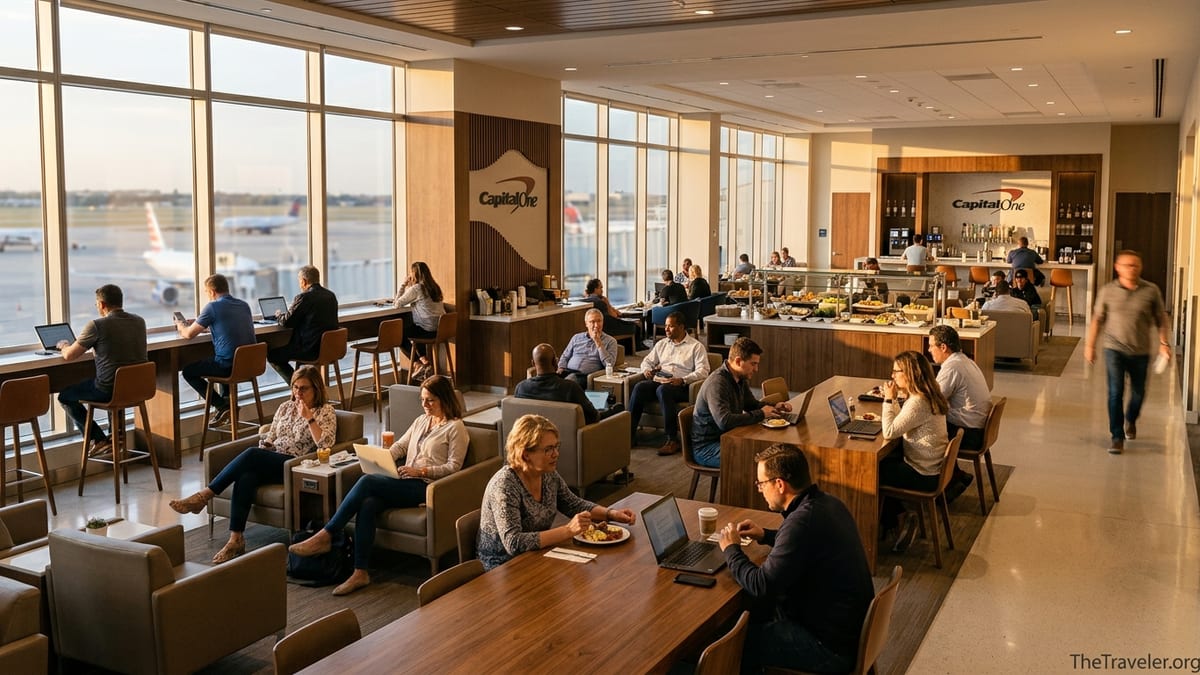
Inside, Capital One Lounges are deliberately designed to feel more like a modern coworking space or boutique hotel lobby than a traditional airport club. At DFW, for instance, you walk into a bright, high ceiling room with floor to ceiling windows overlooking the ramp and a mix of armchairs, communal tables and semi private nooks. Power outlets and USB ports are built into almost every seating option, and the color palette leans toward warm woods and textiles rather than the cool corporate look that dominates many older lounges.
Noise levels tend to be moderate rather than library quiet. In practice the main seating areas at DFW and Denver often buzz with conversation during evening bank departures, while the so called “quiet work zones” and tucked away corners attract laptop users trying to join video calls. Compared with packed main terminals, though, the environment usually still feels noticeably calmer, especially during midmorning and midafternoon lulls.
Capital One has also leaned into local touches to keep the experience from feeling generic. In Dallas that has meant regional art and Texas inspired menu items; in Denver you are more likely to see nods to mountain culture and local craft coffee. Travelers who regularly bounce between networks often describe Capital One Lounges as slightly less formal than an Amex Centurion Lounge and more design conscious than many Priority Pass locations operated by airlines or independent vendors.
One important real world detail is crowding. When the DFW lounge first opened, Venture X cardholders frequently reported walking straight in. By 2025 and 2026, capacity controls and “waitlist” messages at peak hours became more common, especially on Sunday afternoons and weekday mornings. If you are flying during a busy holiday period, it is realistic to expect that access may be delayed or briefly paused even if you technically have the right card.
Amenities You Can Realistically Expect Inside
The Capital One marketing language focuses on “elevated amenities,” but what does that actually translate to on the ground? Across the current lounges you can expect a strong food and beverage program, a handful of wellness focused extras, and thoughtful practical touches that frequent travelers will appreciate more than splashy gimmicks.
Food is a central part of the experience. At the DFW lounge, for example, you will typically find a buffet with hot dishes such as seasonal pastas, braised meats, roasted vegetables, hearty breakfast scrambles and steel cut oats in the morning, alongside a cold bar of salads, fruit and grab and go items. Many travelers treat the lounge as a full meal stop, replacing an airport restaurant visit that might easily cost 25 to 35 dollars per person. Portions are not plated by staff; you serve yourself, which keeps things efficient on short connections.
On the beverage side, lounges feature self pour soda machines, espresso and drip coffee, infused waters and a staffed bar offering complimentary beer, wine and a focused cocktail list. At DFW and IAD, the bar programs have included regionally sourced beers and a few house cocktails; premium spirits or certain wines may carry a surcharge, but many guests never need to open their wallets once inside. For a traveler who might otherwise have bought two airport cocktails at 16 to 20 dollars each, this benefit alone can offset much of the perceived value of entry.
Beyond food and drink, amenities vary slightly by location but commonly include shower suites that can be reserved at the front desk, quiet nursing rooms for parents, luggage lockers, and sometimes small fitness rooms or stretching areas stocked with mats and resistance bands. Wi fi is free and generally faster and more reliable than what you will find in the public concourse. In practical terms, this means a long haul flyer connecting through DFW can land from an overnight flight, shower, change clothes and have a proper breakfast before boarding a domestic hop without ever leaving the secure area.
How Lounge Access Works After the 2026 Policy Changes
The most significant changes to the Capital One lounge ecosystem in 2026 have not been inside the lounges but at the door. Beginning on February 1 2026, Capital One tightened access rules for its premium Venture X cards, especially around guests and authorized users. For frequent travelers this has changed how families and small groups plan their airport time together.
Today, the easiest way to get complimentary access is still to hold the Capital One Venture X Rewards Credit Card or the Venture X Business card. Primary cardholders on these products receive unlimited complimentary entry to Capital One Lounges, Capital One Landing locations and participating Priority Pass lounges, subject to space and standard same day boarding pass requirements. You present your physical card or a digital lounge pass in the Capital One mobile app at the front desk.
Where things have shifted is the cost of bringing others. As of February 2026, guests of Venture X cardholders no longer automatically receive free admission. Unless you have spent roughly 75,000 dollars or more across your Venture X account in a calendar year, each adult guest at a Capital One Lounge will typically cost around 45 dollars per visit, with children aged 2 through 17 charged about 25 dollars and children under 2 admitted free. At Priority Pass locations accessed through Venture X, guest fees commonly run around 35 dollars per person. These charges post directly to your credit card statement rather than being collected at the lounge door.
Authorized users have also seen their benefits curtailed. Additional cardholders on a Venture X account no longer get complimentary lounge access by default. Instead, the primary cardholder can choose to pay an annual fee in the neighborhood of 125 dollars per authorized user to grant them unlimited lounge access privileges for the year. Some existing authorized users were grandfathered under older rules for a time, which has led to confusion as those benefits expire at different dates in 2026.
There is one important spend based exception: if a primary cardholder and eligible additional cardholders put at least about 75,000 dollars of purchases on the Venture X account in a calendar year, they can unlock complimentary guest access benefits for a limited period. In practice, this has mainly affected high spending business owners or heavy travelers who can realistically hit that threshold; casual users should plan on paying guest fees or having each frequent traveler in the family carry their own qualifying card.
Day Passes, Walk In Access and How Much You Will Actually Pay
Not every traveler inside a Capital One Lounge is a Venture X or high tier Capital One cardholder. Capital One has kept open the option for paid entry, which can be attractive if you value a quiet meal and workspace on a long day of travel but do not want to commit to a premium credit card. Pricing can shift over time, but in 2026 a standard walk in day pass typically runs around 90 dollars per person for travelers without any qualifying Capital One cards.
For Capital One cardholders who do not have complimentary lounge access baked into their benefits, there are often slightly discounted rates. Some resources reference single visit passes priced near 65 dollars for eligible cardholders. For example, a traveler holding a mid tier Capital One travel card that does not include free lounge access might still be able to purchase a discounted day pass before a six hour layover in Dallas and treat it as the equivalent of a nice airport meal and workspace for the day.
From a value perspective it helps to compare lounge pricing to what you would otherwise spend in the terminal. A solo traveler who would likely buy a sit down restaurant meal, a coffee, a snack and possibly a second drink over the course of several hours can easily spend 60 to 80 dollars at a major U.S. hub airport. For couples or families, that number rises quickly. Lounges also bundle in Wi fi, power, seating and showers, which you would otherwise have to patch together from crowded gates, paid shower facilities or public restrooms.
However, the equation changes if you travel light, prefer to wander the terminal, or already have access to other lounges through airline status or cards like the Amex Platinum or Chase Sapphire Reserve. In those cases, a Capital One Lounge day pass might make sense only in specific circumstances, such as when your other lounge options are particularly crowded or located in a different terminal that requires re clearing security.
How Capital One Lounges Compare to Other Major Lounge Networks
In practice, most frequent travelers do not experience Capital One Lounges in isolation. Instead, they compare them against other options available on a given itinerary, such as an American Airlines Admirals Club, a Priority Pass independent lounge, an Amex Centurion Lounge or a Delta Sky Club. Each network has its own strengths and quirks, and Capital One fits into this landscape as a high quality but still niche option.
Against Amex Centurion Lounges, Capital One facilities are generally seen as competitive in design and food quality, with a slightly more relaxed, less crowded feel at the moment simply because there are fewer locations and fewer eligible cardholders. Centurion Lounges often win on variety of amenities and depth of locations, but they also attract heavy traffic in places like Dallas, Miami and New York LaGuardia, where waitlists and time limits have become commonplace.
Compared with airline operated clubs such as Admirals Clubs or United Clubs, Capital One Lounges typically offer better complimentary food and a more contemporary space, but they lack the direct integration of gate agents, rebooking assistance and boarding announcements that airline lounges provide. If your priority is a full meal and a place to work, Capital One often wins. If you are worried about irregular operations and want quick access to airline staff, an airline club can still be the smarter base of operations.
Relative to Priority Pass lounges, which vary widely in quality from bare bones rooms with chips and soda to upscale spaces with a la carte dining, Capital One Lounges represent the upper end of the independent lounge spectrum. Venture X cardholders might route through DFW specifically to use the Capital One Lounge rather than a more basic Priority Pass option elsewhere in the airport. On the other hand, because Capital One’s footprint is so small, many trips will still rely primarily on the Priority Pass network, with a Capital One Lounge visit as a pleasant bonus when geography aligns.
How to Plan Your Trip Around Capital One Lounge Access
Given the tighter guest rules and limited number of locations, making the most of Capital One Lounges in 2026 requires a bit of planning. The first step is to take honest stock of your card portfolio and travel habits. If you hold a Venture X card and take several trips a year through DFW, IAD, DEN or LaGuardia, it can make sense to build in slightly longer layovers, especially on international connections, so that you have enough time to check in, eat, shower and relax without rushing.
If you often travel with a spouse or partner who flies without you, it may be worth running the math on paying the extra annual fee to grant that authorized user their own unlimited lounge access. For example, if your partner takes eight round trips a year and expects to use a lounge on most of them, an incremental 125 dollar authorized user lounge fee effectively prices each lounge visit at only a few dollars, far less than a paid day pass.
Families with children should pay close attention to guest pricing. A family of four with two adults and two kids over age two could easily face entry charges of more than 140 dollars per visit if they rely on a single primary cardholder who has not hit the 75,000 dollar annual spend threshold. In these situations, it can be more economical for two adults each to carry their own premium lounge access card, or to reserve Capital One Lounge visits for especially long travel days while using more affordable options such as Priority Pass restaurants or basic airline clubs on shorter trips.
Finally, remember that access is always subject to space. Even with the right card in your wallet, you may occasionally find a short waitlist in front of the DFW desk during peak banks. Building in an extra 15 to 20 minutes of buffer time on connections where lounge access is a priority can help avoid frustration if staff need to control entry temporarily.
The Takeaway
Capital One Lounges have carved out a clear niche in the increasingly crowded world of premium airport spaces. With attractive design, strong food and beverage offerings, useful amenities like showers and lockers, and a more playful atmosphere than many legacy clubs, they offer genuine value, particularly for travelers who pass regularly through DFW, Washington Dulles, Denver or New York LaGuardia.
At the same time, the 2026 shift in guest and authorized user policies has meaningfully changed how easy it is to share that experience. What used to be a standout perk for families and groups is now a more individual focused benefit, unless you are willing to pay guest fees or put very high annual spend through your Venture X account. For some cardholders, that will be a deal breaker; for others, the combination of a relatively moderate annual fee, ongoing travel credits and lounge access will remain compelling.
For travelers trying to decide whether Capital One Lounges should factor into their airport strategy, the practical answer is to treat them as a high quality extra rather than a sole reason to choose an itinerary or credit card. When your route lines up with a Capital One Lounge, the experience can be a highlight of your trip. When it does not, you will still have a wide world of airline and partner lounges to explore.
FAQ
Q1. Who gets free access to Capital One Lounges in 2026?
Primary holders of the Capital One Venture X and Venture X Business cards get unlimited complimentary entry to Capital One Lounges and Landings, subject to space and same day boarding pass rules.
Q2. How much does it cost to bring a guest into a Capital One Lounge?
After the 2026 changes, most Venture X cardholders pay roughly 45 dollars per adult guest and about 25 dollars per child aged 2 to 17 at Capital One Lounges, while children under 2 are typically free.
Q3. Can authorized users still get complimentary Capital One Lounge access?
New authorized users no longer receive free lounge access automatically. The primary cardholder can instead pay an additional annual fee, around 125 dollars, to grant a specific authorized user unlimited lounge access for the year.
Q4. Is there a spending threshold that improves lounge benefits?
Yes. Venture X primary cardholders and eligible additional cardholders who spend about 75,000 dollars in a calendar year can unlock complimentary guest access to Capital One Lounges and Landings for a set period, reducing or eliminating per visit guest fees.
Q5. Do I need my physical card to enter a Capital One Lounge?
In most cases you can present either your physical Venture X card or a digital lounge pass generated inside the Capital One mobile app, along with a same day boarding pass, to gain entry.
Q6. What is the difference between a Capital One Lounge and Capital One Landing?
Capital One Lounges are full service spaces with extensive seating, buffets, bars and amenities such as showers, while Capital One Landing locations are smaller, food and beverage focused spaces that feel closer to upscale airport restaurants with lounge style seating.
Q7. Can I buy a day pass if I do not have a Venture X card?
Yes. Travelers without qualifying cards can usually purchase a walk in day pass, often priced around 90 dollars per person, although exact rates can vary by time and location.
Q8. Are Capital One Lounges usually crowded?
Crowding depends on the airport and time of day. Locations like DFW can experience short waitlists during peak travel banks or holidays, while midmorning and late evening periods are often calmer.
Q9. How do Capital One Lounges compare to Amex Centurion Lounges?
Capital One Lounges are generally competitive on design and food quality and sometimes feel less crowded, but Amex Centurion has a larger global footprint and more locations in major hubs.
Q10. Is it worth planning a longer layover just to use a Capital One Lounge?
For travelers who value a proper meal, showers and a quiet workspace, adding 60 to 90 minutes to a connection at an airport with a Capital One Lounge can be worthwhile, especially on long travel days or after overnight flights.