


The Bay of Naples is home to two legends that tempt almost every traveler planning a southern Italy itinerary: glamorous Capri and quietly magnetic Ischia. Both are volcanic islands within a couple of hours of Naples, both ringed by dramatic cliffs and cobalt water, and both offer memorable food, views, and Mediterranean light. Yet the impression they leave could not be more different. Choosing between them is less about which is better, and more about which one fits the trip you want to remember years from now.
Get the latest updates straight to your inbox!
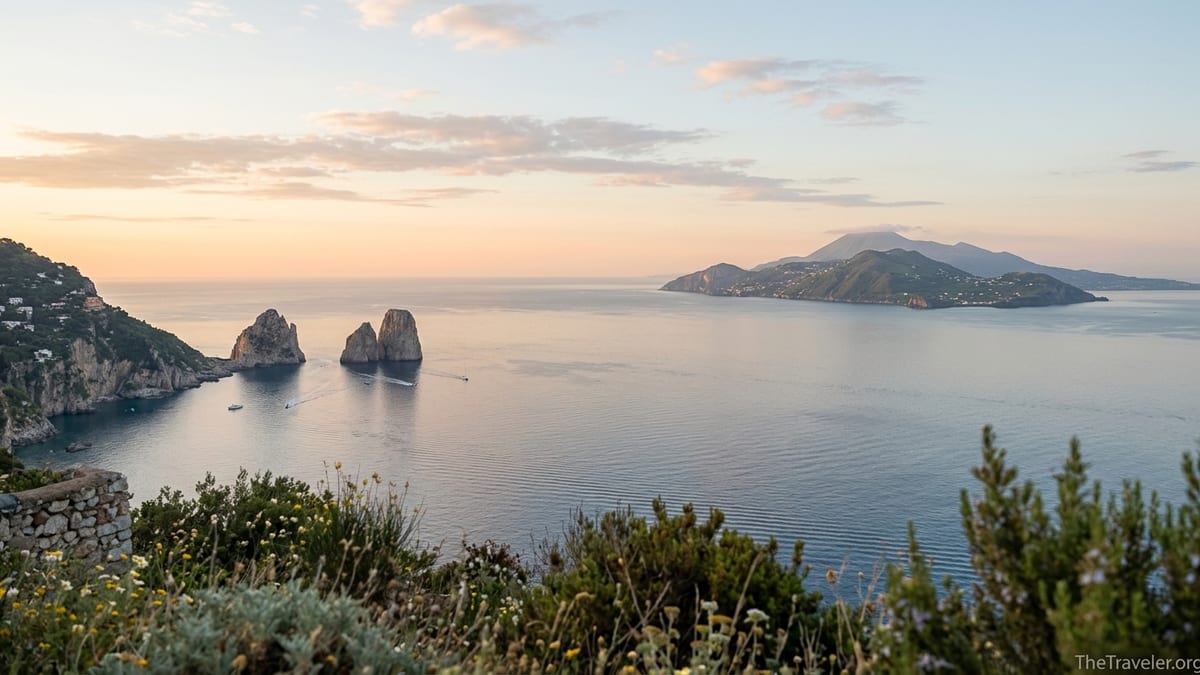
First Impressions: Glamour vs Slow-Burn Charm
Step off the hydrofoil in Capri and the first impression is energy. At Marina Grande you are greeted by gleaming private yachts, polished cafes, porters in crisp uniforms loading luggage into open-top taxis, and a constant flow of day-trippers queuing for the funicular up to Capri town. In high season, the little square known as the Piazzetta feels like a stage set for a fashion shoot, with designer boutiques and hotel terraces stacked above the harbor. It is easy to see why Capri has been a jet set icon for decades.
Ischia’s welcome is different. Arriving at Ischia Porto, the waterfront is lively but more lived-in, with local commuters stepping off the same ferries as holidaymakers. Everyday shops sit beside gelato counters, and the sidewalks carry more families with beach bags than luxury shoppers with branded carriers. Wander ten minutes inland and you are just as likely to pass a neighborhood bakery or a hardware store as a souvenir stand, a reminder that Ischia is a working island with a resident population far larger than Capri’s.
These first few hours often set the tone for the entire stay. Travelers who crave people-watching, polished hotels and a feeling of being somewhere unmistakably “special” tend to fall hard for Capri within minutes. Those who relax more in places that feel local, slightly rough around the edges and less choreographed often find Ischia wins them over slowly: perhaps on a quiet bus ride across the island’s green interior, or during a sunset stroll in Forio when locals gather on the sea walls with paper cones of fried seafood.
Neither impression is better or worse, but they are distinct. If you picture yourself in linen and sunglasses on a terrace above a superyacht-filled bay, Capri will match that mental image exactly. If your ideal memory is of hot springs, simple trattoria dinners and coastal walks with more pine trees than selfie sticks, Ischia may leave the deeper mark.
Costs, Crowds and Practicalities
Logistics alone can tilt the decision. Both islands are reached by ferry or hydrofoil from Naples, with journey times from about 50 minutes on a fast boat to roughly 80–90 minutes on regular ferries. As of 2026, a one-way hydrofoil from Naples to Capri often runs in the region of 22 to 28 euros in peak months, while standard ferries can be a bit cheaper but slower. To Ischia, standard ferry tickets can start around 11 to 15 euros one way, with hydrofoils typically in the high teens to around 20 euros, depending on the company and season. Extra fees for luggage are common on both routes, so it is worth checking fine print when booking.
On the ground, Capri is consistently more expensive. A simple espresso at a table on the Piazzetta can easily cost twice what you would pay standing at the bar in Naples, and even casual lunches near the center often start around 20 to 25 euros per person for a main course and water. Midrange double rooms in Capri town or Anacapri can climb well above 300 euros per night from June to September, with luxury properties charging several times that. On Ischia, you can still find comfortable family-run hotels with pools in villages like Forio, Lacco Ameno or Sant’Angelo frequently in the 150 to 250 euro per night range in shoulder season, with prices rising but generally remaining lower than Capri’s in high summer.
Crowds are another major factor. Capri swells with day-trippers, particularly between late May and early October. On a sunny Saturday in July, you might spend 20 to 30 minutes queued for the funicular in Marina Grande, then find narrow lanes in Capri town packed shoulder-to-shoulder by midday. It is still magical to walk out to the Gardens of Augustus and look over the Faraglioni sea stacks, but you will almost certainly share the moment with tour groups and Instagram crews. Ischia absolutely receives tourism, yet because the island is larger, has multiple ports and spreads visitors between beaches, thermal parks and hill towns, it tends to feel less saturated except in the most popular spots around Ferragosto in mid-August.
For a traveler on a tighter budget or someone who gets stressed by crowds, these practicalities matter as much as scenery. If you have three nights and want a relaxed pace without worrying about every gelato splurge, Ischia usually gives you more breathing room. If you are comfortable paying a premium for the buzz and famous views, Capri rewards that splurge with a setting that feels like nowhere else.
Landscape, Beaches and Swimming
Capri is dramatic rather than beachy. Sheer cliffs drop straight into deep blue water, with small coves wedged between rock faces. The island’s most iconic sights are geological: the Faraglioni sea stacks rising from the sea, the luminous Blue Grotto, the switchback Via Krupp path carved into a cliff. Public beaches do exist at Marina Grande and Marina Piccola, but they are relatively small bands of pebbles and can be extremely crowded in summer. Many visitors opt instead for paid beach clubs where you rent a sunbed on stone platforms or tiny patches of sand, often paying 30 to 50 euros per person in peak season for a lounger and umbrella at well-known spots.
Ischia offers more and longer stretches of sand. Maronti Beach, for example, arcs for nearly three kilometers along the south coast and has a mix of free areas and stabilimenti where a pair of loungers and an umbrella can be significantly cheaper than the equivalent on Capri. The Bay of Citara near Forio combines a broad sandy beach with access to one of the major thermal parks. On the northern side, the sandy crescent of San Montano allows for gentle entries into shallow water, ideal if you are traveling with children. It is entirely possible to spend a week on Ischia moving between different beaches without repeating the same stretch of coast.
Swimming experiences differ too. Around Capri, the water often feels wilder and deeper, with boat tours circling sea caves and rock arches. A classic day involves boarding a small shared boat at Marina Grande, cruising beneath the Faraglioni, and, if sea conditions permit, transferring to rowboats to enter the Blue Grotto. On Ischia, swimming is more often linked to the island’s volcanic nature, with hot springs bubbling up in the sand near fumaroles at Maronti or feeding seaside thermal pools where steam rises in cooler months.
If your strongest travel memories come from big, cinematic views and postcard silhouettes, Capri’s cliffs will likely imprint themselves on your mind. If you are happiest padding down a long beach in bare feet or finding a quiet cove to float for an hour, Ischia arguably offers more variety and space to make those moments your own.
Thermal Waters, Wellness and Slow Days
One area where Ischia stands apart is its thermal culture. As a volcanic island, it boasts numerous hot springs, fumaroles and mineral-rich waters that have been used for centuries. Today this heritage translates into large thermal parks, such as Giardini Poseidon in the Bay of Citara and Negombo in Baia di San Montano, where you can spend a full day soaking in a series of pools at different temperatures, wandering terraced gardens and relaxing on private beaches. Recent price lists for Poseidon suggest adult day tickets can approach the 50 to 60 euro range in high season, with discounts for children and partial-day options, which is still competitive compared with what you might pay for a few hours at a luxury spa elsewhere in Europe.
These parks create the kind of unhurried, sensory memory that many travelers associate with Ischia. Picture arriving mid-morning, finding a shady lounger under a palm tree, alternating between a hot pool overlooking the sea and cooler seawater pools, then breaking for a simple lunch of grilled fish and local white wine at a terrace restaurant inside the park. Families tend to linger here too, with parents soaking while children move between pools under lifeguard supervision. Even outside the big parks, smaller hotels often pipe thermal water into their own pools, so an afternoon spent drifting from hot to cool baths becomes a normal part of the day rather than a rare treat.
Capri, by contrast, is not a thermal destination. Its appeal lies more in vistas, architecture and ambiance than in hot springs. Wellness experiences tend to take the form of high-end hotel spas with treatment menus and infinity pools that look out to the sea. An afternoon might involve a massage followed by time in a designer pool rather than a circuit of dozens of mineral baths. For some travelers, that branded luxury feels more memorable than rustic pools on terraced hillsides; for others, Ischia’s springs and the casual way locals treat balneotherapy as part of everyday life leave the greater impression.
If you think your standout island memory will be a long day of doing almost nothing except soaking, reading and napping between thermal dips, Ischia is the stronger choice. If you prefer your relaxation framed by sleek design and views from a hotel spa terrace rather than natural hot springs, Capri can still deliver a luxurious version of “wellness,” simply in a different key.
Culture, Villages and Evening Atmosphere
Capri compresses much of its cultural and social life into two main centers: Capri town and Anacapri. In Capri town, evenings revolve around the Piazzetta and surrounding lanes, where cafe tables fill with people sipping aperitivi and watching the scene. Luxury boutiques from international brands line Via Camerelle and nearby streets, and it is common to see visitors in carefully curated outfits strolling between window displays and hotel bars. Cultural sights such as the Charterhouse of San Giacomo or the Gardens of Augustus provide a break from shopping, while the Roman ruins of Villa Jovis and the cliffside Villa Lysis above town offer quieter, more reflective visits for those who make the uphill walk.
Anacapri, set higher on the island, has a more village-like atmosphere with small churches, artisan workshops and lanes that feel distinctly less polished than Capri town. The chairlift to Monte Solaro departs from here, carrying visitors to a panoramic viewpoint where, on a clear day, you can see the Sorrentine Peninsula, the Amalfi Coast and the blue expanse toward the islands of the Pontine archipelago. Evening in Anacapri is often calmer, with family-run restaurants serving gnocchi alla sorrentina or rabbit in white wine, dishes typical of the region.
Ischia spreads its life across several towns, each with a different personality. Ischia Porto is the transport hub, with a lively strip of bars and restaurants along Via Roma and Corso Vittoria Colonna. Forio on the west coast offers a mix of historic churches, seafront promenades and sunsets over the Tyrrhenian Sea. Lacco Ameno has a chic but lower-key atmosphere, with boutique hotels and the famous Fungo rock offshore. Sant’Angelo, on the south coast, is an almost pedestrian-only village that clings to a rocky promontory, its pastel houses tumbling down toward a small harbor and sandy beaches.
Evenings on Ischia tend to feel more relaxed and local. You might sit at an outdoor table in Forio’s old town eating spaghetti alle vongole while children ride bicycles across the piazza and elderly residents chat on benches. There are fewer destination cocktail bars with international DJs, and more traditional wine bars pouring carafes of island-grown Biancolella and Forastera. For some visitors that lack of overt spectacle is precisely what makes Ischia memorable: it feels like being briefly absorbed into the rhythms of an Italian seaside town rather than stepping onto a glamorous stage.
Signature Experiences That Stay With You
Both islands offer specific experiences that linger long after the trip, though their character differs. On Capri, one of the defining memories for many travelers is the boat circuit of the island. Boarding a small gozzo at Marina Grande, you follow the coastline beneath limestone cliffs, pass under natural arches, and, if the captain judges conditions safe, glide into small grottoes where sunlight turns the water surreal shades of blue and green. If the sea is calm and the Blue Grotto is open, transferring to tiny rowboats and ducking through the low entrance to emerge in the glowing interior can feel like stepping into a myth, even if you share the cave with a dozen other boats.
Another Capri moment that tends to stick is the view from Monte Solaro. After riding the single-seat chairlift up from Anacapri, you step off into a panorama that seems almost too dramatic to be real: the Faraglioni below, ferries tracing white lines across the bay, the bulk of Mount Vesuvius on the horizon. Visitors often end up lingering longer than planned at the summit cafe, nursing a coffee or spritz simply to keep absorbing the view. Strolling back through Anacapri’s narrow streets, stopping to buy handmade sandals or ceramics, completes the sense of a day shaped around vistas and craftsmanship.
On Ischia, signature experiences tilt more toward water and land. A classic day might start with a bus or taxi to the trailhead for Mount Epomeo, the island’s highest point. The hike passes chestnut woods and tufa rock formations before opening onto views over the Bay of Naples and Capri itself in the distance. After descending, an afternoon at a thermal park or a quiet beach such as San Montano rounds out the day. Many travelers remember not just the sights but the feeling of their muscles easing in hot pools after a morning on the trail.
Another lasting Ischia memory often involves Castello Aragonese, the fortress on a rocky islet connected to Ischia Ponte by a causeway. Exploring its ramparts, churches and gardens, you look back across the water to the pastel houses of Ischia Ponte and out to sea where ferries move between the islands. Arriving toward late afternoon and staying until golden hour, when the stone walls warm in the light and swifts circle the towers, can feel quietly cinematic without the performance aspect sometimes present on Capri.
Who Will Love Capri, Who Will Love Ischia?
In the end, the question of which island leaves a bigger impression is really about matching place to personality. Capri often resonates most with travelers who enjoy a sense of occasion. If your favorite memories from trips involve dressing up a little for an aperitivo, browsing small designer boutiques, staying in stylish hotels and feeling the hum of a place that the world knows by name, Capri will likely carve itself deeply into your imagination. The specific sights, from the Faraglioni at sunset to the narrow Via Krupp zigzagging down toward the sea, have a way of appearing in your mental highlight reel long after you have flown home.
Ischia tends to enchant those who value atmosphere over fame. If you prefer long stays to quick hits, like getting to know bus routes and bakery staff, and feel more attached to places where tourism folds into everyday life, the island’s mix of thermal culture, beaches and understated towns may leave the stronger mark. Travelers who visit for four or five days often say that Ischia felt like a place they could return to year after year, in part because there is always another bay or hot spring to discover and because prices allow for a slower pace without constant budgeting.
For some visitors, the perfect solution is not choosing at all. In late spring or early autumn, it is genuinely feasible to spend two nights on Capri and three or four on Ischia in a single trip, using ferries that connect the islands directly in season or routing back through Naples. That way, you can experience Capri’s intensity without fatigue, then decompress into Ischia’s softer rhythm. Even in that case, most people find that one of the two ends up becoming their personal favorite, the place they imagine when they think “back to the Bay of Naples.”
If time or budget means choosing only one, think about what story you want to tell when you describe the trip later. If you want to talk about glamour, vertical landscapes and world-famous views, Capri fits that narrative. If you want to talk about hot springs, local wine, sandy beaches and feeling for a while like a regular in an Italian seaside town, Ischia is more likely to supply the anecdotes.
The Takeaway
Capri and Ischia sit within sight of each other, but they offer distinctly different ways to fall in love with the Bay of Naples. Capri is compact, vertical and overtly glamorous, a place where almost every viewpoint looks like a brochure cover and every coffee break costs a little more but comes with a side of spectacle. Ischia is broader, greener and gentler, a working island that happens to be threaded with hot springs and beaches, where prices and space make it easier to stay longer and settle in.
Neither choice is wrong. The “bigger impression” each leaves is simply tuned to different travelers. Those fueled by iconic images and the thrill of being somewhere the world recognizes will likely declare Capri unforgettable. Those who measure a destination by how easily they can slip into its daily rhythm may discover that Ischia, with its thermal waters, sandy bays and low-key evenings, is the island they keep thinking about long after other stops have blurred together.
When planning, be honest about your priorities. If you have only a day from Naples and crave the headline experience, Capri delivers maximum impact in minimum time, especially if you combine a morning boat tour with an afternoon wander through Capri town and Anacapri. If you have several days, appreciate value and like the idea of mixing hiking, hot springs and beach time, Ischia is more likely to feel like a small world of its own. Either way, the Bay of Naples will probably tempt you back, if only to see what you missed on the island you did not choose this time.
FAQ
Q1. Which island is better for a first-time visitor to Italy, Capri or Ischia?
For a short Italy itinerary focused on headline sights, Capri often makes more sense because its name and landmarks are instantly recognizable and it can be experienced in a concentrated day or overnight. If you have more time, or prefer a less touristy base with beaches and hot springs, Ischia may offer a richer, more relaxed introduction to Italian island life.
Q2. Is Capri really that much more expensive than Ischia?
In general, yes. Ferry tickets are in a similar range, but once on the islands, accommodation, restaurant meals and beach clubs tend to cost noticeably more on Capri. A midrange hotel room in high season, a seafront lunch or a sunbed at a popular beach club can easily be 30 to 50 percent pricier than a comparable experience on Ischia.
Q3. Can I realistically visit both Capri and Ischia on the same trip?
Yes, especially between late spring and early autumn when more ferry connections operate. Many travelers spend one or two nights on Capri for the iconic views and atmosphere, then move to Ischia for four or five nights of beaches and thermal parks. You can connect the islands directly in season or by routing back through Naples.
Q4. Which island is better for beaches and swimming?
Ischia generally wins for classic beach experiences. It has several long sandy stretches such as Maronti and Citara, as well as sheltered bays like San Montano, plus numerous thermal pools by the sea. Capri’s coastline is stunning but steep, with smaller pebble beaches and more emphasis on boat trips around cliffs and caves than on long days on wide sandy shores.
Q5. Is Capri or Ischia better if I am traveling with children?
Families often find Ischia easier. The island offers shallow sandy beaches, plenty of space, family-friendly hotels with pools and thermal parks where children can enjoy some of the facilities. Capri can be wonderful with kids who enjoy boats and views, but its steep lanes, crowds and higher prices mean it is often better as a short visit rather than a long family base.
Q6. How many days should I spend on Capri versus Ischia?
Capri can be sampled in a long day, but staying one or two nights allows you to enjoy early mornings and evenings when day-trippers have left. Ischia rewards longer stays; three to five nights give you time to explore multiple towns, beaches, and at least one thermal park without rushing.
Q7. Do I need to book ferries to Capri and Ischia in advance?
In peak season it is wise to book at least the longer or more time-sensitive crossings in advance, especially hydrofoils at popular times of day. Outside July and August, it is often possible to buy tickets on the day, but checking schedules and availability ahead of time helps avoid surprises, particularly if you are connecting with trains or flights.
Q8. Which island has better nightlife?
Capri has the higher-profile nightlife, with chic bars and some clubs attracting an international crowd in summer, especially around Capri town. Ischia’s evenings are more low-key, centered on seaside promenades, wine bars and late dinners. If you are looking for glamorous late nights out, Capri is the better fit. If your idea of nightlife is a long meal and a stroll with gelato, Ischia will suit you well.
Q9. Is it easy to get around without a car on Capri and Ischia?
Yes on both, though the experience differs. Capri is small, with a network of buses, the funicular and plenty of walking paths; many visitors never miss having a vehicle. Ischia is larger, but its public buses connect main towns and beaches, and taxis or small boat services fill in gaps. Renting a scooter is an option on both islands for confident riders, but most travelers manage comfortably without a car.
Q10. If I love hiking and nature, which island should I choose?
Ischia generally offers more varied hiking, including the ascent to Mount Epomeo and coastal or countryside walks that see fewer crowds. Capri has spectacular but shorter routes, such as the Path of the Forts near Anacapri or walks to viewpoints above the Faraglioni. Hikers who want multiple full-day trails will find Ischia more satisfying, while Capri suits those who prefer shorter scenic walks combined with other activities.