


More news on this day
Venezuela has reopened the cargo gateway at the Caracas-area Simón Bolívar International Airport following weeks of disruption caused by June’s powerful earthquakes, restoring a vital air bridge for trade and humanitarian shipments across the Caribbean and Latin America.
Get the latest news straight to your inbox!
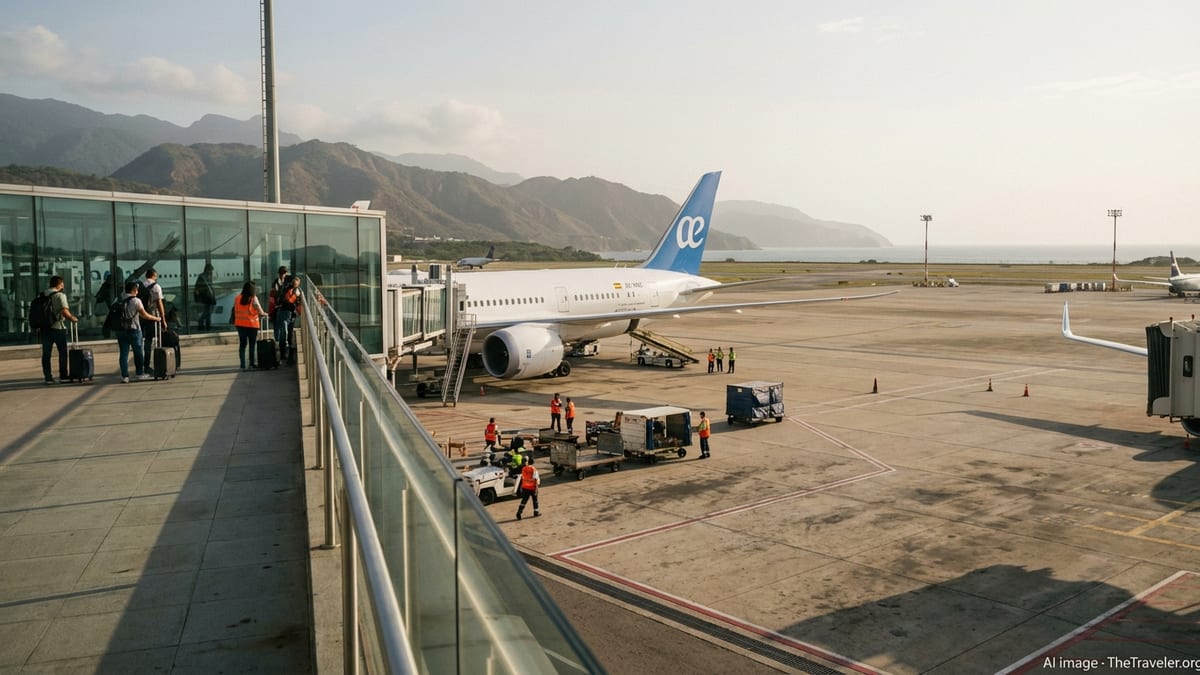
Strategic Gateway Returns to Service After Weeks of Disruption
The reopening of the cargo facilities at Simón Bolívar International Airport, serving Caracas from the coastal city of Maiquetía, marks one of the most significant milestones yet in Venezuela’s recovery from the twin earthquakes of June 24, 2026. Public situation reports and humanitarian assessments describe how the quakes severely damaged airport infrastructure and forced the suspension of commercial operations, including air freight, cutting off the country’s primary aviation logistics hub.
In the weeks since, engineers, military units and contracted specialists have focused on stabilizing runway surfaces, repairing aprons and cargo ramps, and securing key support systems such as power, lighting and fuel supply. Recent updates indicate that priority works on the freight side of the airport have advanced faster than at the passenger terminal, enabling authorities to reopen cargo operations under controlled conditions while broader reconstruction continues.
The decision to restart cargo movements reflects both the airport’s central role in Venezuela’s supply chains and the mounting pressure to normalize trade flows. Simón Bolívar is the country’s main international air gateway, historically handling a high share of time-sensitive imports including pharmaceuticals, high-value components and perishables, in addition to outbound shipments of fresh produce and specialized industrial goods.
Initial operations are reported to focus on scheduled freighter services and chartered relief flights, with capacity increases expected as additional sections of the cargo apron and warehousing complex are certified for use. Passenger traffic remains more limited, although reports suggest phased reopening of parts of the terminal is being planned for later in the year once further safety checks are complete.
From Emergency Airlift to Rebuilding Trade Flows
During the first days after the earthquakes, the enforced closure of the Caracas-area airport sharply constrained the arrival of international relief, according to multiple humanitarian situation reports. Aid agencies and foreign governments were forced to route flights through secondary airfields and neighboring countries, adding time and complexity to the logistics chain at a moment when medical supplies, shelter materials and search-and-rescue teams were urgently needed.
As temporary repairs advanced, a limited number of humanitarian and military-operated flights began using the airfield under strict controls, turning the damaged airport into a mixed-use platform for both emergency response and early recovery. Imagery and public updates from relief organizations have shown aircraft offloading medical cargo, food assistance and technical equipment on portions of the ramp deemed structurally sound.
The formal reopening of the cargo gateway signals a shift from ad hoc emergency airlift toward a more regular pattern of freight movements. Airlines and logistics providers are expected to progressively resume scheduled services linking Caracas with major regional hubs in Panama, Colombia, Brazil and the Caribbean, as well as long-haul connections to North America and Europe where demand justifies the capacity.
Trade analysts note that even partial restoration of cargo operations can have an outsized impact on the pace of economic recovery. Air freight typically handles a small fraction of total trade volume by weight but a disproportionate share by value, particularly for sectors such as pharmaceuticals, electronics, specialized machinery and high-end consumer goods that rely on fast and predictable delivery.
Regional Supply Chains Adjust and Realign
The prolonged disruption at Venezuela’s main airport forced shippers and freight forwarders to improvise. Regional trade press and industry commentary indicate that cargo destined for Caracas was diverted through airports in neighboring countries, with overland trucking used to bridge the final leg where borders and road conditions allowed. Some operators temporarily pivoted to seaborne routes through La Guaira and other ports, accepting longer transit times to maintain basic flows.
These workarounds helped keep a minimum level of goods moving, but they also introduced higher costs and logistical complexity. For time-critical shipments, particularly medical supplies and high-value inputs for industry, the lack of direct cargo access to the Caracas market created bottlenecks and inventory shortages. Retailers and manufacturers reportedly pared back product lines, delayed launches or shifted sourcing to adapt to the uncertainty.
With the dedicated cargo facilities at Simón Bolívar back online, many of these temporary routings are expected to be unwound. Freight forwarders are already signaling interest in reinstating consolidated shipments into Caracas, emphasizing the efficiency gains of direct uplift compared with multi-stop routings. At the same time, some of the alternative corridors forged during the crisis are likely to remain in use as contingency routes, improving overall resilience should future shocks affect a single gateway.
The reopening could also support neighboring economies that act as transshipment and consolidation points. Regional logistics hubs that aggregate cargo for onward distribution to Venezuela may now see steadier flows and the opportunity to expand value-added services, from cold-chain management to light assembly, as trade gradually normalizes.
Safety, Infrastructure Upgrades and Operational Limits
Even as cargo flights resume, public information from humanitarian and technical assessments emphasizes that the airport’s infrastructure remains under significant stress. The earthquakes affected not only visible structures but also subsurface elements such as foundations, drainage systems and utility lines that are critical for safe, sustained operations. Engineers have reportedly prioritized detailed inspections of load-bearing pavements, fuel pipelines and adjacent slopes in the steep terrain surrounding Maiquetía.
To manage residual risk, aviation authorities and international partners have introduced operating restrictions on aircraft size, parking positions and movement patterns on the ground. Airlines are being advised to adjust payloads and flight schedules in line with these constraints, while ground handlers adopt revised procedures for loading, towing and refueling to minimize stress on partially repaired surfaces.
The crisis is also accelerating long-discussed modernization plans for the airport. Regional aviation experts point to renewed interest in seismic retrofitting, runway rehabilitation and the expansion of dedicated cargo facilities that meet modern safety and security standards. Investment proposals under discussion include the reinforcement of warehouses and cold-storage units, upgraded firefighting and emergency-response capabilities, and digital systems for cargo tracking and customs clearance to reduce dwell times.
In the near term, however, the focus remains on ensuring that the reopened cargo gateway operates within clearly defined safety margins. Industry observers note that any significant aftershock activity or evidence of new structural issues could trigger rapid reviews of operating limits and, if necessary, temporary suspensions on specific stands or taxiways.
Implications for Travelers and the Wider Tourism Economy
Although the current reopening centers on cargo, the restored functionality of the airport has indirect consequences for passengers and the tourism sector. A more reliable flow of spare parts, catering supplies and specialized equipment is a prerequisite for airlines planning to bring back regular passenger services, especially on longer international routes that require higher service and maintenance standards.
Travel advisories and consumer reports continue to highlight infrastructure damage across parts of Caracas and the coastal state of La Guaira, suggesting that a full rebound in leisure tourism will take time. However, the ability to move relief materials, reconstruction equipment and commercial goods more efficiently through the airport should support hotel refurbishment, tour operator restarts and the broader visitor economy in the medium term.
Business travel linked to reconstruction projects, energy, logistics and financial services may recover faster than holiday traffic. As cargo operations stabilize and additional parts of the terminal complex are certified for use, airlines are expected to weigh the commercial case for gradually restoring passenger frequencies, particularly on routes where there is pent-up demand from the Venezuelan diaspora.
For now, the reopening of the Caracas cargo gateway stands as a symbolic and practical step in Venezuela’s emergence from one of the most disruptive natural disasters in its modern history, reconnecting the country to regional and global trade routes even as rebuilding continues on the ground.