


More news on this day
Australia’s cruise industry has posted record economic gains for 2023–24, but Carnival Cruise Line’s decision to withdraw two homeported ships from the market in March 2028 underlines growing concerns that the country’s medium‑term cruise outlook is weakening even as current performance peaks.
Get the latest news straight to your inbox!
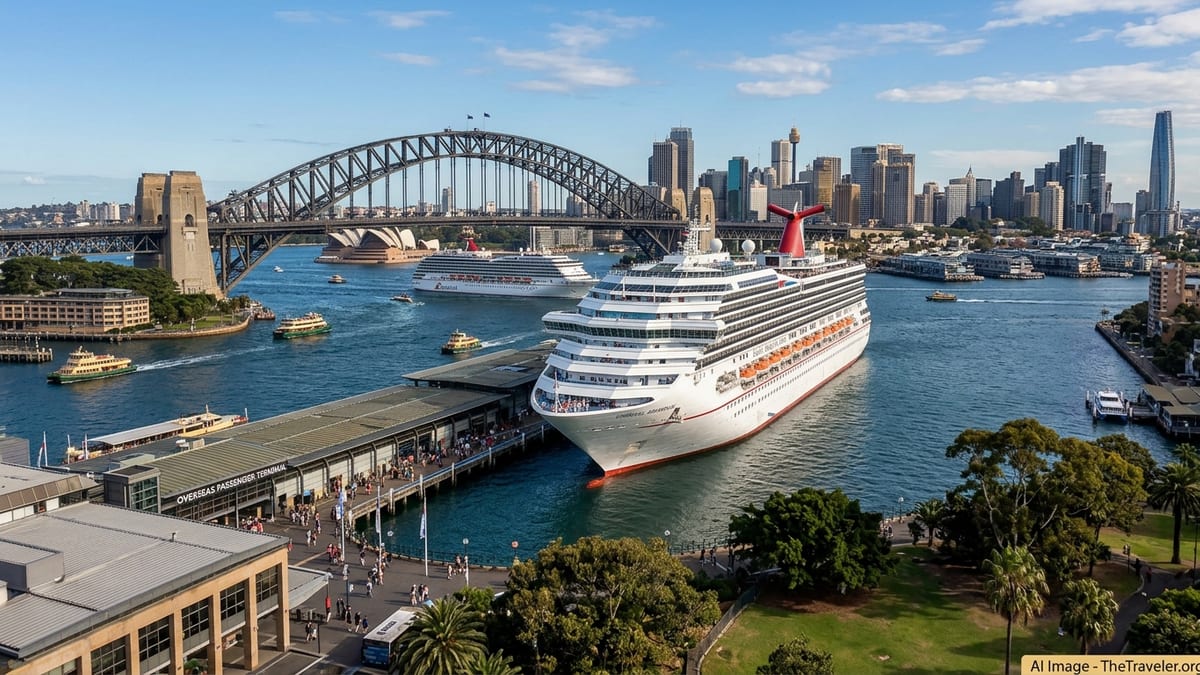
Record 2023–24 economic impact masks emerging pressures
The latest national economic impact assessment commissioned by Cruise Lines International Association (CLIA) Australasia and the Australian Cruise Association shows cruise tourism generated about A$8.43 billion in total economic output in the 2023–24 financial year, up from roughly A$5.6 billion a year earlier. That 49.7 per cent increase marks the highest cruise‑related output yet recorded in Australia and is credited with supporting more than 26,000 jobs across ports, tourism operators and supply chains in the period.
The study attributes the surge to a full year of post‑pandemic operations and strong demand from Australians returning to sea holidays. It also highlights the breadth of spending, from passenger and crew expenditure in port cities to provisioning, port services and ship maintenance, underscoring why ports and regional destinations have viewed cruise as a high‑value tourism segment.
Industry bodies stress, however, that the 2023–24 numbers describe activity already delivered rather than guaranteeing similar gains later in the decade. With deployment decisions made several years ahead, the economic highs now being reported are based on ship capacity that was committed well before today’s policy and cost debates intensified.
CLIA warns of declining contribution and calls for a national plan
Despite the record assessment, CLIA’s global leadership has warned that Australia’s cruise contribution is already slipping on some measures. Speaking on 3 September 2026, CLIA global president Bud Darr said Australia’s cruise economic impact in the most recent financial year he cited had fallen by about A$1.1 billion year on year, to roughly A$7.3 billion, attributing the decline to reduced ship deployment and concerns over competitiveness.
Darr used the figures to renew calls for a coordinated national cruise strategy involving federal and state governments, ports and the industry. CLIA has argued that operators need long‑term certainty on regulation, berthing access and operating conditions to justify basing large ships in Australia, particularly during shoulder seasons when alternative markets may offer stronger returns.
While various governments and port authorities have signalled support for cruise tourism, there is currently no single national framework that guarantees future capacity. For travellers, that means the robust choice of ships and itineraries available today reflects past commitments, and could narrow in future if operators redeploy vessels elsewhere.
Carnival confirms 2028 exit of Luminosa and Adventure
The most concrete sign of deployment pressure came on 15 October 2026, when Carnival Cruise Line announced that Brisbane‑based Carnival Luminosa and Sydney‑based Carnival Adventure will both leave the Australian market in March 2028 as part of what the company described as long‑term global fleet planning. Carnival did not announce any like‑for‑like replacement tonnage based year‑round in Australia after their departure.
Carnival’s statement confirms that Carnival Luminosa will operate a final Australian season before departing Sydney on 15 March 2028 on a 23‑day repositioning voyage to North America. Carnival Adventure is scheduled to leave Sydney on 20 March 2028 on a one‑way sailing to Japan, after which both ships are slated for deployment in other regions.
Carnival Luminosa has a published capacity of around 2,260 lower berths and a gross tonnage of 92,720, while Carnival Adventure is of similar modern big‑ship scale. Together they represent several thousand lower berths of seasonal and year‑round capacity being removed from Australia from late March 2028. Although Carnival Splendor from Sydney and Carnival Encounter from Brisbane are currently planned to continue year‑round, the confirmed exit of two of the four locally based ships amounts to a significant cut by the market’s largest operator rather than a wholesale withdrawal.
What the changes mean for travellers through the late 2020s
For travellers considering a cruise from Australia in the near term, the deployment changes are still some distance away. Carnival and other major lines already have programs on sale covering departures through at least 2027, and the 2023–24 economic results reflect an environment in which ship choice and frequency from Sydney, Brisbane and other ports remains strong.
The more tangible impact is likely to be felt from the 2028–29 season onwards, particularly for guests who prefer Carnival’s style of cruising or who sail regularly from Brisbane and Sydney. With Carnival Luminosa and Carnival Adventure leaving and no replacement homeported ships yet announced, Australians may face fewer Carnival itinerary options, greater reliance on rival brands, or a shift toward fly‑cruising to connect with ships based in Asia, North America or Europe.
Industry groups say safeguarding capacity will depend on how governments and ports respond over the next two years. CLIA has argued that clearer long‑term settings on port infrastructure, environmental regulation and fees could help to retain or attract ships in the second half of the decade, but there is no assurance that policy changes will follow. Travellers planning future cruises from Australia should pay close attention to deployment announcements, check the homeport status of specific ships for 2028 and beyond, and be aware that today’s record cruise economy does not guarantee the same level of choice later in the 2020s.