


More news on this day
Several US embassies across Europe have issued coordinated “holiday season” security alerts dated November 16 and 17, 2026, urging American travelers to stay particularly alert at crowded Christmas markets, shopping centers, transport hubs and other large gatherings during the coming winter holidays. The notices do not cite a specific plot but layer an extra level of precaution on top of existing State Department travel advisories and the current Worldwide Caution.
Get the latest news straight to your inbox!
What the New Holiday Alerts Say
Newly posted security messages from US embassies covering France and Monaco, Belgium, the Netherlands, Switzerland, Norway and other European posts use near-identical wording to warn that, as the holiday season approaches, US citizens should remain vigilant of their surroundings and practice strong personal security and situational awareness. The alerts, titled variations of “Security Alert: Holiday Season” or “Security Alert: Europe,” were released between November 16 and 17, 2026.
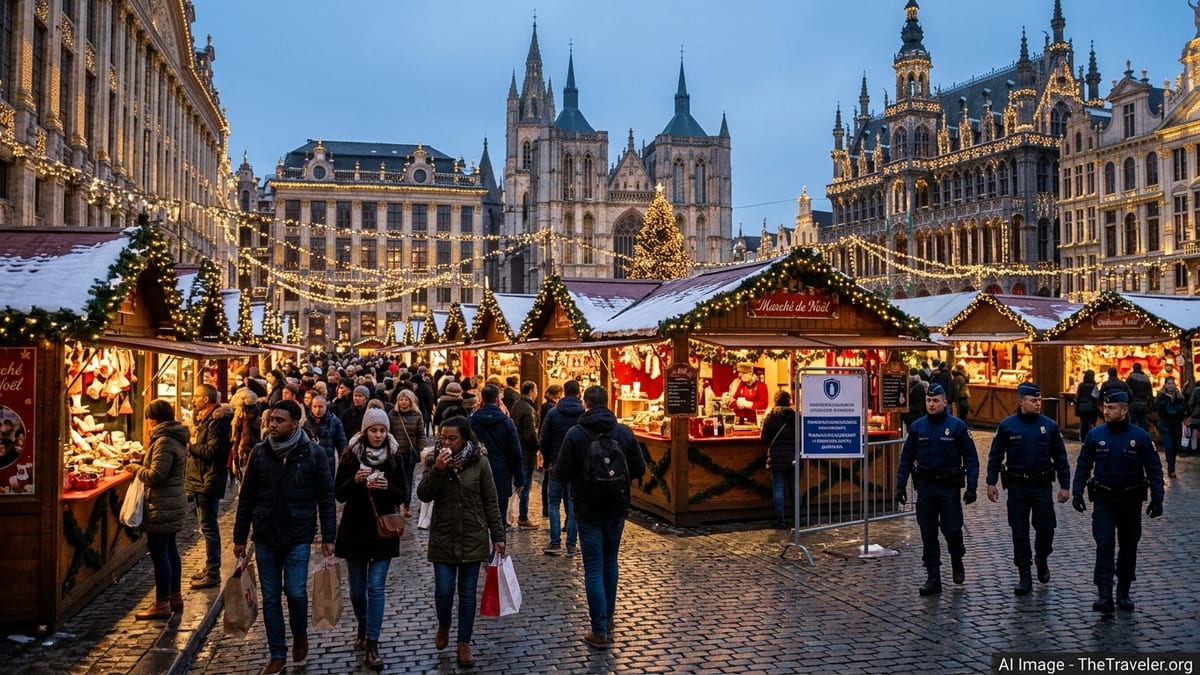
The messages state that terrorists, including lone actors, could attack with little or no warning and that potential targets include Christmas and other holiday markets, transportation hubs, shopping malls, places of worship, tourist locations and other public areas that attract large crowds. They also note that large public events and gatherings can be targets for both terrorist activity and ordinary crime.
Several of the alerts add that disruptions to travel and daily life remain possible during the holiday period because of heightened security checks, protest activity and hoax bomb threats that have previously affected airports and other transport infrastructure in parts of Europe this autumn. None of the embassy messages, however, refers to a newly discovered or specific credible plot.
How These Warnings Fit With Existing Advisories
The holiday alerts are being issued alongside, rather than instead of, the State Department’s standing frameworks. At the global level, a Worldwide Caution first published in May 2026 and updated on July 22, 2026, already advises Americans to exercise increased caution worldwide because of a complex security environment and the potential for unforeseen escalation in some regions.
Country-specific advisories for major European destinations remain in place and have not been fundamentally changed by this latest messaging. For example, France continues to be listed at a Level 2 advisory, which asks US travelers to exercise increased caution due to risks that include the possibility of terrorism and civil unrest. Similar Level 2 advisories cover several other countries where the new holiday alerts have appeared.
The November embassy messages are narrower and more time-bound than the underlying advisories. They focus specifically on the winter 2026–27 holiday period, on crowded venues that are typical of that season, and on the practical steps individual travelers can take. They also reflect the State Department’s practice of sharing the same general threat information with US citizens that is used internally to guide the security posture of its own facilities.
What This Means for US Travelers Heading to Europe
For most visitors, the immediate impact is behavioral rather than logistical. The embassies are not telling Americans to cancel trips to Europe or avoid the continent as a whole; instead they urge travelers to be more deliberate about personal security, particularly when visiting popular seasonal attractions such as Christmas markets, outdoor concerts, ice rinks and major shopping districts.
The alerts recommend that travelers maintain a high level of situational awareness, keep an eye on exits and crowd density, and be prepared to move away from any situation that feels unusual or unsafe. They also highlight the importance of following instructions from local authorities, carrying identification, and avoiding demonstrations or large spontaneous gatherings that might develop into protests.
US citizens are strongly encouraged to enroll in the Smart Traveler Enrollment Program so they can receive embassy messages by email or text while abroad. The alerts further advise monitoring local news, official social media channels and the relevant embassy website for any updates, as well as allowing extra time for airport screening, train-station checks or temporary closures around major events.
Travel Operations and How Long Alerts May Last
As of November 19, 2026, commercial flights and cross-border rail services in Europe are operating normally, and the State Department has not issued a new continent-wide travel advisory or a do-not-travel notice for Europe. The disruptions flagged in the alerts relate mainly to the possibility of localized delays from security measures, protest actions or precautionary responses to hoax threats, rather than to a systemic shutdown of transport.
Historically, seasonal alerts of this kind remain posted through the relevant holiday period, in this case likely into early January 2027, or until they are updated or replaced by new messaging. The exact language or emphasis can change quickly if local conditions shift, if threat reporting evolves or if security measures are scaled up or down by host governments.
Prospective travelers are therefore advised to recheck both the main State Department advisory for their destination country and the security alerts section of the relevant US embassy website shortly before departure and periodically during their trip. That will provide the most current picture of any location-specific restrictions, curfews, demonstration notices or security recommendations that could affect planned visits to markets, museums, religious services or New Year’s events.