


More news on this day
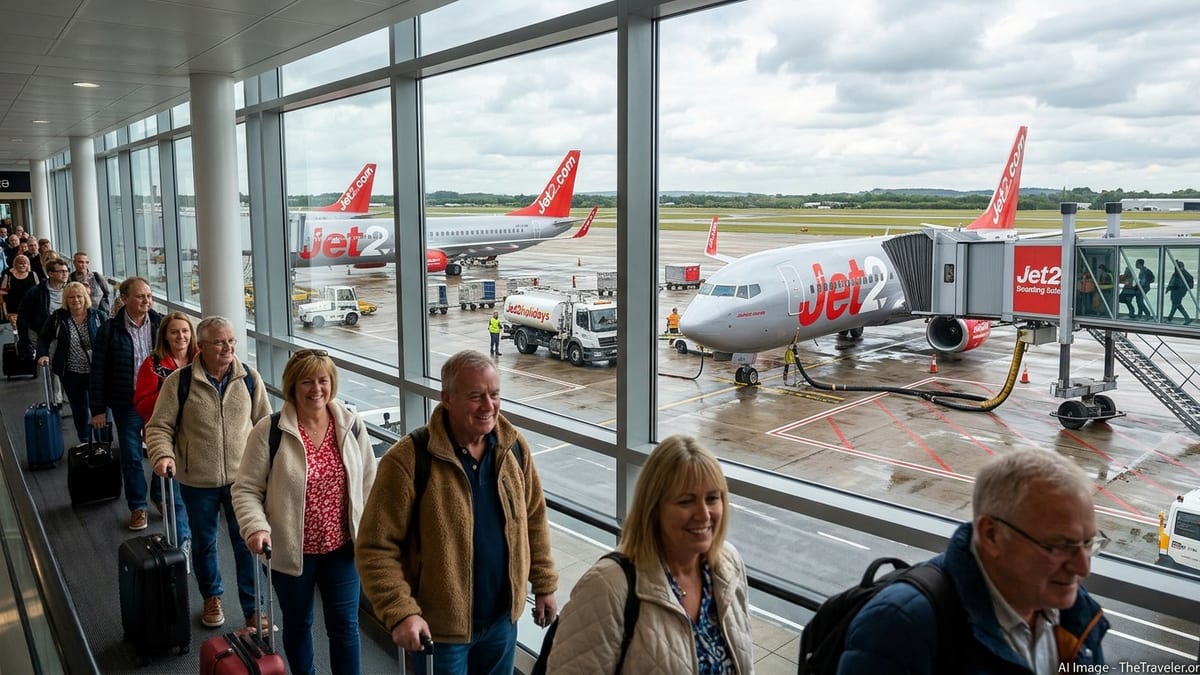
Jet2 has warned that UK holiday prices are likely to rise after its latest half-year results, released on 18 November 2026, showed record passenger numbers but mounting pressure from sharply higher jet fuel costs and a tightening regime of environmental and aviation taxes under the Labour government.
Get the latest news straight to your inbox!
Record revenue, strong demand but weaker margins
In its interim results for the six months to 30 September 2026, Jet2 reported revenue of £5.6 billion and said it had carried a record 15.4 million passengers, both higher than a year earlier, reflecting continued strong demand for package holidays and leisure travel out of the UK.
Despite this growth, management highlighted a squeeze on profitability. In its results commentary and follow-up briefings, the company pointed to rising operating costs, with fuel and government-related charges weighing on margins even as volumes increased.
Chief executive Steve Heapy used the results to signal that fares are likely to move higher, arguing that the combination of structurally more expensive fuel and higher UK tax and environmental charges will need to be recovered, at least in part, through pricing.
Heapy attacks “constant” UK tax rises and new green charges
Heapy was particularly critical of UK policy on aviation taxes and green levies, describing what he called “constant, incessant” tax rises under the current Labour government. He cited increases and planned increases in environmental and aviation-related charges, including sustainability and carbon-linked costs, as key contributors to Jet2’s higher cost base.
The company has also taken aim at the UK’s sustainable aviation fuel mandate, which began in 2025 and is designed to ratchet up the required share of lower-carbon fuels in airlines’ overall uplift over the coming years. Jet2 has warned that, if domestic SAF production fails to keep pace with progressively higher blend requirements, UK-based airlines could be forced to compete for limited volumes or pay penalties, ultimately pushing up fares for UK travellers.
In its commentary on the mandate, Jet2 argues that British holidaymakers risk facing disproportionate fare increases compared with some overseas markets because carriers may effectively have to “pay for fuel that does not exist” when supply falls short of mandated levels, a cost that would eventually filter through to ticket and package prices.
Fuel hedging buffers, but does not eliminate, Europe’s jet fuel shock
Jet2 has moved to shield itself from some of the current volatility in fuel prices by hedging most of its near-term needs. The company says 91 per cent of its winter 2026/27 jet fuel requirement is hedged at about 880 US dollars per metric tonne, and around half of its summer 2027 requirement is hedged at roughly 837 dollars per tonne.
Even with these positions, management emphasises that fuel will remain a significant pressure point. Industry data from IATA show that global jet fuel prices more than doubled between April 2025 and April 2026, with Europe particularly exposed because of its reliance on Middle Eastern supply and disruptions around the Strait of Hormuz. Fuel is projected to account for roughly one-third of airline operating costs in 2026, and many carriers have already trimmed capacity or nudged up fares on selected routes in response.
For Jet2, the current hedges provide temporary cost visibility but do not remove the risk of structurally higher fuel costs feeding through into future seasons. The company’s own planning scenarios assume elevated jet fuel prices persisting into summer 2027, and any further spikes or additional environmental charges would put renewed pressure on margins.
What UK travellers are likely to see this winter and into 2027
Jet2 has joined several European rivals in making targeted capacity adjustments for the coming winter. Since early September the airline has reduced its planned winter 2026/27 programme by around 240,000 seats, citing the need to focus flying where demand and yields best cover higher fuel and regulatory costs.
There is no indication at this stage of widespread cancellations or a collapse in UK leisure capacity. Instead, the adjustments appear concentrated at the margins of the schedule, with weaker-performing routes and off-peak services more exposed. For travellers, that is likely to translate into fewer flight options on some winter departures, especially from certain regional airports, and reduced availability of last-minute deals.
Into summer 2027, Jet2 is still planning year-on-year growth in seat capacity, but it has signalled that fares and package prices will need to reflect the new cost environment. Holidaymakers should therefore expect ongoing upward pressure on prices, particularly at peak school holiday periods and on the most popular Mediterranean and Canary Islands routes.
How to book around rising costs and what to watch next
Given the signals from Jet2 and the wider fuel market, UK leisure travellers looking to fly with the airline over the next 12 to 18 months may benefit from planning earlier than usual, especially for peak weeks such as Christmas, February half-term and the main summer school holidays in 2027.
Booking well ahead can provide more choice on dates and departure airports, while those with flexibility might find better value by targeting shoulder periods outside the busiest weeks, flying midweek rather than at weekends, or considering alternative regional airports where capacity remains stronger.
Because fuel prices, hedging levels and UK aviation tax policy are all subject to rapid change, travellers should recheck the latest information close to booking. Key signals to watch include any further capacity adjustments in Jet2’s published schedules, explicit announcements of new fuel or environmental surcharges, and any government moves to revise SAF mandate timelines, introduce additional green levies or adjust existing charges such as Air Passenger Duty. These factors will help determine how far current cost pressures ultimately flow through to UK holiday prices.