


More news on this day
Flights linking Miami and Caracas were canceled on Thursday after powerful back-to-back earthquakes in Venezuela damaged Simón Bolívar International Airport, disrupting a newly restored air corridor between South Florida and the country’s capital.
Get the latest news straight to your inbox!
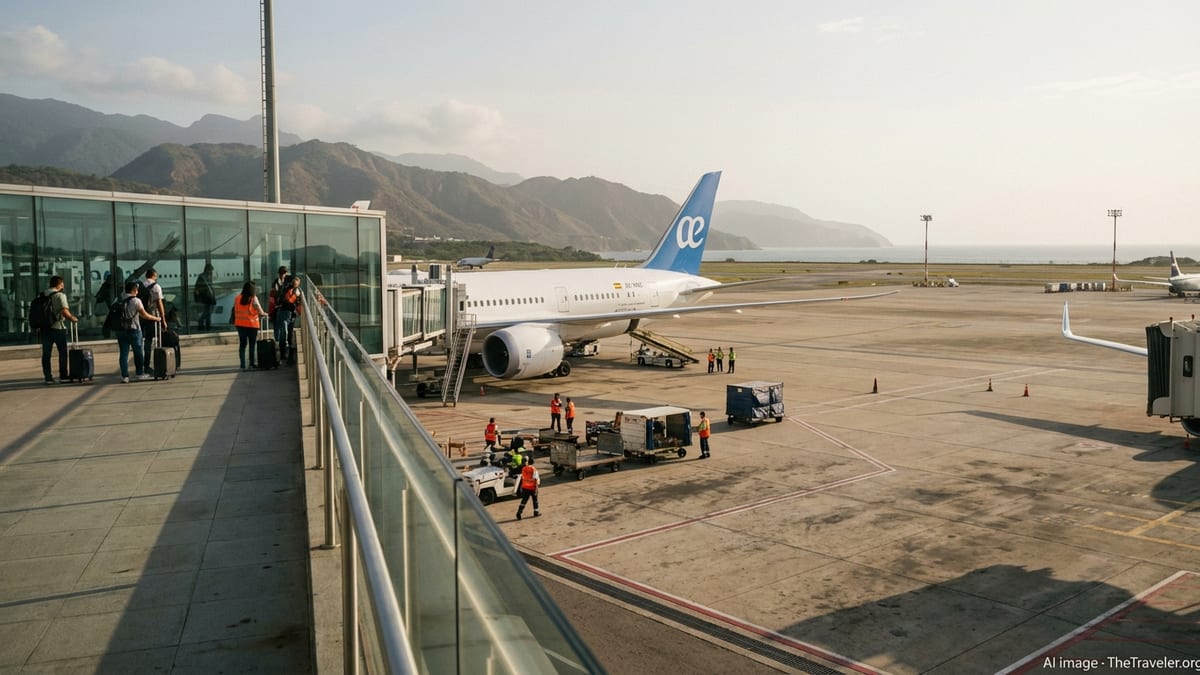
Airport damage halts Caracas operations
Publicly available information indicates that Simón Bolívar International Airport, which serves Caracas from the coastal city of Maiquetía, suspended commercial operations after two strong earthquakes struck northern Venezuela on Wednesday evening, June 24. Images shared by regional and international media show collapsed ceiling panels, dust-filled terminals and debris in passenger areas, prompting an evacuation of the facility.
Reports describe structural damage in parts of the terminal complex and visible cracks on some paved surfaces. While detailed engineering assessments have not yet been made public, the extent of visible damage and the ongoing aftershocks have led airport and airline operators to keep traffic grounded while safety checks continue.
The closure affects the principal international gateway for Venezuela at a moment when air connectivity had only recently begun to improve. Before the earthquakes, Simón Bolívar International Airport had resumed a limited schedule of direct commercial flights to the United States and other regional hubs following years of reduced international service.
Miami departures to Caracas canceled
In Miami, publicly available flight information on Thursday showed that scheduled departures to Caracas were canceled as a direct consequence of the airport shutdown in Venezuela. Local broadcast coverage in South Florida noted that at least two outbound flights from Miami International Airport, planned for June 25, would not operate because their destination airport was unable to receive traffic.
Carriers that had recently relaunched or announced nonstop service on the Miami–Caracas route are now adjusting schedules and advising passengers to monitor updates. Some operators are offering flexible rebooking options for itineraries involving Caracas over the coming days, reflecting the uncertainty around the duration of the closure.
The cancellations are affecting travelers in both directions, including Venezuelan residents returning home, South Florida–based Venezuelan communities visiting family, and business passengers using Caracas as a gateway to other cities in the country. Many travelers are being advised to remain in Miami or delay departure until a clearer operational picture emerges.
Regional and international flight disruptions
The impact is extending beyond South Florida. Published coverage from Latin American and European outlets indicates that multiple foreign carriers have suspended flights to and from Caracas temporarily, citing the airport’s condition and the lack of a firm reopening timeline. Reports mention cancellations or suspensions on routes from hubs such as Madrid and Panama City as airlines evaluate alternative plans.
Other regional airports in Venezuela have remained operational, but most do not offer the same range of international connections as the Maiquetía hub. As a result, rerouting options for long-haul travelers are limited, and some passengers are being advised to postpone trips rather than attempt complex overland or multi-stop itineraries inside the country.
Industry analysts note that even when the runway and basic infrastructure are cleared for use, terminal repairs, power reliability and air traffic management will all influence how quickly normal schedules can resume. Airlines may opt for a phased return, beginning with reduced frequencies and daylight operations while authorities and operators confirm the integrity of facilities.
Safety checks and traveler guidance
According to information made public by news and aviation monitoring services, technical teams are engaged in assessing damage at Simón Bolívar International Airport, including inspections of terminal structures, airside facilities and navigation systems. Aftershocks reported in the region are adding complexity to these efforts, as engineers must verify that repairs or temporary reinforcements remain secure over time.
Travel organizations are advising passengers with tickets between Miami and Caracas to confirm their flight status directly with their airline before heading to the airport, and to consider allowing additional time once operations eventually resume. Some guidance also suggests that travelers keep essential documents, medication and basic supplies in carry-on luggage in case of extended delays or diversions.
Publicly available information from humanitarian groups and local media in South Florida highlights that the disruption is particularly challenging for those attempting emergency travel in response to the earthquakes, including individuals seeking to reach relatives in affected Venezuelan cities. With commercial air options constrained, many are relying on community networks and consular channels for updates.
Uncertain timeline for resuming Miami–Caracas links
As of Thursday afternoon, there was no confirmed date for the full reopening of Simón Bolívar International Airport. Coverage from international outlets characterizes the situation as fluid, noting that the priority in Venezuela remains search and rescue operations, medical care for the injured and stabilization of critical infrastructure across the quake zone.
Aviation observers indicate that once safety authorities and airport operators publish an official operational status, airlines serving the Miami–Caracas route are likely to issue new schedules and rebooking guidance. Until then, travelers are being cautioned to assume that flights may remain canceled or heavily modified for several days.
For South Florida, where sizable Venezuelan communities rely on direct flights for family visits and business, the sudden interruption of air links underscores the broader regional impact of the earthquakes. How quickly those connections can be restored will depend on the pace of reconstruction at Caracas’s main airport and the evolving seismic conditions along Venezuela’s Caribbean coast.