


More news on this day
A SkyWest Airlines Embraer 175 operating as United Express flight SKW5911 between Helena, Montana, and Denver, Colorado, diverted to Western Nebraska Regional Airport on 8 August, adding a rare Great Plains stop for passengers as traffic into Denver once again confronted challenging summer conditions.
Get the latest news straight to your inbox!
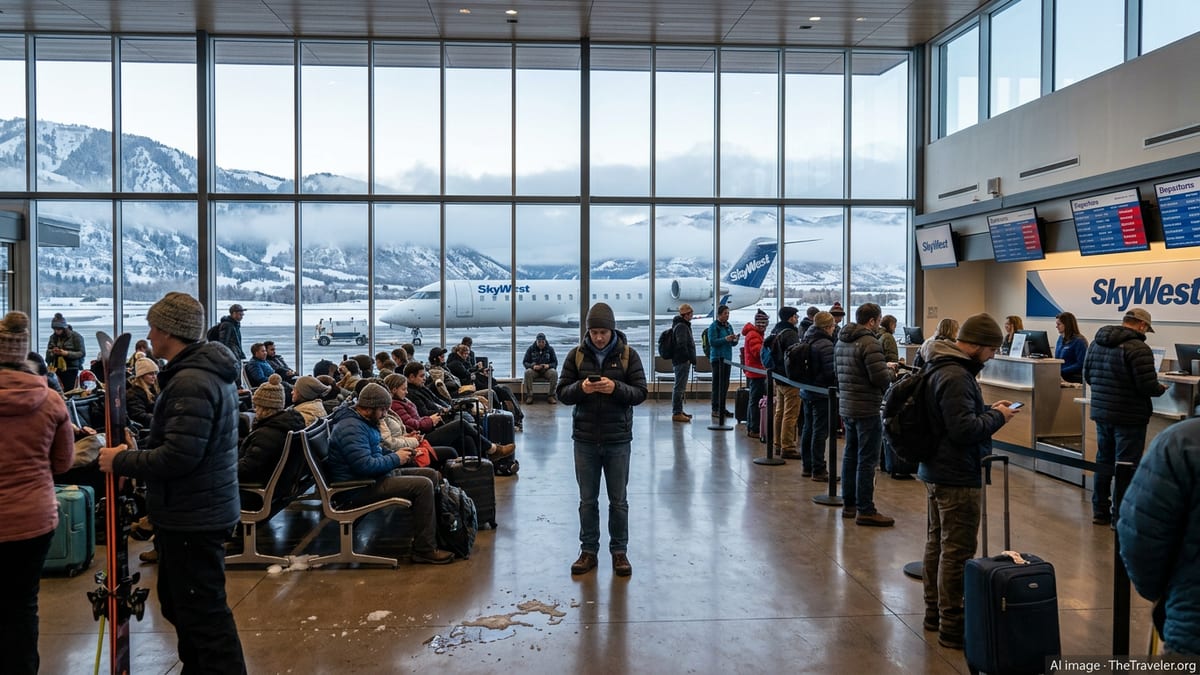
Helena to Denver Service Interrupted East of the Rockies
Publicly available flight tracking information shows that SKW5911 departed Helena Regional Airport on the morning of 8 August on a routine regional hop toward Denver International Airport. The service is part of the broader network that connects smaller communities in the northern Rockies with United’s hub in Denver using SkyWest-operated regional jets.
Instead of descending into Denver as scheduled, the Embraer 175 altered its course on approach and turned east across the Colorado border, continuing into western Nebraska. Tracking plots indicate a smooth cruise phase, followed by the route deviation consistent with a decision to divert rather than commit to the arrival flow into Denver.
The aircraft subsequently landed at Western Nebraska Regional Airport, which serves the Scottsbluff and Gering area of Nebraska. The unscheduled stop placed passengers in a community of roughly 15,000 people that rarely appears on itineraries for travelers booked on a Montana to Colorado route.
Regional operations data and past diversion patterns suggest that Denver’s position against the Rocky Mountains, combined with fast-changing summer weather, often prompts airlines to reroute inbound flights to nearby alternates in Colorado, Wyoming and Nebraska when arrival capacity tightens.
Why Western Nebraska Regional Airport Works as a Diversion Field
Western Nebraska Regional Airport has a long paved runway and instrument approach procedures designed to handle regional jets, making it a practical option when larger hubs experience congestion or weather-related restrictions. Federal documentation related to Essential Air Service and past carrier selections for the Scottsbluff region notes that SkyWest has played a recurring role in providing scheduled connectivity for the area, underlining the airport’s familiarity to the airline.
Although Omaha and Lincoln are Nebraska’s better-known commercial gateways, the Scottsbluff facility sits closer to Denver and beneath typical diversion tracks for aircraft arriving from the north and northwest. The airport’s location allows flights to exit holding patterns near Denver, burn less fuel than they might by pressing farther east, and still reach a field that can handle jet traffic and basic ground services.
Reports from recent irregular operations affecting Denver indicate that a mix of regional jets and mainline aircraft have used secondary airports in the central High Plains to wait out storms, including fields in Wyoming, western Nebraska and northeastern Colorado. In several of those cases, passengers spent extended periods on the ground before aircraft repositioned to Denver once weather or traffic flow improved.
Against that backdrop, the selection of Western Nebraska Regional Airport for SKW5911’s diversion aligns with an established pattern in which Denver-bound regional flights seek out smaller but suitably equipped airports to ride out temporary disruptions.
Passenger Impact and Onward Travel Options
While detailed timing and ground handling information for SKW5911’s diversion were not immediately available in public reporting, typical responses in similar situations involve refueling, waiting for an updated arrival slot into Denver, and coordinating with the airline’s operations center on whether to continue the flight or arrange alternative transport.
For passengers, a diversion to an airport like Western Nebraska Regional can mean spending time on board while crews evaluate conditions and receive clearance to depart again. In other recent Denver diversion events documented by travelers, some aircraft remained on regional ramps for several hours as thunderstorms moved across the Front Range, with crews monitoring duty-time limits and fuel planning before making their next move.
Should an onward flight become impractical, airlines sometimes turn to buses or other ground transport to bridge the remaining distance, particularly when the diversion point is within a half-day’s drive of the original destination. Given the roughly 200-mile distance between Scottsbluff and Denver, road transport stands as a viable fallback if air traffic constraints persist longer than expected.
For itinerary-sensitive travelers, diversions can cascade into missed connections at Denver, one of the country’s busiest hubs. Rebooking efforts then concentrate on later departures to onward destinations, with travelers either continuing the same day or facing overnight stays near the hub once they eventually arrive.
Diversions Highlight Denver’s Operational Challenges
The SKW5911 event underscores the operational complexity associated with Denver’s location and weather profile. The airport’s elevation above 5,000 feet, surrounding terrain and volatile thunderstorm patterns frequently combine to trigger arrival and departure metering, bringing temporary airborne holding and reroutes for inbound flights.
Airline performance statistics compiled by local aviation authorities indicate that Denver regularly handles heavy regional jet traffic in addition to mainline aircraft, creating high demand for arrival slots during peak hours. When lightning, wind shear or convective storms move across the approach corridors, controllers often reduce acceptance rates, pushing some aircraft toward alternates with more benign conditions.
SkyWest’s Embraer 175 fleet, which often serves thinner markets feeding into Denver, is suited to these alternates because of the jet’s ability to operate from shorter runways and smaller terminals than those required for larger mainline aircraft. For airports such as Western Nebraska Regional, these occasional diversions create brief bursts of jet activity that stand out amid their usual mix of general aviation and limited scheduled service.
Although many diversions conclude without further incident once weather and traffic normalize, each instance offers a reminder of how tightly choreographed regional airline networks must remain in order to keep remote communities connected to national hubs.
Regional Connectivity and the Role of Small Plains Airports
The path taken by SKW5911 illustrates how regional air service across the northern Rockies and Great Plains depends not only on origin and destination airports, but also on a web of alternates that support reliability. Communities such as Scottsbluff, North Platte and others in western Nebraska have long relied on federally supported air links and carrier agreements to maintain connections to larger hubs like Denver.
Policy documents related to Essential Air Service show that these communities frequently work with regional carriers, including SkyWest, to secure multi-year contracts for scheduled flights. In exchange, the airports provide facilities that can also absorb diversion traffic when the main hubs encounter operational constraints, spreading the burden of disruption across a wider geographic area.
For travelers, this network means that a ticket between two well-known cities may unexpectedly add a small, unfamiliar airport to the day’s journey. While such detours can be frustrating in the moment, aviation safety practices encourage conservative decisions about weather and traffic, and diversions to airports like Western Nebraska Regional are part of that safety-first approach.
As Denver continues to grow as a connecting hub and regional airlines adjust schedules to match demand, events such as the SKW5911 diversion highlight the ongoing importance of small Plains airports in keeping the broader system flexible and resilient during periods of summer turbulence and storm activity.