


More news on this day
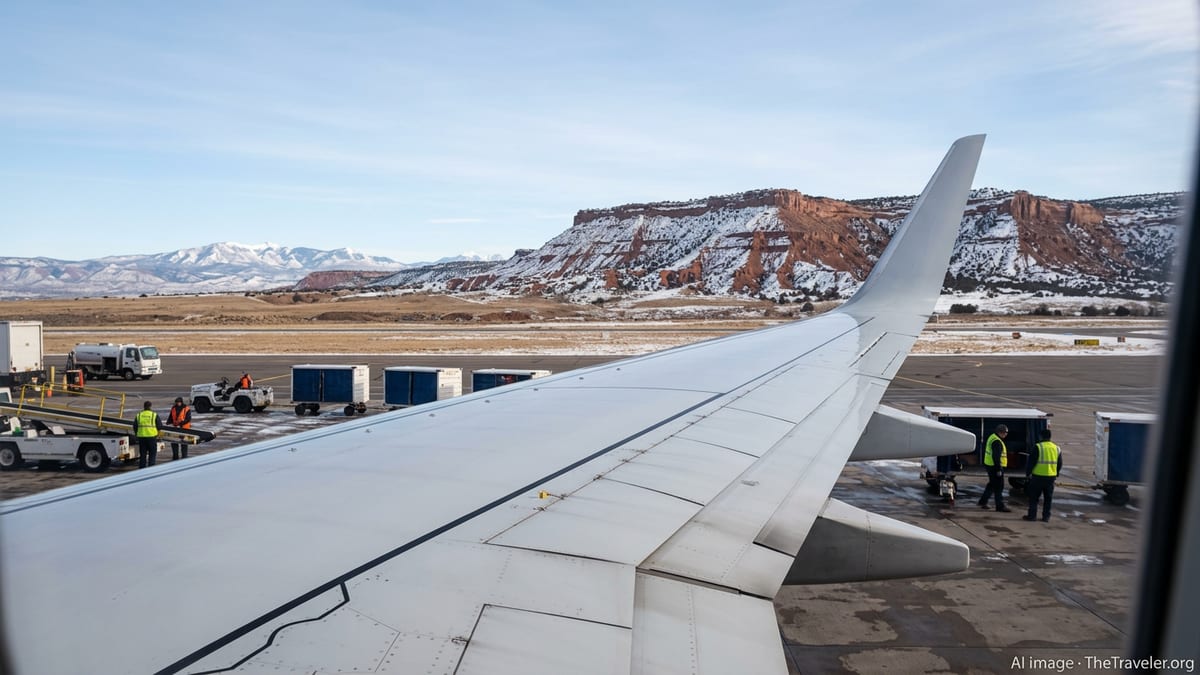
A United Airlines Airbus A320 operating as Flight 514 from Eastern Iowa to Denver diverted to Grand Junction Regional Airport in western Colorado on 8 August, adding the busy Western Slope airport to a growing list of diversion havens used when traffic into Denver is disrupted.
Get the latest news straight to your inbox!
Unexpected Change of Course Over the Rockies
Publicly available flight tracking information shows that United Airlines Flight 514 departed Eastern Iowa Airport on 8 August bound for Denver International Airport, following a standard westbound routing toward the central Rockies. Midway through the journey, the Airbus A320 turned off its direct track and headed toward Grand Junction, an indication of a diversion decision typically linked to weather, congestion, or operational constraints in Denver’s airspace.
Data from commercial tracking platforms indicates that the aircraft descended toward Grand Junction rather than entering holding patterns near Denver, a pattern that often emerges when traffic levels or storms around Denver reduce arrival capacity. Industry commentary on similar United diversions in recent months has pointed to summer thunderstorms and strong afternoon winds along the Front Range as recurring triggers for route changes and unscheduled stops at alternate airports in the region.
Reports circulating in aviation forums and social media discussions about recent diversions into Grand Junction and other Colorado airports describe flights arriving with adequate time remaining on their duty-day limits, suggesting that carriers are increasingly choosing early, decisive diversions to avoid extended holding, fuel concerns, and crew timeouts.
While specific operational details for Flight 514 on 8 August had not been formally detailed at the time of writing, the track and timing align with broader patterns of Denver-bound flights seeking calmer conditions and available runway capacity at secondary airports when late-summer weather complicates the approach into the main hub.
Grand Junction’s Growing Role as a Diversion Airport
Grand Junction Regional Airport, located on Colorado’s Western Slope, has quietly become an important pressure valve for the state’s air traffic. Airport activity reports and planning documents show a steady rise in both scheduled traffic and diversions, with United among the mainline carriers that regularly appear in the airport’s statistics.
Recent airport authority board materials highlight that Grand Junction has received increased federal investment for runway replacement and expansion projects, part of a multi-year effort to support higher traffic volumes and improve safety margins in a region characterized by mountainous terrain and rapidly changing weather. The airport’s configuration, including a long primary runway and modernized terminal facilities, makes it a viable refuge for narrowbody jets such as the Airbus A320 that operate high-density routes into Denver.
Operational summaries out of Grand Junction in the past two years have noted spikes in landing fees and passenger counts linked directly to diversion activity. Periods of severe weather on the Front Range, especially in late spring and summer, have resulted in clusters of United and other carriers’ aircraft parked on ramps and taxiways there while traffic management initiatives limited arrivals into Denver.
For Flight 514, Grand Junction’s location west of the Continental Divide offered an accessible alternative with fewer storm-related constraints on 8 August. The airport’s altitude and runway length are compatible with an A320 operating at mid-stage weights, allowing carriers to land, refuel if needed, and reassess crew and connection options before continuing toward Denver or repositioning aircraft and passengers through other hubs.
Passenger Impact and Operational Considerations
For passengers, a diversion such as that experienced by those on Flight 514 typically means extended travel time, missed connections, and a reordering of the rest of the day’s plans. Accounts from travelers on similar Denver-bound diversions in recent weeks describe periods of waiting onboard while ground crews assess refueling needs and weather windows, followed by either a continuation to Denver or rebooking on alternative flights once the operating crew approaches duty limits.
Published coverage on airline operations in Colorado notes that afternoon flying into Denver during the summer months is particularly vulnerable to disruptions as thunderstorms build along the Front Range. In that environment, dispatchers and flight crews often face a choice between holding near Denver and risking fuel and time constraints, or diverting early to airports such as Grand Junction, Colorado Springs, or regional fields on the plains where there is capacity to park and service aircraft.
Industry analysis of delay and diversion patterns in the United States has found that carriers sometimes accept the financial and logistical costs of diversion in order to protect longer-term schedules and reduce the likelihood of cancellations that ripple across the network. In practice, this can mean that a flight like United 514 completes its journey to Denver later than planned, but avoids outright cancellation, which would require repositioning both passengers and aircraft on already busy later departures.
Although passengers on Flight 514 would likely have faced missed connections in Denver, the choice of Grand Junction as a diversion point aligns with a broader operational trend: using strategically located regional airports to absorb short-term disruption so that core hub schedules can resume as quickly as possible once weather or traffic constraints ease.
Why Colorado Diversions Are So Common in Summer
Colorado’s unique combination of high elevation, mountainous terrain, and volatile summer weather means that diversions into and out of Denver are a regular feature of the travel landscape. Meteorological data and long-term studies on flight delays in the United States show that convective storms, turbulence, and wind shifts in mountainous regions often force temporary reductions in arrival and departure rates at major hubs.
In Denver’s case, strong afternoon thunderstorms and rapidly changing wind directions can lead to runway configuration changes, ground stops, and holding patterns that quickly saturate available airspace. When that occurs, flights approaching from the east and west, including routes from the Midwest such as the Eastern Iowa to Denver service flown by Flight 514, may be sequenced into long arrival queues or directed to alternates.
Aviation researchers have noted that airlines serving complex weather markets often design their route networks and contingency plans with specific alternates in mind, taking into account runway length, ground handling capabilities, and passenger accommodation options. Grand Junction appears frequently in that calculus for Denver-bound flights from the west and central United States, providing a balance between proximity to Denver and operational flexibility on the Western Slope.
As climate patterns and passenger demand evolve, analysts expect that Colorado’s summer disruption profile will continue to shape how airlines deploy aircraft, schedule connections, and choose alternates for key routes. The diversion of United Flight 514 on 8 August fits within that wider pattern, illustrating how individual flights are managed in real time within a complex and weather-sensitive network.
What Travelers Can Take Away From the Incident
For travelers passing through Denver, the experience of Flight 514 serves as a reminder that even routine domestic routes can be affected by local conditions that escalate quickly. Travel and aviation advisories consistently recommend building extra time into itineraries involving Denver during peak storm seasons, particularly for afternoon arrivals and departures when convection is most active.
Consumer guidance based on past diversion events suggests that passengers connecting through Denver may benefit from earlier-in-the-day flights, flexible tickets, and close monitoring of flight status notifications on days with active weather forecasts. Reports from recent passenger experiences on diverted United flights indicate that rebooking options, hotel arrangements, and meal support can vary depending on whether the cause is categorized as weather related or within the airline’s control.
From an industry standpoint, diversions like that of United Flight 514 also highlight the importance of regional airports such as Grand Junction in maintaining overall network resilience. Investment in infrastructure, ground services, and capacity at these alternates can reduce the impact of major-hub disruptions on both airlines and passengers.
While the 8 August diversion added an unexpected stop to the journey from Eastern Iowa to Denver, it also underscored how a combination of weather, terrain, and operational planning shapes air travel across Colorado, turning regional airports into critical partners in keeping national air traffic moving when conditions at major hubs become challenging.