


Carnival’s fleet now stretches from mega Excel class ships with roller coasters to compact classics that feel like a floating resort hotel. Size is not just a trivia point. It determines how crowded the pool feels on a sea day, how many dining options you can try in a week, and whether your cruise has a mellow, small ship vibe or a high energy theme park atmosphere. Understanding how Carnival’s ship sizes compare is one of the most important decisions you can make before you book.
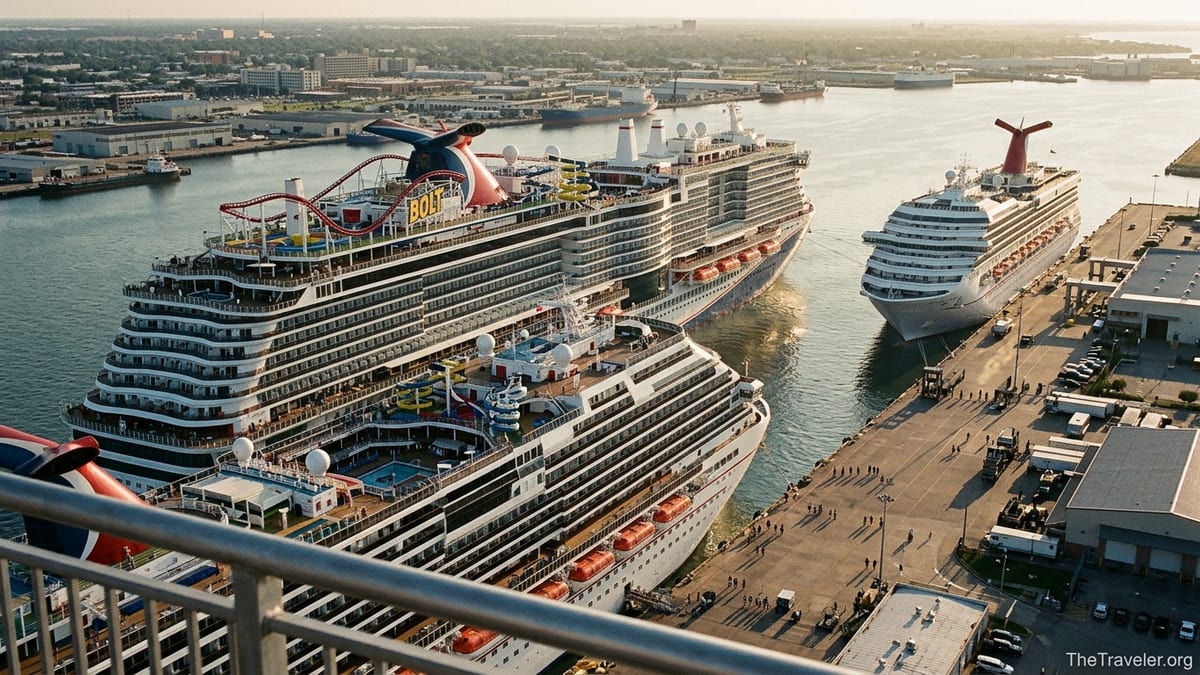
How Carnival Measures Ship Size and Why It Matters
When Carnival talks about ship size, the main metric is gross tonnage. Despite the name, gross tonnage is not the ship’s weight. It is a measurement of internal volume that gives a sense of how much space is available for cabins, restaurants, theaters, and everything else on board. For example, Carnival Jubilee and Carnival Celebration come in at roughly 183,500 gross tons and can carry more than 5,300 guests at double occupancy, putting them at the top of Carnival’s size range. At the other end, Carnival Elation is roughly 70,000 gross tons with around 2,000 guests, closer to the “classic cruise ship” era than a modern mega resort at sea.
Passenger capacity is the second number to pay attention to. Carnival typically lists a ship’s “double occupancy” capacity, which is how many guests the ship can host if every cabin has two people. On peak holiday sailings, when extra berths in family cabins are filled, the real headcount can be higher. Excel class ships like Jubilee and Mardi Gras often sail near or at full capacity, which means popular venues fill quickly at prime times. On a smaller ship like Carnival Spirit or Carnival Legend in the Spirit class, the lower passenger count relative to the ship’s size often translates to easier lounge seating and shorter buffet lines, especially on longer itineraries where sea days are spread out.
Ship length and width affect how the layout feels in practice. Carnival’s largest Excel class ships stretch to about 1,130 feet long, with multiple “zones” or neighborhoods and entertainment venues stacked over nearly 20 decks. Walking from your cabin toward the bow to the main theater at the front can easily be a five to seven minute walk, especially if you are navigating crowds before a show. Mid sized ships such as the Conquest or Vista class are shorter and slightly narrower, so it is usually easier to learn the layout over the first day or two and get from your cabin to coffee, the pool, or the dining room in just a couple of minutes.
Space per passenger is where these numbers come together in real life. Spirit class ships are often praised by experienced Carnival cruisers for having a relatively high space to passenger ratio, which gives them a more relaxed feel even when sailing full. By contrast, some repeat guests find the Excel class layout congested in certain chokepoints at peak hours, despite the impressive tonnage. When you choose a ship, think less about the biggest number and more about how that space is divided and how many people you will share it with.
Excel Class: Mega Ships for Nonstop Action and Families
The Excel class ships are Carnival’s giants and trendsetters: Mardi Gras, Carnival Celebration, and Carnival Jubilee. At roughly 180,000 to 183,500 gross tons and more than 5,200 guests at double occupancy, they are about two and a half times larger by volume than Carnival’s smallest vessels. Excel ships are divided into themed zones rather than traditional decks, such as The Ultimate Playground, Summer Landing, and the French Quarter inspired 820 Biscayne on Carnival Celebration. They offer headline features like BOLT, the first roller coaster at sea, multi level water parks, expanded Serenity adults only retreats, and a long list of specialty dining from Shaq’s Big Chicken to Emeril’s Bistro.
For many travelers, Excel class is the best fit when they want the ship to be the destination. A family sailing out of Port Canaveral on Mardi Gras for a seven night Eastern Caribbean itinerary might spend an entire sea day just exploring the three deck Grand Central atrium, trying different street food style bites in the La Piazza zone, and riding BOLT at sunset. Teenagers have dedicated clubs, sports courts, and a huge water park, while adults can shift between craft cocktail bars, a comedy club, and piano bars in the evening. If you prefer long evenings with lots of entertainment choices and do not mind walking a bit more each day, these ships offer the most variety.
There are trade offs. At full summer capacity, Excel class ships can feel busy, especially around the Lido pool area on sea days or outside the main dining rooms just before the early dinner seating. Securing a lounger by the main pool at midday sometimes requires going out early, especially on Mardi Gras sailings to popular Caribbean ports where guests stay on board instead of going ashore. Cabins can also sell out quickly for peak dates, and while Carnival often runs competitive base fares, you should expect a noticeable premium for popular balconies on holiday sailings compared with an older mid sized ship doing a similar route.
Excel ships work particularly well for multigenerational groups and milestone celebrations. A 50th birthday group sailing on Carnival Jubilee from Galveston, for instance, can book a mix of interior cabins, balcony rooms, and a few suites in the Excel suites area, then meet up in casual venues like Guy’s Burger Joint or at specialty restaurants such as Chibang!. Because there are so many entertainment venues, it is easier to split up by interest: grandparents in a quieter cocktail lounge, thrill seekers on BOLT, and younger kids in Camp Ocean. If your travel style leans toward “we want everything in one floating city,” Excel class is a strong fit.
Vista and Dream Classes: Balanced “Resort Ship” Feel
The Vista and Dream classes sit just below Excel in size but often feel like the sweet spot for many Carnival loyalists. Vista class ships such as Carnival Vista, Carnival Horizon, and Carnival Panorama are roughly 133,500 to 135,000 gross tons with around 3,900 to 4,000 guests at double occupancy. Dream class ships, including Carnival Dream, Carnival Magic, and Carnival Breeze, are slightly smaller again, but still solidly in the large ship category. Both classes feature expansive open deck areas, multiple pools and hot tubs, sizeable water parks, and interior promenades with bars and lounges that feel lively without the same level of crowd density as the Excel class.
In practice, a seven night Western Caribbean cruise on Carnival Vista from Galveston might offer a more relaxed rhythm than a similar sailing on Jubilee, even if the port calls are comparable. You still get popular Carnival staples like the Punchliner Comedy Club, Playlist Productions shows, RedFrog Pub, and Alchemy Bar, plus outdoor attractions like the SkyRide bike track and WaterWorks slides. Yet because the overall passenger count is lower and the layout is somewhat more traditional, it can be easier to find quiet corners on sea days, especially on the outer promenade decks and at the aft pool.
From a budget standpoint, Vista and Dream class sailings often hit an appealing middle ground. Base fares on shoulder season dates can still dip to roughly the low to mid hundreds of dollars per person for four or five night sailings in an inside cabin, depending on demand and region, while balconies on longer itineraries usually come in under what you would typically pay for an equivalent cabin on an Excel class ship in peak months. For couples or friend groups who want strong entertainment and dining variety but do not need the “latest and greatest” water slides or roller coasters, these ships usually offer the best value per night.
Vista and Dream classes also suit travelers who like being outdoors. Carnival Panorama, for example, has expansive outdoor seating around the Lido and at specialty venues like the outdoor section of Guy’s Pig & Anchor Smokehouse. On sea days along the Mexican Riviera, many guests spread out along these terraces rather than crowd around a single main pool. If your travel style involves a lot of reading on deck, casual walks around the exterior promenade, and lingering sundowners at the aft pool, these mid large ships fit well.
Conquest, Spirit, and Sunshine Classes: The Comfortable Middle
Carnival’s Conquest, Spirit, and Sunshine classes occupy the middle tier of the fleet by size and often by personality. Conquest class ships like Carnival Conquest, Carnival Glory, Carnival Valor, Carnival Liberty, and Carnival Freedom were once considered very large but are now mid sized in the modern market. They typically come in at around 110,000 gross tons with close to 3,000 guests. Layouts are straightforward, with a central atrium, a theater at the bow, a large main dining room, and a classic Lido pool deck flanked by hot tubs and buffet stations.
Spirit class ships such as Carnival Spirit, Carnival Pride, Carnival Legend, Carnival Miracle, and Carnival Luminosa are smaller again, often around the mid 80,000 gross ton range, with roughly 2,100 to 2,200 guests at double occupancy. These ships were designed with longer sailings and more scenic routes in mind. Pride and Legend, for instance, have regularly been used for European and Alaska itineraries, where larger open deck space along the sides and a relatively high space per passenger ratio are especially appreciated. Spirit class ships are frequently praised by experienced cruisers for feeling “just right” in terms of crowds, especially when sailing itineraries with more port days than sea days.
The Sunshine class is unique in that it consists of heavily refurbished former Destiny class ships now sailing as Carnival Sunshine, Carnival Sunrise, and Carnival Radiance. These vessels are in the low to mid 100,000 gross ton range with around 3,000 guests, but after their refits they feature many of Carnival’s newer venues, such as Guy’s Burger Joint, BlueIguana Cantina, and updated water parks. For travelers boarding Sunshine in Charleston or Radiance from Southern California, the experience feels like a bridge between Carnival’s classic layout and its newer amenities.
For travelers who prefer a more laid back atmosphere, these mid sized and smaller large ships are appealing. A 10 night Alaska cruise on Carnival Spirit in May, for instance, is likely to draw a slightly older, more itinerary focused crowd than a three or four night cruise to the Bahamas on a larger ship at the height of summer. Sea days may be calmer, and venues like the main atrium bar and piano bar become familiar hangouts. If you are the sort of traveler who enjoys recognizing the same faces each evening and chatting with staff who quickly remember your order, these classes are a strong fit.
Smaller and Older Ships: Classic “Fun Ship” Feel
Carnival’s smallest active ships, like Carnival Elation, offer a glimpse into cruise design before the age of mega ships. With tonnage roughly around 70,000 and guest counts close to 2,000, these vessels feel more like compact resorts. Corridors are shorter, public areas are fewer but more central, and it typically takes only a day to learn the entire layout. Facilities are simpler: one or two main pools, a modest water park area, a main theater, casino, and a more limited selection of specialty dining compared with newer ships.
These smaller ships are frequently deployed on shorter three to five night sails from ports like Jacksonville, Mobile, or Tampa, often visiting destinations such as Key West, Cozumel, or Nassau. For travelers who prefer a quick getaway with lower total trip costs, this can be ideal. You might find a four night Bahamas sailing in an interior cabin priced attractively in the off season, making it easier for first time cruisers or budget conscious travelers to test whether they enjoy life at sea. Because the ship is smaller, you will likely see many of the same people at breakfast, on the pool deck, and at shows, contributing to a friendly, intimate vibe.
Of course, older and smaller ships also involve compromises. Cabins tend to have fewer modern touches, such as USB charging ports at the bedside or the very latest television systems. Spa facilities are usually more compact, and outdoor spaces may not have the multiple tiered lounging areas found on larger ships. If you are expecting an enormous water park, a dedicated ropes course, or a dozen dining venues, you may feel limited. But if your travel style focuses on port intensive itineraries or you simply want a few days to unwind with shorter walking distances and a more intimate onboard community, the smallest ships can be exactly the right choice.
An example would be a long weekend cruise out of Florida booked just a few months ahead, perhaps for a birthday or friends’ reunion. Even with current pricing trends, it is often easier to find last minute values on shorter sailings aboard older ships compared with prime weeklong voyages on newer vessels. You still receive Carnival’s core “Fun Ship” atmosphere, comedy shows, nightlife, and included dining, just on a more compact scale.
Matching Ship Size to Your Travel Style
The best Carnival ship size is not simply the biggest or the newest. It is the one that matches how you like to spend your days at sea. If your ideal cruise looks like a resort week where you might never leave the ship, Excel or Vista class is usually a better fit. You will have more bars, lounges, specialty restaurants, and activities than you can realistically experience on a single sailing. For example, a family of four on Mardi Gras might plan a sea day that starts with breakfast burritos at BlueIguana Cantina, moves through the ropes course and mini golf in the morning, and ends with a full production show and late evening street food in the La Piazza zone.
By contrast, if your main focus is the destination rather than the onboard bells and whistles, a Spirit or Conquest class ship can be ideal. On a 12 night cruise to the Mediterranean or a repositioning voyage across the Atlantic, you may care more about having plenty of open deck space to watch sunsets and an easy to navigate layout than about the latest thrill rides. Mid sized ships often dock in ports where very large ships may need to tender guests ashore or may not call as frequently, although actual deployment varies by year and market demand.
Consider also how you feel about crowds and walking distances. Travelers with mobility challenges or those who simply dislike long walks in air conditioned corridors might prefer mid sized ships or older, smaller vessels where most venues are clustered in a compact central area. If you are used to staying in sprawling resort complexes on land and enjoy logging 10,000 steps a day while exploring, the multiple neighborhoods of an Excel ship may be a natural fit. Remember that elevators are heavily used at peak dining and show times on the largest ships, which can lengthen wait times.
Finally, think about the mix of your group. A multigenerational family that includes toddlers, teens, and grandparents will likely appreciate the variety and space of Excel or Vista class, whereas a couple celebrating an anniversary may be equally happy on a Spirit class sailing to Alaska where the focus is scenery and quiet evenings at the piano bar. Solo travelers might favor mid sized ships, where it can be easier to make connections in smaller venues and ship sponsored meetups hosted in the same bars and lounges night after night.
Costs, Itineraries, and Practical Booking Tips by Ship Size
Pricing on Carnival cruises changes frequently based on demand, season, and region, but ship size does influence the overall cost profile. In broad terms, sailings on the newest and largest Excel class ships in peak season tend to command higher base fares than older mid sized or small ships on similar length itineraries. For example, a seven night Eastern Caribbean sailing in July on Carnival Jubilee may run significantly higher per person in a standard balcony than a similar length sailing that month on a Conquest class ship from a different Florida port, especially once you add popular extras such as drink packages or Wi Fi.
Itineraries also tend to differ by ship size. Mega ships like Mardi Gras or Celebration are typically assigned to marquee Caribbean routes from major homeports such as Port Canaveral or Miami, where terminal facilities can handle larger passenger volumes and logistics for LNG fueled ships. Vista and Dream class ships cover a mix of Caribbean, Mexican Riviera, and sometimes European itineraries, often with more variety in port combinations. Spirit class ships are frequently used for Alaska, Hawaii, and longer repositioning or seasonal itineraries, where their size and range are well suited to scenic cruising and more complex routes.
When comparing options, factor in not only the fare but also onboard spending and extras that matter to you. Daily automatic gratuities, which for Carnival are currently in the mid teens per person per day for standard cabins, will add up more quickly on longer itineraries regardless of ship size. Specialty dining on Excel and Vista classes can tempt you to spend more, with premium venues such as steakhouses and celebrity chef restaurants carrying an added charge per person. Smaller ships may have fewer extra charge options, which can help limit impulse spending if you prefer keeping your onboard account predictable.
To make size work in your favor, use it as a filter early in your search. If you know you want a mega ship experience with cutting edge amenities, narrow your search first to Excel and Vista class and then compare itineraries and dates. If you value itinerary variety and a calmer onboard atmosphere more than the newest attractions, start with Spirit and Conquest class sailings, then refine by port and price. In either case, booking shoulder season dates, such as late April, early May, or late September, often yields better prices across all ship sizes while avoiding the heaviest crowds of school holidays.
The Takeaway
Choosing the right Carnival ship size is one of the most powerful levers you have in shaping your cruise experience. Mega Excel class ships like Mardi Gras, Celebration, and Jubilee deliver a floating theme park atmosphere with near endless dining and entertainment choices, ideal for families and groups who want the ship to be the main attraction. Vista and Dream class ships strike a comfortable balance, offering plenty to do without quite the same crowd density, while mid sized Conquest, Spirit, and Sunshine class vessels keep things more intimate and itinerary focused.
Smaller and older ships round out the fleet with classic “Fun Ship” character and shorter, more affordable getaways that are perfect for first time cruisers or travelers who prefer compact, easy to navigate environments. By looking beyond marketing slogans and focusing on concrete factors like gross tonnage, passenger capacity, deck layout, and how you personally like to spend your time, you can match a Carnival ship to your own travel style with confidence.
Before you book, take a few minutes to compare ship classes side by side, think honestly about how you feel about crowds and walking distances, and consider whether your trip is more about the ship or the destinations. Aligning those answers with the right category of Carnival ship size will do more to shape your enjoyment than almost any single upgrade you can buy once on board.
FAQ
Q1. What is the biggest Carnival cruise ship right now?
Carnival’s largest ships by gross tonnage are in the Excel class, including Carnival Jubilee and Carnival Celebration at roughly 183,500 gross tons and more than 5,300 guests at double occupancy. Mardi Gras is only slightly smaller by tonnage and carries a similar number of passengers.
Q2. Are bigger Carnival ships always better?
Not necessarily. Bigger ships offer more dining and entertainment options, but they also carry more passengers, which can mean busier pools, longer elevator waits, and more walking. Many experienced cruisers prefer mid sized Spirit or Conquest class ships for their quieter feel and easier layouts.
Q3. Which Carnival ship size is best for families with kids?
Families with children and teens often do best on Excel or Vista class ships because of their large water parks, kids’ clubs, sports courts, and variety of casual dining. Mardi Gras, Carnival Jubilee, Carnival Celebration, and Carnival Vista are strong choices if your kids enjoy lots of activities and do not mind crowds.
Q4. What ship size is best if I get overwhelmed by crowds?
If you prefer a calmer atmosphere, look at Spirit class ships like Carnival Spirit or Carnival Pride, or mid sized ships such as Carnival Conquest or Carnival Sunshine. These vessels carry fewer people than the Excel class and often sail itineraries that attract a more relaxed, destination focused crowd.
Q5. Do smaller Carnival ships cost less than larger ones?
Often, but not always. Older and smaller ships on shorter itineraries can be more affordable on a per night basis, especially outside of school holidays. However, pricing also depends heavily on demand, region, and travel dates, so it is possible to find deals on larger ships during slower periods.
Q6. Which Carnival ships are best for Alaska and scenic itineraries?
Carnival typically uses mid sized ships like the Spirit class for Alaska, Hawaii, and other scenic or longer itineraries. Their relatively high space per passenger and generous open deck areas make them well suited to routes where guests spend a lot of time outdoors watching the landscape.
Q7. How does ship size affect port options?
Larger ships require ports with bigger terminals and harbor facilities, so they tend to focus on major Caribbean and popular regional hubs. Mid sized and smaller ships can sometimes access smaller or more varied ports and may tender guests ashore more frequently, though actual itineraries change year by year.
Q8. Will I feel more motion on a smaller Carnival ship?
In rough conditions, smaller ships can feel more movement than very large vessels, especially at the bow and higher decks. That said, modern stabilizers and careful itinerary planning mean that most guests are comfortable on all ship sizes, particularly if they choose mid ship cabins on lower decks and avoid the most turbulent seasons.
Q9. Is it easier to meet people on smaller or larger ships?
Many solo travelers and couples find it easier to meet people on mid sized and smaller ships where venues are more intimate and you tend to see the same faces. On very large ships there are more people overall but they are spread across more bars and lounges, so it can take longer to build that familiar community feel.
Q10. How should I choose between two Carnival ships on the same route?
Start by comparing ship class and size, then look at what matters most to you: number of sea days, dining options, kids’ facilities, and cabin availability. If you value new attractions and variety, choose the larger or newer ship. If you prioritize a calmer environment and shorter walking distances, pick the smaller or mid sized option even if the itinerary is similar.