


More news on this day
New information about the derailment of the historic 1880 Train in the Black Hills near Rapid City has pointed to track conditions as a key factor, focusing attention on safety practices along one of South Dakota’s signature tourist rail routes.
Get the latest news straight to your inbox!
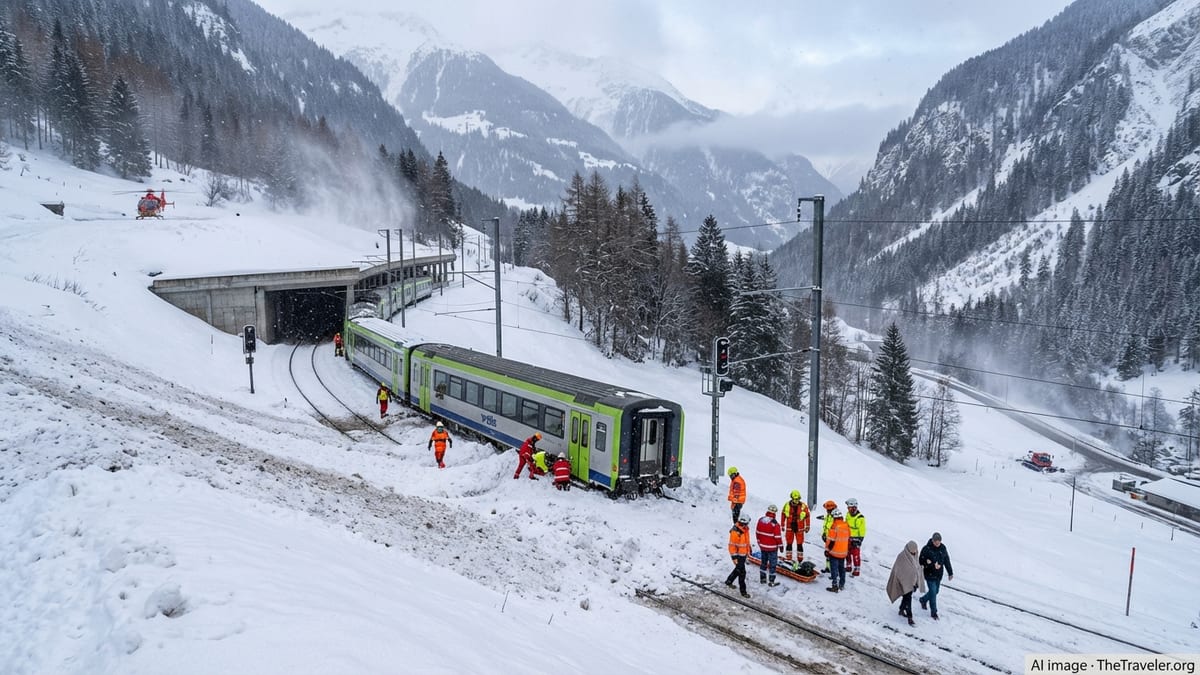
Tourist favorite disrupted after derailment
The 1880 Train, operated by Black Hills Central Railroad between Hill City and Keystone, is a long-established heritage attraction that draws visitors from Rapid City and beyond during the summer season. Publicly available information describes the route as a 10-mile journey through pine forests and granite outcrops, often paired with trips to Mount Rushmore and Custer State Park for day-trippers.
The derailment occurred during a special event run, prompting the cancellation of a themed “train robbery” excursion and casting uncertainty over upcoming departures. Local broadcast coverage reported that the affected train remained upright and that there were no injuries among passengers or crew, but images of cars off the rails quickly circulated on social media and community forums.
Following the incident, the operator suspended at least one scheduled event while inspections and recovery work took place along the affected stretch of line. Travelers who had booked specialty excursions around the derailment date faced itinerary changes, with some visitors turning instead to driving routes through the Black Hills to keep sightseeing plans on track.
The disruption highlighted how closely tourist operations in the central Black Hills are intertwined. Restaurants, lodging providers and tour companies that market the 1880 Train as part of bundled experiences saw a brief period of uncertainty as they waited for clarity on when regular service could resume.
Investigation zeroes in on track conditions
Recent updates from regional news coverage indicate that the investigation into the derailment has centered on the condition of the track rather than mechanical failure of locomotives or passenger coaches. Early findings describe a localized issue along the right-of-way that contributed to the cars leaving the rails, with no indication of weather-related causes at the time of the incident.
Rail safety reviews in the region have previously emphasized the importance of maintaining tourist lines to standards comparable with freight carriers, even when trains operate at lower speeds. Publicly accessible planning documents from South Dakota transportation agencies note that the 1880 Train operates on former mainline track that has been isolated from the national rail network for decades, placing full responsibility for inspection and upkeep on the tourist railroad itself.
According to published coverage of similar derailments in the Upper Midwest, track geometry defects, rail wear and localized subsidence are recurring contributors when passenger equipment leaves the rails. The update on the 1880 Train suggests that a combination of these factors, rather than a single dramatic failure, is the most likely explanation for the incident outside Rapid City.
While the detailed technical report has not been widely circulated, references in regional reporting indicate that investigators are treating the occurrence as preventable through more frequent inspections and targeted maintenance along the affected curve or grade.
Safety record and regulatory context for heritage lines
Heritage railways like the 1880 Train operate in a distinct niche, combining historical equipment with modern safety expectations. Public information from federal rail safety agencies shows that tourist operations are generally subject to the same overarching safety framework as freight and intercity passenger carriers, but with inspection schedules and requirements tailored to their speed, traffic levels and equipment types.
Across the United States, recent rail accident summaries have linked a significant share of derailments involving low-speed passenger movements to infrastructure conditions rather than high-speed train handling errors. Industry and government reports cite misaligned track, deteriorated ties and ballast issues as common risk factors, particularly on lightly used or seasonally operated routes.
In South Dakota, the state’s most recent rail planning documents highlight the 1880 Train as a key tourism asset in the Black Hills, while noting that isolated tourist lines must manage track standards without the constant traffic that tends to reveal problems early on heavier corridors. The latest findings in the Rapid City-area derailment appear to align with these broader patterns, reinforcing longstanding guidance on proactive maintenance.
For travelers, the regulatory framework typically remains behind the scenes. The renewed focus on track conditions following the derailment, however, has brought the inspection process into public view, prompting questions about how often the line is checked and what standards are used for heritage rolling stock.
Impact on visitors and regional tourism
The derailment arrived in the midst of the Black Hills high season, when families, tour groups and road trippers converge on Rapid City as a base for exploring western South Dakota. Travel forums and social media posts in the days after the incident show a mix of disappointment and flexibility among visitors who had planned their itineraries around the 1880 Train experience.
Many travelers turned to alternate activities, including scenic drives along Iron Mountain Road, visits to downtown Rapid City attractions and extended time at nearby national and state parks. Local hospitality businesses that promote the train as part of package deals reported, through publicly available statements, that they were working with guests to adjust plans while monitoring the operator’s service updates.
The incident also sparked a broader conversation among repeat visitors about how tourist railways communicate disruptions. Comments on community message boards and regional news sites noted the value of prominent service alerts, clear refund policies and timely social media updates when specialized excursions are affected by infrastructure problems.
Despite the short-term challenges, travel commentary suggests that interest in the 1880 Train remains strong, with many visitors expressing an intention to rebook once full service is confirmed. For a route rooted in nostalgia and scenic appeal, the key question is less about long-term demand and more about how quickly confidence in safety and reliability can be reaffirmed.
Next steps for the 1880 Train and travelers
With the initial cause of the derailment now attributed to track conditions, attention is shifting toward corrective actions and future safeguards. Published coverage indicates that remedial work is underway along the affected segment, including targeted repairs and closer monitoring of track geometry where the incident occurred.
Industry practice following such derailments typically involves a mix of engineering reviews, revised inspection intervals and, in some cases, speed restrictions over particular sections until long-term fixes are in place. Observers of the 1880 Train operation will be watching for any permanent changes in schedules, maximum speeds or equipment use once regular service resumes between Hill City and Keystone.
For prospective riders planning Black Hills trips in the coming weeks, publicly shared advisories encourage checking the 1880 Train’s latest operating status close to departure dates, especially for special events such as themed excursions or evening runs. Travel planners suggest building flexibility into itineraries so that visitors can substitute other nearby attractions if certain departures are adjusted or canceled.
As the summer season continues, the derailment near Rapid City stands as a reminder that even low-speed heritage railways rely on rigorous track maintenance to keep nostalgic journeys both scenic and safe. How the operator responds in the wake of the revealed cause is likely to shape traveler perceptions of the 1880 Train for seasons to come.