


More news on this day
Flights bound for Dallas Fort Worth International Airport (DFW) faced significant disruption Sunday as a temporary Federal Aviation Administration ground stop and ongoing traffic-management restrictions rippled through one of the nation’s busiest connecting hubs, leaving travelers with delayed departures, tight connections, and the prospect of schedule recovery stretching into the evening.
Get the latest news straight to your inbox!
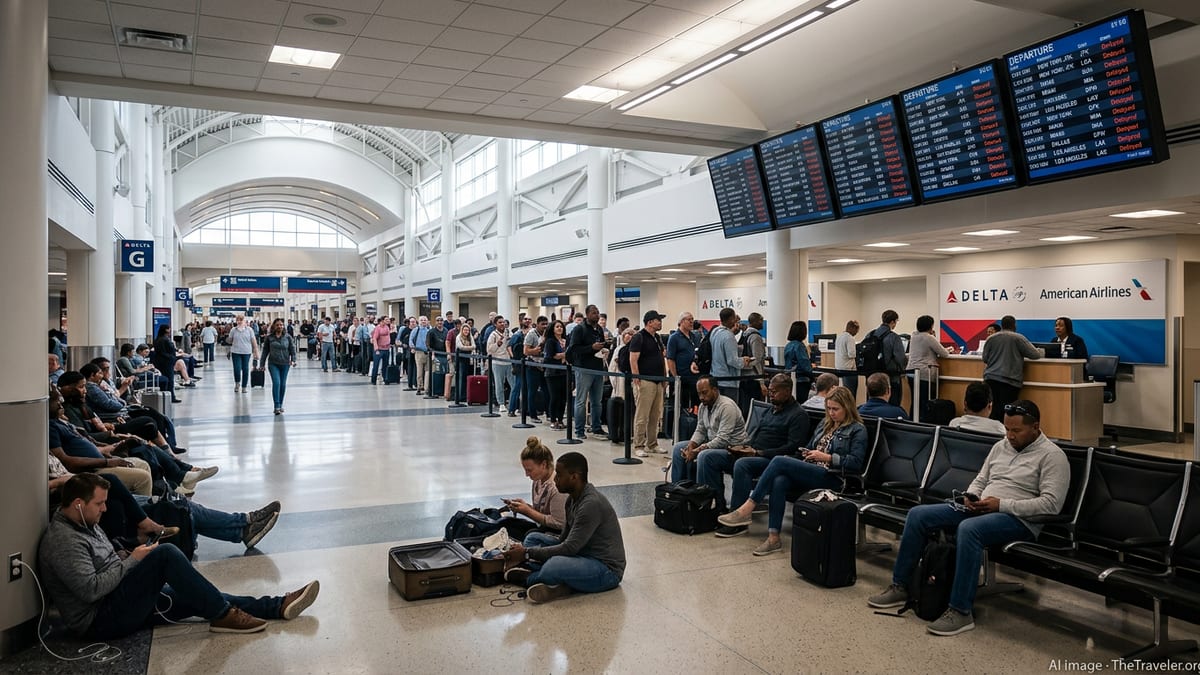
What a ground stop means and why it can snarl the whole system
A ground stop is among the most restrictive tools used to manage air traffic flow in the United States. In practical terms, it typically keeps aircraft from departing their origin airports if they are headed to a destination where arrival capacity is constrained, reducing congestion in the air while shifting the wait to the ground.
Even when a ground stop is limited in time, delays can compound quickly. Airlines that run tightly coordinated schedules can see aircraft arrive late, gates turn over more slowly, and outbound flights pushed back as crews and planes are no longer in position for their next legs.
At DFW, the ripple effect can be especially pronounced because the airport functions as a major connecting gateway for both domestic and international itineraries. When inbound flows are paused or metered, connection windows shrink and reaccommodation options can become limited on later departures, particularly on routes with fewer daily flights.
DFW’s current status: weather-related programs and rolling gate holds
Publicly available FAA airport-status information early Sunday showed a weather-related traffic management program affecting arrivals to DFW, with general departure delays described as gate hold and taxi delays in the 15 to 29 minute range and decreasing, while arrival delays were generally 15 minutes or less. The FAA status page also noted the information is not flight-specific and travelers should check with their airline for individual impacts.
That snapshot can coexist with uneven passenger experiences across the network, because a ground stop aimed at DFW often presents as an “origin delay” elsewhere. A flight scheduled to arrive in North Texas may be held at its departure airport until restrictions ease, and then may face additional metering as traffic is released back into the system at a manageable rate.
Complicating matters, North Texas convective weather can be highly dynamic. Thunderstorm activity can reduce arrival rates quickly, and even when conditions improve at the airport itself, routes into the region may remain constrained by weather in surrounding airspace corridors.
Why DFW disruptions spread beyond Texas
DFW is a hub where schedules are built around banks of arriving flights feeding banks of departures. When the inbound bank is delayed, aircraft and crews can miss their next assigned segments, and later flights may depart behind schedule even if local conditions look improved.
The effects can be felt across multiple airlines and cities because DFW connects a large share of domestic itineraries to long-haul international service and to smaller regional destinations. Travelers headed to smaller markets can be more exposed to missed connections, since the next available flight may not depart until the following day.
Air traffic initiatives can also evolve from one control measure into another. A ground stop may be lifted and replaced by a less restrictive program designed to meter arrivals, which can keep delays rolling through the late afternoon and evening rather than ending abruptly when the initial restriction is canceled.
How travelers can track the situation in real time
For travelers trying to understand why a flight is stuck at the gate far from Texas, the FAA’s airport status pages and air traffic advisories can provide high-level context about traffic management initiatives affecting DFW. Those tools are designed to reflect broad operational conditions rather than the specifics of any single flight.
Because flight-by-flight impacts change quickly during irregular operations, airline apps and text alerts typically provide the most actionable updates for gate changes, revised departure times, and rebooking options. Airport display boards can lag during periods when gates are being reassigned and turn times are changing.
Travelers with tight connections through DFW may also want to evaluate same-day alternatives with additional buffer time, while keeping in mind that a regional weather pattern can affect multiple airports at once and may limit reroute options.
What to watch next: recovery timing and downstream disruptions
When restrictions ease, the operational challenge shifts to recovery: repositioning aircraft, restoring crew schedules, and rebalancing gate availability. That can keep departure delays elevated even as the arrival flow improves, because outbound flights depend on aircraft arriving from earlier legs.
Late-day travelers are often most exposed to the “domino effect,” as there is less schedule slack remaining to absorb earlier disruptions. If aircraft arrive late and crews approach duty-time limits, cancellations can occur even after weather improves, especially on the final departures to smaller destinations.
For passengers traveling through DFW, the key is to treat a ground stop as a network event rather than a purely local problem. Once the system falls behind, the resulting backlog can linger for hours, shaping connection reliability and on-time performance well into the evening.