


More news on this day
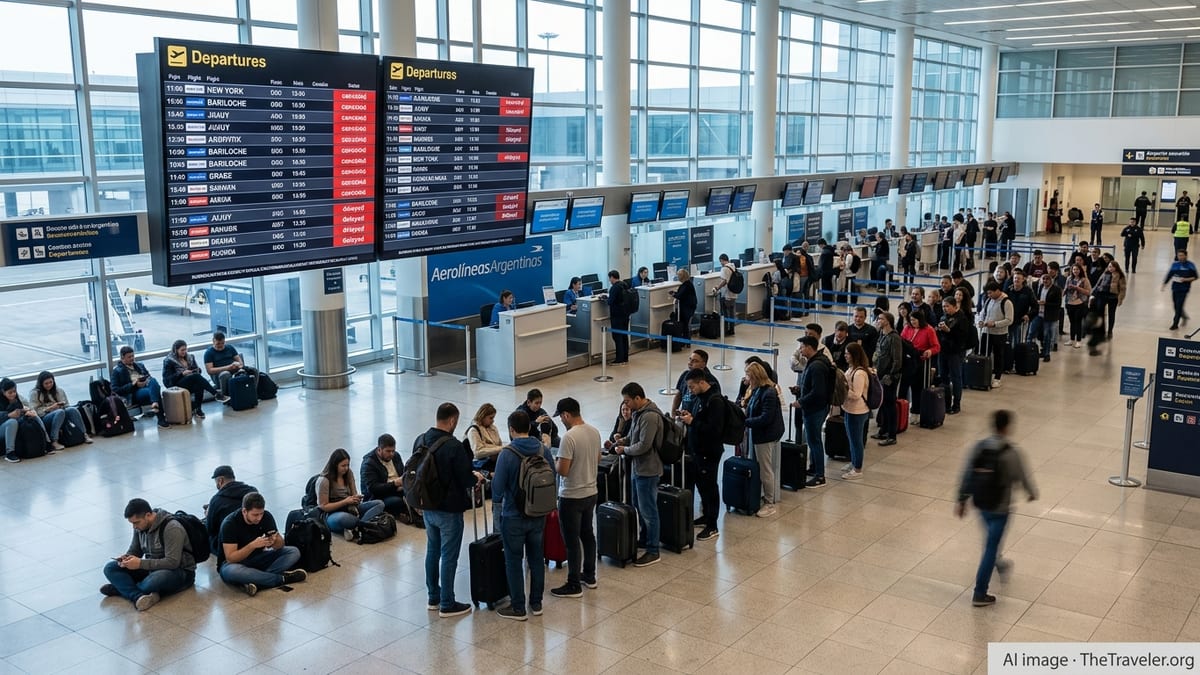
Operations at Buenos Aires’ Aeroparque Jorge Newbery were severely disrupted on May 25, with at least eight cancellations and around 20 delays affecting services by Flybondi, LATAM, JetSMART, Aerolineas Argentinas and other carriers, stranding passengers across Argentina, Brazil and Chile.
Get the latest news straight to your inbox!
Domestic Links Severed to San Juan, Posadas and Tucumán
The disruption concentrated on Aeroparque’s dense domestic network, temporarily cutting scheduled links to several provincial capitals. Publicly available flight boards for May 25 showed services between Buenos Aires and San Juan, Posadas and San Miguel de Tucumán among those most affected, with a mix of outright cancellations and long rolling delays.
Data compiled from real time trackers on Monday indicated that at least one Aerolineas Argentinas service linking San Juan’s Domingo Faustino Sarmiento Airport with Aeroparque did not operate as planned, while earlier services on the same route had already reported significant delays over the weekend. Similar issues were reported on Buenos Aires–Posadas flights, a key corridor for business and family travel in Argentina’s northeast.
In the northwest, flights between Aeroparque and Tucumán’s Teniente Benjamín Matienzo International Airport also faced disruption. One regularly scheduled Aerolineas Argentinas rotation that had operated normally on May 22 was followed by irregular operations in subsequent days, contributing to uncertainty for travelers heading to and from the region.
With multiple domestic spokes simultaneously affected, passengers reported longer connection times, missed onward journeys and crowded terminals, as airlines attempted to consolidate passengers onto fewer services or reroute them through alternative hubs further from downtown Buenos Aires.
International Routes Hit Between Buenos Aires, São Paulo and Santiago
The knock on effect extended beyond Argentina’s borders, particularly on high demand routes linking Aeroparque with São Paulo and Santiago de Chile. Flight status data for the São Paulo Guarulhos to Buenos Aires corridor for May 25 showed irregular departure and arrival patterns for both LATAM and Aerolineas Argentinas services, including significant schedule changes and day of departure delays.
According to published coverage in Argentine and Brazilian media, at least one LATAM flight between Aeroparque and Santiago de Chile experienced extended disruption, with departure times pushed back and passengers asked to wait in already crowded gate areas. JetSMART, which also operates on the Chile–Argentina axis, saw several services delayed, further reducing available capacity during peak hours.
Travel analysts note that these international links are particularly sensitive because they connect into long haul networks serving North America and Europe. Even a few hours of delay on regional legs can cause passengers to miss overnight departures from São Paulo or Santiago, forcing costly rebookings and extended hotel stays.
Regional tourism stakeholders warn that persistent operational problems on these routes may discourage visitors from combining Argentina with neighboring countries in a single itinerary, undercutting efforts to market the Southern Cone as an integrated destination.
Flybondi, JetSMART and LATAM Under Scrutiny
Low cost and regional carriers came under renewed scrutiny as the day unfolded. Reports from aviation monitoring sites and consumer forums highlighted a cluster of Flybondi cancellations in recent months, with the airline previously acknowledging operational and fleet availability issues in separate coverage earlier this year. Recent social media and forum posts from travelers also describe last minute cancellations and multi hour delays affecting domestic leisure routes.
JetSMART, another key low cost player in Argentina and Chile, has likewise drawn criticism from passengers for schedule changes and operational reliability. While the airline has expanded rapidly on cross border services, travelers posting on public discussion boards in 2026 describe a pattern of late departures and occasional route cancellations, complicating plans for those on tight schedules.
LATAM, the region’s largest network carrier, faced its own challenges on Monday’s operation. Codeshare services operating between São Paulo, Buenos Aires and onward South American destinations saw scattered delays, with some flights arriving off schedule into Aeroparque and then departing late on their return segments. Publicly available data suggests that these disruptions were not limited to a single airline, but combined to create congestion at peak times.
Aerolineas Argentinas, which uses Aeroparque as a primary hub, also dealt with late running aircraft on multiple domestic sectors, compounding the strain on airport infrastructure and ground handling resources as aircraft and crews rotated through delayed banks of flights.
Operational and Labor Pressures Behind the Gridlock
Aeroparque’s location close to central Buenos Aires and its dense schedule of short haul flights make the airport particularly vulnerable to knock on effects when operations are disrupted. According to recent analyses in Argentine business media, the combination of tight turnaround times, limited spare aircraft and high utilization leaves little margin when even a single rotation runs late.
Local coverage has also pointed to recurring labor tensions in Argentina’s aviation sector as a contributing factor to recent disruptions. Partial work stoppages and short notice industrial actions at Aeroparque during earlier periods produced dozens of cancellations and thousands of affected passengers, creating a precedent for sudden schedule instability at the airport.
On May 25, reports indicated that a mix of crew availability, aircraft rotation problems and residual congestion from earlier delays contributed to the 8 cancellations and about 20 delays registered across airlines. While formal investigations into the precise triggers of each disruption are ongoing, the pattern fits a broader picture of operational fragility at one of Argentina’s most important aviation hubs.
Analysts observe that Argentina’s domestic aviation market is still adjusting to rapid shifts in demand, regulatory changes and intense price competition. In such an environment, any external shock can quickly translate into visible disruption for passengers, particularly at busy airports like Aeroparque.
Passengers Face Cascading Travel and Economic Costs
For travelers, Monday’s disruptions translated into long queues, missed events and additional expenses. Passengers attempting to reach San Juan, Posadas and Tucumán for work or family commitments faced rebookings across multiple days, while some opted for overnight buses or detours via Ezeiza International Airport and other regional hubs to salvage their plans.
Travel forums and social networks on May 25 featured accounts from passengers who reported receiving refunds but then facing significantly higher fares when trying to replicate their original trips on alternative airlines. The price gap was particularly steep on short notice international routes linking Argentina to Brazil and Chile, where remaining seats were already limited.
Tourism operators warn that repeated episodes of disruption risk damaging confidence in regional air connectivity. Small hotels, tour companies and conference organizers in cities such as San Juan and Posadas are especially exposed, as even a handful of cancelled flights can result in a wave of no shows, late arrivals and shortened stays.
With Aeroparque serving as a critical junction for both domestic and regional travel, industry observers argue that improving resilience at the airport, whether through clearer contingency planning, better fleet backup or more predictable labor frameworks, will be essential to reducing the likelihood that a cluster of operational issues can again isolate multiple cities across Argentina, Brazil and Chile in a single day.