


Great Smoky Mountains National Park offers more than 800 miles of trails, but for many visitors the short list quickly narrows to two classics off Newfound Gap Road: Charlies Bunion and Alum Cave. Both deliver big views, mossy forests, and a taste of high-elevation Smokies scenery, yet they feel very different on the ground. If you only have one full hiking day, choosing between them can shape your entire trip. This guide breaks down what each hike is really like, from difficulty and crowds to views and logistics, so you can decide which one fits your group, your schedule, and your comfort level.
Get the latest updates straight to your inbox!
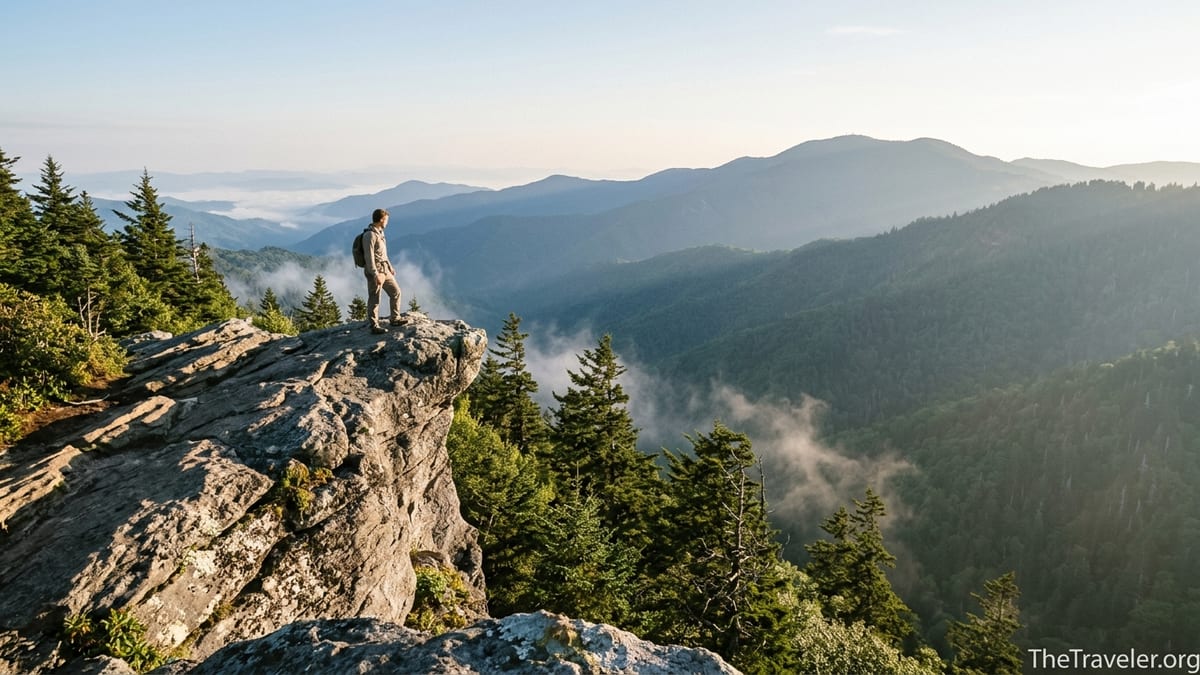
At a Glance: Two Smokies Classics Compared
Charlies Bunion and Alum Cave both start from Newfound Gap Road, the main scenic highway that crosses the crest of the Great Smoky Mountains between Gatlinburg, Tennessee, and Cherokee, North Carolina. In practice, though, they feel like very different adventures. Charlies Bunion is an out-and-back ridge walk on the Appalachian Trail to a rocky overlook roughly 8 miles round trip with about 1,600 feet of elevation gain. Most day hikers turn around at the stone prow of rock that gives the hike its name, enjoying a high, airy panorama before retracing their steps.
Alum Cave, in contrast, is a steep mountain trail that climbs the flank of Mount LeConte. Many casual visitors hike just 2 to 2.5 miles up to Alum Cave Bluffs and back, for a moderate outing of about 4.5 to 5 miles round trip. Stronger hikers may continue to the 6,500-foot summit area of Mount LeConte, making it a demanding 10 to 11 mile day with more than 2,700 feet of climbing. The same trailhead serves everyone from first-time Smokies visitors in sneakers to backpackers heading for LeConte Lodge.
If you imagine walking a high ridge with long views on either side, Charlies Bunion is closer to that picture. If you picture winding up through forest, passing rock arches and dramatic cliff bands before reaching a huge overhanging bluff or a mountaintop lodge, Alum Cave is the better match. The rest of this guide digs into the details so you can decide which scenario sounds like your ideal Smokies day.
Trail Stats, Difficulty, and Who Each Hike Suits
For most travelers, difficulty and time are the first deciding factors. Charlies Bunion is roughly 8 miles round trip from the Newfound Gap parking area, with a net elevation gain of about 1,600 feet and high points over 6,000 feet. That makes it a solid, moderate day hike for reasonably fit walkers who are comfortable spending 4 to 6 hours on trail. There are ups and downs along the ridge, but no continuous grind like you find on some Smokies climbs. Many visitors who regularly walk 3 to 4 miles at home find Charlies Bunion manageable if they pace themselves.
Alum Cave to the bluffs is shorter but steeper. The out-and-back distance to the bluffs is about 4.5 to 5 miles, with an elevation gain just over 1,000 feet. Families with school-age kids and travelers who want a half-day outing often choose this version. However, the trail tread includes rock steps, roots, and sections of narrow path with steep drop-offs. It is rated moderate, but anyone with knee issues, a fear of heights, or very young children may find parts of it taxing.
Continuing past Alum Cave Bluffs toward Mount LeConte shifts the difficulty firmly into strenuous territory. A full day to the LeConte summit area and back can involve around 10 to 11 miles and roughly 2,700 feet of climbing. This suits experienced hikers, people used to mountain terrain, and those willing to start early and commit a full day. In practice, many visitors who are unsure of their fitness simply hike to the bluffs, enjoy the views, and turn around, which is a perfectly rewarding day out.
In short, pick Charlies Bunion if you want a longer but more even ridge hike with sustained views and fewer steep, exposed sections. Pick Alum Cave if you prefer a shorter but steeper climb with more varied rock features and the option to extend all the way to one of the most famous summits in the Smokies.
What You Will See: Views, Scenery, and Trail Character
Charlies Bunion offers classic high-country Smokies scenery from the moment you leave the Newfound Gap parking lot. The trail follows the Appalachian Trail along the state line between Tennessee and North Carolina, weaving through spruce-fir forest, rhododendron tunnels, and occasional open viewpoints. On clear days, you get long views into both states as you climb, with ridges and hollows fading into blue haze. The final rock outcrop is the star: an exposed prow of stone where hikers often sit to picnic and watch clouds move across the valley far below.
On the way to Charlies Bunion, side paths lead to viewpoints like The Jump Off, a dramatic cliff edge that adds extra distance but rewards with sweeping vistas and fewer people. High-elevation wildflowers in late spring, rich fall color in October, and rime ice in winter all change the mood of this hike. In many trip reports, visitors describe Charlies Bunion as one of the most photogenic spots in the park, particularly for wide-angle photos of layered ridges.
Alum Cave is more about dynamic terrain and unique rock formations. The trail begins along Alum Cave Creek, crossing log bridges and passing mossy boulders, then enters a narrow cleft known as Arch Rock where stairs and handrails guide you through the stone. Higher up, you reach Inspiration Point, a natural overlook with a sweeping view into a rugged valley known as Huggins Hell. Beyond that, the path traverses a steep mountainside on narrow ledges with cable handrails before suddenly emerging beneath the enormous overhang of Alum Cave Bluffs, an 80-foot-tall rock shelter with a sandy floor.
In fog or low clouds, Alum Cave has an almost otherworldly feel, with mist drifting around the cliffs and water seeping from the bluff overhead. On clear days, light filters across the bluff face and you can look out over folds of forested ridges. If you push on to Mount LeConte, you enter dense spruce-fir forest, then reach viewpoints like Cliff Tops or Myrtle Point, where sunrise and sunset lend the sky vivid colors. Overall, Alum Cave gives you more variety in a shorter distance, while Charlies Bunion offers a steadier, more contemplative ridge walk ending at one big, spectacular vista.
Parking, Permits, and Practical Logistics
Both hikes are along Newfound Gap Road, which means access is straightforward when the road is open. Charlies Bunion starts at Newfound Gap, a large, paved parking area about 13 miles from Gatlinburg. This lot can fill on busy weekends and peak leaf season, but turnover is fairly frequent as many visitors are just stopping for photos at the overlook. Even if you arrive mid-morning in summer, you often have a reasonable chance of circling for a space. Because you begin right at the state-line overlook, bathrooms and informational signs are available at the trailhead.
Alum Cave’s trailhead lies a few miles down the road toward Gatlinburg and has two main parking lots plus a few roadside pullouts. Despite this, the lots routinely fill very early on popular days. In June and October, for example, hikers frequently report arriving between 6:30 and 7 a.m. to secure a spot for a LeConte summit attempt. Later arrivals often have to park farther along the road and walk extra distance along the shoulder before even reaching the trailhead, which can feel long at the end of a full mountain day.
Great Smoky Mountains National Park now requires a paid parking tag for most vehicles parked longer than 15 minutes anywhere in the park, including Newfound Gap and Alum Cave. Travelers booking cabins in Gatlinburg or Pigeon Forge should factor this into their budget. A day tag typically costs only a modest amount, but you must purchase it in advance online or at a visitor center, then display it on your dashboard. Rangers do ticket vehicles without proper tags, and enforcement has become more consistent in recent seasons.
Road and trail closures can also influence your choice. Newfound Gap Road occasionally closes temporarily during winter storms or significant maintenance, which affects access to both trailheads. In addition, the park sometimes issues temporary closures or bear warnings on specific trails. Before you decide between Charlies Bunion and Alum Cave, check the park’s current conditions page and, if you are visiting in spring or fall, confirm that there are no active restrictions on your chosen hike. It is not common, but popular destinations like Charlies Bunion have appeared on bear warning lists when wildlife activity spikes.
Seasonal Conditions, Weather, and Safety Considerations
Both hikes reach high elevations where conditions can differ dramatically from Gatlinburg or Cherokee. In spring and fall, it is common to leave town in mild temperatures and reach the ridge to find cold wind and patches of ice in shaded areas. On Charlies Bunion, this can mean frosty rocks on the final outcrop; on Alum Cave, it can translate into icy steps near Arch Rock or slick ledges above Inspiration Point. Microspikes or traction devices are helpful if you plan to hike in late winter or very early spring when ice lingers.
Summer brings haze, humidity, and afternoon thunderstorms. On Charlies Bunion, where you spend much of the day moving along a ridge with occasional openings, you may be more exposed to lightning and sudden gusts at viewpoints. On Alum Cave, steep terrain and cliffs can funnel water, making the trail muddy and slippery after a storm. Whichever route you choose, plan to start early to avoid both midday heat and the most common thunderstorm window, typically mid to late afternoon.
Black bears are active throughout Great Smoky Mountains National Park. Sightings are possible on both trails, although your chances increase at dawn and dusk or when food is left unattended. Park guidance emphasizes carrying all food inside your pack, never feeding wildlife, and giving any bear you encounter plenty of space. Rangers occasionally close specific areas after aggressive bear behavior is reported. An example in recent years involved bear incidents near busy trails that prompted temporary closures and renewed safety reminders for hikers. Treat these advisories seriously and be prepared to change plans or turn around if a ranger or posted sign directs you to do so.
Other safety basics apply equally to both hikes. Sturdy footwear with good traction is essential, especially for the rocky sections on Alum Cave and the often rooty segments of the Appalachian Trail toward Charlies Bunion. Bring more water than you think you need; for an 8-mile day at moderate temperatures, most adults should carry at least 2 liters, and more in summer. Cell service is spotty to nonexistent along large parts of both routes, so download offline maps in advance and let someone know your plan and estimated return time.
Crowds, Atmosphere, and Overall Experience
Crowds can significantly shape how each hike feels. Charlies Bunion, while popular, often feels calmer than Alum Cave once you get past the first mile or two. Because the hike is longer and requires more time commitment, the number of casual visitors drops off the farther you go. Many hikers describe long stretches where they pass only a few groups, especially on weekday mornings or in shoulder seasons. The destination outcrop can still be busy at peak times, but there is usually space to sit quietly and take in the view.
Alum Cave to the bluffs is among the most popular trails in the entire park. On a sunny Saturday in June, the lower mile can feel almost like a procession, with families, photographers, trail runners, and groups of friends all sharing the path. The narrow ledges before the bluffs sometimes require short waits as people move carefully in both directions. Some visitors love the energy and people-watching; others find it detracts from the sense of solitude they associate with the mountains.
Continuing beyond Alum Cave toward Mount LeConte thins the crowd somewhat, but you still share the trail with day hikers and overnight guests heading to or from LeConte Lodge. At busy times, lodge guests start very early, and you may find yourself in a friendly moving caravan on the way up. The flip side is that this route offers a social, almost communal Smokies experience. People swap trail conditions, recommend favorite lookouts like Cliff Tops, and encourage those struggling on steep sections.
If your ideal day is quiet and contemplative, you might lean toward Charlies Bunion, especially if you can start early on a weekday. If you enjoy a lively scene and do not mind pausing to let others pass on narrow trail segments, Alum Cave can be rewarding in its own way. The bluffs themselves provide ample room for people to spread out, snack, and take photos without feeling too crowded, except on the most packed holiday weekends.
Which Should You Choose Based on Your Travel Style?
If you are visiting the Smokies for the first time and want the most iconic, high-payoff hike that fits into a half day, Alum Cave to the bluffs is often the best choice. In roughly 4.5 to 5 miles, you experience creekside forest, a stone arch, a dramatic overlook, cliffside trail with hand cables, and finally the broad shelter of the bluffs themselves. You can be back in Gatlinburg by mid-afternoon for an early dinner or a stroll along the parkway, even if you start after breakfast instead of pre-dawn.
On the other hand, if you already know you love full-day hikes and want that sense of journey along a mountain spine, Charlies Bunion provides it. Combining the Bunion with a side trip to The Jump Off turns it into a highlight reel of Smokies ridge walking. Many hikers who have done both trails say that Charlies Bunion offers the more expansive, layered views and a slightly wilder feel, even though you are never far from the busy park road as the crow flies.
Families with younger children or travelers sensitive to heights should think carefully about Alum Cave’s exposed sections. The cables make the trail feel more secure, but there are still steep drop-offs beside narrow path. For some, that adds excitement; for others, it triggers discomfort. Charlies Bunion also has an exposed finale at the rock outcrop, but you can easily step back from the edge or stop at earlier viewpoints if anyone in your group is uneasy.
If you are staying in Gatlinburg for several days, one realistic strategy is to hike Alum Cave to the bluffs on your first clear morning, then tackle Charlies Bunion on a later day if your legs and schedule allow. That way, you sample two very different but equally classic Smokies experiences. If you only have one full hiking day and need to choose, let your tolerance for steep, rocky climbing versus steady ridge walking be your guide.
The Takeaway
When you strip away the debate, Charlies Bunion and Alum Cave are both outstanding hikes that showcase what makes Great Smoky Mountains National Park special: deep forests, dramatic landforms, and far-reaching views of blue ridgelines. There is no wrong answer, only a better match for your time, fitness, and comfort level. If you prefer a moderate, longer hike with ridge-top scenery and a dramatic overlook at the end, Charlies Bunion is your trail. If you want a shorter but steeper route with varied rock features and the option to continue to one of the park’s most celebrated summits, Alum Cave delivers.
Whichever you choose, plan ahead. Secure a parking tag, check current road and trail conditions, start early, and pack extra water and layers. Give wildlife space, respect any temporary closures, and be ready to turn around if weather, fatigue, or conditions warrant it. With thoughtful preparation, your day on either Charlies Bunion or Alum Cave can become the story you tell friends and family when they ask what the Smokies are really like. In the end, the best hike is the one that fits you well enough that you are already planning your next visit before you reach the trailhead again.
FAQ
Q1. Which hike is better for beginners, Charlies Bunion or Alum Cave?
For relatively fit beginners who are comfortable walking several miles, Charlies Bunion can feel easier overall because the grade is more gradual, even though it is longer. Alum Cave to the bluffs is shorter but steeper and includes narrow sections with drop-offs that some new hikers find intimidating. If your main concern is distance, choose Alum Cave to the bluffs; if you are more concerned about steep climbs and exposure, Charlies Bunion may be the better fit.
Q2. How early should I arrive for parking at the Alum Cave trailhead?
On busy spring and summer weekends or during fall foliage season, it is wise to arrive at Alum Cave between 6 and 7 a.m. to have the best chance of finding a spot in the main lots. On weekdays or in the off-season, you may find parking later in the morning, but spaces still fill quickly on clear days. Newfound Gap for Charlies Bunion usually has slightly more flexibility, although it, too, can fill by mid-morning in peak periods.
Q3. Do I need special permits for Charlies Bunion or Alum Cave?
You do not need a backcountry permit for standard day hikes to Charlies Bunion or Alum Cave, but you do need a valid parking tag to leave your vehicle in Great Smoky Mountains National Park for more than 15 minutes. Overnight stays at LeConte Lodge, accessed via Alum Cave, require advance reservations and separate lodging costs. Backcountry camping in the area requires a permit and reservation at designated sites, which you can arrange through the park’s backcountry office.
Q4. Are these hikes suitable for children?
Many families hike to Alum Cave Bluffs or partial distances on Charlies Bunion with school-age children who are used to walking. However, neither trail is ideal for toddlers or children who are prone to running ahead, because both have steep drop-offs in places. Parents often choose Alum Cave for older kids who enjoy scrambling on rocks and exploring under the bluffs, while selecting Charlies Bunion for patient walkers who can manage a longer outing at a steady pace. In all cases, close supervision and clear safety rules are important.
Q5. What about fear of heights on these trails?
Alum Cave has more consistent exposure, especially on the ledges just before the bluffs, where a cable handrail lines the outer edge of the narrow path. Hikers with a strong fear of heights sometimes find this section challenging. Charlies Bunion’s final rock outcrop is exposed, but you can choose how close to the edge you go and can enjoy earlier viewpoints without stepping onto the narrowest parts. If you are very sensitive to heights, Charlies Bunion, with caution near the end, is usually the less intimidating option.
Q6. Can I do both hikes in the same day?
Technically, a very fit and experienced hiker could complete both Charlies Bunion and Alum Cave to the bluffs in a single long summer day, but it would be a demanding schedule with a lot of driving and limited time to actually enjoy the destinations. For most travelers, especially those still acclimating to the terrain and elevation, it is more enjoyable to dedicate one day to each hike. That way you can start early, take breaks, linger at viewpoints, and return to town with energy left for dinner and planning the next day.
Q7. When is the best season to hike Charlies Bunion and Alum Cave?
Late spring through mid-fall offers the most reliable conditions for both hikes. May and early June bring wildflowers and fresh green foliage, while late September through late October usually delivers vibrant fall color, especially in mixed hardwood forests below the ridges. Summer provides long daylight hours but can be hot and humid, with afternoon thunderstorms. Winter and early spring can be beautiful but may bring ice, snow, and temporary road closures on Newfound Gap Road, so only experienced cold-weather hikers with proper gear should attempt these trails then.
Q8. Are dogs allowed on Charlies Bunion or Alum Cave?
Dogs are not allowed on most trails in Great Smoky Mountains National Park, including Charlies Bunion and Alum Cave. The park restricts dogs to campgrounds, picnic areas, roads, and a very small number of designated short paths. If you are traveling with a dog, plan for them to stay at your lodging or with a local pet sitter while you hike. Bringing a dog on these trails can result in a citation and is strongly discouraged for the safety of wildlife, other visitors, and your pet.
Q9. What gear should I bring for these hikes?
At a minimum, plan to bring sturdy hiking shoes or boots with good traction, at least 2 liters of water per adult for an 8-mile day, snacks or lunch, a breathable rain jacket, and an extra warm layer even in summer. Trekking poles can be helpful on both trails, especially for the steeper sections of Alum Cave and for your knees on long descents from Charlies Bunion. A small first aid kit, headlamp, paper map or downloaded offline map, and sunscreen round out a practical day-hike kit in the Smokies.
Q10. How can I avoid the biggest crowds on these trails?
To minimize crowds, aim for an early start, ideally just after sunrise, and consider hiking on weekdays rather than weekends. For Alum Cave, reaching the trailhead parking before 7 a.m. makes the biggest difference; for Charlies Bunion, starting from Newfound Gap before tour buses and mid-morning visitors arrive helps you enjoy quieter trail sections. Visiting in shoulder seasons such as early May or mid-November, outside major holidays and leaf-peeping peaks, also improves your chances of finding more solitude on both hikes.