


In Great Smoky Mountains National Park, two drives dominate every first-timer’s shortlist: the high-elevation sweep of Newfound Gap Road and the wildlife-rich valley of Cades Cove. Both are spectacular, both are busy, and both require some planning. If you only have time for one, the better choice depends less on which road is more beautiful and more on what kind of experience you want from your day in the Smokies.
Get the latest updates straight to your inbox!
The Basics: Two Very Different Smokies Icons
Newfound Gap Road is a 31-mile paved highway that crosses the spine of the Great Smoky Mountains between Gatlinburg, Tennessee, and Cherokee, North Carolina. Officially part of US 441, it climbs from river-level forest to more than 5,000 feet at Newfound Gap Overlook, with long-distance views, cooler temperatures, and easy access to hiking trailheads. You can drive it point-to-point in about an hour without stops in light traffic, though most visitors need at least two to three hours to pull off at overlooks, take short walks, or duck into one of the visitor centers.
Cades Cove, by contrast, is an 11-mile one-way loop road that circles a wide, pastoral valley surrounded by mountains. It is one of the single most popular places in the park, with a slow-speed, stop-and-go rhythm focused on wildlife viewing and historic log cabins, churches, and barns. The National Park Service suggests planning two to four hours just to drive the loop, and many visitors easily spend an entire day once they factor in picnics, hikes like Abrams Falls, and time exploring the historic structures.
On paper, Newfound Gap Road covers more miles and more elevation change, while Cades Cove offers denser wildlife and history in a smaller area. In practice, they feel so different that most repeat visitors treat them as separate types of experiences: a mountain-crossing road trip versus a slow-motion valley safari through time.
From a logistics standpoint, Newfound Gap Road is usually a through-route people fold into longer drives between Gatlinburg and Cherokee, while Cades Cove is a there-and-back commitment on a one-way loop you must complete once you enter. That difference alone can make one option more appealing depending on your schedule and tolerance for traffic.
Scenery Showdown: High Ridges vs Open Valley
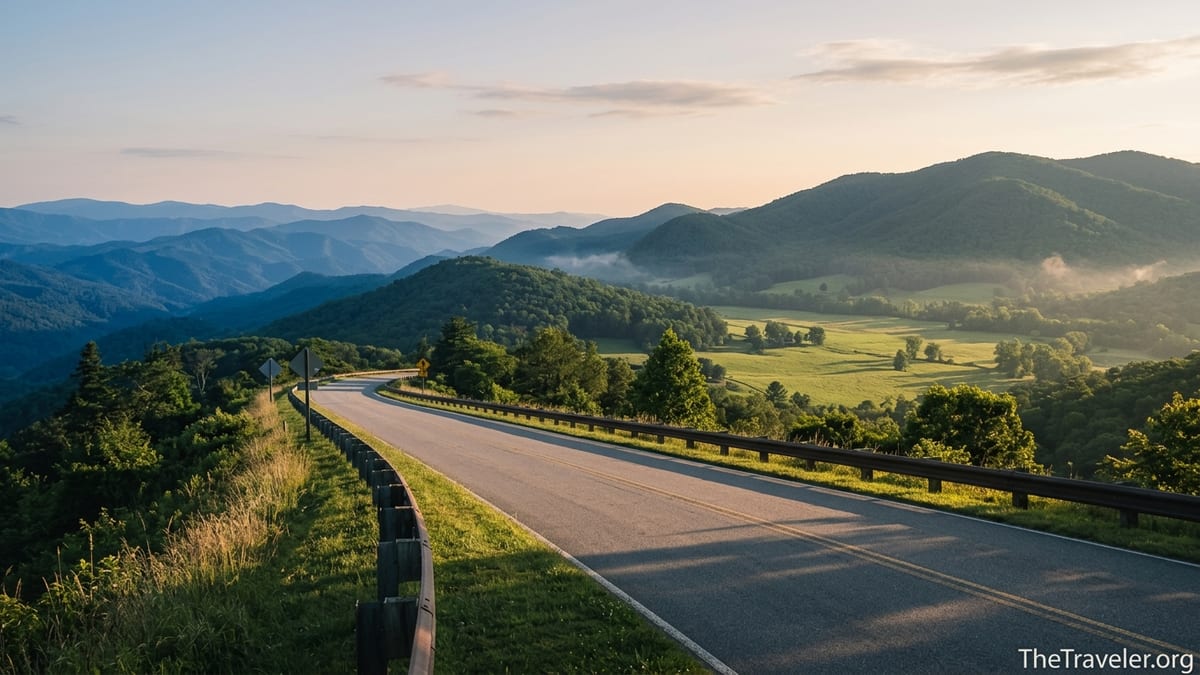
If your idea of a classic Smokies view is ridge after ridge fading into blue haze, Newfound Gap Road delivers that repeatedly. Starting near the Sugarlands Visitor Center outside Gatlinburg, the road winds through tight river gorges before climbing to overlooks like Carlos Campbell and Morton Overlook, where pullouts face layered ridges in Tennessee and North Carolina. At Newfound Gap Overlook, more than 5,000 feet above sea level, you can stand on the state line, feel a temperature drop of several degrees compared with Gatlinburg, and on clear days see a sea of peaks that looks more like the view from a plane window than a roadside parking lot.
Cades Cove offers a different kind of drama. The loop road threads through open meadows framed by mountains such as Rich Mountain and Thunderhead Mountain, with white-tailed deer grazing, wild turkeys crossing the road, and morning fog burning off over fields. Rather than looking across miles of ranges, you are surrounded by them while you drive between split-rail fences and patches of forest. Photographers who love backlit grass, solitary trees, and low-lying mist often favor sunrise in Cades Cove, particularly from pullouts near the start of the loop and the gravel cut-throughs like Hyatt Lane when they are open.
Another factor is how much you want your scenery to change over the length of your drive. Newfound Gap Road feels like a journey through different ecological zones: lush riverbanks, mid-elevation hardwoods, and spruce-fir forest near the top. In a single summer afternoon you might see rhododendron blooming along the lower slopes and feel a crisp breeze in a conifer forest at Newfound Gap. Cades Cove’s scenery is more consistent: meadows, fencerows, and forest edges, punctuated by churches, cabins, and the occasional creek crossing. For some travelers that pastoral repetition is soothing; others find that Newfound Gap’s big-elevation shifts feel more like an adventure.
Seasonality also plays a role. In early to mid-October, Newfound Gap Road offers sweeping views of fall color in multiple elevations, so you can often find good foliage somewhere along the drive even if the valley is past peak. In late spring and early summer, Cades Cove’s fields turn lush green and wildflowers dot the forest margins, while the ridges overhead remain deep blue and smoky. If you are chasing fall views from a single overlook, Newfound Gap has the edge. If you want that classic green Appalachian valley with low clouds snagging on nearby summits, Cades Cove is hard to beat.
Wildlife & History: What You Are Most Likely to See
Cades Cove is widely regarded as one of the best places in the park to spot wildlife from your car. Black bears, white-tailed deer, wild turkeys, coyotes, and foxes are all seen regularly along the loop road and in the fields. Rangers and frequent visitors often recommend arriving shortly after sunrise or staying near sunset, when animals are most active and traffic is slightly lighter. On a typical summer morning you might watch a bear forage on a distant hillside, see turkeys strut across the road, and spot deer moving through the high grass, all before you reach the halfway point near the visitor center.
The loop is also a concentrated slice of Smokies history. Within those 11 miles you pass well-preserved 19th-century structures, including log homes like the John Oliver Cabin at the beginning of the drive and three historic churches, as well as barns and the Cable Mill area near the Cades Cove Visitor Center. Many travelers follow the self-guided tour booklet sold at the entrance road, using numbered signposts to match cabins and churches with short historical notes. For families, stepping out at a weathered log cabin or seeing a working grist mill offers a more tangible sense of Appalachian life than a museum exhibit alone.
Newfound Gap Road generally offers more elusive wildlife but a broader historical story. Bears and elk can appear along the shoulders, especially near the Oconaluftee side of the park, but sightings are less predictable than in Cades Cove’s open valley. What you can count on is a tour of transportation and conservation history. The road crosses the Appalachian Trail at Newfound Gap, passes the site where President Franklin D. Roosevelt dedicated the park in 1940, and connects two gateway communities with long Cherokee and Appalachian heritage. Pullouts often include interpretive signs on everything from early road building in rugged terrain to the creation of the park from former logging lands.
For travelers interested primarily in wildlife photography from the car, Cades Cove generally offers more reliable opportunities if you are patient with traffic and crowds. For those more drawn to civil engineering, national park history, and sweeping natural vistas, Newfound Gap Road tells a bigger story in a single continuous drive.
Traffic, Timing, and Road Conditions
One of the most important practical differences between these drives is how traffic behaves. Cades Cove Loop Road has a posted speed limit of around 20 miles per hour but often moves at a walking crawl during peak summer and fall weekends. It is not unusual for the 11-mile loop to take two hours or more when congestion builds, especially if a black bear appears near the road and a “bear jam” brings vehicles to a standstill. Because the loop is one-way, once you commit you generally must finish the circuit, with only a couple of interior gravel roads sometimes available as shortcuts when open.
In addition, Cades Cove has designated vehicle-free days most Wednesdays from roughly May through September, when the loop is closed to cars from morning until at least midday so that cyclists and pedestrians can enjoy the road in peace. Visitors who show up with cars on those mornings discover they must either park and walk or return later in the day. The loop is typically open from sunrise to sunset otherwise, weather permitting, but it pays to check current conditions through the park before driving out, especially after major storms when low water crossings or side roads can briefly close.
Newfound Gap Road, by comparison, is a two-lane through highway with numerous pullouts where faster drivers can pass and slower drivers can pull aside for photos. Summer weekends, fall foliage season, and holiday periods can still bring heavy traffic, but true gridlock is less common than in Cades Cove, and you can often keep moving even when the road is busy. Travel times between Gatlinburg and Cherokee commonly range from about an hour in very light traffic to closer to 90 minutes or more if you stop often for photos or get caught behind slower vehicles.
The main operational caveat on Newfound Gap Road is weather. At more than 5,000 feet, the namesake gap frequently sees snow and ice in winter and early spring when Gatlinburg remains wet or merely cool. The National Park Service periodically closes the highway between Sugarlands and Oconaluftee during storms and reopens it once crews have treated or cleared the pavement. If you are visiting from roughly December through March and wake up to snow in Gatlinburg, plan for the possibility that Newfound Gap Road could be closed until conditions improve, and be ready with lower-elevation alternatives like Little River Road or the Roaring Fork Motor Nature Trail.
What Each Drive Demands From Your Day
From a time-budget perspective, Newfound Gap Road is more flexible. You can drive all or just a section of it, turn around at any viewpoint, and combine it with other stops like Clingmans Dome Road in a half-day outing. A traveler based in Gatlinburg might, for instance, leave town after breakfast, stop at the Sugarlands Visitor Center for orientation, then drive to Newfound Gap for photos and a short stroll along the Appalachian Trail before returning to town by mid-afternoon. Those with a full day could continue down the North Carolina side, visit the Oconaluftee Visitor Center and Mountain Farm Museum, then return over the pass in time for dinner.
Cades Cove usually requires a more deliberate block of time. From Gatlinburg or Pigeon Forge, you must first drive roughly an hour to reach the cove through curvy mountain roads such as Little River Road and Laurel Creek Road. Once you enter the one-way loop, you are committed until you complete it. Visitors who plan a quick detour often find that what they imagined as a two-hour side trip expands into four or more hours, especially if they choose to walk through the Cable Mill area, tour multiple cabins, or hike to Abrams Falls.
Families traveling with small children often appreciate that Newfound Gap Road offers frequent chances to reset the day. If the kids tire of the car, you can stop at a picnic area, let them explore a trail for a few minutes, then turn back the way you came without penalty. In Cades Cove, by contrast, tantrums or back-seat fatigue can feel more stressful because exiting the scene requires continuing along the same congested loop.
Another consideration is how you handle uncertainty. Both roads can experience temporary closures or delays due to construction, fallen trees, or wildlife management. However, because Newfound Gap Road is a through route with alternate ways back to town, you have more options if you encounter a closure. In Cades Cove, closures of internal gravel spurs or short-term delays from wildlife are simply part of the experience, and patience is not optional.
Photography, Picnics, and Active Stops
Photographers looking for classic road-in-the-mountains shots, sweeping panoramas, and sunrise or sunset light over distant ranges tend to find more options along Newfound Gap Road. Pullouts like Morton Overlook near the Tennessee side or the vistas approaching Newfound Gap Overlook itself give you elevated views in multiple directions. Because the road changes elevation so dramatically, you can often drive a few miles up or down to find a layer of fog, a patch of sunlight, or a band of fall color that suits your composition. Tripods are manageable at most overlooks, and visitors frequently combine photo stops with short walks along the Appalachian Trail to escape roadside crowds.
Cades Cove, on the other hand, excels at intimate landscape scenes and wildlife photography. Early risers who enter the loop near sunrise often capture deer or turkeys backlit in the fields, thin fog on the valley floor, and the warm glow of first light hitting surrounding peaks. The rustic churches and cabins offer strong subjects for black-and-white images or detail shots of weathered wood and hand-hewn logs. Telephoto lenses around 200 to 400 millimeters are common among bear watchers parked at pullouts, while families with smartphones focus on cabin porches and kids running through open fields.
Both drives also offer good opportunities to get out of the car and move. Along Newfound Gap Road, popular short hikes include the half-mile stroll along the Appalachian Trail from Newfound Gap Overlook and slightly longer walks from adjacent trailheads such as Kephart Prong or Alum Cave, which start right off the highway. Designated picnic areas near the road provide riverside tables where you can unpack a supermarket lunch from Gatlinburg or Cherokee and listen to water rush over rocks just below the pavement.
In Cades Cove, trailheads like Abrams Falls entice visitors who want to turn a scenic drive into a half-day hike. The loop road itself, especially on vehicle-free days, becomes a favorite route for local cyclists and walkers, who rent bikes in Townsend or bring their own and pedal the 11 miles through the valley without worrying about cars. Picnic areas near the entrance and along the loop give families a place to spread out blankets, grill simple meals, or simply rest between cabin visits and wildlife watching.
Which Drive Is Better for Your Travel Style?
If you are trying to decide between Newfound Gap Road and Cades Cove for a one-day visit, start by asking what you want most from your Smokies experience. Travelers who prioritize big mountain views, cooler air in summer, and the sense of crossing from one side of the range to the other usually come away more satisfied with Newfound Gap Road. It fits naturally into itineraries that already include Gatlinburg and Cherokee, requires a bit less rigid time commitment, and offers more predictability if you dislike being stuck behind slow traffic.
Those who dream of seeing black bears, deer, and turkeys from the comfort of their vehicle, or who are deeply interested in Appalachian settler history, often find Cades Cove more compelling despite its traffic. If your mental image of the Smokies involves misty fields, a lonely white church, and the creak of a cabin’s wooden floorboards under your feet, the cove delivers that more completely than a quick stop at a highway overlook. For photographers focused on wildlife and pastoral scenes, it is often the higher-reward option, especially at dawn or dusk.
Budget can play a minor role, though both drives themselves are free once you have the required parking tag for Great Smoky Mountains National Park. Newfound Gap Road’s through-route design can make it easier to pair with low-cost motels in Gatlinburg or Cherokee and minimize extra gas or time. Cades Cove’s out-and-back approach involves more drive time from most lodging bases and may encourage you to treat it as a full-day outing, potentially adding costs for meals or bike rentals if you choose to ride the loop on vehicle-free days.
In the end, many visitors who return to the park more than once make a point of experiencing both. For a first trip or a short stay, a useful rule of thumb is this: choose Newfound Gap Road if you want to feel like you have driven across the Smokies, and choose Cades Cove if you want to feel like you have stepped back into a small, wildlife-rich valley within them.
The Takeaway
Newfound Gap Road and Cades Cove each showcase a different face of Great Smoky Mountains National Park. One is a high, winding mountain highway that connects states and ecosystems, with long views and cool breezes; the other is a quiet-feeling valley loop that concentrates wildlife, history, and soft morning light into 11 slow, memorable miles. Neither is objectively better, but each lends itself to a particular kind of day in the park.
If your time is short and you want the widest range of scenery with the greatest flexibility, Newfound Gap Road usually gives you more. You can tailor your day to the weather, your energy level, and the interests of your group, all while enjoying some of the most expansive views in the Smokies. If you have patience for traffic, a strong desire to see wildlife, and curiosity about how people once lived in these mountains, Cades Cove offers a more immersive, ground-level experience that many travelers remember long after the trip.
Ideally, plan enough time to drive both on different days and in different light. Experience sunrise mist in Cades Cove and a late afternoon breeze at Newfound Gap Overlook, and you will understand why generations of visitors debate this exact question. Until then, let your priorities guide you, check current road and weather conditions before you set out, and remember that in the Smokies, the drive itself is often as rewarding as the destination.
FAQ
Q1. Which scenic drive is better if I only have half a day, Newfound Gap Road or Cades Cove?
Newfound Gap Road is usually better for a half-day because you can turn around at any point, adjust how far you go, and still enjoy major overlooks without committing to a slow one-way loop.
Q2. Where am I more likely to see black bears, Newfound Gap Road or Cades Cove?
Cades Cove generally offers more reliable bear sightings, especially shortly after sunrise or near sunset, thanks to its open fields and concentrated habitat, though sightings are never guaranteed.
Q3. How long should I plan for each drive?
Plan two to three hours for Newfound Gap Road with a few photo stops between Gatlinburg and Cherokee, and at least two to four hours for Cades Cove, more if you tour cabins or hike.
Q4. Are there specific days when Cades Cove is closed to vehicles?
From roughly May through September, Cades Cove Loop Road typically has a weekly vehicle-free day, often on Wednesdays, when the loop is reserved for cyclists and pedestrians during morning hours.
Q5. Which drive has better fall colors?
Both are excellent, but Newfound Gap Road often has the edge for fall color because it passes through multiple elevations, increasing your chances of finding good foliage during October.
Q6. Is winter driving more of an issue on Newfound Gap Road or Cades Cove?
Winter conditions affect Newfound Gap Road more because of its higher elevation. Snow and ice can temporarily close the road, while Cades Cove, at lower elevation, often remains accessible when conditions are safe.
Q7. Which route is better for families with young children?
Newfound Gap Road tends to be easier with young kids because you can stop often, exit the route at any time, and avoid being stuck for long stretches in loop traffic if patience runs out.
Q8. Can I combine either drive with a good day hike?
Yes. Along Newfound Gap Road you can access popular hikes like Alum Cave or short sections of the Appalachian Trail, while Cades Cove connects to hikes such as Abrams Falls from a spur off the loop.
Q9. Do I need a special permit or reservation to drive these roads?
You do not need a separate permit to drive either road beyond the park’s standard parking tag requirement. It is still wise to check the park’s current guidelines before your visit, as policies can change.
Q10. If I want to avoid the biggest crowds, which drive should I choose?
Newfound Gap Road generally feels less claustrophobic during busy periods, especially if you visit early or late in the day, while Cades Cove can be heavily congested for long stretches in peak season.