


Perched high on the state-line ridge between Tennessee and North Carolina, Charlies Bunion has earned a reputation as one of the most rewarding day hikes in Great Smoky Mountains National Park. The approach is not effortless, but hikers who make the 8 mile round trip along the Appalachian Trail are paid back with a rare bare-rock outcrop, dramatic drop offs, and a sweeping panorama of blue layered ridges that captures the Smokies at their most iconic.
Get the latest updates straight to your inbox!
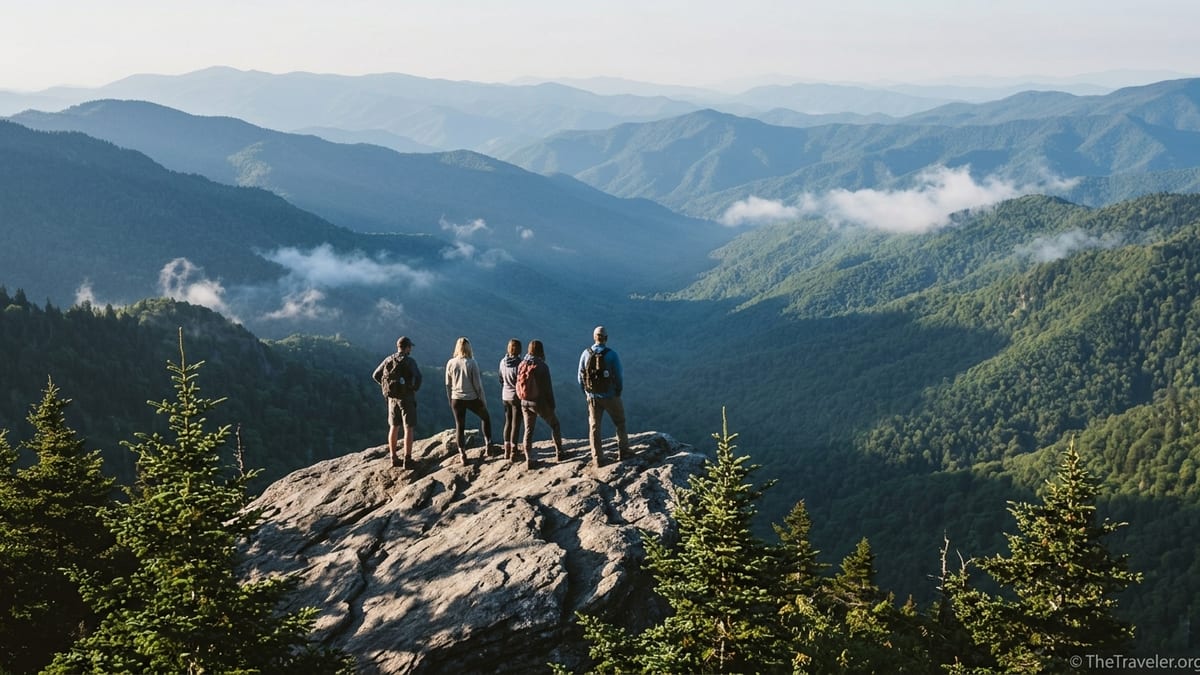
A Rare Bare Rock Window Into the Smokies
Most of the Great Smoky Mountains are cloaked in dense forest, with summits often capped by spruce fir and views screened by thick summer foliage. Charlies Bunion is an exception. Here, a rocky knob juts from the ridgeline at around 5,500 feet, its exposed face dropping sharply into the Greenbrier and Porters Creek valleys far below. From the outcrop, hikers stand on rough, weathered stone instead of soil and leaf litter, with nothing to interrupt the view except the curve of the mountains themselves.
On a clear day, you can trace the spine of the Smokies east and west, picking out peaks like Kephart, Guyot, and LeConte as they fade into the blue haze that gives the range its name. In early fall, that view turns into a patchwork of red maples, golden birch and hickory, and deep green spruce. In winter, when snow dusts the higher ridges and bare branches reveal every fold in the terrain, the amphitheater of ridges and hollows feels even more dramatic.
Part of the reward comes from the contrast. After miles of hiking through enclosed forest, emerging onto Charlies Bunion is like stepping out of a tunnel into open sky. The sudden sense of exposure, the drop at your feet, and the wind sweeping across the ridge combine to make the view feel bigger and wilder than many pull off panoramas you get from park roads.
Despite its popularity, the outcrop still feels personal. There is room for only a handful of people on the main rocks at one time, and hikers often take turns stepping out for photographs or a quiet moment. That intimacy, combined with the immensity of the landscape, is a big part of why so many visitors rank Charlies Bunion among the most memorable vistas in the Smokies.
The Appalachian Trail Approach: Earning the View
The standard route to Charlies Bunion follows the white blazes of the Appalachian Trail from Newfound Gap. The hike is approximately 8 miles round trip with about 1,600 feet of total elevation gain, which most reasonably fit hikers complete in 4 to 6 hours. It is long enough and steep enough in places to feel like a real mountain walk, but not so punishing that you need advanced backcountry experience.
From the Newfound Gap parking area, where you are already at more than 5,000 feet, the Appalachian Trail climbs immediately into spruce fir forest. The first mile is a steady but moderate ascent over rock steps and packed dirt. Many hikers notice the air cooling quickly here. Even in July, when Gatlinburg might be in the upper 80s Fahrenheit, Newfound Gap can be 10 to 15 degrees cooler, with the shaded forest feeling almost alpine in the morning.
As you continue past junctions with the Sweat Heifer Creek and Boulevard trails, the Appalachian Trail undulates along the crest. There are short, steep pulls interspersed with level stretches and occasional partial views through gaps in the trees. By the time you pass Icewater Spring Shelter, a rustic three sided thru hiker shelter set just off the trail, you have already climbed the bulk of the elevation. Many day hikers pause here to refill water from the nearby spring using a filter and to enjoy early glimpses into the North Carolina side of the park.
The final approach to Charlies Bunion leaves the Appalachian Trail briefly on a signed side path that descends a short distance to the rocks. That last hundred yards, dropping from the shaded forest to the bare outcrop, feels like a threshold. The need to hike in and out along the same route also intensifies the sense of accomplishment. This is not a drive up overlook or a quick stroll from a visitor center. When you stand on Charlies Bunion, the view feels earned.
Geology, Fire, and a Name With a Story
The drama of Charlies Bunion is rooted in both geology and history. The Smokies are ancient mountains, their rocks uplifted and then worn down over hundreds of millions of years. In most places forests have reclaimed every shoulder and summit, but a combination of landslides, erosion, and early 20th century logging and fire left this particular ridge unusually exposed. The result is a knobby protrusion of rock jutting from an otherwise forested face, like a stone spur on the side of the mountain.
The name itself comes from Smokies lore dating to the 1920s. During a hike along this ridge, writer and conservationist Horace Kephart was reportedly accompanied by a local farmer and guide named Charlie Conner. When Conner removed his boots to rest his feet, Kephart is said to have remarked that the craggy rock below looked like Conner’s bunion. The nickname stuck, and when park officials and surveyors later formalized place names in the area, Charlies Bunion found its way onto the map.
Knowing that backstory adds to the experience. A viewpoint called “Overlook 3” might be easy to forget, but Charlies Bunion carries a human image that is hard to shake. Standing on the rocks, it is easy to imagine those early hikers laboring up the same ridge long before paved roads, GPS maps, or ultralight gear. The name becomes a reminder that, despite the park’s modern infrastructure, Smokies hiking culture grew from rugged local knowledge and a certain rough humor.
The geology also plays a practical role in why the view is so impressive. The outcrop drops steeply on several sides, which opens a true 270 degree panorama without the half hidden sight lines you get on more rounded summits. On clear days after a cold front, when haze and humidity are low, hikers can often see ridge beyond ridge for dozens of miles, a textbook illustration of the “smoky” blue layers that define the range.
Season by Season: How the View Changes
Charlies Bunion is usually accessible from spring through late fall, and each season offers a different personality to the view. In April and early May, snow patches may linger along the trail, and ice can cling to shaded rock slabs. Many locals carry inexpensive microspike traction devices for this shoulder season. The reward is exceptionally crisp air and distant clarity. On these days, you might stand on bare rock while rime ice still coats spruce branches just inland from the cliffs.
By late May and June, the high forest turns lush and green, with wildflowers such as trillium, violets, and bluets brightening the understory near Newfound Gap. The view from Charlies Bunion at this time is a deep, almost saturated green, broken by the gray rock and pale blue sky. On warm weekends, the parking lot at Newfound Gap can fill by mid morning, so many hikers aiming for cooler temperatures and thinner crowds start at sunrise, catching low golden light spilling across the ridges as they arrive at the outcrop.
Autumn brings the most famous vistas. From early to mid October, depending on elevation and year to year variations, the slopes below Charlies Bunion blaze with reds, oranges, and yellows. Because the hike travels along a high ridge, you often look down on the color rather than viewing it at eye level. Travelers who might have spent the day in car traffic around Cades Cove sometimes find that a half day dedicated to Charlies Bunion yields the single most memorable foliage view of their trip.
Winter conditions are more unpredictable. Newfound Gap Road can close temporarily during snow or ice, and wind chill at the gap can feel closer to freezing even on sunny days. But if the road is open and you are equipped with warm layers, traction, and appropriate caution on ice, a clear winter day at Charlies Bunion can be spectacular: snow sprinkled across the high country, bare hardwoods revealing every fold in the lower valleys, and long, low light creating sharp shadows on the rock face.
Comparing Charlies Bunion With Other Classic Smokies Views
Great Smoky Mountains National Park is filled with viewpoints, from short roadside walks to strenuous climbs. What sets Charlies Bunion apart is its combination of distance, drama, and intimacy. Alum Cave to Mount LeConte, for example, is a longer, steeper hike that rewards you with lodge clearings and ledges overlooking the western Smokies. Clingmans Dome offers a sweeping 360 degree view from an observation tower just a half mile from the parking lot. Newfound Gap itself delivers a wide vista from the edge of the pavement.
Yet many hikers who have experienced all of these still single out Charlies Bunion as the place the mountains felt most alive. The outcrop’s small footprint makes the scene feel personal. There is no tower or railing separating you from the sky, only rough rock under your boots and open air ahead. When layered clouds push through the valleys, you can watch them spill over ridge after ridge at eye level, an experience that is harder to replicate from busier, more developed overlooks.
There is also variety built into the route. Within a relatively short half day outing, you travel through mixed hardwood forest, high elevation spruce fir, mossy rock gardens, and narrow ridgeline sections where the trail feels just a few feet wide. That diversity of terrain keeps the hike engaging for visitors who might find long forest road walks monotonous. Compared with some shorter viewpoint trails that climb relentlessly for one payoff, Charlies Bunion offers rewarding glimpses along the way, then saves its most dramatic reveal for the end.
For travelers with a limited window in the park, this makes Charlies Bunion a strong candidate for the single major hike of a trip. A couple staying in Gatlinburg, for instance, can leave town after an early breakfast, drive the roughly 30 minutes up to Newfound Gap, complete the hike at a moderate pace with a lunch break on the rocks, and still be back in town by late afternoon for dinner. That balance of accessibility and wild feeling is a big reason the hike has become a modern classic.
Planning Your Day: Practical Tips and Realistic Expectations
Because Charlies Bunion has grown so popular, a bit of planning goes a long way. Parking at Newfound Gap is free but limited, and during peak seasons it can fill by mid morning. Arriving between sunrise and 8 a.m. greatly increases your chances of finding a space without circling. Many hikers from nearby towns like Gatlinburg and Cherokee plan a simple trailhead breakfast in the car, such as coffee from a local cafe and grocery store pastries, to save time and get an early start.
The hike’s length and exposure at the outcrop mean carrying some basic gear is important. Lightweight hiking shoes or trail runners with good grip are adequate for most people, but the rocky sections can be slick after rain. Many visitors bring trekking poles, especially for the downhill segments on the return. A compact rain jacket is wise even on seemingly clear summer days, when afternoon thunderstorms can build quickly along the ridge. At least 1.5 to 2 liters of water per person is a common benchmark for moderate weather, with more in mid summer.
Families sometimes ask whether the trail is suitable for children. Many school age kids who are accustomed to walking can complete the hike if you allow plenty of time and breaks. The real concern is at the viewpoint itself. There are significant drop offs around the rocks, and while there is a main flat area where people typically sit, it requires close attention with young children. Travel parties often designate one adult to focus solely on kids while others take turns stepping out to the more exposed angles for photographs.
Travel logistics also include checking current conditions. While there are no routine long term closures specific to Charlies Bunion at the time of writing, sections of Newfound Gap Road can close temporarily due to ice, snow, or maintenance, especially in winter and early spring. Before you set out, it is sensible to consult the current road and trail condition updates from Great Smoky Mountains National Park, either the evening before or early the same morning.
The Takeaway
Charlies Bunion does not offer the easiest view in the Great Smoky Mountains, nor the highest, nor the most developed. Its reputation rests on something more subtle: a feeling of being just far enough into the backcountry to touch the wild heart of the range, yet close enough to reach in a single day from the busy gateway towns below.
The bare rock, the sheer drop, and the wide sweep of ridges create a vista that lingers in memory long after the trip has ended. Paired with a ridge top approach along the Appalachian Trail and a name that hints at decades of Smokies trail lore, Charlies Bunion gives hikers a sense that they have earned a private audience with the mountains, even if they share the outcrop with a handful of fellow travelers.
For visitors planning a trip to Great Smoky Mountains National Park, this hike offers a near ideal balance of effort and reward. With thoughtful preparation, respect for the exposure at the viewpoint, and an early start, Charlies Bunion can be the moment when the Smokies shift from scenic background to lived experience, a place you will still be picturing years after you step off the rocks and turn back toward Newfound Gap.
FAQ
Q1. How long is the hike to Charlies Bunion and how difficult is it?
The standard route from Newfound Gap is about 8 miles round trip with roughly 1,600 feet of elevation gain. Most hikers describe it as moderate to strenuous, mainly due to the distance and steady climbs rather than any technical scrambling.
Q2. How long should I plan for the hike?
Most visitors should allow 4 to 6 hours for the round trip, including time for breaks, photos, and a relaxed stop at the viewpoint. Faster hikers may finish in closer to 4 hours, but planning for the longer window helps avoid feeling rushed.
Q3. Do I need a permit or reservation to hike to Charlies Bunion?
No backcountry permit is required for a day hike to Charlies Bunion from Newfound Gap. Standard park entry regulations and parking rules apply, but there is no separate trail fee for this route.
Q4. Is the trail dangerous or exposed?
The Appalachian Trail portion is well defined and generally safe for prepared hikers, but the viewpoint itself has significant drop offs and uneven rock. Using caution, keeping children close, avoiding the very edge, and staying back from wet or icy rock surfaces greatly reduces risk.
Q5. When is the best time of year to hike Charlies Bunion?
Late spring through fall is the most popular period. May and June offer cooler temperatures and fresh greenery, while early to mid October often brings impressive fall color. Winter can be beautiful but requires extra caution due to possible snow, ice, and road closures.
Q6. What should I wear and bring for the hike?
Comfortable hiking footwear with good traction, layered clothing for changing temperatures, rain protection, snacks or lunch, and at least 1.5 to 2 liters of water per person are sensible basics. Many hikers also carry trekking poles, a small first aid kit, and sun protection for the exposed rocks at the viewpoint.
Q7. Is the hike suitable for children or beginners?
Active children and newer hikers who are comfortable walking several miles can often complete the trail if you plan for a slower pace and regular breaks. The distance and elevation gain mean it may feel challenging, so managing expectations and being prepared to turn around early if needed are important.
Q8. How early should I arrive at Newfound Gap for parking?
In busy seasons and on weekends, arriving around sunrise to mid morning gives you a better chance at finding a parking spot without long waits. Later in the day, spaces may open as early hikers return, but midday crowds and potential afternoon storms can make an earlier start more comfortable.
Q9. Can I combine Charlies Bunion with other nearby viewpoints?
Fit and experienced hikers sometimes add short side trips, such as visiting nearby ridge viewpoints along the Appalachian Trail. However, most first time visitors find that focusing on the main out and back to Charlies Bunion makes for a satisfying and full day without overextending.
Q10. Are dogs allowed on the trail to Charlies Bunion?
No. Great Smoky Mountains National Park restricts pets on most trails, including the Appalachian Trail segment to Charlies Bunion. Dogs are allowed in campgrounds and along certain roads, but not on this hiking route.