


Charlies Bunion is one of the most dramatic viewpoints in Great Smoky Mountains National Park, an airy rock outcrop perched along the Appalachian Trail with deep, layered ridgelines spilling away in every direction. It is also one of the park’s most popular hikes. With some planning, though, you can time your visit for clear mountain views and surprisingly uncrowded moments on the rocks. Here is how to plan a Charlies Bunion hike that feels wild rather than congested.
Get the latest updates straight to your inbox!
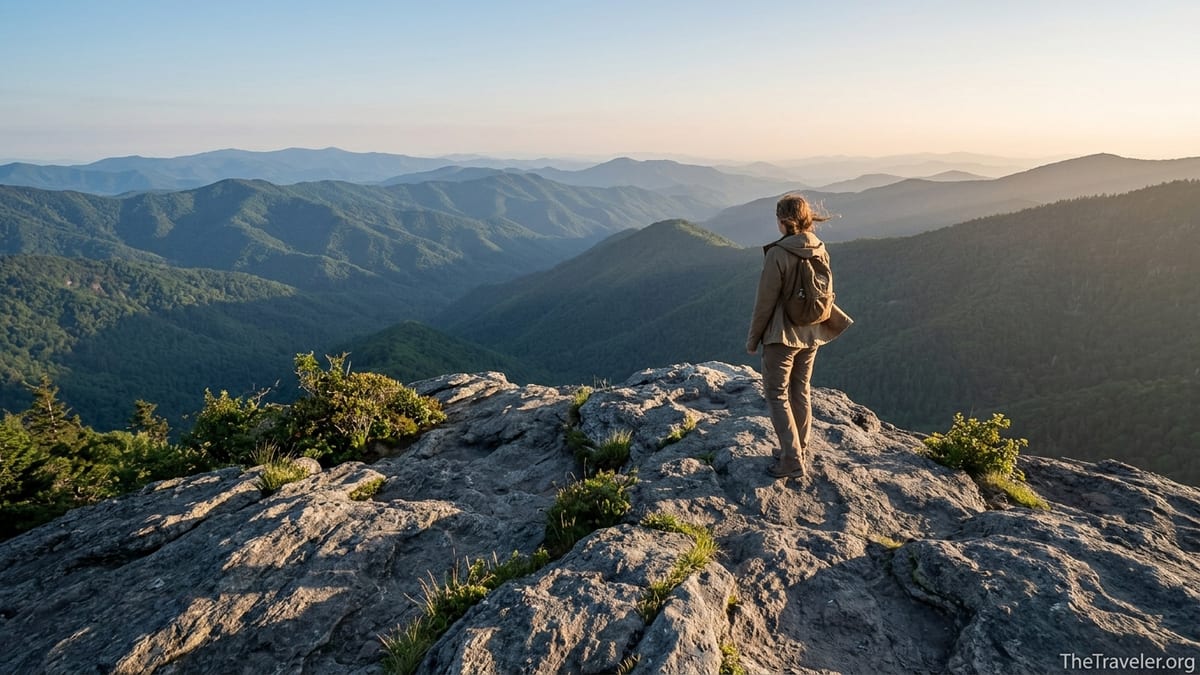
Understanding the Charlies Bunion Hike
Charlies Bunion sits on the state line ridge in Great Smoky Mountains National Park, roughly halfway between Gatlinburg, Tennessee, and Cherokee, North Carolina. The hike follows the Appalachian Trail from Newfound Gap, a high pass at about 5,050 feet, out to a rocky promontory at around 5,565 feet. The standard route is about 8 miles round trip with around 1,600 feet of cumulative elevation gain, enough to feel challenging but still attainable for fit day hikers.
Because the trail follows the Appalachian Trail for the entire distance, navigation is straightforward. You start at the signed Appalachian Trail access at the far end of the Newfound Gap parking lot and follow white blazes along a mostly forested ridge, passing viewpoints like The Jump Off side trail and the Icewater Spring Shelter area before the final short spur to Charlies Bunion itself. The last couple of hundred yards traverse uneven rock with steep drop-offs, which adds to both the drama and the need for caution.
In practical terms, this is a half-day outing for most visitors. Many hikers leaving Newfound Gap around 7 a.m. from a hotel in Gatlinburg or a cabin near Cherokee are back at their car by early afternoon, with time left for a late lunch in town. Strong hikers who are used to mountain trails may finish in 4 to 5 hours, while first-time visitors to the Smokies should plan closer to 6 hours to allow for breaks, photos, and slower pace on the rocky sections.
Understanding this profile helps you plan for your own priorities: if you want lingering time on the rocks without rushing, it is sensible to build in an extra hour and treat the hike as the main activity of your day rather than something to squeeze in between other plans.
Best Seasons and Weather for Clear Views
Great Smoky Mountains National Park is famous for its haze. On humid summer afternoons, distant ridgelines can fade into a blue-gray wash, and thunderstorms can build quickly. If your priority is crisp, far-reaching views from Charlies Bunion, consider visiting in cooler, drier windows like late October to early November or clear winter days from December through February, when cold fronts often scrub the air clean. On these days, hikers regularly report seeing layer after layer of ridges stretching seemingly forever.
Spring can also offer sharp visibility, especially after rain, but it is a shoulder season. In April and early May, you may find lingering ice or snow patches at higher elevations near Newfound Gap even when Gatlinburg feels like mild spring down below. This can be a plus for solitude but requires microspikes or at least very cautious footwork. Summer, by contrast, brings lush greenery and long daylight hours but also more humidity and midday haze. If summer is your only option, you can still get clear views by watching the weather closely and aiming for days right after a cold front has moved through.
Checking the forecast for nearby Gatlinburg and then specifically for Newfound Gap’s higher elevation conditions the night before your hike is critical. A day that looks like scattered clouds in town can mean fog and low visibility along the ridge. Local outfitters in Gatlinburg and Cherokee can often give a boots-on-the-ground sense of whether the high trails were in the clouds that morning. If the forecast calls for afternoon thunderstorms, which is common in June, July, and August, it is wise to be off the exposed rocks of Charlies Bunion and back into the forest by early afternoon.
It is also important to monitor Newfound Gap Road status, particularly in winter. This main pass can close temporarily after snow or ice. Travelers staying in a Gatlinburg hotel, for example, sometimes wake up to a closure notice at Sugarlands Visitor Center and must pivot to lower-elevation hikes. If Charlies Bunion is a priority objective for your trip, consider building in at least two possible days so you can be flexible around weather and road conditions.
Timing Your Day to Avoid Crowds
Even though the hike is not as crowded as very short walks like Laurel Falls, Charlies Bunion is well known among Smokies visitors and Appalachian Trail enthusiasts. The key to having fewer people around you is to time your departure from Newfound Gap carefully. On a typical busy Saturday in June, the Newfound Gap parking lot may begin filling steadily after 8 a.m. as day trippers from Gatlinburg and bus tours arrive for the overlook. Hikers who start between 9 and 10 a.m. often find a steady stream of people along the first couple of miles.
If you want stretches of solitude and a chance to have the rocks mostly to yourself, start very early or surprisingly late. An early strategy might be leaving a cabin near Gatlinburg around 5:30 a.m., arriving at Newfound Gap shortly after sunrise, and stepping onto the trail by 6:30 a.m. In summer this gives you cool temperatures, quiet forest, and the chance to reach Charlies Bunion by mid-morning before many casual hikers have gotten underway. Several recent trip reports describe having the outcrop almost to themselves around 8:30 or 9 a.m., then encountering heavier two-way traffic on the return.
A late-day strategy can also work when sunset times and your comfort level with timing safely allow it. For example, in June and July when sunset is after 8:45 p.m., stepping onto the trail around 3 p.m. from Newfound Gap still gives you abundant daylight for an out-and-back hike, and many day-trippers are already descending or back at their cars. Used thoughtfully, this timing can mean a calmer experience along the ridge. The tradeoff is higher afternoon temperatures and a greater risk of thunderstorms, so you must watch radar and be willing to turn around if clouds build.
Weekdays are your friend if your travel schedule allows. A Wednesday in early May or late September looks very different from a holiday weekend. Travelers staying three nights in Gatlinburg or Cherokee often plan Charlies Bunion for the middle weekday and use weekend days for short roadside overlooks and lower trails. Regardless of the day, giving yourself a wide timing window and a relaxed schedule makes it easier to pause when the trail opens to views rather than feeling rushed by the hikers behind you.
Access, Parking, and Logistics from Nearby Towns
The hike to Charlies Bunion begins at Newfound Gap, accessed along US 441, the main road that crosses the park between Gatlinburg and Cherokee. From downtown Gatlinburg, the drive to Newfound Gap is roughly 30 to 40 minutes in light traffic. From Cherokee, the drive is similar in length from the Oconaluftee Visitor Center area. Many visitors staying in chain hotels along the Gatlinburg Parkway or in vacation cabins around Pigeon Forge plan their departure so they are rolling through the park entrance before 7 a.m. to avoid backups on Newfound Gap Road.
Newfound Gap itself has a large parking area spread along both sides of the road, larger and more forgiving than popular trailheads like Alum Cave Bluffs. On busy summer days it still fills, but there is frequent turnover because many people stop only for photos at the overlook and then drive on. To hike Charlies Bunion you will want one of the regular car spots rather than the short-term bus or RV spaces; look for the Appalachian Trail sign at the upper end of the lot as your anchor. The parking area includes restrooms and informational signs, which makes it a good place to organize gear without feeling rushed.
As of mid 2026, Great Smoky Mountains National Park requires a paid parking tag for vehicles parked longer than a brief stop, with daily tags priced in the range of a few dollars and multi-day options slightly more. You can buy these at visitor centers like Sugarlands near Gatlinburg and Oconaluftee near Cherokee or from kiosks in some parking areas. In practice, many travelers pick up a weeklong tag at Sugarlands on their arrival day, then use it for Charlies Bunion and other outings like Alum Cave, Clingmans Dome, or the Roaring Fork Motor Nature Trail.
Because the trail is an out-and-back, there is no shuttle involved for the standard day hike. However, some backpackers arrange a shuttle through local guide services so they can start at Newfound Gap, hike past Charlies Bunion, and continue along the Appalachian Trail to a different exit point. For most visitors planning a clear-views, low-crowd outing, simply driving your own rental car or personal vehicle up from Gatlinburg or Cherokee and returning to the same spot is the simplest approach.
Trail Conditions, Difficulty, and Safety
On paper, 8 miles with 1,600 feet of gain might sound manageable even to those who usually walk only city streets, but Charlies Bunion is still a mountain trail at high elevation. The path alternates between smooth, needle-covered sections through spruce-fir forest and rocky, rooty segments that demand attention to each step. From Newfound Gap, the Appalachian Trail climbs steadily for the first mile, levels out for stretches along the ridge, and then rolls up and down short, sometimes steep pitches on the way to Icewater Spring Shelter and beyond.
For a less crowded experience, it helps to understand where people tend to bunch up. The first half-mile from Newfound Gap is often the busiest, with many casual walkers testing the trail before turning back. The sections near Icewater Spring Shelter and at popular side paths like The Jump Off can also see clusters of hikers taking photos or having snacks. The final spur to Charlies Bunion narrows to a rough, rocky ledge; here, hikers typically take turns moving out and back to the best perches, and patient, single-file movement keeps things calmer and safer.
Footing is the main safety concern. After rain, the rocks and roots can be slick, and in late fall, winter, and early spring, shaded portions of the trail may hold ice even when the sunlit overlooks look dry. Lightweight traction devices that slip over trail shoes are increasingly common in daypacks for April and November hikes. In all seasons, staying on the established trail and the main rock area avoids trampling fragile vegetation and reduces the risk of slipping on loose soil at the very edge.
Because the outcrop drops away steeply, this is not the best place for off-leash dogs or for letting small children roam freely. The park restricts dogs to certain roads and picnic areas rather than most trails, so Charlies Bunion is usually a dog-free hike. Families who want a similar length outing with more gradual terrain might pair shorter Smokies walks and roadside overlooks instead. For adults with moderate fitness, a realistic pace of 2 miles per hour including breaks puts this hike well within reach, especially if you begin early when temperatures are cooler.
Packing Smart for Clarity and Comfort
Thoughtful packing contributes directly to both safety and your ability to linger for the views you came for. Footwear is the most important choice. Trail-running shoes with good tread or lightweight hiking boots handle Charlies Bunion’s mix of rock and dirt well. Visitors who have tried the hike in smooth-bottomed sneakers often report sore feet and shaky ankles by the return leg. If you are flying in and renting a car, wearing your own broken-in trail shoes on the plane saves luggage space and avoids the temptation to buy untested boots in Gatlinburg.
Even in summer, a light insulating layer and a windproof shell belong in your pack. Newfound Gap and the state-line ridge are significantly cooler and breezier than the valleys. It is common in July to leave a hotel in Pigeon Forge in short sleeves and step out of the car at Newfound Gap to find a stiff, cool wind. A thin fleece or synthetic midlayer and a packable rain jacket make it comfortable to sit on the rocks and watch the clouds without shivering, which in turn helps you wait out brief crowds from large hiking groups.
Water and snacks should match the effort the hike actually requires rather than what you hope you will need. Two liters of water per person is a reasonable starting point for temperate conditions, more if the forecast is hot and humid. Many hikers carry a couple of sports drink bottles purchased from a Gatlinburg grocery store plus a reusable bottle or bladder filled with tap water. Energy bars, trail mix, or a simple peanut butter sandwich picked up from a local café before dawn travel easily and let you extend your time on the ridge if the weather and solitude are perfect.
Finally, a small first-aid kit, a paper map or downloaded offline map of the park, and a fully charged phone are sensible additions. Cell coverage along the trail is unreliable. While the route is well traveled and marked, having a basic ability to orient yourself and manage a blister or minor scrape makes it easier to relax and enjoy the scenery instead of worrying about what might go wrong.
Strategies to Share the Trail Lightly
Even when you plan meticulously for fewer people, you will still share Charlies Bunion with others. A conscious trail etiquette mindset can make the experience more pleasant for everyone and, in subtle ways, can help keep the overlook from feeling overrun. Speaking quietly in the narrow rock sections lets the natural sounds of wind and birds stand out. Taking photos efficiently and then stepping back from the prime spots gives others room to enjoy the same moment without a long wait.
Groups have a particularly strong impact. If you are visiting with friends or family, consider breaking larger groups into smaller clusters that hike slightly apart, especially in the early miles from Newfound Gap where the trail is busiest. This reduces the sense of being stuck behind a large wall of people and can also make conversation more intimate and enjoyable. When you stop for a break, moving a few steps off the main tread to durable surfaces like rock slabs helps keep the flow open.
The ridge-top environment around Charlies Bunion is fragile, with thin soils and slow-growing vegetation. Staying on the established path, even when an unofficial shortcut looks tempting, protects the landscape that makes this hike special. It also keeps the experience more authentic for those behind you. Instead of widening trails by stepping around mud, for example, walking through short soft spots in sturdy footwear preserves the narrow, intimate feel of the Appalachian Trail corridor.
Finally, consider how your schedule across multiple days in the Smokies influences crowding patterns. If most visitors plan big hikes like Alum Cave or Charlies Bunion in the middle of the day and drive scenic roads at sunrise and sunset, flipping that pattern can both improve your own photos and spread use out. Watching sunrise at Newfound Gap or Clingmans Dome, then hiking Charlies Bunion while others are still at breakfast, is one of the simplest ways to turn a famous route into a surprisingly peaceful adventure.
The Takeaway
Planning a Charlies Bunion hike for clear views and fewer people is less about secret backdoors and more about stacking the odds in your favor. Choosing a cool, dry day, starting early or strategically late, and giving the route the time and respect it deserves can turn a busy national park classic into a personal highlight of your Smokies trip. A bit of extra preparation with gear, water, layers, and parking tags removes last-minute stress and lets you focus on the changing light over the ridges.
For visitors staying in gateway towns like Gatlinburg, Pigeon Forge, or Cherokee, Charlies Bunion can anchor a memorable day that feels simultaneously accessible and wild. By understanding the terrain, watching the forecast, and practicing considerate trail etiquette, you can step onto the Appalachian Trail at Newfound Gap and, a few hours later, stand on a rocky perch that feels far removed from traffic and T-shirt shops.
Whether you are checking off a famous Appalachian Trail viewpoint or simply looking for a half-day hike with real mountain character, this route rewards intention. Plan well, carry what you need, and let the timing work in your favor. With a little luck from the weather and thoughtful choices about when to go, Charlies Bunion will live up to its reputation as one of the finest views in the Smokies, without the crowds that sometimes accompany that fame.
FAQ
Q1. How long does it take to hike to Charlies Bunion and back? Most reasonably fit hikers take between 4 and 6 hours for the 8 mile round trip, including breaks for photos and snacks, with stronger hikers tending toward the shorter end of that range.
Q2. What is the best time of day to hike Charlies Bunion for fewer people? Starting just after sunrise, often by 6:30 or 7 a.m. in summer, usually provides the quietest experience, though a late afternoon start on long summer days can also be calmer than mid-morning.
Q3. Which town is better as a base for the hike, Gatlinburg or Cherokee? Both work well, but Gatlinburg has more lodging and dining options and is slightly more convenient if you also plan to hike Alum Cave or visit popular spots like the Roaring Fork Motor Nature Trail.
Q4. Do I need any permits or passes to hike Charlies Bunion? You do not need a separate hiking permit for Charlies Bunion as a day hike, but you do need a valid Great Smoky Mountains parking tag for your vehicle if you will be parked at Newfound Gap for more than a brief stop.
Q5. Is Charlies Bunion suitable for children or beginner hikers? It can be appropriate for older children and beginners with decent fitness who are comfortable with uneven ground, but the distance and final rocky exposure make it less suitable for very young kids or those nervous about heights.
Q6. What should I wear on the Charlies Bunion trail? Wear broken-in trail shoes or light hiking boots with good grip, moisture-wicking layers, and a light insulating and rain layer, since temperatures and wind at Newfound Gap are often much cooler than in Gatlinburg or Cherokee.
Q7. Are there bathrooms or water sources along the way? There are restrooms at Newfound Gap but not at Charlies Bunion itself, and while there is a spring near Icewater Spring Shelter, most day hikers simply carry all the water they need rather than relying on backcountry water treatment.
Q8. How busy is the trail in peak season? In peak months like June and October, expect a steady flow of fellow hikers during mid-morning and midday, especially within a mile or two of Newfound Gap, but you can still find quieter periods by starting early on a weekday or hiking in shoulder seasons.
Q9. Can I combine Charlies Bunion with other nearby hikes in one day? Ambitious hikers sometimes pair a Charlies Bunion outing with short roadside stops like the Newfound Gap overlook or an evening drive to Clingmans Dome, but most visitors treat it as their main hike for the day to avoid feeling rushed.
Q10. What happens if the weather turns bad while I am on the trail? If clouds build or thunderstorms threaten, the safest choice is to turn around before or shortly after reaching Charlies Bunion so you can return to the forested sections and ultimately to your car at Newfound Gap before conditions worsen.