


More news on this day
China Eastern Airlines is advising passengers booked on May 29, 2026 departures MU244 to Shanghai Pudong and MU5014 to Xi’an from Milan Malpensa Airport to prepare for possible delays and allow additional time at the airport, according to publicly available operational data and recent travel advisories.
Get the latest news straight to your inbox!
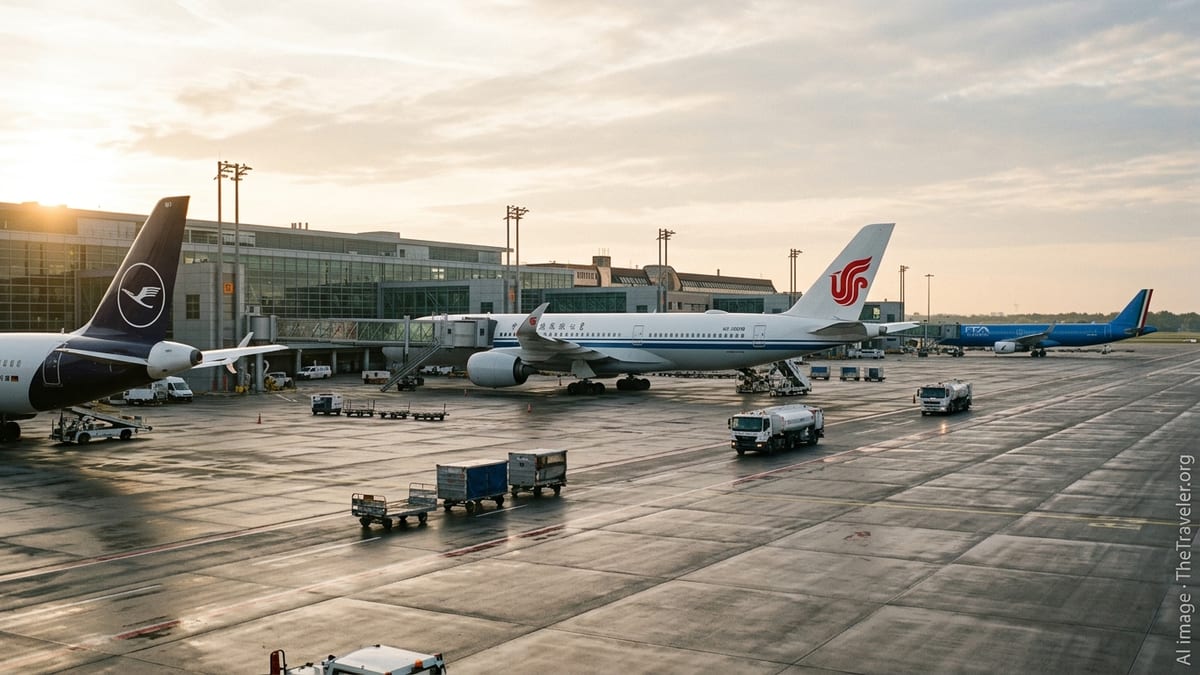
Busy Late‑May Operations Put Spotlight on MU244 and MU5014
Flight MU244 is one of China Eastern’s primary links between northern Italy and Shanghai Pudong, operating from Milan Malpensa’s Terminal 1 with a scheduled early afternoon departure and next‑day morning arrival in China. Timetables and tracking platforms list the service in late May 2026 with a planned block time of roughly eleven and a half hours, reflecting a long nonstop sector on widebody aircraft.
Performance data compiled across recent rotations show that MU244 has maintained a relatively strong arrival record into Shanghai, but with more variable departures from Milan. A recent summary of the route’s punctuality indicates that the flight has pushed back late on a notable share of trips while still making up time in the air and arriving close to, or ahead of, schedule at Pudong. This pattern underpins the current advice for travelers to anticipate ground delays at origin rather than major disruption on arrival.
Flight MU5014 provides additional connectivity from Milan Malpensa toward central China, serving Xi’an Xianyang, an increasingly important hub for both domestic and regional connections. Although it attracts less attention than the Shanghai route, schedule data place MU5014 within similar peak operating windows at Malpensa, increasing its exposure to the same local congestion and handling pressures affecting MU244.
With both flights scheduled on May 29, 2026 during a busy late‑spring travel period in Europe, operational planning information points to a tighter margin for turnaround times, ramp availability, and air traffic flow management slots. These factors, rather than a single identified incident, appear to be driving the recommendation that passengers remain alert to potential delays.
Milan Malpensa Capacity Strains and Border Processing Delays
Milan Malpensa has experienced intermittent pressure on capacity in recent months, as traffic levels on intercontinental routes recover and grow. Industry coverage of the airport’s long‑haul portfolio notes a renewed focus on flights to East Asia, including multiple Chinese carriers operating to Shanghai and other major cities. That expansion has added to the number of widebody movements clustered across a few key departure banks.
Traveler reports from early May 2026 describe longer processing times in certain parts of Malpensa, particularly at security and border control during peak hours. Passengers on non‑Schengen long‑haul flights have highlighted queues and delays that extend the time required to reach departure gates, especially when several large aircraft are boarding simultaneously. These anecdotal accounts align with the cautionary language now being directed to passengers on China Eastern’s late‑May departures.
While the airport remains fully operational, the combination of infrastructure works, high load factors and complex staffing requirements has prompted airlines to adjust their guidance. General travel policies published by carriers serving Malpensa increasingly stress the need for earlier check‑in arrival, often three to four hours before scheduled departure for long‑haul services. China Eastern’s messaging around MU244 and MU5014 reflects the same trend toward conservative timing, aimed at reducing the risk of missed flights due to bottlenecks on the ground.
For passengers traveling on May 29, the practical implication is that even if the flights ultimately depart close to schedule, the path through the terminal may be slower than usual. Arriving at the airport well in advance and completing check‑in and security formalities early is being presented as a key strategy to limit stress and safeguard travel plans.
Operational Reliability, Aircraft Turnarounds and Knock‑On Disruption
China Eastern’s broader operational record in 2026 shows a mixture of on‑time performance and occasional disruption across its long‑haul network. Punctuality statistics available for MU244 indicate an on‑time arrival rate that remains relatively high, supported by generous schedule padding on the eastbound sector. However, ground factors such as late inbound aircraft, extended catering or maintenance checks, and congested departure slots can compress the turnaround window in Milan.
On heavily utilized aircraft types, a delayed arrival from a previous route segment can cascade into subsequent services if turnaround times are already tight. Sector histories for MU244 in the days leading up to May 29 show several instances where departure from Milan occurred behind schedule, followed by partial recovery in the air. Similar patterns have been observed on other China Eastern routes in the region, suggesting that while crews and operations centers are generally able to recover lost minutes, they still advise passengers to prepare for a degree of variability.
For MU5014 to Xi’an, any delay at Malpensa has the potential to affect onward connections at Xianyang, a growing transit point for flights across China. Published guidance from China Eastern and other carriers underscores that missed connections caused by late arrivals can require rebooking onto later services, especially when cabins on peak domestic flights are already close to full. Highlighting possible delays in advance is therefore intended to prompt travelers to review minimum connection times and build additional margin into their itineraries where possible.
Aviation analysts tracking Chinese carriers in Europe note that late‑spring and early‑summer schedules often run near capacity, leaving limited flexibility to swap aircraft or crews at short notice. Against this backdrop, China Eastern’s advisory for the May 29 Milan departures is being interpreted as a precaution designed to manage expectations and encourage proactive planning by travelers.
What Passengers Should Expect on May 29
For travelers holding tickets on MU244 to Shanghai Pudong or MU5014 to Xi’an on May 29, 2026, the immediate impact of the advisory is a recommendation to treat departure times as potentially fluid. Real‑time trackers list both flights as scheduled, but mention that recent patterns include moderate deviations from timetable, particularly during busy periods at Malpensa.
Passengers are being encouraged, through general airline guidance and booking‑site notices, to monitor their flight status closely in the 24 hours before departure. Online check‑in systems and mobile notifications can provide early signals of schedule adjustments, gate changes or extended boarding windows. In some cases, automated systems open bag‑drop counters earlier than usual when a flight is expected to experience congestion, allowing travelers who arrive in advance to move more quickly through the process.
Industry commentary also emphasizes the importance of carrying any necessary documentation for transit or entry into China, including for onward domestic connections via Shanghai or Xi’an. In the event of delay, properly prepared documents can shorten interactions at transfer desks and immigration checkpoints, which becomes especially valuable when connection times are compressed.
Despite the advisory, most available data point to a likelihood that MU244 and MU5014 will operate on May 29 with only moderate scheduling variation rather than severe disruption. For many travelers, the greatest advantages will come from straightforward measures such as arriving early, checking status updates regularly, and planning conservatively for any onward connections scheduled the same day or following morning.
Rebooking Options and Passenger Rights in Case of Significant Delay
China Eastern’s published conditions of carriage, as summarized in its passenger documentation, outline the carrier’s responsibilities in cases of substantial delay or cancellation. The materials describe flight departure delay as a situation where a service leaves significantly after its scheduled time, and set out a framework for offering rebooking, refunds or other forms of assistance depending on ticket type and local regulations.
For flights departing the European Union, including services from Milan Malpensa, passengers may fall under regional consumer protection rules that provide for specific rights in cases of long delays or cancellations. Travel‑rights advocates routinely advise passengers to retain boarding passes, booking confirmations and any written records of revised schedules, as these documents can play a role in subsequent claims or reimbursement requests.
In the context of MU244 and MU5014 on May 29, the current advisory does not imply that a major disruption is guaranteed, but rather that some degree of delay is more likely than usual. Travelers who are concerned about tight onward itineraries may wish to explore voluntary changes in advance through their booking channel, taking into account any applicable fare conditions or change fees that remain in effect.
Consumer groups and aviation forums also encourage passengers to keep receipts for essential expenses if a significant delay leads to meals, accommodation or local transport costs. While individual outcomes vary according to the precise circumstances and governing regulations, clear documentation can assist in any later communication with the airline or with intermediary agents. As the May 29 departures approach, these standard best practices are being highlighted alongside China Eastern’s own guidance as practical steps for passengers on the Milan to Shanghai and Milan to Xi’an routes.