


More news on this day
Travelers across China faced widespread disruption as more than 600 flights were canceled and nearly 800 delayed, with major carriers including Air China, XiamenAir, Juneyao Airlines, Mandarin Airlines and China Eastern sharply curbing operations on key domestic and regional routes.
Get the latest news straight to your inbox!
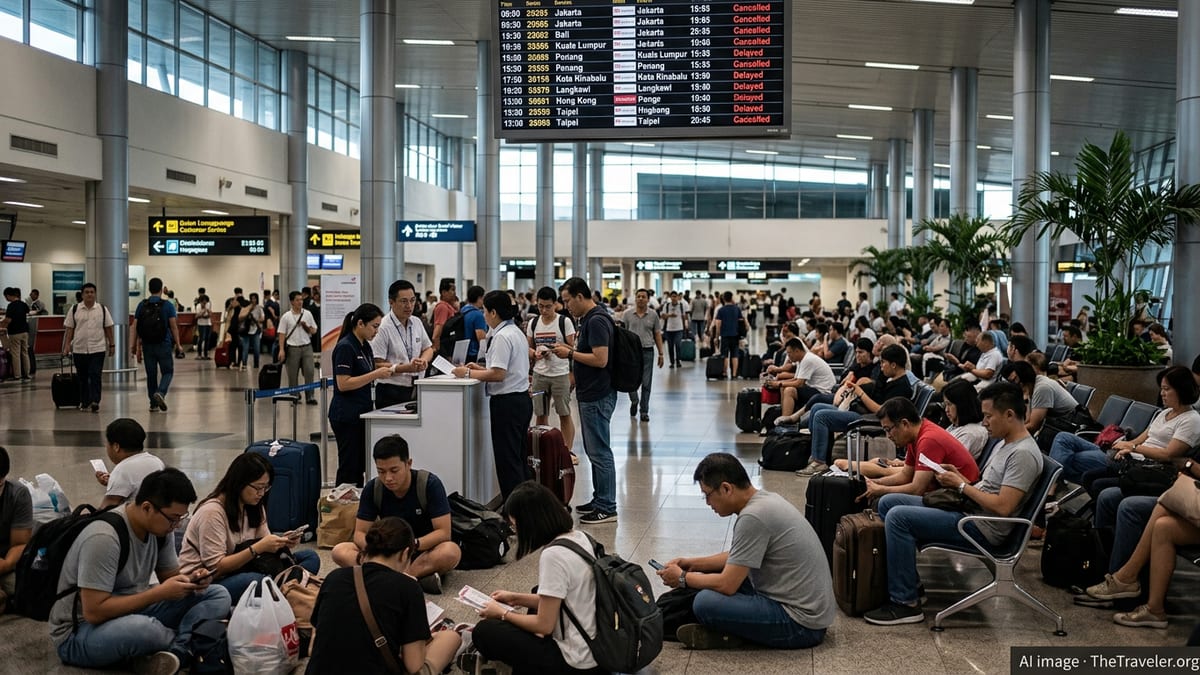
Nationwide Disruptions Hit Major Chinese Carriers
Publicly available aviation data for Friday, July 11 indicates that at least 603 flights operated by Chinese and cross-strait carriers were canceled and another 793 were delayed, affecting services on some of the country’s busiest routes. The latest figures cover operations by large state-linked airlines such as Air China and China Eastern alongside privately controlled and regional brands including XiamenAir, Juneyao Airlines and Mandarin Airlines.
The cancellations were spread across both trunk and secondary routes, but the greatest impact was felt in and out of major hub cities such as Chengdu, Wuhan, Dalian, Shenyang and Nanjing. These airports serve as important transfer points for travelers connecting between inland provinces, the eastern seaboard and international destinations across East and Southeast Asia.
Reports from flight-tracking platforms and Chinese airport operation summaries show a patchwork of outright cancellations, rolling delays and schedule changes that left travelers facing long queues, missed connections and urgent rebooking efforts. In several cases, entire sequences of flights on single routes were withdrawn from the day’s schedule, compressing remaining capacity and putting pressure on alternative services.
While the number of affected flights is significant, analysts note that the disruption is concentrated within particular time windows and locations, rather than indicating a complete shutdown of any one hub. Nevertheless, the scale and clustering of cancellations across multiple carriers highlight the sensitivity of China’s aviation network to operational and weather-related shocks during the busy summer travel season.
Weather, Operational Constraints and Summer Demand
Chinese-language airport notices and local media coverage attribute a substantial share of the disruption to a combination of adverse weather patterns and operational constraints. Heavy rain, strong winds and typhoon-related systems moving through parts of eastern and central China have periodically reduced airport capacity, forcing carriers to consolidate or cancel flights to maintain safety margins.
At the same time, airlines are contending with a tight balance between aircraft availability, crew rostering and strong summer demand. Industry schedule data for May and June already showed Chinese carriers trimming some regional services, particularly in markets such as Southeast Asia, as they reshaped networks following earlier expansions. The latest wave of cancellations appears to extend that pattern to selected domestic routes, especially where overlapping services from multiple airlines allow for short-notice consolidation.
Network adjustments can quickly cascade through connecting itineraries. Flights that feed long haul and regional routes from cities like Chengdu or Wuhan are particularly vulnerable, as a cancellation on a domestic leg may render onward segments unviable. As a result, some airlines have opted to preemptively cancel clusters of flights rather than risk extended knock-on delays later in the day.
Published commentary from aviation analysts suggests that China’s carriers are still fine-tuning schedules after several seasons of volatile demand and evolving international access. The current episode of disruptions is being read by some observers as a sign that network resilience has not fully caught up with the rapid restoration of capacity since late 2023.
Key Hubs from Chengdu to Nanjing See Heavy Impact
Among individual cities, Chengdu again emerged as one of the most heavily affected hubs. Flight information showed multiple cancellations on routes linking the Sichuan capital to coastal business centers and popular leisure destinations, including services typically used by travelers heading onward to Southeast Asia. For passengers transiting through Chengdu’s twin airports, last-minute adjustments to onward journeys became common, with some forced to reroute through alternative gateways.
Wuhan, a central hub connecting north-south and east-west axes, also reported a high concentration of canceled and delayed services. Reductions in flights to and from Wuhan can ripple through surrounding provincial cities that depend on the airport for both domestic and limited international connectivity, making it harder for travelers to secure same-day alternatives when their original flights are withdrawn.
Further north, Dalian and Shenyang in northeast China experienced notable schedule cuts and delays, affecting both business travelers and tourists using the region’s coastal resorts. In eastern China, Nanjing saw its own set of cancellations on routes feeding into Shanghai and other regional centers, complicating travel plans for passengers trying to avoid busier coastal hubs.
Across these cities, publicly available airport and flight-tracking data point to a similar pattern: carriers concentrated cancellations in mid-morning and late-afternoon banks, when air traffic volumes are highest and small disturbances can more easily cascade into longer delays. Reductions at those peaks can stabilize operations later in the evening but leave travelers with fewer same-day options.
Passenger Experience: Long Queues and Limited Rebooking Options
Posts on Chinese social media platforms, travel forums and flight discussion boards describe scenes of crowded terminal halls, extended check-in and customer service queues, and passengers scrambling to secure limited rebooking options. Some travelers reported being reprotected on later same-day flights, while others received only partial refunds or vouchers after discovering that alternative services were fully booked or significantly more expensive.
Given the concentration of cancellations among multiple carriers operating on the same corridors, standard strategies such as switching to a competing airline or routing via a different hub were not always effective. In cities like Chengdu and Wuhan, where several carriers had trimmed their schedules simultaneously, even travelers willing to pay higher fares sometimes struggled to find workable options.
Aviation consumer advocates and experienced travelers have responded by urging passengers to check flight status frequently in the 24 hours before departure, to allow extra time at the airport and to familiarize themselves with each airline’s policies on changes and refunds. Some travel advisory posts also emphasize the value of flexible tickets and travel insurance, particularly for itineraries involving tight connections or complex multi-leg routes.
For international visitors, disruptions within China can be especially challenging, as domestic cancellations may cause travelers to miss flights onward to other Asian destinations, Europe or North America. Without through-ticket protections, these missed connections can translate into substantial additional costs and extended stays while waiting for new seats to become available.
What Travelers Should Do Now
Travel experts consulted in published coverage advise anyone planning to transit through affected Chinese hubs in the coming days to monitor weather developments and schedule updates closely. Checking both airline and airport notifications, as well as independent flight-tracking platforms, can provide early warning of emerging problems and improve the chances of securing a timely rebooking.
Passengers already holding tickets on routes that have seen repeated cancellations may wish to explore voluntary changes, such as moving their travel to earlier or later dates, changing to less congested time slots or routing through alternative hubs where operations appear more stable. Where itineraries were booked through online agencies or tour operators, travelers are being encouraged to contact those intermediaries promptly, as they may have additional tools for finding open seats or negotiating waivers.
For those yet to book, the current disruption underscores the value of building in buffer time for important connections and considering travel plans that are less exposed to a single hub or carrier. Choosing itineraries with longer layovers and avoiding the tightest minimum connection times can reduce the risk that an upstream delay will derail an entire trip.
While there are no indications that China’s aviation system faces a prolonged shutdown, the scale of the latest cancellations and delays illustrates how quickly conditions can change when weather systems intersect with already stretched summer schedules. Travelers planning to cross China’s skies in the coming weeks may find that extra preparation and flexibility are the best safeguards against further turbulence.