


More news on this day
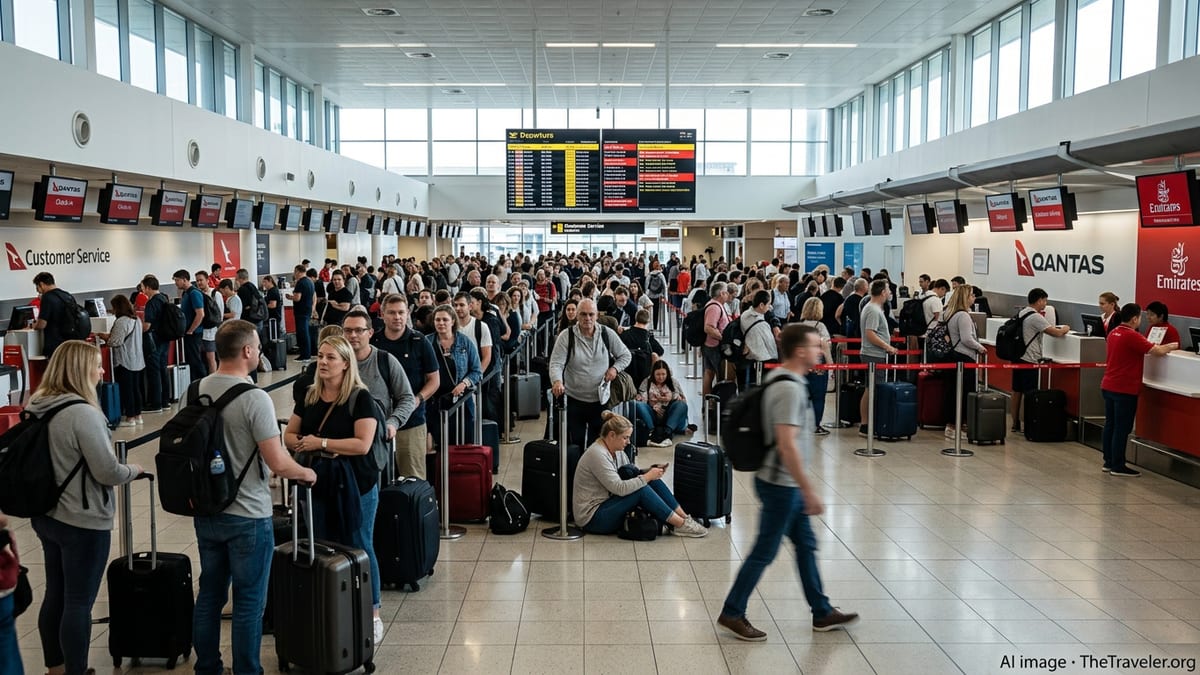
Hundreds of travellers were stranded at Melbourne Tullamarine Airport as extensive disruption to domestic and international operations saw 151 flights delayed and 13 canceled, affecting major carriers including Qantas, Virgin Australia, Jetstar, Air New Zealand, Singapore Airlines, Emirates and Qatar Airways.
Get the latest news straight to your inbox!
Widespread Delays Ripple Across Domestic and International Networks
Reports from live flight-tracking boards and airline status pages show significant disruption across Melbourne’s Tullamarine Airport, with delays and cancellations impacting both short-haul domestic services and long-haul international routes. The knock-on effects have been visible across key corridors linking Melbourne with Sydney, Brisbane, Adelaide, Hobart and major overseas hubs in Asia, the Middle East and North America.
Qantas, Virgin Australia and Jetstar, which together handle a large share of Melbourne’s domestic traffic, all recorded multiple services pushed back well beyond scheduled departure and arrival times. Publicly available information from airline status tools indicates some flights experiencing rolling delays of more than an hour, with several services ultimately canceled after extended holds at the gate or on standby.
International operations were also affected, with Air New Zealand, Singapore Airlines, Emirates and Qatar Airways among the carriers reporting disrupted schedules. Long-haul departures to key transit hubs such as Singapore and Doha were subject to late running, while selected arrivals landed significantly behind schedule, contributing to congestion in terminal areas and baggage collection zones.
By late in the operating day, flight data aggregated from airport information services and airline portals pointed to at least 151 flights delayed and 13 canceled at Melbourne Tullamarine, disrupting travel plans for thousands of passengers and complicating connections onto onward services.
Possible Causes: Weather, Airspace Congestion and Operational Strain
While detailed cause-by-cause breakdowns were not immediately available, publicly accessible aviation reports suggest a combination of adverse weather, regional airspace congestion and operational constraints may have contributed to the disruption. Melbourne’s status as a busy hub for Qantas, Virgin Australia and Jetstar means even modest schedule disturbances can quickly cascade, particularly during peak morning and evening waves.
Industry punctuality data and past performance reports indicate that factors such as crew and aircraft rotation issues, ground handling bottlenecks and technical inspections can all drive reactionary delays. When one flight runs late, the aircraft and crew involved are often scheduled to operate subsequent sectors, magnifying the impact across multiple routes and airlines sharing the same terminal infrastructure.
Recent public discussions about staffing pressures among ground handlers and service providers at major Australian airports have also highlighted how limited spare capacity can leave operations vulnerable when conditions deteriorate. In such circumstances, even relatively short-lived weather or air traffic management constraints can result in a build-up of delayed departures and arrivals that can take hours to unwind.
Separate aviation advisory material further notes that international airspace issues, including congestion around major transit hubs in Asia and the Middle East, can force long-haul services to adjust routes or departure slots, occasionally feeding back into Australian gateway airports such as Melbourne.
Impact on Travellers: Long Queues, Missed Connections and Rebookings
The scale of disruption at Melbourne Tullamarine translated into long queues at check-in counters, security screening points and airline service desks as passengers sought new options. With flights pushed back repeatedly, many travellers faced prolonged waits in departure lounges, while those on canceled services were left to secure alternative departures, accommodation or refunds.
According to published coverage focusing on similar disruption events, passengers on multi-sector itineraries are particularly vulnerable to missed connections when departure times slip. At Melbourne, delays on early domestic legs can cause travellers to miss onward international flights, while late-arriving long-haul services can similarly jeopardise connections to regional Australian destinations.
Available consumer guidance material stresses that extended delays and cancellations can lead to additional out-of-pocket costs for food, local transport and last-minute hotel rooms, especially when large numbers of people are competing for limited vacancies near the airport. Families, elderly passengers and those travelling with young children often face additional challenges managing long waits in crowded terminals.
Social media posts and user reports from recent disruption episodes at Melbourne illustrate how quickly pressure can build when information is changing rapidly on departure boards. Travellers often describe repeatedly revised departure times, uncertainty about rebooking options and difficulty reaching airline call centres that are handling a surge of inquiries.
Options and Rights for Affected Passengers
Available consumer information on Australian air travel indicates that passengers affected by significant delays or cancellations are generally advised to check their airline’s conditions of carriage, as entitlements vary between carriers and depend on the reason for the disruption. Some airlines provide meal vouchers, accommodation or ground transport in certain circumstances, while others focus on rebooking passengers on the next available service or offering fare credits and refunds.
Publicly accessible guidance from aviation consumer advocates notes that travellers should retain boarding passes, booking confirmations and receipts for any additional expenses incurred during a disruption. These documents can assist in making claims with airlines or, in some cases, with travel insurers, many of which offer cover for extended delays, missed connections and trip interruption when policies include appropriate clauses.
Travel advice resources also encourage passengers to monitor airline apps, text alerts and online flight status tools closely during major disruption events. In many recent cases at Melbourne and other large airports, schedule changes and gate updates have appeared on digital channels before being reflected on physical display boards, giving some travellers a small but useful head start in rebooking or rearranging ground transport.
Consumer organisations further recommend that passengers who booked through third-party travel agents or online booking platforms check whether these intermediaries can assist with alternative routings. However, publicly available commentary shows that responsibilities and response times can vary considerably depending on the agency and the type of ticket purchased.
Ongoing Disruption Risk and Advice for Upcoming Travel
Aviation analysts regularly point to the potential for residual knock-on effects after a day of heavy disruption, particularly at major hubs such as Melbourne Tullamarine. Aircraft and crew displaced from their intended rotations may not be perfectly repositioned by the next morning, raising the risk of further delays as airlines work to restore normal schedules.
Travel planning guidance suggests that passengers with upcoming departures from Melbourne check their flight status repeatedly in the 24 hours before travel and again on the day of departure. Allowing extra time to reach the airport, particularly during peak times, can help mitigate the stress of unexpected queues or gate changes once at the terminal.
Some advisory material recommends that travellers with critical same-day commitments, such as international connections or time-sensitive events, consider earlier departures where possible so they have additional buffer if delays occur. Those with flexible travel plans may choose to avoid the busiest peaks until operations have clearly stabilised.
As airlines, airport operators and air traffic managers continue working to normalise schedules after the latest wave of disruption at Melbourne Tullamarine, publicly available information suggests that conditions for passengers may remain variable. Travellers are being encouraged by a range of consumer advocates and travel information services to remain vigilant, stay informed through multiple channels and prepare for the possibility of further short-notice changes to their journeys.