


More news on this day
A helicopter collision with high-voltage power lines has sparked a destructive fire and brought a key rail corridor to a standstill, underscoring how quickly an aerial mishap can cascade into a broader infrastructure emergency.
Get the latest news straight to your inbox!
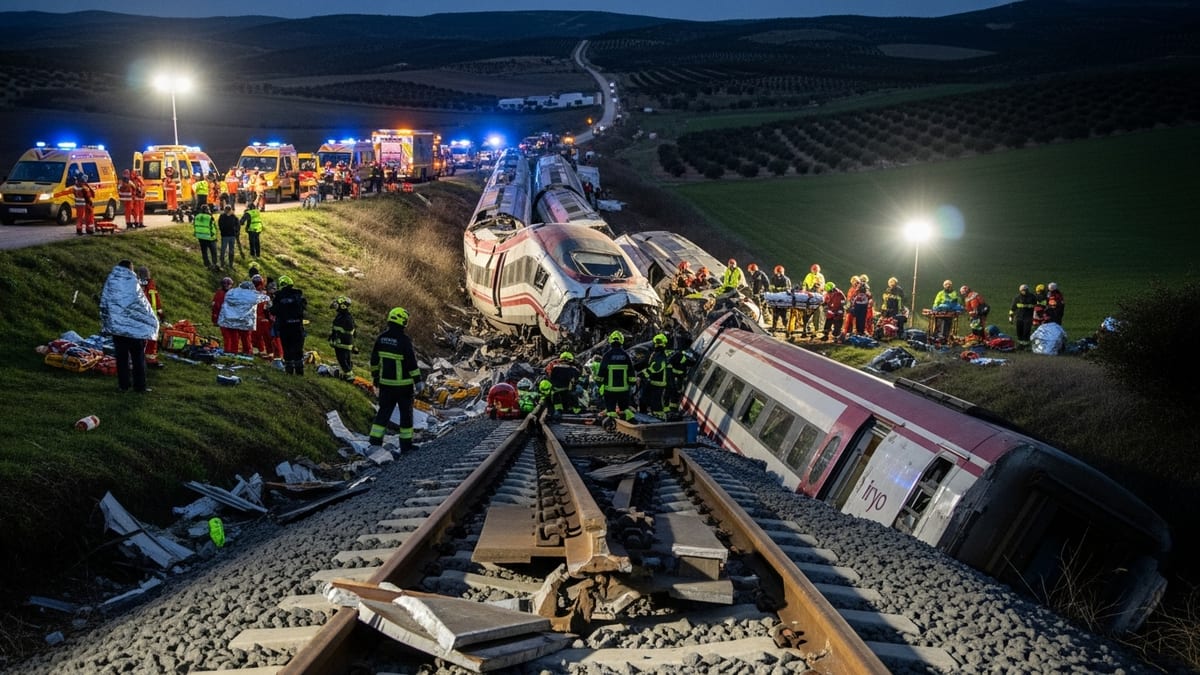
Low-level flight turns into multi-network emergency
According to early reports compiled from regional media and official bulletins, the helicopter was flying at low altitude when it struck overhead power lines serving both local communities and nearby railway signaling systems. The impact severed the cables and sent wreckage tumbling into adjacent land, where dry ground conditions allowed fire to take hold within minutes.
Witness accounts gathered in local coverage describe a sudden flash, followed by falling debris and an immediate loss of power in nearby neighborhoods. Firefighters arrived to find the helicopter wreckage amid energized lines and spot fires, conditions that complicated both rescue and suppression efforts.
Publicly available aviation safety data show that power line strikes are a recurring hazard for helicopters, particularly in rural and peri-urban corridors where pilots routinely fly low for agricultural, utility, or patrol missions. In this case, the combination of low-level flight, critical electrical infrastructure, and proximity to an active rail line turned a single air accident into a multi-agency response.
Initial assessments indicate that the pilot had little time to react once the lines came into view, highlighting the challenge of wire visibility even in daytime conditions. Investigators are expected to analyze flight path data, recent maintenance records, and any onboard tracking devices to determine how the aircraft arrived on a collision course with the wires.
Power loss cascades onto the rails
When the power lines were severed, backup systems were unable to fully shield the rail network from the sudden outage. Signaling equipment and level-crossing protections along the line reportedly went dark or reverted to fail-safe modes, forcing rail operators to halt or severely restrict traffic as technicians worked to understand the extent of the damage.
Rail operators, in statements summarized by national media, described a wave of knock-on effects: stranded trains between stations, crowded platforms, and urgent efforts to introduce bus replacements. Some intercity services were terminated short of their destinations while others were rerouted to secondary lines, with dispatchers juggling capacity constraints across the wider network.
Disruptions extended well beyond the immediate crash zone. Because modern rail operations depend heavily on continuous power for signaling, communications, and station systems, even a localized outage can propagate through timetables dozens of kilometers away. Commuters and long-distance travelers reported significant delays, missed onward connections, and last-minute changes to travel plans.
Rail safety guidelines typically require that traffic be halted whenever signaling reliability is in doubt, a principle that likely amplified the scale of the shutdown but limited the risk of secondary collisions. Technicians faced the twin challenge of confirming that all lineside equipment was safe to re-energize while electrical crews worked with aviation investigators at an active accident scene.
Firefighters battle difficult terrain and electrical hazards
The crash ignited a fast-moving fire beneath the broken power lines, sending smoke across nearby roads and sections of railway track. Fire crews had to navigate steep ground and limited vehicle access, working closely with utility teams to confirm that downed lines were de-energized before moving closer to the wreckage.
Reports indicate that helicopters and fixed-wing aircraft were not immediately deployed for aerial firefighting because of concerns over residual wires and low visibility from smoke. Ground crews instead relied on hose lines, portable pumps, and firebreaks to prevent the flames from reaching buildings, signaling cabinets, and fuel storage areas near the line.
Residents in the vicinity described in local reporting how the blaze advanced quickly through dry grasses and scrub before firefighters brought the perimeter under control. Some households experienced short-notice evacuation warnings as a precaution, while others were urged to remain indoors to avoid smoke inhalation.
The incident illustrates a familiar challenge for emergency planners: aviation crashes that damage power and transport infrastructure can create overlapping hazards, from live electricity and toxic smoke to blocked access routes for responders. Coordination among fire services, rail operators, and power utilities is critical to containing the situation and restoring core services.
Spotlight on helicopter safety near critical infrastructure
Investigators are expected to focus on why the helicopter was flying so close to major power lines and whether existing mapping, training, and warning systems were sufficient. Many low-level routes used by helicopters are designed to keep aircraft clear of towers, high-voltage corridors, and busy transport hubs, yet accident records show that wire strikes remain stubbornly frequent.
Aviation safety studies published in recent years have highlighted several recurring factors: visual illusions that make thin conductors hard to detect, sun angles that hide wires against the background, and the pressure on some pilots to operate in marginal weather or tight time windows. Even experienced crews with thousands of hours of flight time have been involved in daytime wire collisions.
Regulators and industry groups have promoted technologies such as terrain and obstacle warning systems, detailed digital charts, and reflective markers on high-risk wires. However, retrofitting these solutions across entire power and rail networks is a long-term project, and many stretches of line still rely primarily on pilot vigilance.
In the aftermath of this crash, attention is likely to focus on whether additional markers, better route planning tools, or temporary flight restrictions around key corridors might reduce the risk of another helicopter striking critical infrastructure and triggering a chain reaction of outages.
Travelers face renewed questions about resilience
The rail disruption has once again exposed how dependent modern travel is on a small number of shared infrastructure corridors. A single incident, far from any major station, managed to stall commuter, regional, and freight services, prompting calls from passenger advocates for more redundancy and faster recovery plans.
Traveler accounts in local and national coverage describe long queues for information, crowded substitute buses, and limited clear communication on estimated arrival times. For many passengers, the experience reinforced the perception that rail systems are vulnerable to low-frequency but high-impact shocks such as aviation accidents, extreme weather, and equipment failures.
Transport analysts have noted that climate trends, growing air traffic, and aging infrastructure are combining to raise the stakes for resilience. Where power lines, highways, and railways converge, failures now have the potential to ripple across multiple modes at once, disrupting both daily commuting and long-distance tourism.
For travelers planning itineraries through affected regions in the coming days, publicly available timetables may continue to show temporary speed restrictions, revised stopping patterns, or capacity limits while repairs and safety inspections continue. The incident serves as a reminder that flexible plans, travel insurance where appropriate, and up-to-date information are increasingly important parts of modern journey planning.