


More news on this day
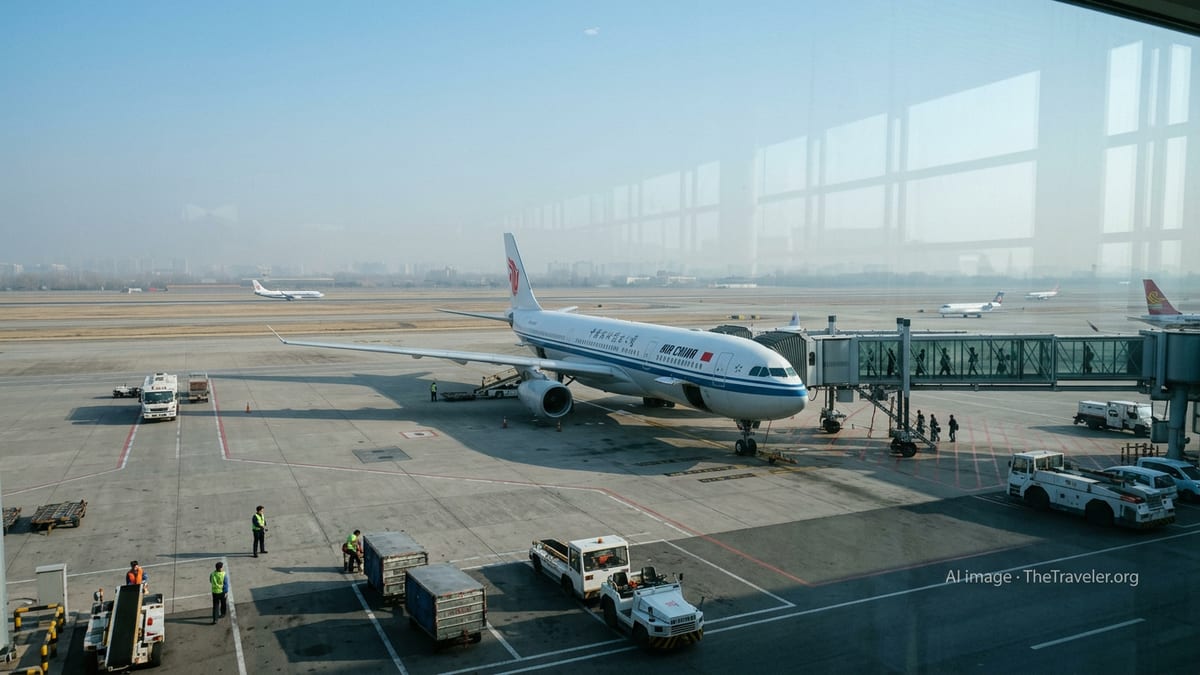
China’s domestic air network has been hit by another wave of disruption, with more than two thousand delays and dozens of cancellations reported across major hubs and popular tourist gateways, affecting operations at carriers including Air China, China Southern, China Eastern, XiamenAir and Hainan Airlines.
Get the latest news straight to your inbox!
Widespread Delays Across a Stretch of the Mainland
Publicly available operational data and recent industry coverage point to extensive disruption across the Chinese aviation system, with reports of around 2,037 flights delayed and 47 cancelled in a single day as weather and congestion combined to slow traffic. The impact has been spread across a broad geographic area, touching not only Beijing and Guangzhou but also regional centers such as Changzhou, Chengdu, Zhangjiajie and Fuzhou.
Recent travel-industry reporting on similar disruption days in May and June 2026 highlights how quickly conditions can deteriorate once delays begin to cascade through the network. When aircraft and crews are held on the ground at one airport, later rotations at downstream airports often depart late or are removed from the schedule entirely, producing knock-on effects that can last well into the evening peak.
While headline numbers of delayed flights have varied slightly between different monitoring services, they all show the same pattern: high volumes of late departures clustered around China’s busiest corridors, particularly routes linking Beijing, Shanghai, Guangzhou and the interior hubs of Chengdu and Changsha. Secondary airports serving key tourist regions, including Zhangjiajie in Hunan province, have also reported irregular operations during recent disruption episodes.
Beijing and Guangzhou Struggle to Keep Traffic Moving
Beijing’s two main gateways, Capital and Daxing, remain at the heart of China’s domestic network and tend to feel the strain early when weather or airspace restrictions tighten. Live departure boards from both airports on recent days have shown multiple services marked as delayed or cancelled, including flights operated by Air China, China Southern and China Eastern on trunk routes to cities such as Shanghai, Changsha, Guangzhou and Fuzhou.
At Daxing, schedule snapshots have illustrated clusters of late-running flights alongside a smaller number of outright cancellations, particularly in the evening wave when aircraft utilization is typically at its highest. At Capital, tracking portals show that many long-haul and key domestic services are still operating, but with varying degrees of delay depending on their origin and routing.
Further south, Guangzhou’s Baiyun International Airport has also featured prominently in recent disruption tallies. As a major hub for China Southern and an important transfer point for travelers heading onward to Southeast Asia and the interior, even moderate delays there can quickly ripple out to medium-size cities, including Changzhou and Fuzhou. For passengers, that has translated into missed connections, tight transfer windows and sudden schedule changes communicated through airline apps and airport screens.
Tourism Gateways Chengdu and Zhangjiajie Feel the Impact
Chengdu, split between the older Shuangliu airport and the newer Tianfu facility, has emerged as one of the most consistently affected cities during recent waves of flight disruption. Industry reports from late May and late June described hundreds of delayed movements at Chengdu’s airports on peak days, underscoring how sensitive the region is to shifts in weather and airspace capacity across central and western China.
These irregularities are particularly significant for international and domestic visitors using Chengdu as a base for itineraries that also include Xi’an, Chongqing, Zhangjiajie or Tibet. Travel forums and trip reports posted in recent weeks show travelers increasingly trying to build extra buffer time into their routes through Sichuan and Hunan, in anticipation that at least one flight may run late during the journey.
Zhangjiajie, a smaller but high-profile tourist airport serving the national park and surrounding mountain scenery, has also been caught up in the pattern of delays and cancellations. Travelers planning tight connections into or out of Zhangjiajie, especially on journeys linking with Beijing, Guangzhou or Shanghai, have reported reconsidering night arrivals and early-morning departures to reduce the risk that a disruption elsewhere in the network will leave them stranded.
Air China, China Southern and China Eastern Lead Affected Carriers
Because of their scale and extensive domestic networks, Air China, China Southern and China Eastern have been among the most visibly affected airlines on recent high-disruption days. Flight-tracking platforms show numerous services from these carriers departing late or being withdrawn from service when delays elsewhere create crew and aircraft shortages.
Smaller but still significant players such as XiamenAir and Hainan Airlines have also featured in disruption reports, particularly on routes that connect coastal cities with inland tourist markets. When primary hubs like Beijing, Shanghai or Guangzhou restrict movements, airlines often prioritize core trunk routes, which can lead to thinner schedules or same-day cancellations on secondary services.
Current guidance from consumer-rights groups and travel publications stresses the importance of monitoring flights through airline apps and airport information screens rather than relying solely on third-party booking platforms. Some advisories also note that, during large-scale disruption events, it may take longer than usual for schedule changes to filter through to all channels, prompting travelers to double-check information directly with their carrier before heading to the airport.
What Travelers Should Expect Over the Coming Days
As China moves deeper into the summer travel period, aviation analysts expect intermittent disruption to remain a feature of the domestic air market, particularly during late-afternoon and evening peaks when congested air corridors can become saturated. Thunderstorms and heavy rain, which are common in southern and central provinces at this time of year, are likely to continue triggering local ground stops and flow restrictions.
Travel advisories published in recent weeks suggest that passengers consider building longer layovers into multi-stop itineraries within China, especially when connecting through Beijing, Shanghai, Guangzhou or Chengdu. For routes into popular tourist areas such as Zhangjiajie, some commentators recommend avoiding same-day onward connections where possible and instead allowing at least one full day’s margin between key legs.
For now, the latest figures of more than 2,000 delays and dozens of cancellations are a reminder that even as China’s aviation sector continues to scale up capacity, the system remains vulnerable to sudden pressure from weather and airspace limitations. Travelers planning trips in the coming days are being encouraged by publicly available guidance to stay flexible, keep documentation at hand for potential rebooking or refunds, and build contingency time into any tight, multi-city schedules.