


More news on this day
Thousands of air travelers across China were left in limbo as a fresh wave of disruption brought 1,356 flight delays and 108 cancellations to busy hubs including Beijing, Shanghai, Shenzhen and Zhengzhou, snarling operations at Hainan Airlines, China Eastern, China Express, Lucky Air and several other carriers.
Get the latest news straight to your inbox!
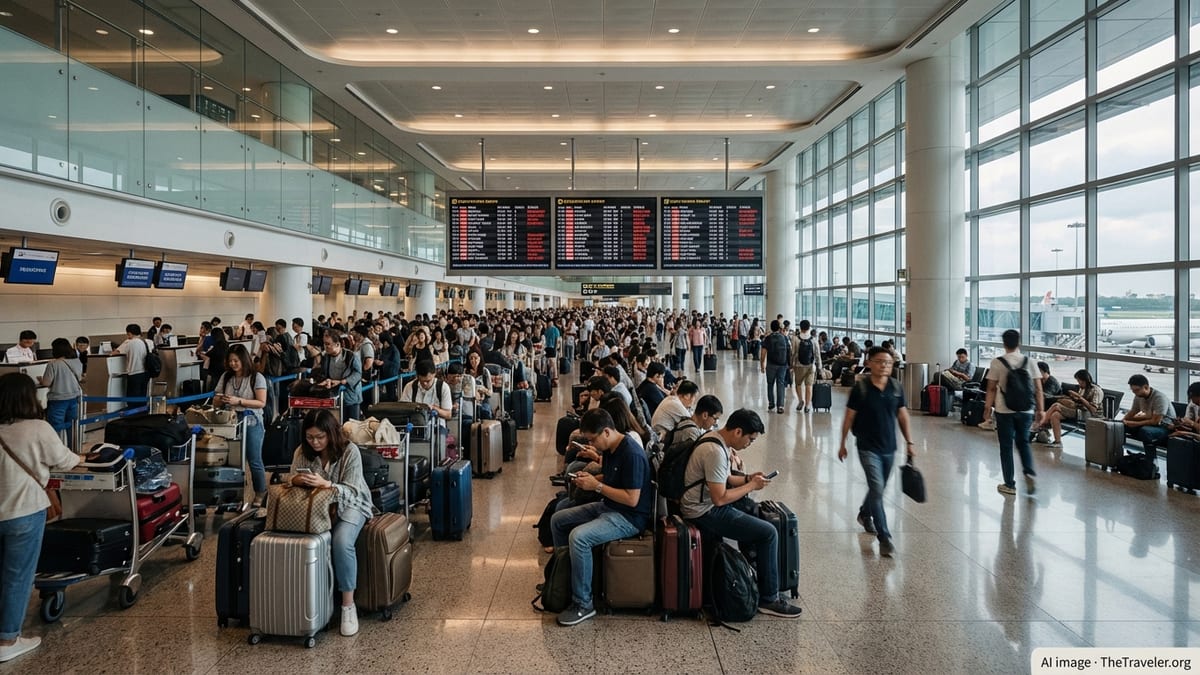
New Wave of Disruptions Hits China’s Crowded Skies
Operational data compiled from live flight tracking platforms and industry summaries for mid May indicate that the latest spike in disruption is concentrated at China’s largest urban hubs, particularly the dual-airport systems in Beijing and Shanghai, along with fast-growing centers in Shenzhen and Zhengzhou. The combined tally of 1,356 delayed departures and arrivals, together with 108 outright cancellations, reflects another highly unsettled day for the country’s aviation network.
Publicly available information shows that the impact is spread across both full service and low cost operators. Hainan Airlines and China Eastern are among the carriers most visible in delay statistics, alongside regional specialists such as China Express and low cost brands including Lucky Air. The figures mirror a broader pattern seen in recent months in which clusters of delays at a handful of major airports quickly ripple outward across domestic routes.
While exact causes vary by city and time of day, recent published coverage of China’s air travel peaks points to a mix of factors commonly driving disruption. Weather patterns, restricted airspace, air traffic flow controls and tight aircraft and crew rotations have all been cited in earlier episodes that produced several thousand delays in a single day at nationwide level. The latest numbers fit into this wider trend of a network operating close to capacity, where relatively small disturbances can escalate quickly.
For travelers, the practical effect is a familiar combination of missed connections, long terminal waits and last minute rebookings. Reports from previous disruption days in Beijing, Shanghai, Shenzhen and other hubs describe passengers queuing for hours at service counters or attempting to rebook via airline apps, only to find alternative flights already heavily booked or themselves delayed.
Major Hubs From Beijing to Shenzhen Under Pressure
Beijing’s Capital and Daxing airports have again emerged as focal points of delay, according to aggregated operational dashboards that track departures and arrivals in real time. When banks of morning and late afternoon flights slip behind schedule at these hubs, the knock on effects are often felt on trunk routes linking the capital with Shanghai, Guangzhou, Shenzhen and regional centers in central and western China.
In Shanghai, both Pudong and Hongqiao airports have recently recorded elevated levels of congestion during severe disruption days, with statistics in earlier episodes showing thousands of delayed movements and hundreds of cancellations in the space of 24 hours. Observers note that the city’s role as both a domestic transfer point and a major international gateway amplifies the impact when weather or air traffic restrictions reduce capacity for even a few hours.
Shenzhen Bao’an, one of China’s fastest growing hubs, has also featured prominently in recent disruption tallies. Public data from a March storm system, for example, showed more than one hundred cancellations across several coastal hubs in a single day, with China Eastern, Hainan Airlines and other major brands reporting cascading delays that affected services to Southeast Asia and the Middle East. The latest wave of 1,356 delays and 108 cancellations appears consistent with that pattern of southern and eastern seaboard airports absorbing a significant share of operational strain.
Zhengzhou Xinzheng International Airport in central Henan has repeatedly surfaced in earlier coverage as a pressure point during nationwide disruption events, with cancellations by multiple carriers magnifying the impact for transfer passengers. When flights at Zhengzhou fall behind schedule, the consequences often extend to onward connections to Beijing and Shanghai, turning what begins as a regional issue into a nationwide challenge.
Hainan Airlines, China Eastern, China Express and Lucky Air in the Spotlight
Among individual airlines, Hainan Airlines and China Eastern are again prominent in the latest figures, reflecting their large domestic networks and the role they play on heavily trafficked trunk routes. Previous operational snapshots have shown these carriers experiencing heightened cancellation and delay rates when severe weather or congestion hits eastern Chinese hubs, contributing materially to national totals that have at times surpassed 5,000 delays in one day.
Regional operator China Express and low cost carrier Lucky Air also appear frequently in disruption reporting, particularly on services linking provincial cities to major hubs such as Beijing, Shanghai and Chengdu. Earlier data on winter and spring travel days revealed that when capacity is squeezed at larger airports, secondary routes flown by regional airlines can be among the first to be canceled or heavily delayed, leaving passengers in smaller markets with limited alternatives.
Analysts who track the Chinese aviation network have long highlighted its sensitivity to bottlenecks at a few key nodes. Studies of delay patterns at Beijing Capital and Shanghai Hongqiao, for example, show that when these airports experience extended congestion, airlines including China Eastern, Hainan Airlines, Lucky Air and others often see average delay times climb quickly across multiple routes. The current episode, with 1,356 delays and 108 cancellations concentrated at a core group of hubs, appears to fit within that established pattern.
For carriers, such bursts of disruption can drive up operating costs due to aircraft repositioning, crew rescheduling, fuel burn during extended taxi or holding, and the expense of passenger care. Publicly available conditions of carriage and airline advisories emphasize that schedules are not guaranteed, yet periods of repeated large scale delays have nonetheless fueled ongoing debate about network resilience and customer protections in China’s fast expanding aviation market.
Passengers Face Long Queues, Missed Connections and Patchy Support
For passengers caught up in the latest disruption, the statistics translate into hours of uncertainty on the ground. Published accounts from earlier large scale delay days across China describe an all too recognizable scenario. Short initial delays of 30 to 60 minutes can gradually extend into multi hour waits as congested airspace, crew duty limits and airport curfews interact, eventually leading some services to be canceled outright late in the day.
Travelers on affected Hainan Airlines, China Eastern, China Express and Lucky Air flights have previously reported challenges obtaining timely information and assistance when irregular operations stretch call centers and airport service desks beyond normal capacity. Consumer oriented coverage notes that while some passengers secure hotel rooms, meal vouchers or alternative itineraries, others describe more limited support, particularly at smaller airports or on late night services where staffing and accommodation options are constrained.
Industry and consumer advocates regularly advise passengers on disrupted flights in China to monitor status updates through official airline and airport information channels, retain boarding passes and delay notifications, and review ticket conditions carefully when seeking refunds or free changes. On days when more than a thousand flights run late, as in the current case, the volume of simultaneous rebooking and refund requests can make persistence and documentation especially important.
At the same time, the growing volume of user generated posts on social media and travel forums during disruption events has made the scale of passenger frustration more visible. Images and descriptions of crowded departure halls in Beijing, Shanghai, Shenzhen and Zhengzhou during previous episodes suggest that the current wave of delays and cancellations is another test of how well airlines and airports can communicate and manage expectations when schedules unravel.
Ongoing Questions Over Capacity, Weather Resilience and Network Design
The recurrence of high impact disruption days in China’s aviation calendar has led to renewed scrutiny of how the system is configured and managed. Research on spatial delay distributions in Chinese airline networks points to the particular vulnerability of routes linking Beijing, Shanghai and Shenzhen, where limited airspace and heavy demand mean that relatively minor disturbances can trigger a chain reaction of delays.
Recent episodes, including winter weather chaos that produced more than a thousand delays in a single day and spring storms that led to over five hundred cancellations and nearly eight thousand delays nationwide, underline how tightly coupled the system has become. When severe conditions develop over multiple major cities at once, airlines such as China Eastern, Hainan Airlines and their regional partners may have few options beyond canceling flights, consolidating services and prioritizing certain trunk routes.
Discussions within industry coverage increasingly focus on measures that could improve resilience, including more flexible use of airspace, investment in ground handling capacity at busy hubs and clearer, more consistent passenger care policies. Operational guidelines published by carriers already acknowledge the possibility of significant delays and cancellations, but the experience of passengers during large disruption days continues to raise questions about how those policies work in practice.
With China’s air travel demand still expanding and international connections being rebuilt alongside dense domestic schedules, the latest tally of 1,356 delays and 108 cancellations serves as another reminder of the challenges involved in keeping such a complex network running smoothly. For travelers planning journeys through Beijing, Shanghai, Shenzhen, Zhengzhou and other key hubs, the pattern emerging from recent months suggests that closely monitoring flight status and allowing extra time for connections remain prudent steps on any busy travel day.