


More news on this day
Air travel across the Middle East faced another wave of disruption this week, as publicly available airport and airline data indicated at least 268 flight delays and 21 cancellations affecting key hubs in the United Arab Emirates, Syria, Saudi Arabia, Kuwait and Bahrain.
Get the latest news straight to your inbox!
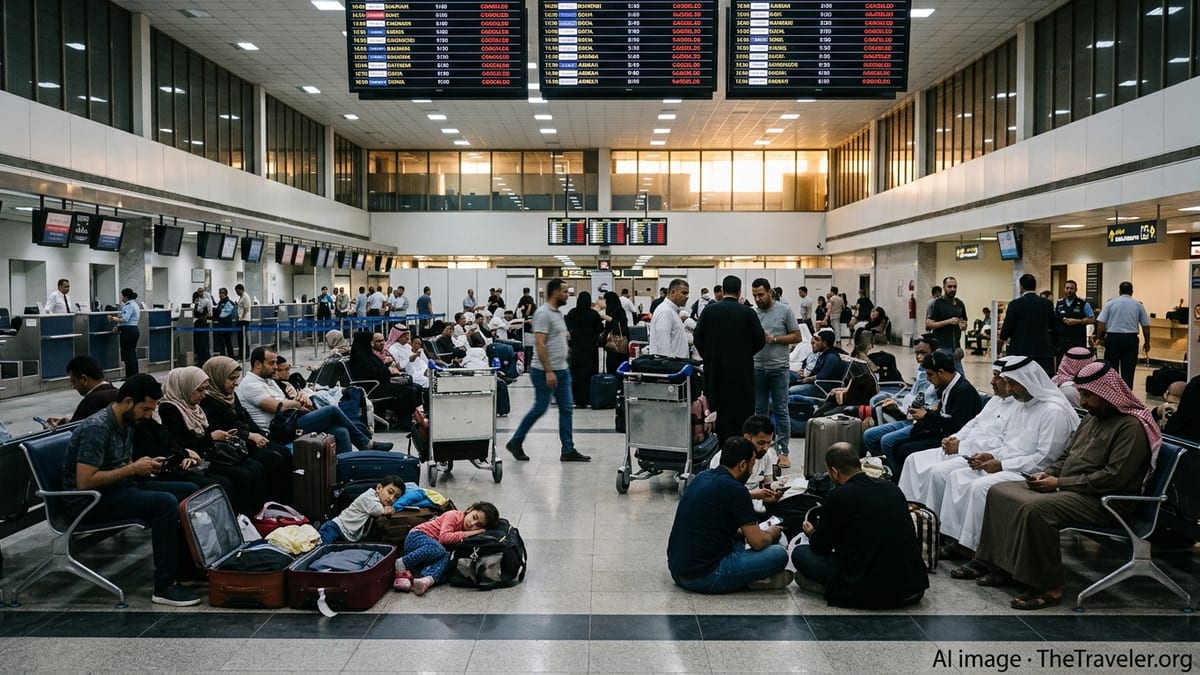
Major Gulf Hubs Grapple With Rolling Disruptions
Regional hubs in Dubai, Damascus, Dammam and Manama have seen schedules repeatedly redrawn as carriers react to shifting airspace restrictions, operational constraints and knock-on delays from earlier days. Flight-tracking dashboards and schedule aggregators show banks of delayed departures and arrivals, with some services pushed back by several hours while others are scrubbed entirely late in the day.
In Dubai, one of the world’s busiest international airports, low cost and full service operators continue to trim or retime services on selected routes. Data compiled from live flight-status feeds shows dozens of departures leaving behind schedule, particularly to destinations that require longer routings around sensitive airspace. At the same time, a smaller number of services are being cancelled outright when aircraft or crew cannot be repositioned in time.
Further north, Damascus traffic has been repeatedly disrupted by changes to regional flight corridors, with schedule tools indicating waves of delays on outbound services and intermittent cancellations on routes linking Syria to the Gulf. Airports in Saudi Arabia’s Eastern Province, including Dammam, have also registered elevated delay levels as carriers juggle aircraft rotations between Europe, Asia and regional points.
In Bahrain, Manama’s international airport has experienced similar pressures. Publicly available arrival and departure boards show clusters of late-running flights, often grouped around peak connection times, reflecting how even a single late inbound aircraft can cascade into multiple delayed departures across the evening.
FlyDubai, Air Arabia, Flynas and Kuwait Airways Among Those Hit
Low cost operators FlyDubai and Air Arabia, which rely heavily on dense regional networks and tight turnarounds, appear particularly exposed to the latest wave of operational strain. Tracking sites show multiple FlyDubai services to Gulf and Levant destinations running late or cancelled, while Air Arabia’s network out of Sharjah has seen selected departures retimed or pulled from the schedule on short notice when routing or crew constraints become insurmountable.
Saudi budget carrier Flynas has also been affected, with delay patterns visible on services connecting secondary Saudi cities to Dubai, Dammam and other Gulf gateways. Industry reporting indicates that where flights do operate, they sometimes take longer fuel-intensive routings that add block time and compress already tight connection windows for onward passengers.
Kuwait Airways, meanwhile, has been adjusting schedules both at its Kuwait City base and across connecting points. Travel-industry circulars and airport updates describe Kuwait Airways operating some services via alternative airports at certain times, as well as consolidating lightly booked flights to free aircraft and crew for priority routes. Passengers posting to public forums have reported short-notice cancellations on select Dubai-bound services and reshuffled itineraries as the carrier attempts to maintain a basic level of connectivity.
Across the region, smaller regional airlines have mirrored these patterns, trimming frequencies on marginal routes and leaning on code share partners where possible. The net effect for travelers is a patchwork of last-minute changes that can vary considerably from one day to the next.
Conflict-Linked Airspace Limits Keep Pressure on Schedules
The continuing disruption is unfolding against the backdrop of a broader regional security crisis that has led to airspace closures, restrictions and risk advisories across parts of the Middle East. Airline advisories and aviation safety summaries show that routes traversing sections of Iranian, Iraqi, Israeli and adjacent airspace remain subject to dynamic controls, prompting many carriers to divert around affected zones.
Publicly available route-mapping and traffic analyses highlight how these diversions can add significant time to flights between Europe and Asia, particularly when aircraft must skirt large swathes of the Gulf and Levant. Extra flight time drives up fuel burn and complicates crew scheduling, leaving fewer operational buffers when disruptions occur earlier in the day.
The constraints have prompted many airlines based outside the Gulf to pull back further from the region or reduce frequencies into major hubs such as Dubai, Doha and Riyadh. Recent industry coverage details multiple European and Asian carriers extending suspensions on Dubai, Dammam, Kuwait, Manama and Tel Aviv sectors into late spring and early summer, limiting alternative options for passengers caught by last-minute cancellations on local carriers.
At the same time, Gulf-based airlines have attempted to keep core long haul routes operating by cutting back on shorter regional segments or consolidating flights where demand allows. This strategy keeps key intercontinental links open but deepens the volatility facing travelers relying on feeder services through cities such as Dubai and Kuwait City.
Passenger Impact From Missed Connections to Overnight Disruptions
For travelers, the immediate impact of 268 delayed and 21 cancelled flights is felt in missed connections, overnight airport stays and lost days of travel. Social media posts and travel forums over recent days describe passengers in Dubai and Kuwait City watching departure times repeatedly slide back on information screens before learning that flights have been cancelled entirely.
Such rolling delays can complicate even relatively simple journeys, especially when onward connections are involved. A late departure from Damascus or Dammam risks breaking carefully planned links through Dubai or Manama, forcing rebookings onto already crowded alternatives or requiring passengers to wait until the next day for a replacement service.
Public passenger-rights resources and legal guides note that compensation rules vary significantly depending on the airline, the departure and arrival countries, and whether local or regional regulations apply. Many carriers are highlighting their rebooking and refund policies for the current Middle East situation, with options that typically include free date changes within a defined period, travel vouchers, or full refunds when a flight is cancelled.
Travel advocacy groups advise that passengers keep detailed records of boarding passes, delay notifications, receipts for meals and accommodation, and any written communication from airlines. Such documentation can be essential when submitting claims for reimbursement or compensation once travel is completed.
Travel Advice: Check Status, Expect Changes and Build in Buffer Time
Industry guidance across airlines, airports and travel organizations stresses that anyone planning to fly through Dubai, Damascus, Dammam, Manama, Kuwait City or other regional hubs should treat schedules as subject to change at short notice. Many carriers are urging customers to monitor flight status through official apps and airport information channels right up to departure time.
Travel planners and frequent flyer communities are recommending that passengers build generous connection times into itineraries involving Gulf and Levant hubs, even if booking tools still show minimum connection standards that were set before the latest disruptions. Longer layovers can provide critical breathing room when inbound flights accumulate delays from rerouting around constrained airspace.
Some corporate travel policies are also being revised, with companies directing staff to avoid nonessential connections through the most affected airports or to opt for routings that keep flights on a single ticket and carrier where possible. This approach can simplify rebooking and reduce the risk that travelers are left to negotiate separate changes with multiple airlines when disruptions occur.
With airspace conditions and operational decisions evolving day by day, there is little indication that disruption will ease immediately. For now, passengers flying with FlyDubai, Air Arabia, Flynas, Kuwait Airways and other regional carriers are being encouraged to stay flexible, anticipate possible changes, and factor the possibility of extended travel times into their plans.