


More news on this day
Air travelers across the West Coast are confronting another day of rolling disruptions as operational issues affecting United Airlines, regional partner SkyWest, Delta Air Lines and Singapore Airlines trigger widespread delays and cancellations at San Francisco International Airport and ripple through Los Angeles, Seattle and long-haul corridors to London.
Get the latest news straight to your inbox!
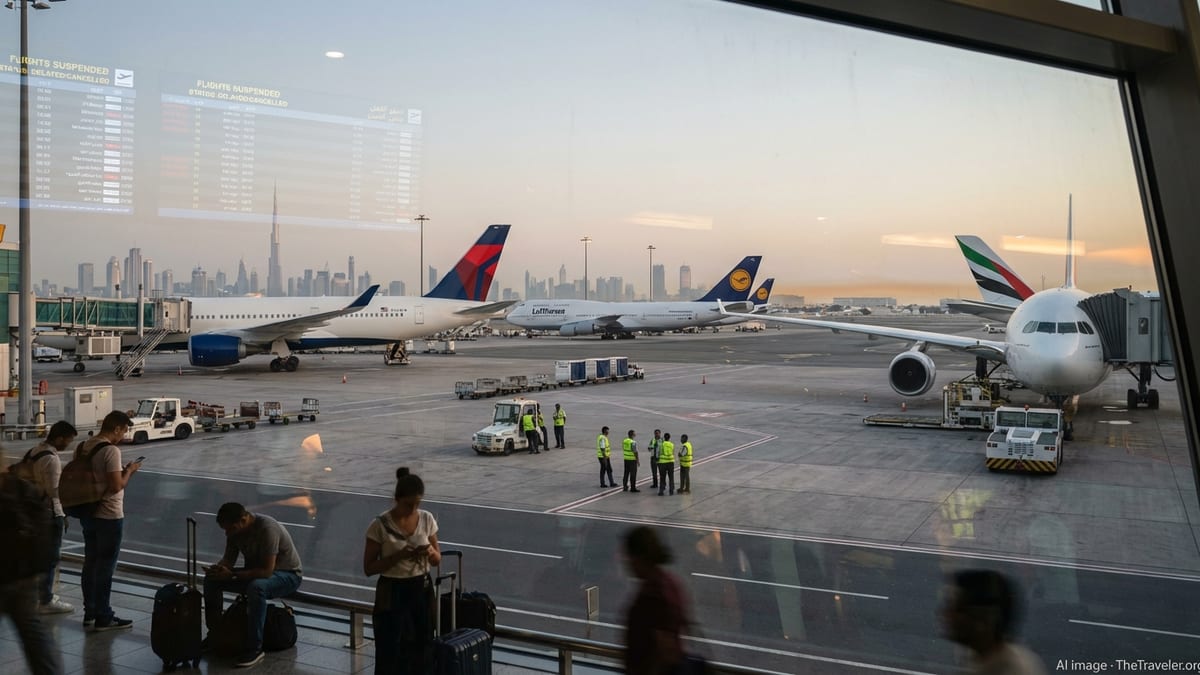
Gateholds at San Francisco Drive Cascading Delays
San Francisco International Airport has emerged as a focal point of the latest disruption cycle, with data from aviation tracking and industry reports on May 17 indicating hundreds of delayed departures and a smaller but still significant number of cancellations across key domestic and international routes. Publicly available information shows that a mix of ground-delay programs, airport congestion and schedule compression during peak morning and evening banks is extending turnaround times and keeping aircraft at the gate longer than planned.
United Airlines, which treats San Francisco as one of its primary hubs, appears particularly exposed as small timetable shifts compound across its dense network of domestic feeders and transpacific departures. Regional flights operating under the United Express banner are facing the twin pressures of limited runway capacity and tight connection windows, creating longer-than-normal holds as aircraft wait for revised departure slots.
Published coverage focused on California travel conditions notes that even modest constraints at San Francisco can quickly translate into missed connections for travelers bound for Seattle, the U.S. East Coast and overseas destinations. With gate space and crew availability closely choreographed, any delay to one leg can displace aircraft from subsequent rotations, leading to rolling knock-on effects throughout the day rather than a single, time-limited disruption.
Operational data suggests that airlines are increasingly relying on re-timing and swapping aircraft instead of immediately canceling services, which can reduce the overall number of cancellations but raises the likelihood that flights depart significantly behind schedule. For travelers, that reality translates into longer waits in departure lounges and more frequent last-minute gate changes at San Francisco.
SkyWest’s Regional Role Magnifies Impact Across LAX and Seattle
Regional operator SkyWest, which flies under contract for major brands including United and Delta, is a critical link in the current disruption picture. Company disclosures and recent reporting highlight SkyWest’s extensive presence at Los Angeles International Airport, San Francisco International Airport and Seattle–Tacoma International Airport, where the carrier operates high-frequency short-haul routes that funnel passengers into long-haul and transcontinental services.
When San Francisco or Los Angeles is placed under a ground-delay program, regional operators such as SkyWest often have limited flexibility to keep flights moving. Industry reports indicate that aircraft may be held at the gate until updated arrival and departure slots are provided, leading to clusters of delayed flights along the West Coast corridor. Because many SkyWest-operated services are scheduled with quick turnarounds, a single extended hold can ripple through multiple subsequent departures.
Travel-focused analyses of current operations in California describe how this regional bottleneck has contributed to more than 500 delayed flights across major airports in the state, with SkyWest frequently cited among the affected operators alongside United and Delta. These statistics underline how a carrier that does not always appear by name on passenger itineraries can nonetheless shape the broader experience across multiple airline brands.
The impact is particularly visible at Los Angeles and Seattle, where regional arrivals feed into long-haul flights to Europe and Asia. When inbound regional flights arrive late, some passengers miss onward connections even if the long-haul aircraft depart close to on time, adding another layer of complexity for airline rebooking teams.
Delta and United Face Ongoing Tech and Network Vulnerabilities
The current wave of disruptions is unfolding against a backdrop of wider technology and network fragilities that have affected major U.S. airlines over the past several years. Publicly available incident summaries highlight how Delta and United have both been caught up in high-profile computer outages and ground stops tied to software issues, vendor failures and broader IT infrastructure problems.
Historical records show that global technology incidents have previously led to simultaneous ground stops at multiple large carriers, creating a template for how quickly operations can unravel when critical systems such as crew scheduling, dispatch and passenger rebooking go offline. While the latest disruptions on the West Coast appear more closely tied to congestion and recovery from earlier delays than to a single acute outage event, the legacy of those episodes has increased scrutiny on how airlines manage their digital backbone.
Industry commentary points out that carriers have invested heavily in modernization projects, yet the highly interconnected nature of their operations means that localized issues can still spread quickly. A tight staffing environment, high load factors and ambitious summer schedules leave little room for error, particularly at slot-constrained hubs such as San Francisco and Los Angeles. When delays begin to mount, airlines may be forced into difficult trade-offs between protecting long-haul operations and preserving regional connectivity.
Delta’s and United’s experiences during earlier disruption events have also highlighted challenges around passenger information, with customers sometimes reporting that public tracking tools and airport displays lag behind real-time operational decisions. As a result, many frequent travelers now rely on multiple sources, including airline apps and independent status dashboards, to monitor developing delays at hubs like San Francisco and Seattle.
Singapore Airlines Links Underscore Global Ripple to London and Beyond
Singapore Airlines, which operates key long-haul services connecting Southeast Asia to the United States and onward to Europe, is also part of the evolving disruption picture. Schedule data shows the carrier maintaining nonstop operations between Singapore and San Francisco, alongside services that tie into major European gateways. When conditions at San Francisco deteriorate, these flights become vulnerable to knock-on timing changes, aircraft swaps or, in more severe cases, cancellation.
Recent disruptions on the U.S. West Coast have drawn attention to how issues in California can influence travel times on routes that extend far beyond North America. Publicly available tracking and passenger accounts indicate that missed connections and rebookings in San Francisco can cascade onto onward services operated by Singapore Airlines and its partners, particularly for itineraries involving London and other European hubs.
Analysts note that long-haul flights generally receive higher priority in schedule recovery efforts because of the limited number of daily frequencies and the complexity of repositioning widebody aircraft. Even so, late-arriving inbound aircraft and delayed crews can still force operators to adjust departure times or consolidate flights, especially when airport curfews or slot restrictions in London are in play.
For travelers moving between Asia, the West Coast and the United Kingdom, the result can be extended layovers, unexpected overnight stays or rerouting through alternative hubs. Current conditions underscore how closely intertwined the operations of United, Delta, SkyWest and Singapore Airlines have become, and how quickly localized disruptions in San Francisco can translate into schedule uncertainty as far away as London Heathrow.
What Travelers Are Experiencing on the Ground
Passenger-facing data from airline dashboards and third-party trackers on May 17 points to a familiar pattern for West Coast travelers: early-morning delays that spill into the midday period, followed by renewed congestion in the late afternoon as airlines attempt to realign aircraft and crew. Travelers at San Francisco, Los Angeles and Seattle report frequent gate changes, rolling departure estimates and longer-than-usual queues at customer service desks as they seek alternative routings.
Published coverage dedicated to California flyers describes a patchwork of outcomes. Some passengers see only modest delays of 30 to 60 minutes, while others encounter multi-hour disruptions or same-day cancellations, particularly on shorter regional segments operated by SkyWest on behalf of United and Delta. Those missteps can be especially disruptive for travelers with tight onward connections to long-haul flights bound for Asia or Europe.
Consumer advocates observing the situation note that the current pattern of delays highlights the importance of flexible planning during peak travel periods. With schedule pressures affecting carriers across the board, passengers may benefit from building in longer connection times at hubs such as San Francisco and Los Angeles, and from monitoring flights closely in the 24 hours before departure when early signs of disruption typically appear.
As airlines work through the latest wave of operational challenges, attention is likely to focus on how effectively carriers like United, Delta, SkyWest and Singapore Airlines can stabilize their schedules while maintaining customer confidence on some of the world’s most heavily traveled long-haul corridors.