


More news on this day
China has reserved a vast stretch of offshore airspace near Shanghai for 40 days, curbing civilian flights and prompting fresh concern over safety, regional stability, and the resilience of global aviation routes.
Get the latest news straight to your inbox!
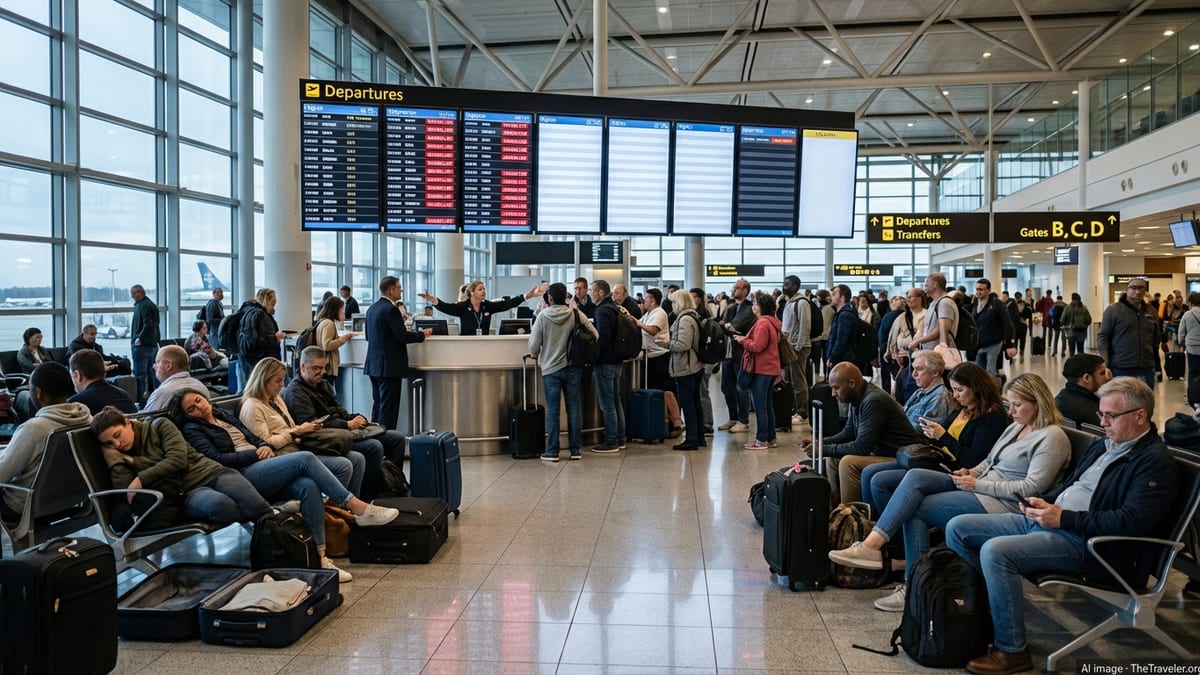
Unusually Long NOTAM Reserves Airspace From March 27 to May 6
Publicly available aviation notices show that China has issued a Notice to Air Missions covering multiple offshore zones in the Yellow Sea and East China Sea from March 27 to May 6, 2026. The reserved area lies within the Shanghai Flight Information Region and extends across an estimated 73,000 square kilometers, according to industry analyses of the coordinates. The measure effectively bans or severely restricts civilian flights transiting these blocks of airspace for the entire 40 day period.
Reports indicate that the duration and scale of the restriction are highly unusual. Large military or space related exercises typically generate closures lasting hours or a few days, not more than five weeks. Aviation risk consultancies describe the combination of a surface to unlimited altitude reservation and the continuous 40 day window as without modern precedent in this region.
Coverage in regional and international outlets notes that the restricted sectors sit off China’s northeast coast, spanning waters frequented by long haul traffic between East Asia, North America, and Europe. Mapping of recent flight tracks suggests that many operators have already begun to contour around the affected blocks, adding distance and complexity to route planning even where scheduled services remain broadly intact.
Limited Official Detail Fuels Speculation Over Purpose
The published NOTAM text does not specify a reason for the extended reservation, beyond advising operators of the hazard and time frame. Chinese state channels had not provided a detailed explanation by mid April, and foreign regulators have so far only restated the advisory for their own carriers. This information gap has encouraged a wave of analysis from military watchers, aviation specialists, and policy think tanks.
Several assessments point to the likelihood of large scale military activity, ranging from live fire drills to complex joint operations that might involve electronic warfare, air defense testing, or missile related activity. Observers note that China has used offshore zones along this coast for recurring exercises in recent years, but those events were typically bracketed in shorter, discrete windows.
Others highlight the possibility that the move is designed to normalize extended Chinese presence in strategically sensitive waters between the Korean Peninsula, Japan, and Taiwan. Commentaries in defense focused publications argue that by establishing long duration restricted corridors, Beijing could be testing international reactions and refining operational patterns that fall short of open crisis yet still alter the status quo.
There is also a more cautious view within parts of the aviation community that warns against over interpretation. From this perspective, the lack of granular detail makes it difficult to distinguish between preparations for routine, if sizable, training and more escalatory signaling. Analysts in this camp stress the importance of tracking actual military activity in and around the zones over the coming weeks.
Operational Impact on Airlines and Long Haul Routes
For airlines and passengers, the immediate question is how disruptive the 40 day restriction will become. Flight tracking data reviewed by aviation analysts suggests that major trunk routes to and from Shanghai and Beijing remain operational, but that routings have shifted to avoid the reserved offshore blocks. This can translate into longer flight times, higher fuel burn, and tighter margins on already pressured international services.
Carriers flying between East Asia and North America, as well as those connecting China with Southeast Asia and Oceania, are among the most exposed to offshore constraints. Crews and dispatchers have been recalculating contingency plans, alternates, and fuel loads in light of the new routing patterns. Some risk advisories recommend that operators maintain additional buffers and review crew duty times to account for potential congestion on remaining corridors.
So far, published coverage suggests that large scale cancellations linked directly to the NOTAM have been limited. Instead, airlines appear to be absorbing the shock through route adjustments and schedule fine tuning. However, there are concerns that even modest additional flying time, replicated across dozens of daily services, could compound cost pressures during a period of uneven recovery in international demand.
Travel planners also warn that secondary effects, such as knock on delays or missed connections during peak periods, may not become fully visible until later in April. Passengers transiting major hubs in East Asia are being advised by airline communication channels and independent travel advisories to monitor itineraries closely during the restriction window.
Safety, Risk Management, and Regional Precedents
The Shanghai offshore NOTAM is being closely compared with other recent instances of extended airspace closures in conflict sensitive regions. Analysts point to multi week restrictions over parts of the Middle East and temporary blanket bans on general aviation in specific flight information regions as examples of how geopolitical tension can quickly reshape the operating map for civil aviation.
In each of those cases, airlines and regulators faced a common challenge: balancing the imperative to avoid poorly understood risks with the need to keep essential air links functioning. Industry commentary suggests that the Chinese 40 day measure may have a similar effect, encouraging operators to adopt conservative avoidance strategies even in the absence of concrete evidence of imminent danger.
Risk consultancies emphasize that NOTAMs of this scale are, in themselves, an important safety tool. By clearly defining hazardous volumes of airspace and specifying times and altitude bands, they give airlines a framework within which to plan alternatives. The concern in this instance centers less on the existence of the notice and more on its exceptional duration, which could reduce flexibility for rerouting if additional regional restrictions arise.
Some experts argue that the episode underscores the need for more transparent and timely communication around major airspace changes in heavily trafficked regions. They contend that while states retain broad discretion over their airspace and adjacent zones where they provide air traffic services, long lasting and unexplained restrictions can introduce new layers of uncertainty into an already complex global system.
What Travelers Should Expect in the Coming Weeks
For travelers with plans involving Shanghai or neighboring gateways in late April and early May, the main practical effect of the 40 day restriction is likely to be felt in scheduling and potential delays rather than outright route suspensions. Airline booking engines continue to sell tickets across affected dates, and published timetables for key international services have not undergone dramatic cuts since the NOTAM was posted.
However, trip planners are advising passengers to build in extra connection time, particularly on itineraries with tight margins between long haul and regional legs. With traffic condensed into fewer offshore corridors and some flows pushed further inland, even minor disruptions could ripple more quickly through hub and spoke networks.
Travel industry observers note that the situation remains fluid. Future updates to the NOTAM, new advisories from foreign regulators, or visible increases in military activity near the restricted zones could prompt additional operational changes. Given the 40 day window runs through May 6, there is also the possibility that the measure is allowed to lapse quietly if planned activity concludes without incident.
Until then, airlines, corporate travel departments, and individual passengers are likely to monitor developments along China’s eastern seaboard more closely than usual. The episode serves as a reminder that decisions taken far from airport terminals, and with limited public explanation, can still reshape the experience of flying for thousands of people across multiple continents.