


More news on this day
Travellers heading into several major city centres over the coming days face disruption as key streets close for planned works, prompting fresh warnings to check routes and allow extra journey time.
Get the latest news straight to your inbox!
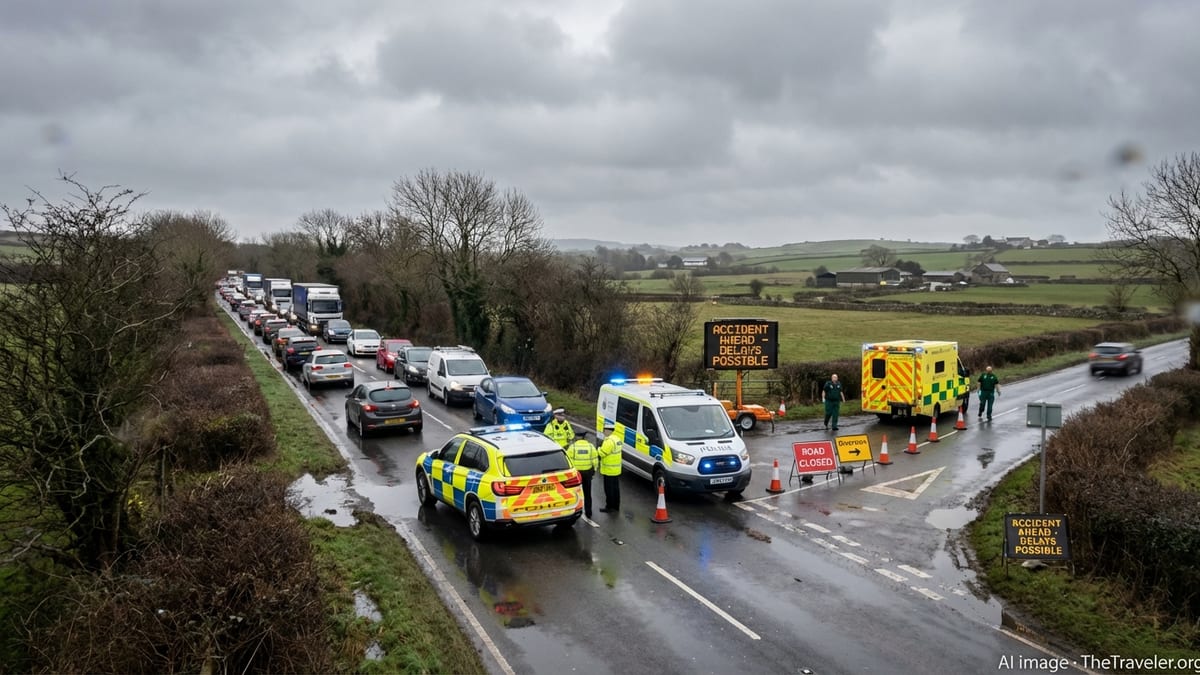
Multiple cities prepare for disruptive street works
Published notices and council travel updates show a series of short-term but high-impact road closures in busy urban cores, with local authorities prioritising safety and long-planned maintenance. While many works take place overnight or on single days, the locations involved sit on important access routes for commuters, shoppers and visitors.
In the City of London, the latest road closure register lists a cluster of central streets shut to general traffic on 6 September 2026, including sections of Aldermanbury, Angel Street, Cheapside and King Edward Street. The notices cite building activity, utility operations and wider project works as reasons for restricting vehicles, with access varying by street but remaining tightly controlled to keep work areas secure.
Further west, announcements from Bradford on Avon in Wiltshire highlight a full closure of part of the B3107 Silver Street on Sunday 6 September. The road is due to close from 9am until midnight between Whiteheads Lane and Kingston Road so reinstatement work can be completed, with the order framed as an urgent measure to protect road users while crews are on site.
Separately, Edinburgh’s A720 City Bypass at Gilmerton Junction continues to experience overnight slip road closures until 11 September, as landscape management activities remove diseased trees and carry out associated safety work. The closures run from late evening to early morning on weekdays, but sit on a critical orbital route used by both local and through traffic around Scotland’s capital.
City-centre streets shut for resurfacing and utilities
In Dublin, current road closure listings indicate scheduled works on a series of central streets through mid-September, with Cathedral Street in Dublin 1 among the most immediately affected. A detailed notice explains that Cathedral Street, between Marlborough Street and O’Connell Street, is to close by day between 8am and 6pm from 7 to 11 September for resurfacing, with only pedestrian access guaranteed throughout.
The Dublin programme is structured around discrete dates for different streets, including Custom House Quay and Sir John Rogerson’s Quay, reflecting a push to complete resurfacing and utility upgrades before the onset of winter weather. Information made available online notes that traffic marshals will supervise closure points and that local vehicle access may be permitted where conditions safely allow.
Utility and reinstatement work is also shaping travel in smaller historic centres. In Bradford on Avon, the one-day Silver Street closure has a signed diversion making use of the A363, B3109 and B3107 to route motorists around the narrow town-centre section. Local access for residents and businesses is expected to be maintained where possible, but the official notice flags likely delays along the diversion corridor.
In London’s financial district, the City of London Corporation’s closure list shows several streets taken out of normal circulation for building sites and major project work. While each closure is relatively short in length, the combined effect covers a significant portion of the Square Mile’s inner grid, and drivers who normally thread east–west on Cheapside or use King Edward Street as a north–south link are advised to seek alternative approaches to the centre.
Longer-running works increase pressure on city networks
On top of short-duration closures, a number of schemes are set to restrict access for weeks at a time, intensifying pressure on city networks already juggling events and routine maintenance. In York, local coverage collating the council’s closure register highlights overnight shut-downs on the A1079 for 14 nights from Monday 7 September, between the York Road junction at Dunnington and the city boundary at Kexby Bridge. The works form part of a resurfacing programme on a key radial route linking the city with the wider region.
The same York reporting points to a seven-week order on Back Swinegate and Little Stonegate in the historic core, where extended city-centre works will limit vehicle movements through one of the busiest pedestrian and hospitality quarters. With additional temporary closures appearing on the city’s official register, the pattern indicates ongoing work to upgrade surfaces and services in advance of the autumn and winter trading period.
In Edinburgh, travellers are also bracing for prolonged restrictions. Local discussion, referencing Scottish Water updates, indicates that Waterloo Place, a principal approach to the city centre from the east, is expected to be closed to westbound traffic for around 11 weeks from 7 September. Combined with other traffic management in the Old and New Towns, this is likely to push more journeys onto alternative corridors, increasing journey times unless drivers factor in the changes.
National route operators are advancing parallel programmes on strategic roads feeding city regions. In south-east England, National Highways’ maintenance schedule for September includes phased overnight slip-road closures on the M20 at junction 12, alongside forthcoming weekend closures on the M4 between junctions 10 and 11 and works near junction 6 at Chatham. While these schemes sit outside central urban areas, travel alerts stress that closures can change at short notice and may affect those combining motorway trips with city visits.
Advice for drivers, visitors and city commuters
Publicly available travel advisories across these locations emphasise early route planning and checking the latest information on the day of travel. City transport pages and dedicated traffic portals provide daily or weekly updates, maps of closure extents and links to diversion routes, helping drivers understand whether they face brief localised disruption or need to rethink how they enter the wider urban area.
For visitors unfamiliar with local streets, the volume of concurrent works increases the value of park and ride sites, rail links and other public transport options into historic centres, where carriageway space is often constrained at the best of times. With some closures, such as in Dublin’s Cathedral Street and York’s medieval core, pedestrian access is specifically protected, making it easier to complete journeys on foot after switching mode outside the immediate work zone.
Those who must drive into affected zones are encouraged by official bulletins to build in extra time, follow signed diversions rather than relying solely on satellite navigation, and watch for changing traffic patterns where city-centre grids are partially closed. In places where overnight closures prevail, such as the A720 at Gilmerton and sections of the A1079 near York, late-evening and early-morning travellers may face more disruption than daytime motorists.
As the September works window progresses, city travel pages indicate that closure dates and times may be refined in response to weather and on-site progress, reinforcing the need to monitor the latest notices rather than relying on early projections alone.
Key online resources for live updates
Across the United Kingdom and Ireland, responsibility for publishing closure details is spread between city councils, national road agencies and, in some cases, utility companies coordinating specific projects. Travellers are therefore advised to consult multiple official sources, particularly when journeys cover both local streets and trunk roads.
City-specific platforms, including the City of London’s road closure map, Dublin City Council’s current roadworks listings and York’s temporary road closure register, offer the most granular view of which city-centre streets are passable on particular days. National services such as Traffic Scotland and National Highways complement this with broader perspectives on bypasses, ring roads and motorway links that strongly influence how traffic reaches urban cores.
Where available, council newsletters, local news sites and travel-focused social media accounts provide additional context on why closures are in place and how long disruption is likely to last. For now, the message across multiple cities is consistent: central streets are under active maintenance, and anyone heading into these areas in early and mid-September should expect diversions, heavier traffic on remaining arteries and a premium on up-to-date route checks.
Dublin City current road closures
Traffic Scotland A720 Gilmerton works