


More news on this day
Civil society organizations in East Africa are pressing Kenya to allow Zimbabwean constitutional lawyer Brian Kagoro to enter the country after reports indicated he was removed from a flight in Addis Ababa while traveling onward to Nairobi, despite ongoing court proceedings linked to a previous entry denial.
Get the latest news straight to your inbox!
What happened in Addis Ababa, and why it matters for travelers
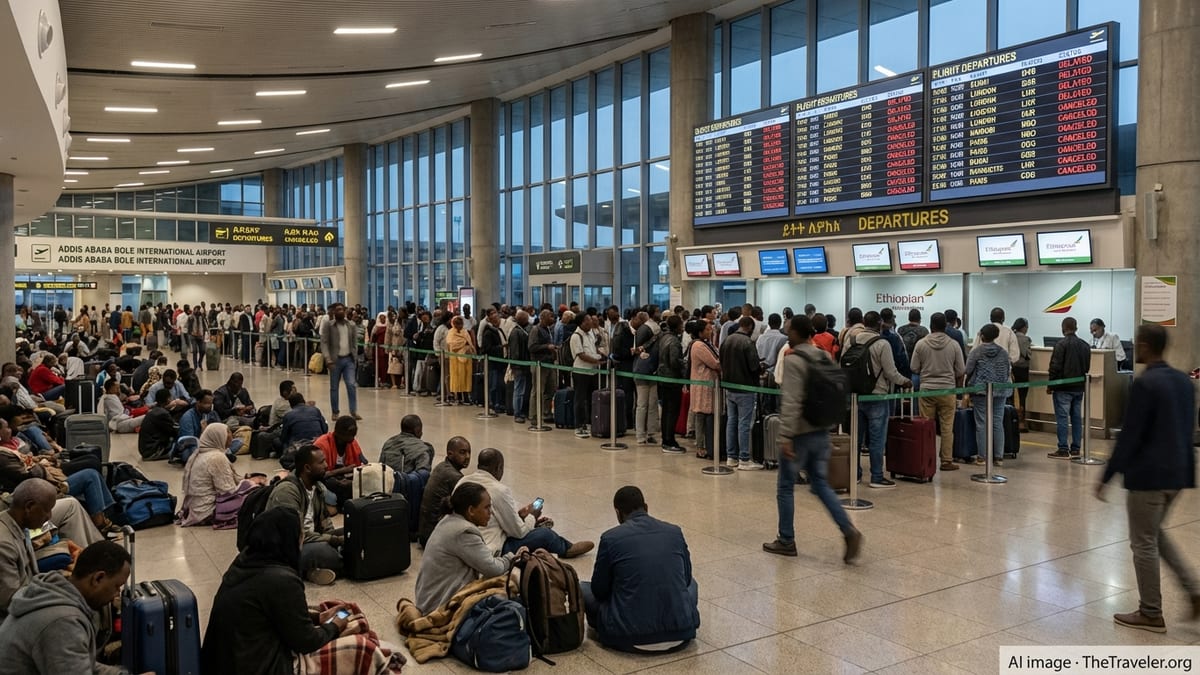
Published coverage indicates Kagoro was stopped from continuing his journey to Kenya after being taken off a flight in Addis Ababa, a key hub for regional connections into Nairobi. The incident has drawn attention because it involved a traveler with an active legal dispute over entry to Kenya, and because Addis Ababa is a common transfer point for passengers heading to Jomo Kenyatta International Airport from Southern Africa, West Africa, Europe, and North America.
While the case is centered on a prominent human-rights lawyer, it also highlights a practical reality for international passengers: entry decisions can hinge on immigration directives that may be actioned before a traveler even lands, including during airline check-in, transit screening, or pre-boarding checks. In disruption scenarios like this, travelers can face missed onward connections and unexpected overnight stays, with responsibility for rebooking and accommodation depending on ticket terms and carrier policies.
For Nairobi-bound passengers, the Addis Ababa to Nairobi route is among the busiest in the region and is served by multiple operators, including Ethiopian Airlines and Kenya Airways on nonstop schedules. That density can help with rebooking options, but it also means last-minute removals can cascade into tight connection windows and missed airport pickups, particularly for travelers continuing to Kenya’s domestic network or onward to safari gateways.
Background: an earlier denial of entry and the court fight now shaping the dispute
The latest disruption follows an earlier episode in February 2026, when Kagoro was denied entry at Nairobi’s Jomo Kenyatta International Airport and removed from Kenya. Coverage by regional and international rights groups has framed that earlier incident as an immigration action taken without transparent, written reasons being provided publicly, with concerns raised about due process.
Several legal and civil-society institutions have been publicly associated with subsequent litigation and advocacy, including the Pan African Lawyers Union, the East Africa Law Society, the Law Society of Kenya, and the Kenya section of the International Commission of Jurists. Published coverage indicates the legal strategy has sought to challenge the entry denial and to prevent further arbitrary refusals while the petition is pending.
Reports also indicate that conservatory orders were issued by the High Court in June 2026, described as protecting Kagoro against future arbitrary denial of entry pending the outcome of the case. The current outcry is largely anchored on the claim that a traveler covered by those interim protections still faced obstacles in reaching Nairobi, now in transit rather than at the Kenyan border itself.
What civil society groups are demanding from Kenya now
In statements carried by Kenyan media and civil-society outlets, groups have renewed calls for Kenya to allow Kagoro to enter, presenting the matter as a test of compliance with court directives and a signal of how Kenya treats regional civil-society actors. The focus has been on the gap between court-ordered protections described in published coverage and the reported reality of a traveler being blocked mid-journey.
Some coverage has suggested civil society representatives planned to assemble at Jomo Kenyatta International Airport to witness the enforcement of the court order and to show solidarity. The stated aim, as reflected in public statements, is to ensure the next attempt to enter Kenya is processed in a predictable, lawful manner, minimizing the risk of detention or immediate removal.
Another theme in the public advocacy has been the wider regional impact. Rights groups have connected the case to concerns about shrinking civic space and cross-border pressure on activists and lawyers, arguing that immigration controls should not be used in ways that discourage lawful participation in conferences, family visits, or professional engagements.
Airlines, transit hubs, and immigration: how these disruptions can unfold
Cases involving disputed admissibility can play out at several points in the travel chain. Depending on the information shared through airline systems and border-management checks, a passenger may be stopped at initial check-in, denied boarding at the gate, or intercepted during transit. Addis Ababa Bole International Airport’s role as a major transfer hub means disruptions there can affect passengers long before they reach Kenya’s border posts.
For travelers, the practical consequences can include involuntary itinerary changes, lost hotel reservations in Nairobi, and missed onward flights to coastal destinations or regional capitals. If the ticket is booked as a through-journey on one itinerary, re-accommodation may be more straightforward than if legs are purchased separately. However, publicly available information on Kagoro’s specific ticketing arrangements has not been consistently detailed in reports, limiting what can be inferred about the exact consumer remedies that were available in this incident.
Travelers who anticipate entry complications, including those traveling on newly issued visas, those with prior immigration disputes, or those whose legal status is in litigation, often rely on documentation and advance clarification. Even then, as this case illustrates, a court process or pending petition may not prevent friction during transit if carriers or airport screening personnel act on different instructions or interpret admissibility risks conservatively.
What to watch next for Kenya-bound travelers
The next steps are likely to depend on court scheduling and whether additional directions are issued to immigration bodies and other actors involved in processing entry. Coverage of the legal dispute has emphasized interim protections pending a final determination, meaning developments can be incremental rather than resolved in a single ruling.
For ordinary visitors, the broader travel takeaway is not that Kenya’s entry rules have changed overnight, but that enforcement decisions can intersect with litigation in highly visible cases. Travelers transiting via major hubs such as Addis Ababa may want to allow longer connection buffers when possible and keep essential documents accessible, including printed confirmations, residency or work permits where relevant, and any court paperwork tied to travel status.
As the public debate continues, the incident is also keeping attention on Nairobi’s position as a regional meeting point for conferences, diplomatic events, and civil-society gatherings. Whether the dispute is resolved at the airport, in court, or through administrative clarification, the outcome will be closely watched by travelers and organizations that depend on predictable cross-border movement within East Africa.