


More news on this day
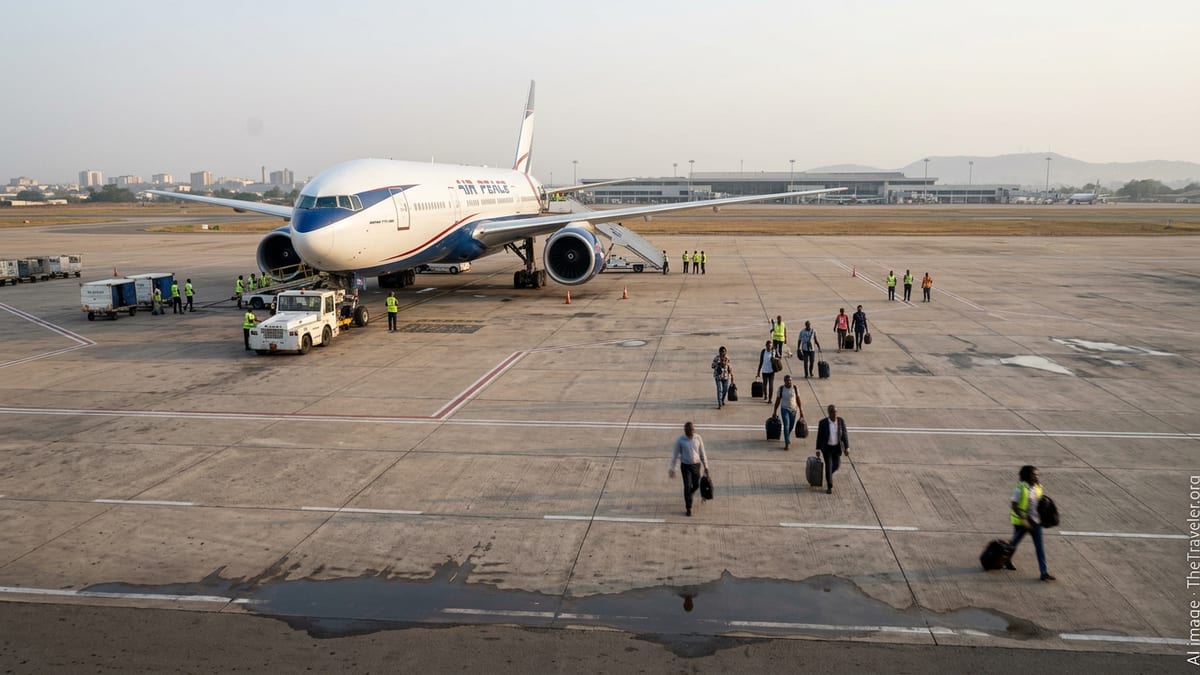
Fresh data from Nigeria’s aviation regulator shows persistent punctuality problems on the country’s domestic network in August 2026, with United Nigeria Airlines and Air Peace each recording flight-delay rates above 70% as disruptions affected thousands of scheduled services.
Get the latest news straight to your inbox!
What the August disruption numbers show
According to the Nigeria Civil Aviation Authority’s published Summary of Domestic Airline Flight Disruption Operations for August 2026, domestic carriers operated 7,961 flights during the month. Of those, 4,765 were recorded as delayed and 36 were recorded as cancelled, indicating that delays were a majority experience for passengers traveling within Nigeria during the period.
The report breaks delays into time bands, providing a clearer look at what travelers faced. Across all airlines, 2,801 delayed flights were recorded in the 16 minutes to 1 hour category, 1,322 in the 1 to 2 hour category, 407 in the 2 to 3 hour category, and 235 in the 3 hours and above category.
While the report aggregates airline performance, it does not provide route-by-route explanations or specific causes for each disruption. Still, the month’s totals underline how quickly schedule reliability issues can ripple across the domestic system, especially when flight banks are tightly timed around major hubs such as Lagos and Abuja.
United Nigeria and Air Peace: high volume, high delay rates
Among the larger domestic operators, United Nigeria Airlines posted the highest delay rate in August 2026. The NCAA’s summary shows United Nigeria operated 1,231 domestic flights, with 943 delayed and 8 cancelled. The table also indicates 442 of those delays fell in the 16 minutes to 1 hour band, 344 in the 1 to 2 hour band, 116 in the 2 to 3 hour band, and 41 at 3 hours and above.
Air Peace, the highest-volume operator in the report, recorded 1,864 domestic flights in August 2026, with 1,330 delayed and 7 cancelled. Its delay distribution included 666 delays between 16 minutes and 1 hour, 400 between 1 and 2 hours, 156 between 2 and 3 hours, and 108 of 3 hours or more.
Delay rate alone does not capture passenger impact, but flight volume matters in practical terms. With Air Peace operating the largest number of domestic flights in the NCAA summary, its disruptions can affect more travelers in absolute numbers, especially when delays cluster around peak business travel windows.
How other airlines fared in the same report
The NCAA summary indicates delay performance varied widely across the rest of the domestic field. For example, the table lists Value Jet at 767 total flights and 435 delayed flights, with 3 cancellations. Enugu Air recorded 878 flights with 582 delays and 4 cancellations. Aero recorded 469 flights with 246 delays and no cancellations listed in the table.
Several smaller operators also recorded notable disruption patterns. Ibom Air is shown with 560 flights and 254 delays, with 3 cancellations. Max Air is listed with 336 flights and 204 delays, with 4 cancellations. Rano Air appears with 503 flights and 216 delays, with 3 cancellations.
Across carriers, the spread of delays into the longest time bands is a key detail for travelers, because a delay of two hours or more can effectively erase the usefulness of same-day connections, business meetings, or onward ground transport plans. In the NCAA breakdown, 407 delayed flights across the system fell into the 2 to 3 hour category and 235 into 3 hours and above.
Regulatory pressure and passenger-rights context
The disruption figures arrive alongside a visible consumer-protection push from the regulator. In a separate NCAA publication dated September 10, 2026, the authority described directing United Nigeria Airlines to improve flight operations, adhere to passenger-rights requirements, and avoid route expansion beyond fleet capacity, while also referencing concerns about communication with passengers and handling of refunds.
For travelers, the practical overlay is Nigeria’s passenger-rights framework, which the NCAA publishes on its website. The guidance states that for domestic flights, passengers are entitled to refreshments after two hours of the scheduled departure time, and that beyond three hours the air carrier shall reimburse passengers the full value of their tickets, as described in the regulator’s passenger-rights information.
The same NCAA passenger-rights guidance also outlines domestic cancellation compensation, indicating 25% of the fare or ticket price unless passengers are informed of a cancellation at least 24 hours before the scheduled departure time, along with the right to reimbursement of the full value of the ticket.
What this means for travelers booking Nigeria domestic flights now
For passengers planning near-term domestic trips, the August data suggests that building time buffers remains prudent, particularly on itineraries with time-sensitive arrivals, same-day returns, or onward connections. When possible, travelers may reduce risk by choosing flight times that leave margin for disruptions rather than the last available departure of the day.
Given the regulator’s published rules on domestic delays and cancellations, travelers may also benefit from keeping key documentation readily available: booking confirmations, receipts, and any written notices received about schedule changes. That material can be useful when requesting refreshments, refunds, or other remedies that depend on the length of a delay or the timing of a cancellation notice.
Finally, the NCAA report underscores that the disruption picture is not limited to one airline. With 4,765 delays recorded out of 7,961 domestic flights in August 2026, reliability challenges appear system-wide, making pre-trip planning and awareness of passenger entitlements increasingly relevant for anyone flying within Nigeria.