


More news on this day
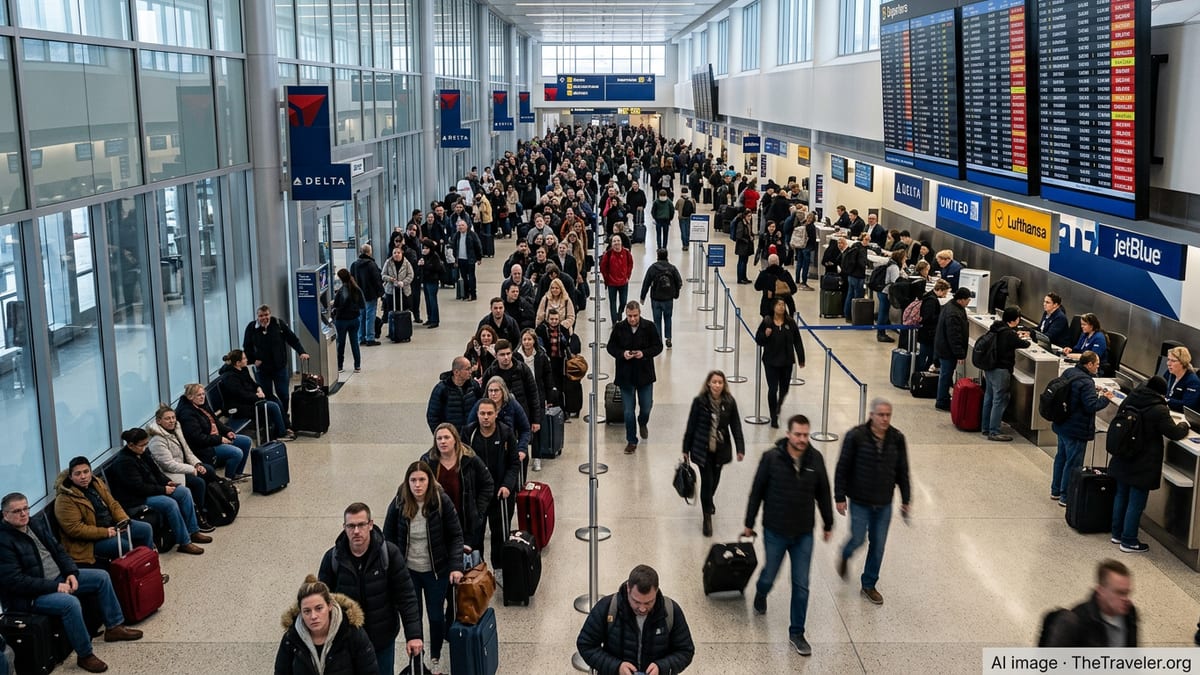
U.S. air travelers faced another turbulent day as flight-tracking data showed more than 868 delays and at least 45 cancellations, with disruption patterns tied to shifting weather, air-traffic flow constraints, and knock-on effects that can quickly spread across airline networks.
Get the latest news straight to your inbox!
What the numbers show across the U.S. network
Live flight-status dashboards typically count delays and cancellations in several ways, including totals worldwide and totals limited to flights within, into, or out of the United States. On Wednesday, September 16, 2026, FlightAware’s public disruption tracker displayed thousands of delays and hundreds of cancellations tied to the U.S. airspace system, underscoring how quickly conditions can deteriorate across a large national schedule.
The headline figures referenced in published travel coverage, over 868 delayed flights and 45 canceled, capture a snapshot of disruption that can change hour by hour. Even when the cancellation number is relatively modest compared with total daily operations, delays can still reshape itineraries by forcing missed connections, crew-time issues, and aircraft repositioning problems that linger into later banked departures.
Travelers often experience these disruptions unevenly. A handful of airports can drive much of the pain, while many other hubs operate close to normal. That unevenness is why two travelers flying the same day can have radically different experiences depending on routing, time of day, and whether their airline’s network is point-to-point or hub-and-spoke.
Where the disruption is coming from: weather, clouds, and traffic programs
Publicly available FAA planning guidance for Wednesday, September 16, pointed to thunderstorms as a risk factor in several metro areas and also flagged non-storm constraints such as gusty winds and low clouds in key markets. The FAA’s daily air traffic report highlighted thunderstorm potential affecting airports including Detroit, Fort Lauderdale, Miami, Phoenix, and Salt Lake City, along with gusty winds in Las Vegas and low clouds in San Francisco.
Separately, FAA command-center status pages and advisory products often signal when ground delay programs or other initiatives are in play at specific airports. On September 16, the FAA’s national airport status summary showed active ground delay programs at Seattle-Tacoma International Airport and San Diego International Airport, with general arrival and departure delays also listed for New York’s LaGuardia.
These tools matter for travelers because they help explain why the same flight can show multiple rolling delays. A departure may be held for an arrival metering program at the destination, a constraint en route, or a local ground-delay initiative aimed at smoothing traffic volume when weather or airport capacity limits would otherwise create unsafe congestion.
How delays cascade: connections, crews, and aircraft positioning
In day-to-day operations, delays are rarely isolated events. A thunderstorm or low cloud ceiling can slow arrivals, which reduces gate availability. When inbound aircraft cannot reach the gate on schedule, the next outbound departure can be delayed even if weather at the origin airport is relatively calm.
Crew scheduling adds another layer. When earlier segments run late, crews can approach duty-time limits, which can force airlines to swap crews or cancel flights if replacements are not available in the right place at the right time. Travelers can also see equipment swaps or last-minute gate changes as airlines attempt to preserve the most critical flights while protecting later-day operations.
The result is a kind of disruption “migration” across the map. A problem that starts in one region can ripple into other regions by mid-afternoon, especially during busy periods when aircraft and crew utilization is tight and there is limited slack for recovery.
What travelers can do right now when delays spike
When disruption levels climb, the most practical step is to verify flight status directly with the operating carrier, then cross-check with a major flight tracker and the FAA’s airport-status tools for broader context. Airline mobile apps are often the fastest route to rebooking because they can surface alternatives before airport lines build and before customer-service channels become saturated.
For connections, travelers may want to look proactively at earlier flights, nonstop alternatives, or reroutes through different hubs, especially if a particular airport is under a traffic management initiative. If the app allows same-day changes, shifting to an earlier departure can reduce the risk of being caught in late-day cascading delays when recovery becomes harder.
It can also help to save receipts and keep a simple timeline of what happened. Even when compensation is limited, documentation can streamline requests for reimbursement under an airline’s policies, travel insurance claims, or credit card trip-delay benefits if the traveler holds an eligible card.
Refund rules, passenger protections, and why the cause still matters
In the U.S., the most consistent baseline protection remains the right to a refund when an airline cancels a flight and the passenger declines the alternative offered. The Department of Transportation’s consumer updates in 2026 have continued to emphasize refund expectations, alongside new transparency initiatives such as passenger-rights materials and required dashboards that are intended to make airline commitments clearer.
Beyond refunds, the details often depend on the cause of the disruption and the carrier’s specific commitments. Weather-related delays and air-traffic constraints can limit what airlines provide beyond rebooking, while controllable issues may trigger additional assistance under a carrier’s customer service commitments. Because those policies vary and can change, travelers are generally best served by checking the airline’s written terms and any same-day travel waiver language that may be posted for affected cities.
Looking ahead, published coverage has also pointed to broader efforts aimed at reducing systemwide disruption, including FAA initiatives to improve how schedules are managed around constraints. For travelers, those longer-term projects may not change today’s departure board, but they signal that the industry is treating recurring delay spikes as a persistent operational challenge rather than a rare anomaly.