


Italy is experiencing a rapid escalation of climate-related hazards, particularly intense heat waves, damaging floods, and recurrent wildfires. For prospective relocators, these evolving risks are no longer occasional anomalies but structural factors that can influence health, daily life, infrastructure reliability, and long-term resilience in different parts of the country. Understanding where and how these risks are concentrated is essential for realistic, decision-grade relocation planning.
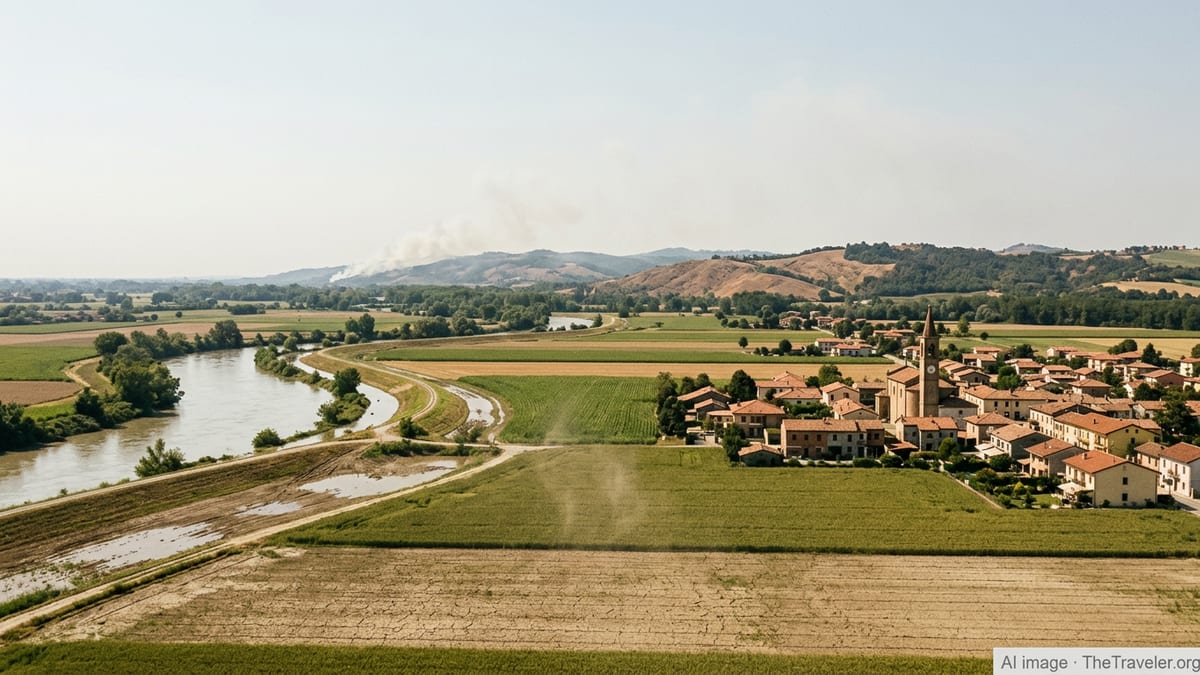
Overview of Climate Risk Profile in Italy
Italy sits in the Mediterranean climate change hotspot, a region where temperatures are rising faster than the global average and extreme events are intensifying. Recent scientific assessments and national reports show increasing exposure to compound hazards, especially in densely populated valleys, coastal plains, and forested southern regions. While risk levels vary sharply between regions and even neighboring municipalities, the overall direction is clear: heat waves, pluvial and fluvial flooding, and wildfires are expected to become more frequent, more intense, and more disruptive over the coming decades.
Italy’s geography explains much of this vulnerability. The Alps and Apennines channel weather systems and catch heavy rainfall, the long coastline exposes many settlements to coastal flooding and storm surges, and extensive woodland and scrubland in central and southern regions creates large fuel loads for fires in hot, dry summers. Urbanization and land-use changes have increased impermeable surfaces and reduced natural buffers, amplifying both flood and heat risks, especially in major metropolitan areas and industrial corridors such as the Po Valley.
For relocation planning, climate risk in Italy can be thought of along three main axes: the northern river basins and alpine areas where flood and glacial-related hazards stand out, the central urban belts where heat and periodic flooding combine, and the southern mainland and islands where heat stress and wildfire risk are particularly high. Each axis presents distinct implications for infrastructure, habitability, and business continuity.
Heat Waves: Scale, Geography, and Health Impacts
Heat waves are the most consequential climate risk in Italy from a public health perspective. A Europe-wide analysis of the summer of 2022 estimated more than 18,000 heat-related deaths in Italy, the highest number among European countries, and subsequent re-analyses for 2023 confirmed that Italy again recorded the largest national toll in Europe in that season. These findings reflect both the intensity of heat episodes and the large share of older people in the Italian population, many of whom live in urban areas prone to the urban heat island effect.
Recent summers have repeatedly brought maximum temperatures above 40°C in parts of northern and central Italy, and above 45°C in southern regions and the islands. National and regional authorities regularly issue “red alert” heat bulletins for major cities such as Rome, Milan, Bologna, Florence, Naples, Palermo, and Catania, indicating conditions where serious health impacts are expected even among healthy adults. During intense heat waves in 2024 and 2025, dozens of Italian cities have simultaneously been on top-level alert, signaling that extreme heat is now a broad, systemic phenomenon rather than a localized anomaly.
Spatially, the Po Valley, which includes Milan, Turin, Bologna, and other industrial centers, is experiencing steadily warmer summers coupled with high humidity and air pollution, increasing cardiovascular and respiratory stress. Central cities such as Rome and Florence often experience prolonged night-time heat, limiting physiological recovery. Southern regions and islands, including Puglia, Calabria, Sicily, and Sardinia, face the highest maximum temperatures, with inland areas regularly exceeding coastal temperatures. For those relocating with older family members, cardiovascular disease, or respiratory conditions, these patterns are especially important to factor into location choice.
Future Heat Projections and Adaptive Capacity
Climate projections for Italy indicate a strong increase in the number of hot days and heat wave episodes over the coming decades under all but the most optimistic global emission pathways. National health and climate assessments suggest that the average number of heat wave days per year has already increased over recent decades and is expected to rise further, especially in the large urban areas of the north and center and in low-lying coastal zones. By mid-century, many parts of Italy are expected to see heat wave conditions for a significantly larger share of the summer season, with more frequent “tropical nights” when temperatures do not drop below 20–25°C.
Adaptive capacity is evolving but uneven. Italy has a relatively advanced heat health warning system, and local authorities increasingly implement measures such as cooling centers, work-schedule restrictions during peak heat, and public guidance for vulnerable groups. During recent severe heat episodes, several regions including Lazio, Tuscany, Puglia, Calabria, and Umbria have moved to limit outdoor work in the hottest hours to reduce occupational heat stress. However, the resilience of housing stock varies: many older buildings, especially in historic centers, lack modern insulation and fixed air conditioning and can retain heat for long periods.
For relocation decisions, this means that urban environment, building type, and local public health measures materially influence actual lived risk. A family in a modern, energy-efficient building with air conditioning in a northern city with strong social services may experience lower effective heat risk than someone in an older, poorly insulated building in a smaller southern town without robust heat action plans. Prospective residents should consider building standards, access to cooling, and local government preparedness when evaluating specific cities.
Flooding: River Basins, Urban Pluvial Floods, and Coastal Exposure
Flooding represents Italy’s most visible infrastructure and property risk. Around the major river systems, particularly the Po and its tributaries, large parts of the floodplain are classified as having significant flood hazard under national mapping, and European analyses indicate that roughly a few percent of Italy’s land area has medium or higher long-term flood risk exposure. Climate change is amplifying this baseline risk by increasing the intensity of short-duration rainfall events and altering snowmelt patterns from the Alps and Apennines.
The May 2023 Emilia-Romagna floods illustrated the vulnerability of densely populated and economically important lowlands. Intense rainfall over several days led to multiple river overflows and levee failures, causing extensive inundation, landslides, at least several dozen fatalities and large-scale evacuations. The region, which contributes a substantial share of Italy’s GDP, had already experienced significant flood episodes in previous years, underscoring a pattern of recurrent risk. Subsequent heavy rainfall in 2024 again produced serious flooding on rivers such as the Lamone, demonstrating that high-impact flood events are not isolated occurrences.
Flood risk is not limited to large river basins. Urban pluvial flooding, where intense cloudbursts overwhelm drainage systems, affects cities throughout the country, including northern industrial centers and historic cities with aging infrastructure. Coastal areas face additional hazards from storm surges, sea-level rise, and subsidence. Parts of the northern Adriatic coast, including the Po Delta and low-lying coastal settlements, are experiencing increasing relative sea-level rise, which heightens the long-term risk of coastal inundation and saltwater intrusion into groundwater and agricultural lands.
Regional Flood Risk Patterns and Long-Term Outlook
Flood exposure in Italy is highly regionalized. In the north, the Po Valley and other major basins such as the Adige, Piave, and Arno contain large concentrations of population, industry, and transport infrastructure on flood-prone plains. In central Italy, hilly terrain contributes to flash flood and landslide risk when intense rainfall hits small catchments and urbanized valleys. In the south and on islands, flood risk tends to be more localized but can be severe where rapid urbanization has encroached on seasonal riverbeds and coastal zones.
Long-term projections point to a likely increase in the frequency and severity of heavy rainfall events, even where mean annual precipitation does not rise. At the same time, hotter and drier summers increase soil impermeability when intense storms arrive, enhancing runoff and peak flows. This combination points to a higher probability of both riverine and pluvial flooding in many parts of Italy, though local outcomes will depend on land-use planning, maintenance of river defenses, and upgrading of drainage systems.
From a relocation perspective, the practical implication is that municipal-scale flood hazard maps and historical flood records become critical due diligence tools. Two towns in the same region can have markedly different flood profiles depending on elevation, proximity to rivers, and the state of protective infrastructure. Coastal locations with low elevation, subsidence issues, and limited flood defences face the most structural long-term challenges as sea levels gradually rise.
Wildfires: Recent Trends, Hotspots, and Seasonal Dynamics
Wildfires are an increasingly prominent risk, particularly in southern Italy and the major islands. According to European and Italian environmental agencies, the country has experienced several severe fire seasons over the past decade, with 2021 and 2023 standing out for large burned areas, especially in Sicily, Sardinia, Calabria, and parts of central regions. During 2023, cumulative burned area in Italy reached tens of thousands of hectares, significantly exceeding the long-term average for much of the summer season.
National environmental monitoring data indicate that the total burnt area in 2024 was lower than in the worst recent years and approximately two-thirds of the 2018–2023 average, showing that interannual variability remains high. However, preliminary estimates for 2025 suggest burned area again increased sharply, with Italian and environmental organizations reporting on the order of 90,000 hectares or more burned by mid-autumn, roughly double the previous year’s total. Most of this area was concentrated in the south, with Sicily registering particularly extensive losses.
The traditional wildfire season, historically focused on the mid-summer months, is lengthening. Italian health and environmental authorities note that significant wildfires are now occurring earlier in the year and extending later into autumn, reflecting warmer, drier conditions and changes in land management. Fire weather conditions are aggravated by heat waves, prolonged drought, and strong winds, increasing the potential for rapid fire spread near wildland-urban interfaces where residential areas meet forests and scrubland.
Wildfire Risk Distribution and Health Implications
Wildfire risk is not evenly distributed across Italy. Southern mainland regions such as Calabria, Basilicata, and Puglia, along with Sicily and Sardinia, consistently record the highest numbers of fires and largest burned areas. Many fires are linked to human activity, both accidental and deliberate, but dry vegetation and heat waves create the conditions that allow them to spread. Central regions, including Tuscany and Lazio, also experience significant events, especially in rural and peri-urban landscapes. Northern regions are comparatively less affected in terms of large burned areas but are not immune, particularly in mountain and foothill zones during dry years.
Beyond direct threat to property and safety, smoke from wildfires degrades air quality over wide areas, compounding heat and pollution impacts, particularly in densely populated basins. Sensitive groups, such as children, older adults, and those with chronic respiratory or cardiovascular conditions, may find that recurring smoke episodes significantly affect quality of life during bad fire seasons. For relocators, the critical questions are proximity to fire-prone vegetation, strength of local civil protection services, and the practicality of evacuation routes and contingency plans in their chosen area.
Medium- and long-term risk assessments, including analyses used by financial and regulatory authorities, indicate that wildfire hazard in Italy is likely to intensify in scenarios of continued warming, with a higher share of assets exposed to high fire danger, especially in southern regions. This aligns with observed trends across the Mediterranean basin, where fire seasons are becoming longer and more severe as temperatures rise.
The Takeaway
Italy’s climate risk profile is characterized by three major and interlinked hazards: increasingly severe heat waves with high health impacts, recurrent riverine and pluvial flooding affecting critical economic regions and infrastructure, and expanding wildfire seasons in the south and on the islands. These risks are not uniform. Some alpine and hill areas offer cooler conditions and lower heat stress but may face greater exposure to certain flood or landslide hazards. Major urban centers benefit from stronger services and adaptation measures but may intensify heat and flood exposure through dense development and aging infrastructure.
For individuals and organizations considering relocation to Italy, decision-grade assessment requires moving beyond country-level averages to region- and municipality-level evaluation. Key due diligence steps include reviewing local historical records for heat, floods, and fires, consulting official hazard maps, examining building standards and adaptation measures, and understanding how local authorities manage early warning, emergency response, and long-term climate resilience planning. Italy is investing in adaptation, but climate hazards are already materially affecting health, infrastructure, and ecosystems, and will continue to evolve over the coming decades.
Relocation remains feasible and attractive in many parts of Italy, but climate risk must be integrated explicitly into site selection, building choice, and long-term planning. Those whose health, business operations, or assets are particularly sensitive to heat stress, flood disruption, or smoke exposure should weigh these factors carefully when comparing Italian regions or considering alternative countries.
FAQ
Q1. Which parts of Italy are most affected by extreme heat?
The highest maximum temperatures and most intense summer heat waves typically affect southern regions and the islands, especially inland areas of Sicily, Sardinia, Calabria, Puglia, and parts of Basilicata. However, major northern and central cities such as Milan, Turin, Bologna, Florence, and Rome also experience frequent heat alerts and strong urban heat island effects.
Q2. How serious is heat-related mortality in Italy compared with other European countries?
Recent multi-country studies of extreme summers found that Italy recorded the highest estimated number of heat-related deaths in Europe, reflecting the combination of intense heat, an aging population, and large urban centers. This indicates that heat is already a major public health issue and an important consideration for relocation.
Q3. Are heat waves expected to become more common in Italy?
Climate projections for Italy point to more frequent and longer heat waves, with an increasing number of hot days and warm nights each year. Without strong global emission reductions and local adaptation, many areas are expected to spend a significantly larger share of the summer season under heat stress conditions by mid-century.
Q4. Which regions in Italy have the highest flood risk?
The Po Valley and other major river basins in northern Italy, including parts of Emilia-Romagna, Lombardy, Veneto, and Piedmont, have extensive flood-prone areas. Central regions with dense river networks, such as Tuscany and Lazio, also face notable risk, as do certain low-lying coastal zones, particularly along the northern Adriatic. Localized urban flash flooding can occur in many cities during intense storms.
Q5. How often do major floods occur in Italy?
Severe flood events with widespread damage have occurred repeatedly over the past decade, with notable episodes in northern and central regions. While individual events are irregular, the pattern of recurring heavy-rainfall floods and landslides suggests that such hazards should be treated as a persistent feature of Italy’s climate risk landscape.
Q6. Where is wildfire risk highest in Italy?
Wildfire risk is highest in southern mainland regions and the major islands. Sicily, Sardinia, Calabria, Basilicata, and Puglia regularly record the largest burned areas, though significant events also occur in central regions like Tuscany and Lazio. Northern Italy generally has lower wildfire exposure but can still experience damaging fires in dry years, especially in mountain and foothill areas.
Q7. Is the wildfire season in Italy changing?
Yes. Observations from recent years indicate that wildfire season is lengthening, with more fires occurring earlier in spring and later into autumn. Warmer temperatures, drought, and vegetation stress, combined with human ignition sources, are contributing to a shift from short, concentrated fire seasons toward longer periods of elevated fire danger.
Q8. How do wildfires affect air quality and health for residents?
Wildfires generate smoke and fine particulate matter that can travel long distances, causing episodes of poor air quality even in areas far from the flames. During strong fire seasons, residents may experience respiratory and cardiovascular stress, especially those with existing conditions. Short-term measures such as staying indoors and using air filtration can help, but recurrent smoke events can significantly affect comfort and health.
Q9. Are some Italian locations relatively less exposed to all three risks?
Some higher-altitude or hill areas distant from large rivers and dense forests may experience lower combined exposure to extreme heat, major floods, and large wildfires. However, risk is highly site-specific, and such areas may still face other hazards like landslides or limited infrastructure. A detailed local risk assessment is essential rather than assuming any region is risk-free.
Q10. What should prospective relocators do to assess climate risks in a specific Italian city?
Prospective relocators should review official flood and hazard maps, check historical records of heat alerts, floods, and wildfires, and evaluate building characteristics such as insulation, elevation, and access to cooling. It is also advisable to understand local emergency management arrangements, including early warning systems and evacuation plans, and to consider obtaining expert risk assessments for high-value property or business investments.