


More news on this day
Ryanair passengers flying from Krakow report being left to spend the night in a freezing terminal after weather related disruption, raising fresh concerns about how Europe’s busiest budget carrier handles stranded travelers and complies with passenger care obligations.
Get the latest news straight to your inbox!
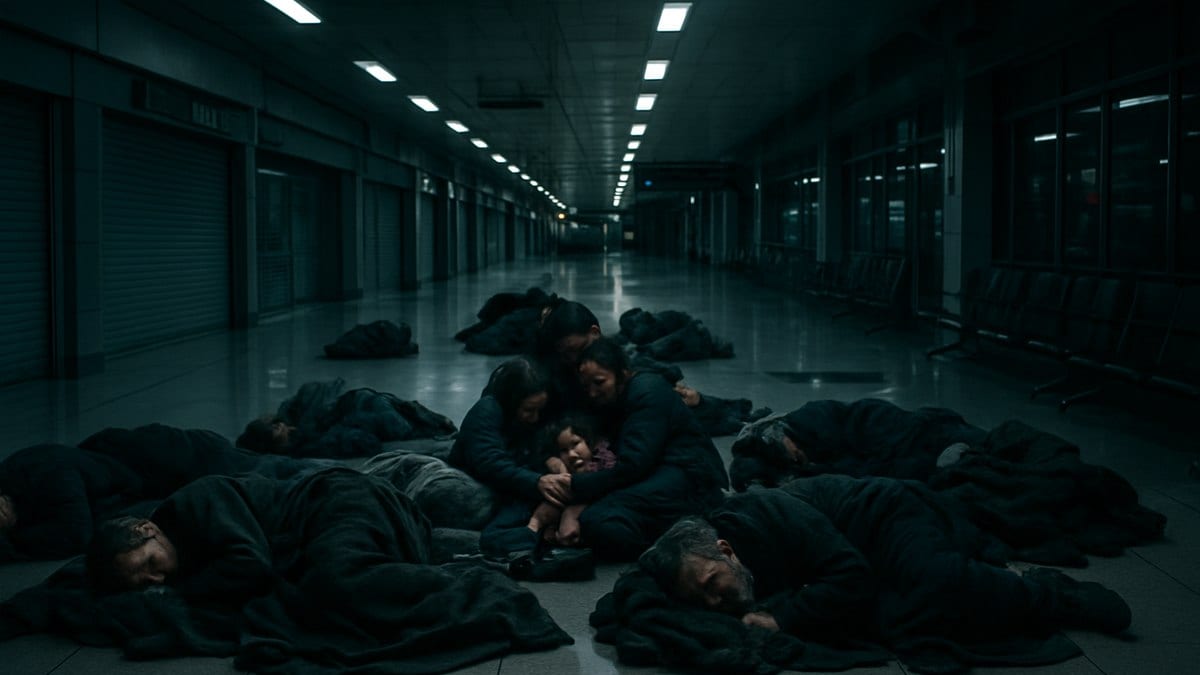
Overnight Stranding After Krakow Disruptions
Recent social media posts and traveler accounts describe a chaotic night at Krakow Airport in southern Poland, where Ryanair passengers say they were left to sleep on cold terminal floors after their flight was delayed and shifted to the following day. The incident reportedly unfolded during a period of freezing temperatures and wintry conditions in the region, when operations at the airport were already under pressure from fog, deicing requirements and knock on delays.
Accounts shared by travelers indicate that a Ryanair service scheduled to depart Krakow in the late evening was first delayed for several hours before passengers were informed the flight would not leave until the next day. By that point, many reported that airport facilities airside were already closing down, with limited food options, restricted seating and minimal access to warm areas as temperatures outside remained below freezing.
Passengers describe remaining in the terminal overnight, wrapped in coats and using hand luggage as makeshift pillows, while they waited for updated information about new departure times and any potential hotel arrangements. Some claimed they were offered only basic refreshments and paper information leaflets on air passenger rights, rather than concrete assistance with accommodation and transport.
While the precise number of people affected has not been independently verified, traveler reports suggest several dozen Ryanair customers were caught up in the disruption, including families with children and older passengers who struggled to rest in the cold, brightly lit terminal environment.
Weather Pressure Exposes Krakow’s Vulnerability
The Krakow incident comes against a wider backdrop of winter related disruption in southern Poland. In recent seasons, publicly available flight tracking data and traveler forums have documented repeated episodes of low visibility, freezing fog and deicing bottlenecks at Krakow Airport and other regional hubs. These conditions have forced aircraft into long holding patterns, diversions to alternative airports and extended ground delays.
Reports from late 2024 and the 2025 2026 winter period describe aircraft circling above Krakow dozens of times before diverting, as well as buses shuttling stranded passengers between Krakow and nearby Katowice when fog or runway conditions made normal operations impossible. In such circumstances, already stretched airport infrastructure can quickly become congested, with terminal areas crowded and basic services under strain.
For low cost carriers built on tight aircraft turnaround times and dense schedules, a single weather related delay can cascade rapidly across the network. When a late flight cannot depart before local night curfews or operational cut off times, the service may be pushed to the following day, instantly generating an overnight stranding scenario for anyone already airside and far from home.
The reported Krakow chaos illustrates how quickly a mix of adverse weather, limited spare capacity and constrained ground handling resources can translate into uncomfortable and, for some passengers, distressing conditions, particularly when communication and practical support are perceived as inadequate.
Passenger Rights and Ryanair’s Care Obligations
Under European Union air passenger legislation, notably Regulation EC 261 2004, travelers whose flights are significantly delayed or moved to the following day are generally entitled to care and assistance from the operating carrier. That typically includes meals, refreshments, hotel accommodation where a stay becomes necessary and transport between the airport and the place of lodging.
Ryanair’s own published information on passenger rights reflects these requirements, explaining that when an overnight delay occurs, affected customers should receive hotel rooms and transfers in addition to food vouchers and the option of rerouting or a refund in certain cases. Industry guidance stresses that these care duties apply even when disruption is caused by extraordinary circumstances such as severe weather.
However, in the Krakow case, traveler accounts suggest a significant gap between the theoretical protections and the practical experience on the ground. Several passengers report that no hotel vouchers were made available on site, or that instructions to organize and later claim back accommodation costs were unclear, leaving many unwilling or unable to leave the terminal in search of rooms late at night in freezing conditions.
Consumer advocates often encourage stranded passengers to document expenses, keep boarding passes and gather evidence of delays in real time to support later compensation or reimbursement claims. The Krakow episode is likely to generate further discussion over how well large low cost airlines are applying these rules during high pressure winter operations, and whether enforcement by national regulators is sufficiently robust.
Communication Breakdowns Deepen Passenger Frustration
Beyond the physical discomfort of an unplanned night in a cold terminal, many of the strongest complaints emerging from Krakow center on communication. Passengers describe long periods with no clear updates at the gate, conflicting information between the airport screens, airline app and staff announcements, and uncertainty over whether to remain airside or attempt to exit and arrange independent accommodation.
In some accounts, travelers say they learned about the following day’s rescheduled departure only after repeatedly checking the airline’s mobile application, rather than through direct, proactive messaging. Others note that by the time a new departure time appeared, it was already late in the night, making it harder to find available hotel rooms or safe late evening transport into the city.
Specialist passenger rights organizations have repeatedly highlighted communication breakdowns as a recurring theme in major disruption events across Europe. When delays stretch into the night, clear guidance on practical steps such as meal vouchers, hotel options, reimbursement rules and alternative routing can make a critical difference to how people cope with the disruption.
The Krakow reports suggest that many affected travelers felt left to navigate these questions largely on their own, relying on online research, informal advice from other passengers and ad hoc conversations with ground staff, rather than a structured care plan communicated consistently to the entire group.
A Growing Pattern of Stranding Incidents
The Krakow experience adds to a growing collection of high profile stranding incidents involving budget carriers across Europe. In recent months, separate coverage has highlighted Ryanair passengers left in regional French and Polish airports overnight after disruptive events ranging from weather to gate access problems and diversions.
While the circumstances vary by airport and route, a common pattern emerges: large numbers of passengers concentrated on a single flight, disruption occurring late in the day when alternative services are limited, and local infrastructure that is not designed to host hundreds of people for an unexpected overnight stay. When combined with constrained staffing and pressure to maintain schedules, the result can be busy terminals where basic comfort quickly deteriorates.
For Europe’s biggest low cost airline by passenger numbers, these episodes raise broader questions about resilience planning and how well contingency measures are resourced for peak winter and holiday periods. Analysts observing the sector note that cost focused business models can be particularly exposed when events disrupt the finely balanced schedule, especially at secondary airports with limited spare capacity.
As more travelers share experiences from Krakow and other affected airports, attention is likely to focus on whether airlines and airports together can implement clearer protocols for overnight disruptions, including guaranteed warm rest areas, streamlined hotel arrangements and standardized, multilingual communication tools. For passengers caught in the recent Krakow chaos, those measures would have meant the difference between a difficult delay and a night spent on a freezing terminal floor.