


Portugal’s warm climate is a major attraction for international relocations, yet the country is also one of Europe’s most exposed to heat waves, drought and wildfires. Recent summers have brought record temperatures, recurring water stress and some of the continent’s largest burned areas. Anyone considering relocation to Portugal, whether as an individual or an employer managing mobile staff, should understand how these evolving climate risks differ by region and how they may affect daily life, business continuity and medium term planning.
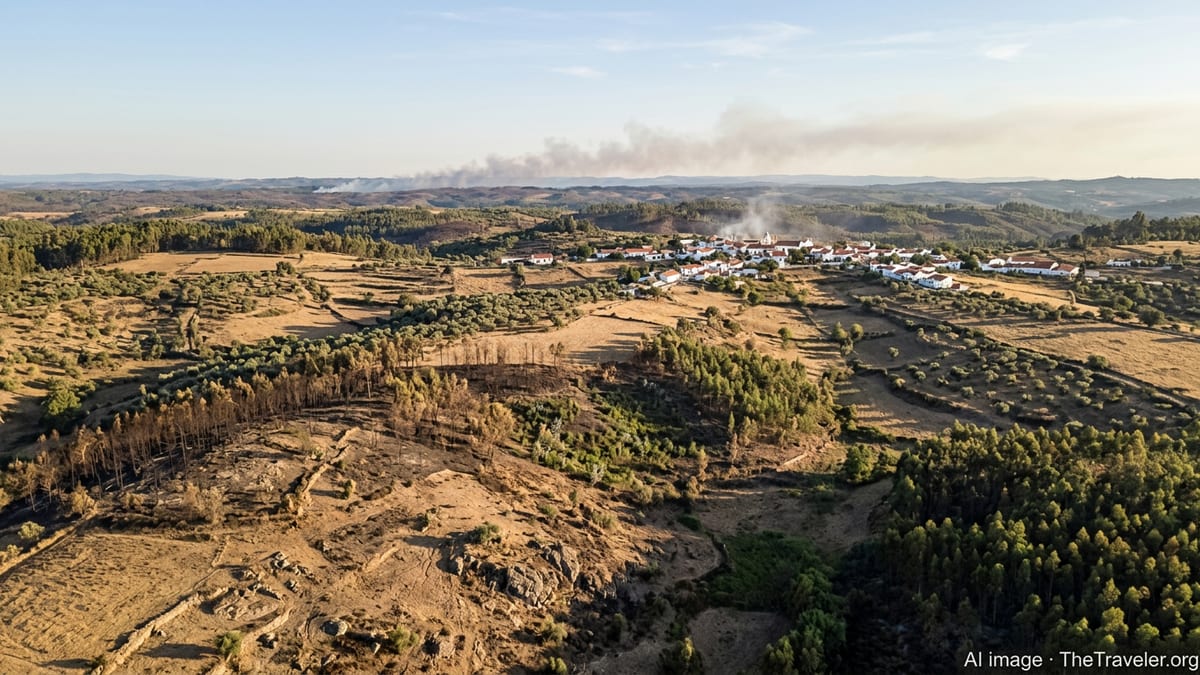
Overview of Portugal’s Climate Risk Profile
Portugal sits on the western edge of the Iberian Peninsula, with a predominantly Mediterranean climate pattern characterized by hot, dry summers and mild, wetter winters. This natural seasonality makes the country inherently prone to summer heat and wildfire, particularly in inland and central regions with extensive forest and shrubland. Climate change is amplifying these pre existing risks by increasing the frequency, intensity and duration of extreme heat and dry spells.
Analytical work by European and national agencies indicates that Portugal is, relative to its size, one of the most wildfire affected countries in Europe, with long term average burned areas estimated at roughly 100,000 to 115,000 hectares per year since around 1980. Heat waves have become more persistent, and summers in the last decade have repeatedly included multi day periods above 40 degrees Celsius in interior districts. Drought indicators show recurrent episodes of moderate to severe drought in large parts of the territory, especially in the south and interior, with the government’s recent transparency reporting noting that roughly one third of mainland Portugal experienced severe to extreme drought conditions for several months in some recent years.
For relocation decisions, this means that climate risk in Portugal cannot be treated as uniform. Coastal areas and the north generally face lower extremes compared with the interior and south, while islands such as Madeira also face their own specific wildfire exposure. Relocating households and organizations should therefore evaluate location choices through the lens of three linked hazards: acute heat waves, seasonal and multi year drought, and high impact wildfire seasons.
Heat Waves: Trends, Health Impacts and Regional Patterns
Portugal has experienced significant and measurable warming in recent decades. Recent summers have seen record or near record temperatures, with interior regions such as Alentejo and parts of central Portugal repeatedly crossing 40 degrees Celsius during heat waves. In 2025, for example, national meteorological data reported widespread heat alerts as many inland stations exceeded previous June or July temperature records, and maximums in some locations approached or exceeded 42 degrees Celsius.
Heat waves in Portugal are not simply hotter single days, but extended periods of high daytime and elevated nighttime temperatures, often lasting from several days up to two weeks or more. Studies of recent episodes suggest that climate change has increased both the probability and intensity of such events relative to the late twentieth century baseline. Some attribution research projects that high heat days that were once relatively rare are now several times more likely, and mid century scenarios anticipate further rises in average summer temperatures of roughly 2 to 3 degrees Celsius under mid range emissions pathways.
The health impacts of these heat waves are well documented. During notable heat events in the early 2000s and 2010s, Portugal recorded substantial excess mortality, particularly among older age groups. A detailed forensic analysis of a July 2022 heatwave estimated excess deaths on the order of more than one thousand during a roughly two week period. More recent alert periods in 2024 and 2025 have also produced hundreds of excess deaths compared with expected seasonal baselines, again concentrated in older populations and people with pre existing conditions.
From a relocation perspective, heat vulnerability varies strongly by region and microclimate. Key patterns include coastal versus interior differences, where Atlantic influenced coastal cities generally experience lower absolute maximum temperatures and benefit from sea breezes, while inland districts can be much hotter and drier. Urban heat island effects are visible in large metropolitan areas, where dense construction and limited green space can keep nighttime temperatures elevated. Elevation also matters, with some higher altitude interior locations somewhat cooler but still exposed to intense sun and dryness.
Drought and Water Stress Across Portugal
Drought is a recurrent feature of Portugal’s climate, but monitoring data from national and European agencies indicates that meteorological drought episodes have become more frequent and widespread in the twenty first century. The Portuguese Institute for Sea and Atmosphere uses a calibrated drought index based on rainfall, temperature and soil water capacity; its bulletins in recent years have frequently classified substantial portions of mainland Portugal as being in moderate, severe or extreme drought, sometimes for multiple consecutive months.
One recent national climate report noted that in certain years between spring and early autumn, roughly 30 to 40 percent of the mainland remained under severe to extreme drought classifications. Satellite based assessments and European drought observatories have similarly highlighted southern Portugal as a hotspot, with repeated years where significant fractions of the Alentejo and Algarve regions experienced soil moisture deficits well below average. In 2023, for example, around half of the country was in some form of drought at the end of winter, and parts of the south remained in significant deficit into summer.
Hydrological impacts vary by river basin, reservoir system and local aquifers. Some years have seen low reservoir levels in southern basins, leading to restrictions on agricultural irrigation and, periodically, tighter management of water use for non essential purposes. While large urban centers have generally maintained reliable drinking water supplies, rural areas and agricultural districts are more vulnerable to restrictions. Drought also interacts with land management, drying out forests and shrublands and increasing fuel availability for wildfires.
Future projections for Portugal typically point to an overall decrease in average rainfall in the dry season, more variable precipitation, and a higher likelihood of prolonged dry spells in southern and interior areas. For relocation planning, this suggests that long term water stress is a material factor, particularly for agriculture dependent businesses, rural property owners and communities in more arid districts. Coastal regions in the north and northwest, which receive higher annual rainfall, tend to exhibit lower structural drought risk but are not immune to episodic dry periods.
Wildfire Risk: Scale, Seasonality and Geography
Portugal is one of Europe’s most wildfire exposed countries, both historically and in recent years. Long term records and recent scientific analyses estimate that average burned area has been on the order of 100,000 to 115,000 hectares annually over the last four decades. Exceptionally severe seasons such as 2017, 2022 and 2024 have pushed burned area sharply higher, with some individual years seeing several hundred thousand hectares affected and significant loss of life and property.
Recent fire seasons illustrate the volatility of this risk. In 2024, Portugal reportedly recorded the largest burned area of any European Union member state, with estimates approaching 450 square kilometers of land affected across the year, driven by severe episodes in Madeira and later on the mainland. In 2025, by mid August, media and official statistics indicated that more than 60,000 hectares had already burned, and by late summer some analyses placed the total burned area in the country at well over 200,000 hectares, representing a striking share of all EU burned land that year.
Geographically, wildfire risk is concentrated but not limited to certain regions. Central and northern inland districts with extensive pine and eucalyptus plantations are recurrent hotspots, as are parts of the interior Alentejo with shrubland and mixed agricultural landscapes. The island of Madeira has also seen high impact fires, with 2024 fires burning thousands of hectares of forest and causing large scale evacuations. Coastal urban centers are generally less directly exposed to large wildfires, but peri urban belts where housing interfaces with forest or scrub can experience evacuation orders or smoke impacts.
Climate change is making extreme fire weather more common. Recent attribution work suggests that the combination of high temperatures, low humidity and strong winds that fuel Iberian wildfires has already become far more likely compared with preindustrial conditions, with probabilities estimated to be tens of times higher. This does not mean every summer will be catastrophic, but it implies that Portugal’s baseline wildfire risk is elevated and that multiple severe seasons within a decade are plausible.
Implications for Daily Life, Infrastructure and Business Continuity
For individuals and organizations relocating to Portugal, climate risks from heat, drought and wildfires translate into several practical considerations for daily life and continuity planning. Heat waves can affect comfort, productivity and health. During peak summer episodes, outdoor work may be restricted in the hottest hours, and residents without effective cooling may find indoor temperatures uncomfortable, especially in older buildings designed primarily for winter heating rather than summer cooling. Public health authorities routinely issue heat alerts and guidance, and in extreme cases some public events or outdoor school activities may be suspended.
Drought conditions can influence water use practices and, in some regions, introduce periodic restrictions. These often focus on agricultural irrigation and non essential uses such as garden watering or filling private pools, but they can also lead to more general conservation campaigns. For location choices, this makes it important to understand local water supply arrangements, dependence on surface reservoirs versus groundwater and any recent history of restrictions in the municipality.
Wildfires have more acute and localized impacts. In high risk districts, the summer and early autumn months sometimes see road closures, smoke affecting air quality, and, in rare but serious cases, evacuations of villages or scattered housing. The vast majority of urban relocations will not face direct fire damage, but properties in rural and peri urban zones that back onto forest or scrub may have higher exposure. Employers with facilities or data centers in such areas may need explicit wildfire business continuity plans, including backup power, remote working contingencies and clear employee communication protocols.
Critical infrastructure operators and local authorities have strengthened prevention and response capacity in recent years, adding fuel management programs, improved alert systems and expanded firefighting resources. However, large multi day fire events can still place pressure on systems and lead to localized power outages, telecommunication disruptions or temporary strain on emergency services. Relocating organizations should review local civil protection plans and understand how emergency alerts are communicated, particularly to non Portuguese speakers.
Regional Differentiation of Climate Risks Within Portugal
Climate risks are highly differentiated across Portugal, and relocation decisions can be tailored accordingly. Broadly, the north and northwest, with higher rainfall and more temperate summers, face somewhat lower combined heat and drought risk than the central interior and south. The Atlantic coast tends to have milder summer temperatures than inland basins, although wildfire risk can still be significant where forested hills approach the shoreline.
Interior central regions combine three risk factors: high summer heat, recurrent drought and substantial forest fuel loads. These areas have historically seen some of the most severe wildfire events and the largest burned areas. For households seeking rural or small town lifestyles in these districts, specific attention to property level fire resilience, defensible space, and local emergency planning is advisable. Heat exposure is also higher, with more frequent days above 35 to 40 degrees Celsius.
Southern Portugal, particularly Alentejo and the inland Algarve, experiences some of the highest summer temperatures and is structurally more prone to drought. While wildfire risk in these regions is significant, it often manifests in shrubland and agricultural landscapes rather than dense coniferous forests, though that does not eliminate potential damage. For relocation decisions focused on agriculture, vineyards or rural tourism ventures, the combination of heat, water stress and fire exposure warrants detailed site specific assessment.
Island territories such as Madeira feature a different climate regime, with generally milder temperatures but steep terrain and extensive forest landscapes that can burn intensely during dry and windy conditions. The 2024 Madeira fires demonstrated that even relatively humid Atlantic islands are not exempt from high impact wildfire seasons. Prospective relocations there should factor in topography, local fire history and municipal risk management when choosing locations.
Adaptation Measures and Risk Mitigation Options
Portugal has expanded its adaptation and risk management framework over the past two decades, integrating heat wave early warning systems, drought monitoring and a more coordinated wildfire management approach. National health authorities operate a heat health warning system that triggers alerts and public guidance during high risk periods. Meteorological and drought indices are updated regularly and inform water management decisions and agricultural advisories.
Wildfire management has evolved from a primarily reactive approach to one that places more emphasis on prevention, including fuel reduction, land use planning and stricter regulation of rural burning activities. A dedicated agency for integrated rural fire management coordinates planning, and the country participates actively in European civil protection mechanisms for mutual aerial firefighting support. Despite these efforts, structural factors such as land abandonment, aging rural populations and fragmented land ownership continue to complicate fuel management in some areas.
Prospective residents and employers can take several practical measures to mitigate climate risk at the property and organizational level. For heat, this includes prioritizing homes and offices with effective shading, insulation and ventilation, and, where appropriate, efficient air conditioning. For drought, landscaping choices that favor native, drought tolerant species and water efficient irrigation systems can reduce dependence on high water use gardens. For wildfire, selecting locations with adequate buffer zones between structures and dense vegetation, using fire resistant building materials where feasible, and complying with local vegetation clearance regulations are important steps.
Organizationally, employers with staff in high risk areas can integrate heat and wildfire risk into occupational health and safety policies, adjusting working hours during extreme heat, providing clear guidance on air quality and smoke exposure, and ensuring that emergency communication protocols are inclusive of international staff. Insurance coverage should be reviewed with a focus on wildfire and extreme weather perils, and business continuity plans should consider the possibility of repeated severe summers rather than treating them as rare anomalies.
The Takeaway
Portugal offers many climatic advantages for relocation compared with colder or more variable regions, but it is also one of Europe’s front line countries in terms of heat waves, drought and wildfire exposure. Observed trends over the past several decades point to more frequent and intense heat events, recurrent drought affecting large portions of the territory and wildfire seasons that can, in some years, produce the largest burned areas in the European Union relative to the country’s size.
Climate risk in Portugal is not homogeneous. Coastal and northern regions generally offer milder conditions and lower structural drought stress, while interior and southern districts face higher combined exposure. Wildfire risk is particularly pronounced in forested central and northern inland areas and in some island landscapes, with peri urban interfaces representing a key concern for property and personal safety. Adaptation measures at both the national and local levels have improved preparedness, but they do not eliminate risk.
For decision makers evaluating relocation, the key is not to treat Portugal’s climate as either uniformly benign or unacceptably hazardous. It is instead critical to match location choices, building characteristics and organizational policies to the specific heat, drought and wildfire profiles of different regions. With informed site selection, appropriate building standards and proactive risk management, many of the most acute impacts can be reduced, though the trajectory of climate change suggests that climate related disruptions will remain a salient feature of life in Portugal in the coming decades.
FAQ
Q1. Are heat waves in Portugal mostly a concern for the interior, or do coastal cities also face high risk?
Heat waves are most intense in interior regions, where temperatures above 40 degrees Celsius are more common, but coastal cities can still experience prolonged hot periods, particularly during blocking events that weaken Atlantic cooling. Coastal locations generally have lower absolute peaks and cooler nights, though urban heat island effects can keep nighttime temperatures elevated.
Q2. How long do typical summer heat waves last in Portugal?
Duration varies, but many recent events have lasted between five days and two weeks, with some summers experiencing multiple episodes. Shorter two to three day spikes are also common. Longer events are associated with higher health impacts, as buildings and infrastructure have less opportunity to cool between hot days.
Q3. Is drought in Portugal a constant condition or mainly cyclical?
Drought in Portugal is cyclical, linked to variability in seasonal rainfall, but observational records show that significant drought episodes have become more frequent and sometimes more intense. Some years maintain near normal water conditions, while others see several consecutive months in which large parts of the mainland are classified in moderate to extreme drought.
Q4. Which regions of Portugal are most affected by drought risk?
Southern and interior regions, particularly Alentejo and inland parts of the Algarve, are structurally more prone to drought because of lower average rainfall and higher summer evaporation. Central interior basins also face significant risk. The north and northwest generally have higher precipitation and somewhat lower drought exposure, though they are not immune to dry spells.
Q5. How severe is Portugal’s wildfire problem compared with other European countries?
On a per area basis, Portugal is among the most severely affected countries in Europe. Long term averages indicate burned areas on the order of 100,000 hectares per year, and in some extreme seasons the country has accounted for a substantial share of all EU burned land. This reflects both climate conditions and land use patterns that create high fuel loads.
Q6. When is the main wildfire season in Portugal?
The core wildfire season typically runs from late spring through early autumn, with peak activity in July, August and early September when vegetation is driest and temperatures highest. However, recent years have seen significant fires occurring earlier or later in the year during unseasonal warm and dry episodes, lengthening the effective fire season.
Q7. Are major cities in Portugal at direct risk from wildfires?
Most dense urban cores are at relatively low direct wildfire risk because they lack large continuous fuel areas. The higher risk lies in peri urban belts and rural settlements near forests or shrublands. Residents in these zones can be affected by evacuations, smoke and road closures, while urban populations more commonly experience smoke incursions and reduced air quality during large regional fire events.
Q8. How likely are water use restrictions in Portuguese cities during droughts?
Large cities generally prioritize maintaining drinking water supplies, and aggressive restrictions are more common in agricultural and rural contexts. That said, during severe droughts some urban municipalities have implemented measures such as limiting non essential uses, reducing public irrigation and encouraging voluntary conservation. The likelihood depends on local reservoir conditions and recent rainfall history.
Q9. What practical steps can relocating households take to reduce climate risk in Portugal?
Key measures include choosing housing in less exposed zones, such as coastal or northern locations with lower heat and fire risk, ensuring good building insulation and shading, considering efficient cooling systems, using drought tolerant landscaping and maintaining cleared buffer zones between structures and dense vegetation in fire prone areas. Staying informed about local alerts for heat, drought and wildfire is also important.
Q10. How are Portuguese authorities adapting to rising climate risks?
Authorities have strengthened heat health warning systems, expanded drought monitoring and implemented more integrated wildfire management, including fuel reduction, land use planning and increased firefighting capacity. They also participate in European civil protection mechanisms for mutual assistance. These measures improve preparedness and response, but they operate against a backdrop of rising baseline risk due to climate change, so residual exposure remains significant.