


Spain is one of Europe’s most climate-exposed countries, sitting in a Mediterranean region that scientific bodies describe as a climate hotspot. For potential relocators, understanding Spain’s current and projected climate risks is essential, particularly given recent records for heat, drought and wildfire, as well as increasing concerns over water security and coastal impacts. This briefing outlines the key climate hazards in Spain and how they vary across regions, with a focus on implications for people considering medium- to long-term relocation.
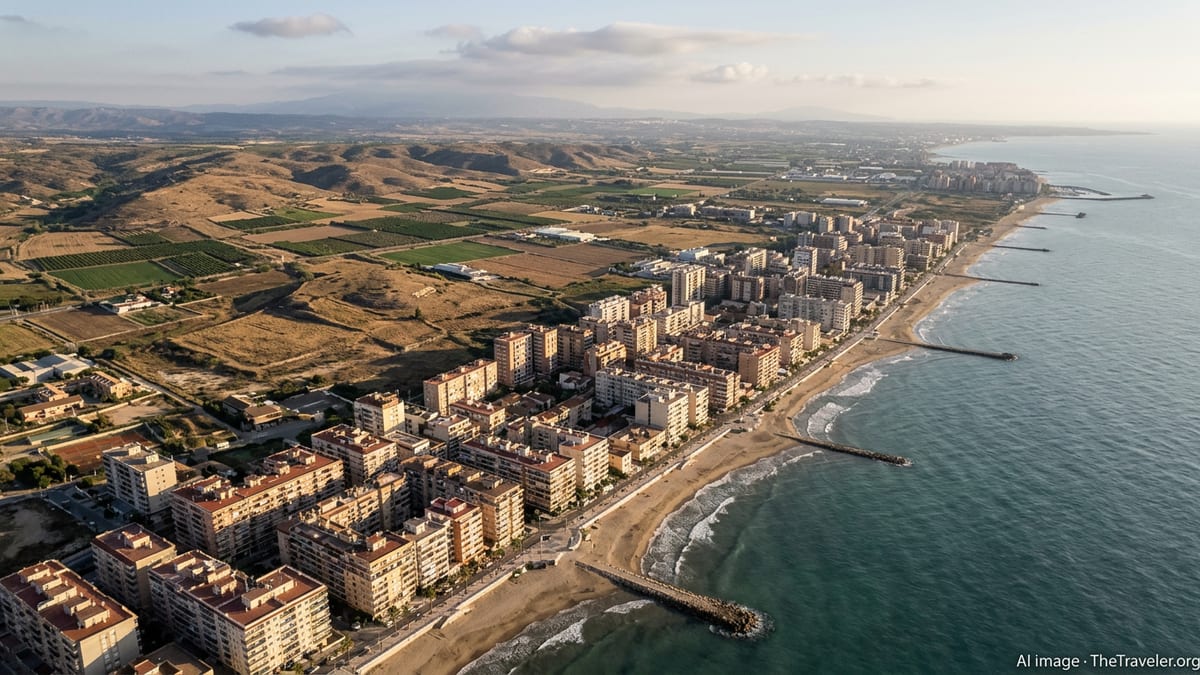
Spain’s Overall Climate Risk Profile
Spain’s geography, with large semi-arid zones and extensive Mediterranean coastline, makes it highly sensitive to warming trends. Regional and international assessments consistently rank Spain among the European Union countries with the highest exposure to heat, water stress and wildfire risk. The Mediterranean basin has already warmed faster than the global average, and projections show that heatwaves and drought periods are likely to become more intense and frequent over coming decades.
Recent summers illustrate this trajectory. Spain’s national meteorological agency reported that summer 2025 was the hottest on record, with an average temperature more than 2 degrees Celsius above the late-20th-century baseline and peak values close to 46 degrees Celsius in some southern locations. Similar anomalies were recorded in 2022, confirming a pattern rather than a one-off event. Such extremes have direct implications for health, outdoor work, energy demand and general liveability, particularly in inner and southern provinces.
Official analyses and climate scenarios prepared for Spain’s long-term planning suggest that by mid-century, average annual temperatures will rise further, and the frequency of very hot days and tropical nights will increase markedly. Combined with more irregular rainfall and intense downpours, this creates a risk mix that affects not only comfort but also infrastructure, insurance, and regional economic resilience. Relocators should understand that climate conditions experienced today are likely milder than those that will prevail over a typical multi-decade stay.
Extreme Heat and Human Health
Extreme heat is currently the most acute climate risk in much of Spain. Heatwaves in the last several years have arrived earlier in the season, lasted longer and covered more territory than in previous decades. In 2025, the first heatwave began in late May, and health-focused analyses for Spain report multiple heatwave days per person per year on average, with higher exposure in dense urban areas. This trend is projected to intensify, and European climate risk assessments expect heat-related mortality to rise substantially in southern Europe without strong adaptation measures.
Health impacts vary by region and city morphology. Inland cities such as Madrid, Seville, Córdoba and Zaragoza are prone to very high daytime maxima and warm nights during heatwaves, which can strain vulnerable populations and people with cardiovascular or respiratory conditions. Coastal cities in the Mediterranean and Andalusia often benefit from sea breezes but are increasingly experiencing hot, humid conditions and marine heatwaves that reduce nighttime relief. Research on heat-related mortality in regions like Catalonia shows that social and environmental factors, including air pollution, age structure and access to green space, modify risk levels.
Adaptation measures such as heat-health early warning systems, public cooling spaces and building retrofits are expanding, but coverage remains uneven. Some urban authorities have introduced temperature limits on commercial air conditioning and promoted energy-efficient cooling to reduce grid stress during peak demand. Prospective residents should consider building characteristics like insulation, shading and cross-ventilation, and whether dwellings are equipped for sustained high temperatures, which historically were less common in parts of northern and inland Spain.
Drought, Water Stress and Regional Differences
Drought and structural water stress are critical climate risks for Spain, especially in the south and east. Studies characterise large areas of the country as subject to medium to high water stress, with some river basins in Andalusia and the south-east experiencing extreme multi-year shortages between 2019 and 2024. Climate change is expected to reduce average rainfall in many Mediterranean catchments while increasing variability, heightening the risk of both meteorological and hydrological drought.
National reports on drought management show that reservoir storage has trended downward over the last decade, with repeated declarations of drought emergency or alert in Catalonia, Andalusia and other regions. In some smaller municipalities, authorities have temporarily restricted non-essential uses such as garden watering or car washing and, in severe cases, have needed tanker supplies. At the same time, Spain has invested heavily in desalination, recycled water and inter-basin transfers, especially along the Mediterranean arc, to buffer urban supply against rainfall variability.
For relocators, the main concern is spatial disparity. Large metropolitan areas such as Madrid, Barcelona, Valencia and Malaga generally maintain secure drinking water supplies thanks to diversified sources and infrastructure, although periodic restrictions on non-essential use may occur in drought years. Rural areas that depend on local wells or smaller reservoirs can face tighter limits. Agricultural regions with intensive irrigation, particularly in southern and south-eastern Spain, are already confronting reduced allocations, which can affect local employment and landscape quality.
Recent economic and environmental assessments point to structural issues, including over-extraction of groundwater, dispersed water governance, and relatively low urban water tariffs by European standards, which together complicate long-term adaptation. New national and regional strategies aim to improve efficiency, digitalise water management and plan major investments in resilience, but implementation will take years. Relocators whose livelihood or lifestyle relies heavily on water use, such as farming or water-intensive industries, should examine basin-level plans and historical restrictions in their target region.
Flood Risk, Heavy Rainfall and River Systems
While drought dominates public discussion, parts of Spain face increasing flood risk, particularly during episodes of very intense rainfall. Mediterranean “cold drop” or cut-off low events can deliver sudden cloudbursts, leading to flash flooding in urban areas and along short, steep river systems. Coastal plains near Valencia and parts of Catalonia, for example, have experienced repeated flood events when heavy rain coincides with saturated soils and limited drainage capacity.
Major rivers like the Ebro periodically flood large areas of agricultural land, affecting towns, infrastructure and livestock. European projects on the Ebro basin indicate that climate change, combined with land-use patterns, raises both the frequency and cost of such events. Adaptation initiatives in the basin are redesigning embankments and floodplains to slow water flow and reduce damage, with estimated significant savings in future flood mitigation and repair costs.
The 2024 floods in Spain, which severely impacted the Valencia region and other areas, highlighted the interaction of topography, urbanisation and sea level. Low-lying cities on alluvial plains close to the coast can experience prolonged drainage times when storm surges coincide with heavy rainfall, as rising sea levels reduce natural outflow. Impervious surfaces and rapid urban development in some coastal zones have also increased runoff, creating flash-flood conditions in formerly rural or peri-urban districts.
Prospective residents should therefore assess both drought and flood risk for specific locations. Within the same province, higher-elevation inland towns may face less flood hazard but more intense heatwaves, while coastal lowlands can be cooler but exposed to pluvial and coastal flooding. Local flood maps, historical event records and municipal drainage or river management plans are relevant due diligence inputs before purchasing property or establishing critical facilities.
Wildfire Hazard and Landscape Change
Spain is one of the European countries most affected by large wildfires, and climate change is a key driver of increasing risk. Extremely hot and dry summers in 2022 and 2025 produced record or near-record burned areas, with hundreds of thousands of hectares affected nationally in the highest-fire years. European fire information systems show that Spain repeatedly ranks near the top of the EU in annual burned surface, particularly in inland and north-western regions with extensive forest and shrubland.
Fire risk reflects the interaction of climate conditions, land management and rural demographic trends. Warmer temperatures and more frequent heatwaves dry out vegetation earlier in the season, lengthening the window for high-intensity fires. At the same time, land abandonment in some rural areas and encroachment of woody vegetation into former agricultural or grazing land create continuous fuel beds. Climate assessments for the Mediterranean region note that such vegetation shifts can magnify drought impacts and increase the likelihood of severe fires.
For relocators, wildfire risk is most relevant when considering homes or businesses located at the wildland-urban interface. Mountainous and hilly areas of Catalonia, Valencia, Aragon, Castilla y León, Galicia and parts of Andalusia have experienced repeated significant fires. Authorities are expanding firebreaks, early warning systems and evacuation planning, but individual exposure still depends heavily on site selection, building materials and defensible space around properties. Insurance conditions can also vary in high-risk zones and may tighten further as climate risk models are updated.
People planning to relocate to rural or peri-urban locations should inquire about recent fire history, local prevention measures and evacuation routes. In contrast, central boroughs of large cities generally face minimal direct wildfire danger, though smoke from distant fires can occasionally affect air quality. Overall, climate projections suggest that, without strong mitigation and land management reforms, summers with very high fire danger will become more frequent in Spain in coming decades.
Sea Level Rise and Coastal Erosion
Spain’s long coastline on both the Atlantic and the Mediterranean exposes many communities to sea level rise and associated coastal hazards. National scenario work suggests that average sea level around Spain could rise on the order of a few tens of centimetres by mid-century relative to late-20th-century levels, with higher values possible under high-emission pathways. While these figures may appear modest, they significantly increase the frequency of extreme coastal water levels, meaning that what was once a rare storm surge can occur much more often.
Specific hotspots are already experiencing visible impacts. Authorities around Barcelona and the Maresme coast report recurring beach erosion, with storms regularly removing large volumes of sand from man-made beaches and requiring repeated replenishment. Residents in some towns have observed the shoreline retreating and infrastructure increasingly exposed to wave action. The Ebro Delta in Catalonia, a low-lying wetland and agricultural area, is documented as suffering from erosion, saltwater intrusion and subsidence, which together amplify the effects of sea level rise.
On the Atlantic side, sections of the Bay of Biscay and parts of the Gulf of Cadiz also face higher risks of coastal flooding and erosion, especially where urban development and tourism infrastructure occupy dunes and former wetlands. Insurance analyses and climate risk briefings note that, as sea level rises, low-lying coastal properties may see more frequent inundation, higher maintenance costs and potential changes in building codes or setback requirements.
Relocators evaluating coastal living in Spain should therefore distinguish between elevated, rocky coasts and low, sandy or deltaic zones. Properties directly adjacent to eroding beaches, estuaries or marshlands require particular scrutiny regarding long-term viability and insurability. Municipal adaptation plans for coastal defence, dune restoration or managed retreat are useful signals of how local authorities are preparing for this slow-onset but persistent risk.
Regional Climate Risk Patterns Within Spain
Spain’s climate risks are highly heterogeneous across its territory, and relocation decisions should account for regional patterns rather than treating the country as a single climate zone. Broadly, the Mediterranean and southern regions are more exposed to compounded heat, drought and wildfire, while Atlantic and northern coastal regions experience milder temperatures but can face stronger storms and heavy rainfall. Inland plateaus, such as the Meseta Central, combine continental temperature extremes with varying levels of drought and wildfire risk depending on vegetation and land use.
For example, Andalusia and Extremadura register some of the highest summer temperatures in Europe, along with recurrent water scarcity and high fire danger in forested and rural areas. The south-eastern Mediterranean arc, including parts of Murcia and Valencia regions, is characterised by structural water stress, intensive irrigation and localised flash-flood risk during intense rainfall episodes. Catalonia has recently experienced both severe drought, particularly around Barcelona, and major wildfire and flood events in its varied topography.
By contrast, Galicia, Asturias, Cantabria and the Basque Country on the northern Atlantic coast typically enjoy cooler, wetter conditions, with lower overall water stress but exposure to Atlantic storms and, in some areas, coastal erosion. Central regions such as Castilla-La Mancha and Castilla y León face increasing heatwave intensity and wildfire vulnerability, but water availability depends strongly on local river basins and reservoir systems. The Canary and Balearic Islands have their own specific profiles, with insular water constraints, tourism dependence and exposure to sea level rise in low-lying areas.
Decision-makers and families assessing relocation options within Spain should align their risk tolerance and lifestyle preferences with these patterns. Those prioritising milder summers and lower drought exposure might favour parts of the north, while accepting greater cloudiness and rainfall. Those drawn to Mediterranean or southern locations should account for a trajectory toward hotter, drier summers, potential water-use restrictions and higher fire risk in rural and peri-urban zones.
The Takeaway
Spain’s climate risks are already material and are projected to intensify over the coming decades. The country faces a combination of extreme heat, structural water stress in several basins, growing wildfire danger, episodic floods and gradually escalating sea level rise. These trends create differentiated impacts across regions and sectors, influencing public health, infrastructure performance, landscape quality and long-term property and insurance considerations.
At the same time, Spain has developed significant experience managing water scarcity, fire suppression and civil protection, and it continues to expand adaptation planning at national, regional and municipal levels. Investments in desalination, water reuse, early warning systems and nature-based solutions are designed to buffer some of the most acute impacts, although implementation gaps and governance challenges remain. Relocators should therefore evaluate not just the hazards themselves but also the adaptive capacity and planning quality of specific regions and cities.
From a relocation perspective, there is no single answer to whether Spain’s climate risks make it an unsuitable destination. For many urban residents, particularly in well-managed metropolitan areas, the main challenges will be coping with more frequent and intense summer heatwaves, occasional water-use restrictions and episodic flooding. For those considering rural, agricultural or coastal settings, risk profiles can be more complex and require careful, location-specific assessment. In all cases, planning horizons should recognise that climate conditions by the 2030s and 2040s will likely be more demanding than those experienced in recent decades.
FAQ
Q1. How serious is extreme heat as a climate risk in Spain for residents?
Extreme heat is a major and growing risk, particularly in southern and inland regions. Recent summers have broken national records, with temperatures in some locations approaching the mid-40s Celsius and heatwaves starting earlier in the year. This raises health risks, especially for older adults, children and people with pre-existing conditions, and it increases reliance on cooling systems.
Q2. Are water shortages a realistic concern for people relocating to Spain?
Yes, but the degree of concern depends strongly on location. Large cities generally maintain secure drinking water through diversified sources, though non-essential uses can be restricted in drought periods. Rural areas and basins with intensive irrigation in the south and east are more vulnerable to water shortages and allocation cuts, which can affect local economies and land use.
Q3. Which parts of Spain are most exposed to wildfire risk?
Wildfire risk is highest in rural and forested areas with hot, dry summers, such as parts of Catalonia, Valencia, Aragon, Castilla y León, Galicia and Andalusia. Properties at the edge of forests or shrubland are more exposed. Central urban areas in large cities face limited direct fire risk but can be impacted by smoke and temporary air quality degradation during large fire events.
Q4. How significant is the threat of flooding in Spain’s cities?
Flood risk varies. Cities located on low-lying coastal plains or along major rivers are more exposed, especially when intense rainfall coincides with high river levels or storm surges. Recent events in regions such as Valencia and along the Ebro have demonstrated that flash flooding and river overflows can cause substantial disruption and damage. Drainage capacity and urban planning quality are important local factors.
Q5. Should potential relocators be worried about sea level rise in Spain?
Sea level rise is a long-term but important consideration for low-lying coastal and delta areas. Shoreline erosion, saltwater intrusion and more frequent coastal flooding are already observable in places like the Maresme coast near Barcelona and the Ebro Delta. Elevated or rocky coasts are less at risk, but properties in sandy or marshland zones close to sea level warrant careful assessment of long-term viability.
Q6. Are climate risks evenly distributed across Spain?
No, climate risks are highly regional. Southern and Mediterranean areas are more exposed to combined heat, drought and wildfire risk, while northern Atlantic regions are cooler and wetter but can face strong storms and coastal erosion. Inland plateaus see large temperature swings and varying drought levels. Understanding regional differences is essential when comparing potential destinations within Spain.
Q7. How is Spain adapting to increasing climate risks?
Spain is implementing a range of adaptation measures, including national climate adaptation plans, drought management strategies, water infrastructure investment, wildfire prevention and civil protection improvements. Many municipalities are developing their own resilience plans. However, experts point to challenges such as fragmented water governance, uneven implementation and the need for more investment in demand-side efficiency and ecosystem restoration.
Q8. What time horizon should relocators consider when assessing climate risks in Spain?
Climate projections suggest that conditions in the 2030s and 2040s will likely be significantly hotter and, in many areas, drier than today. Those planning long-term relocation or property acquisition should consider mid-century scenarios rather than relying only on recent historical climate. This includes thinking about future heatwave intensity, water availability and coastal changes over multi-decade periods.
Q9. Do climate risks in Spain affect property and insurance markets?
Climate risks are increasingly considered in property and insurance assessments, particularly for assets exposed to flooding, wildfire or coastal hazards. Over time, premiums and coverage terms may change for high-risk locations, and building regulations or planning permissions could tighten. Prospective buyers should consult insurers and local authorities to understand current and potential future constraints.
Q10. How can individuals reduce their personal climate risk if they relocate to Spain?
Individual risk can be reduced by choosing locations and properties with lower exposure, such as avoiding floodplains, eroding coasts and high-fire interface zones. Investing in good building insulation, shading and efficient cooling, as well as understanding local emergency plans for heatwaves, fires and floods, also improves resilience. Staying informed about regional climate trends and municipal adaptation measures is an important part of long-term planning.