


More news on this day
Ryanair is facing renewed criticism after passengers at Krakow John Paul II International Airport reported being left to spend a freezing night in the terminal with limited food, water or information following a cancelled flight.
Get the latest news straight to your inbox!
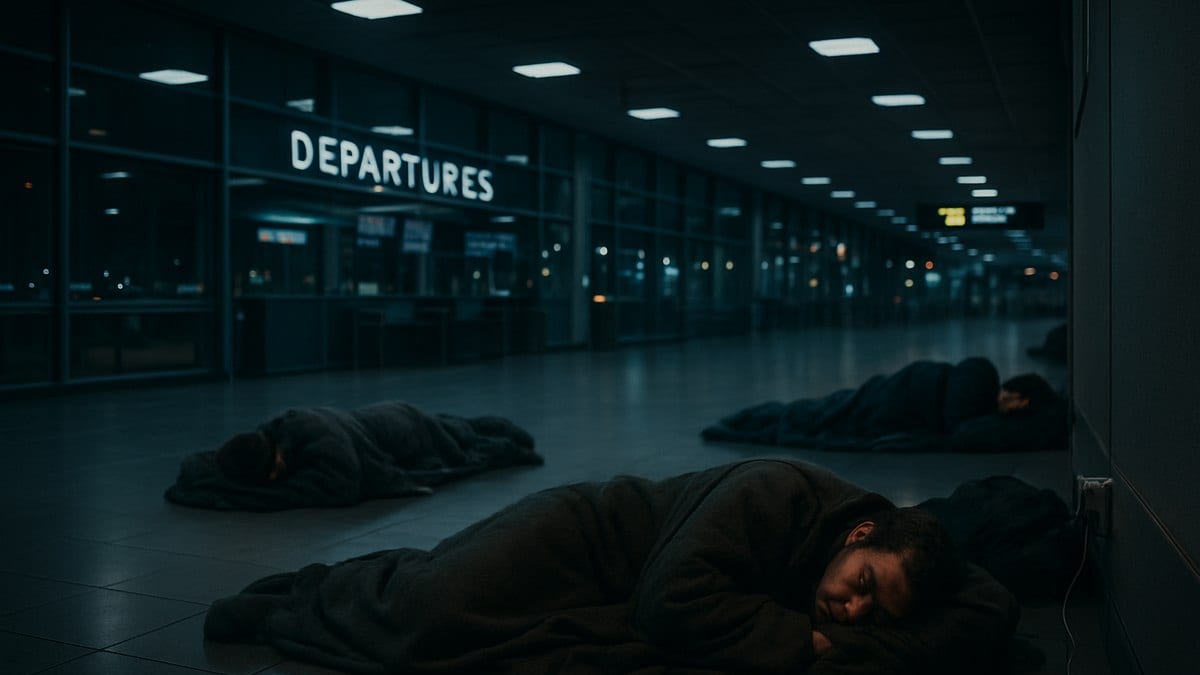
Overnight ordeal in a chilly terminal
Accounts shared in Irish and Polish media, as well as on social platforms, describe a chaotic scene at Krakow Airport after a Ryanair service to Dublin was heavily delayed, diverted and ultimately departed without dozens of ticketed passengers. Stranded travelers, including families with young children, reported being left overnight in a cold terminal with no hotel vouchers and only minimal guidance on when they might be able to fly home.
Published coverage indicates the disruption unfolded after an evening departure from Krakow was repeatedly pushed back, then shifted to operate from another Polish airport because of operational and weather constraints. By the time the aircraft left, many original passengers were still at Krakow, where they say they struggled to obtain confirmed rebooking or basic care such as meals and warm rest areas.
Passengers described temperatures dropping sharply outside and in parts of the terminal overnight, with many left to sleep on floors or hard chairs under coats and improvised blankets. Social media posts highlighted images of children wrapped in jackets, and adults queueing at closed concessions in search of water or snacks as the night wore on.
According to reports, several travelers said they received only generic email notifications about schedule changes, with no on-the-ground support commensurate with an overnight disruption. Others claimed they were advised to arrange and pay for their own accommodation, even as most nearby budget options quickly sold out.
Growing backlash over customer care obligations
The Krakow incident has added to wider criticism of the low-cost carrier’s handling of severe disruption across Europe, where winter fog, freezing temperatures and air traffic control issues have contributed to waves of cancellations and delays. Publicly available information from consumer groups notes that under European Union air passenger rules, airlines are generally required to provide meals, refreshments and hotel accommodation when delays extend overnight, regardless of the cause of the disruption.
Published guidance summarizing EU Regulation 261/2004 explains that while exceptional circumstances such as extreme weather can exempt airlines from cash compensation, they do not remove the duty of care to stranded passengers. That typically includes reasonable accommodation, transport between airport and hotel, and access to basic food and drink while waiting for an alternative flight.
Reports from Krakow suggest many passengers did not receive these standard forms of assistance. Instead, travelers have described being given leaflets or online links about how to claim expenses later, but with no immediate practical support as temperatures dropped outside the glass-fronted terminal overnight.
Consumer advocates contacted in earlier Ryanair disruption cases have consistently urged affected passengers to retain receipts for any hotel, transport and meal costs they incur, and to submit formal claims to the airline if care is not provided at the airport. In more complex situations, travelers are often advised to escalate complaints to national enforcement bodies or alternative dispute resolution schemes if reimbursement is refused.
Ryanair’s disruption record under renewed scrutiny
The latest Krakow episode comes as Ryanair remains under scrutiny for several high-profile disruption cases across its European network. In recent months, passengers have reported being left overnight in terminals in Spain and France after late-night cancellations, as well as facing long delays amid weather-related chaos at major hubs and regional airports.
Operational data compiled by European aviation bodies show Ryanair consistently among the continent’s busiest airlines, operating thousands of daily flights. High utilization and tight turnarounds can intensify the impact of staffing shortages, air traffic restrictions and winter weather, producing knock-on effects that ripple across the schedule when a single aircraft or crew goes out of position.
Travel industry observers note that low-cost business models rely on lean cost structures and rapid aircraft turnaround times, which may leave limited slack when airports face sudden closure, security staffing gaps or runway de-icing delays. In such conditions, passengers on late-evening departures are particularly vulnerable to cancellations that cannot be recovered until the following day.
In recent years, a series of social media posts, complaint threads and local news reports has documented similar stories of passengers sleeping on airport floors in cold conditions after schedule disruptions. The Krakow incident has quickly joined that catalogue, with frustrated travelers contrasting their experience with the extensive marketing used to promote low fares and on-time performance.
What stranded Krakow passengers can do now
For the Ryanair customers left overnight in Krakow, travel law specialists typically recommend a structured approach to seeking redress. The first step is to gather all available documentation, including boarding passes, booking confirmations, delay notifications, photographs from the terminal and receipts for any expenses such as meals, transport and emergency accommodation.
Passengers can then submit a detailed claim directly to the airline, specifying that they are seeking reimbursement under EU passenger care obligations for an overnight disruption, and, where applicable, compensation for a long delay or cancellation. Guidance from legal information sites suggests clearly outlining the timeline of events and attaching copies of all supporting evidence.
If Ryanair rejects or does not respond to a claim within a reasonable period, travelers can escalate their case to the relevant national enforcement body in the country where the disruption occurred, or use approved arbitration or mediation schemes where available. Consumer organizations across Europe regularly highlight these channels as a way to resolve persistent disputes without resorting to court proceedings.
Experts also advise affected travelers to check their travel insurance policies for provisions covering trip interruption, missed connections and additional accommodation costs. While insurers typically require policyholders to seek support from the airline first, they may reimburse some expenses that remain unpaid, particularly in cases involving families with children or medically vulnerable passengers forced to remain in cold, uncomfortable conditions overnight.
Pressure builds for clearer winter disruption planning
The Krakow overnight stranding has intensified calls from passenger-rights advocates for airlines and airports to adopt clearer contingency plans for winter disruption. With climate patterns bringing more frequent fog, ice and sudden temperature drops across Europe, analysts argue that incidents where travelers spend the night on terminal floors in freezing conditions should be rare exceptions, not recurring headlines.
Air travel commentators have suggested that better coordination between airlines, airport operators and ground-handling companies could help ensure that backup accommodation, transport links and staff are available when late-night cancellations occur. Some have also pointed to the need for clearer communication protocols, so that information about diversions or airport changes reaches passengers in time to avoid being left at the wrong terminal or city.
For now, the Krakow case adds to the mounting narrative of frustration surrounding budget carriers’ handling of large-scale disruption. As images of stranded families in cold airports continue to circulate, pressure is likely to grow on airlines serving Central and Eastern Europe, including Ryanair, to demonstrate that aggressive cost control does not come at the expense of basic passenger welfare when flights go badly wrong.